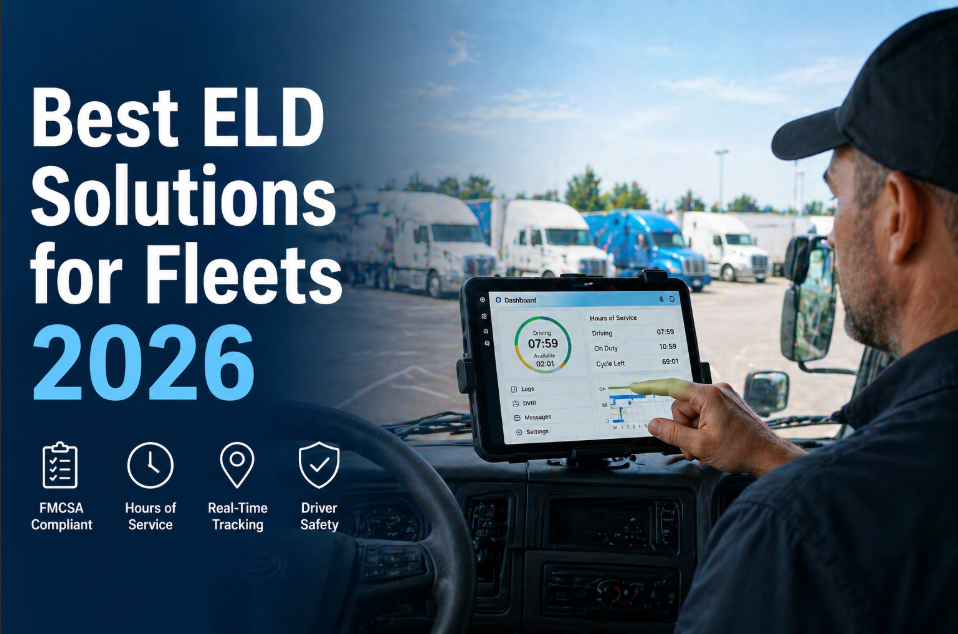
A fleet operations director in Atlanta spent four months evaluating fleet management software in 2024 — sat through nine demos, collected three proposals, and still chose the wrong platform. The software looked good in the presentation. In production, the mobile app crashed when drivers submitted DVIRs with photos, the telematics integration required a custom API build that took six months and $40,000, and the warranty tracking module was a spreadsheet export, not an automated system. The wrong fleet management software doesn't save money — it creates a new category of operational friction while charging a subscription fee to do it. OxMaint is built specifically for commercial fleet operations, with AI-native architecture, not bolt-on AI features added to a legacy CMMS. This guide compares the platforms most commonly evaluated by US, Canadian, and UK fleet operators in 2026 across the eight criteria that determine real-world ROI — not the twelve features that look impressive in a sales deck. Book a demo to see OxMaint in a live fleet environment.
Compare Fleet Software on What Actually Matters
AI capabilities · Telematics integration · PM automation · Warranty tracking · Mobile performance — ranked honestly
Of fleet operators replace their fleet software within 3 years — wrong initial selection is the #1 reason
$40K+
Average cost of a telematics integration that wasn't native — custom API builds after contract signing
9 mo
Average time before fleet operators realise mobile app performance was a deal-breaking issue they missed in the demo
The Eight Criteria That Determine Fleet Software ROI
Most fleet software comparisons evaluate feature lists. Feature lists are written by marketing departments. The criteria that determine whether a platform saves money or costs money in production are different — they are architectural decisions that show up in daily technician workflow, monthly reporting, and annual compliance audits. OxMaint was designed around these eight criteria from the ground up.
01
AI Architecture
Native AI that analyses your fleet's actual data — not a chatbot wrapper around manual work order entry. Predictive PM from fault history, not calendar reminders.
02
Telematics Integration
Native connectors to Samsara, Geotab, Verizon Connect — not "available via API." DTC-to-work-order in under 4 minutes, not after a middleware build.
03
Mobile App Quality
Works offline. Photo capture for DVIRs. Digital signature. Loads in under 2 seconds. Most platforms pass the demo — few pass shift-one with 30 technicians.
04
PM Automation
Work orders generated by actual mileage from telematics — not by calendar date and manual odometer entry. PM compliance that doesn't require a fleet manager to remember to create the work order.
05
Warranty Tracking
Auto-flag at work order creation — not a report you run monthly. Coverage checked against live odometer. NHTSA recall cross-reference automatic. Most platforms treat this as an afterthought.
06
ERP / SAP Integration
Work orders generate SAP purchase orders automatically. Labour costs post to cost centres without manual data entry. Most mid-market platforms require a custom integration project.
07
Reporting Depth
Cost per mile per vehicle. PM compliance by depot. Reactive vs planned ratio trending. MTBF by asset class. Not just "dashboard" — actionable data that fleet directors can take to board meetings.
08
Deployment Speed
Live in 14 days or less — not a 6-month implementation project with a consulting fee. Most enterprise platforms promise 90 days and deliver 8 months.
Feature Comparison — OxMaint vs Legacy Fleet Platforms
The table below compares capabilities across the eight criteria that determine production performance. OxMaint performs at the highest level on all eight — legacy platforms typically excel at one or two and compromise on the rest.
Capability
OxMaint AI
Legacy CMMS A
Enterprise B
Mid-Market C
AI-native predictive PM
Full
None
Partial
None
Native telematics connectors
12+ providers
3 providers
8 providers
API only
Offline mobile app
Full offline
Online only
Limited
Partial
Warranty auto-flag at WO
Automatic
Manual report
Partial
None
NHTSA recall cross-reference
Live API
None
None
None
SAP / ERP integration
Native
Custom build
Native
Custom build
Deployment timeline
14 days
6–12 months
4–8 months
4–6 weeks
Cost per vehicle / month
$12–$18
$35–$60
$28–$45
$18–$28
Full capability Partial / limited Not available
The Fleet Software Evaluation Checklist — 12 Questions to Ask Every Vendor
Most fleet software evaluations are won by the platform with the best demo video. The questions below are the ones that differentiate platforms in production. OxMaint answers yes to all twelve — ask every competitor the same questions.
AI & Automation
Does AI generate PM work orders from actual mileage — not calendar prompts?
Does AI flag warranty coverage before work order approval — automatically?
Can the platform predict component failure before it occurs — with documented accuracy?
Integration
Which telematics providers have native connectors — no custom API build required?
Does SAP integration auto-generate purchase orders from approved work orders?
How long does telematics integration take — in days, not months?
Mobile & Operations
Does the mobile app work completely offline — including photo capture and digital signature?
Can you see a live fleet of 50+ vehicles in production — not a sandbox demo environment?
What is the deployment timeline — in calendar days from contract to live fleet operation?
Compliance & Reporting
Does the platform cross-reference fleet VINs against live NHTSA recall data automatically?
Can cost-per-mile reporting be exported by vehicle, depot, and powertrain type in one report?
What does the platform do when a DVIR creates a defect that requires repair before dispatch?
Technology Capabilities That Separate 2026 Fleet Platforms
Fleet software has diverged into two categories: platforms built on legacy CMMS architecture with AI features added, and platforms built AI-native from the ground up. The performance difference in production is significant. OxMaint is AI-native architecture — AI is not a feature layer on top of work order management. It is the work order management.
AI Digital Twin — Fleet Model
OxMaint builds a digital twin of each vehicle — tracking fault history, PM compliance, parts consumption, and energy efficiency simultaneously. The digital twin identifies the highest-risk vehicles in your fleet before they fail, not after the breakdown tow invoice arrives. Legacy platforms track work orders. OxMaint models fleet health.
AI Camera Vision — Shop and Yard
AI cameras in maintenance bays detect vehicles with visible damage, fluid leaks, or safety issues before they are dispatched. In fleet yards, vehicle condition is assessed at gate entry — defects logged automatically without driver DVIR delay. OxMaint work orders created from camera detection with photo evidence already attached.
OBD / PLC Integration — Real-Time Fault Pipeline
OBD-II fault codes from every vehicle feed OxMaint continuously via telematics — DTC detected at 9:14 AM, work order created at 9:18 AM, technician assigned at 9:19 AM, vehicle pulled before the driver's next dispatch. No manual fault reporting step in the chain. Heavy equipment PLC fault codes supported via J1939 CAN bus.
SAP / ERP — Bidirectional Data Flow
OxMaint work orders trigger SAP purchase orders automatically — parts ordered before the repair starts, not after the technician discovers the need mid-job. Labour costs post to SAP cost centres without manual data entry. Fleet total cost of ownership visible in real-time financial reporting, not month-end reconciliation.
Predictive Analytics — Cost Trajectory Modelling
OxMaint tracks the repair cost trajectory of every vehicle — identifying the inflection point where continued repair becomes more expensive than replacement. This data informs fleet replacement cycles with evidence, not gut feel — the CFO argument that fleet directors have needed for decades but never had the data to make.
28%
Average maintenance cost reduction in year one
97%
PM compliance achieved by OxMaint fleets
14 days
Deployment — vs 6–12 months for legacy enterprise platforms
91%
Warranty recovery rate — vs under 35% without structured tracking
"We evaluated four platforms over three months. The others had better marketing materials. OxMaint had better production references. We called three OxMaint customers before signing — all three said the same thing: it did what the demo showed, it deployed in under three weeks, and it found warranty money we didn't know existed."
— VP Operations, National Distribution Fleet · Phoenix, Arizona · 420 vehicles
Frequently Asked Questions
AI-native architecture — predictive PM from actual fault data, not calendar reminders. Native telematics connectors to 12+ providers. Warranty auto-flag at work order creation. Deploy in 14 days, not 6 months. Legacy platforms added AI as a feature layer; OxMaint was built around AI from day one.
14 days from contract to live operations. Vehicle data imports from existing records, telematics integration configures via native connectors, and technicians train on mobile app in a half-day session. No IT project required, no implementation consultant.
No — OxMaint has native connectors to Samsara, Geotab, Verizon Connect, Fleet Complete, and 8+ additional telematics providers. Integration is configured in the platform, not built by a developer. Most fleets are live with telematics data in 48 hours.
OxMaint pricing starts at $12–$18 per vehicle per month depending on fleet size and features. Most fleets see payback within 11 weeks from warranty recovery and reduced reactive repair costs alone. Pricing is transparent — no implementation fees, no hidden integration costs.
Yes — OxMaint applies powertrain-specific PM templates automatically. EVs receive battery and HV system tasks; ICE vehicles receive oil change and exhaust system tasks. Range-aware dispatch, cost-per-mile by powertrain type, and unified reporting across all vehicle types on one dashboard.