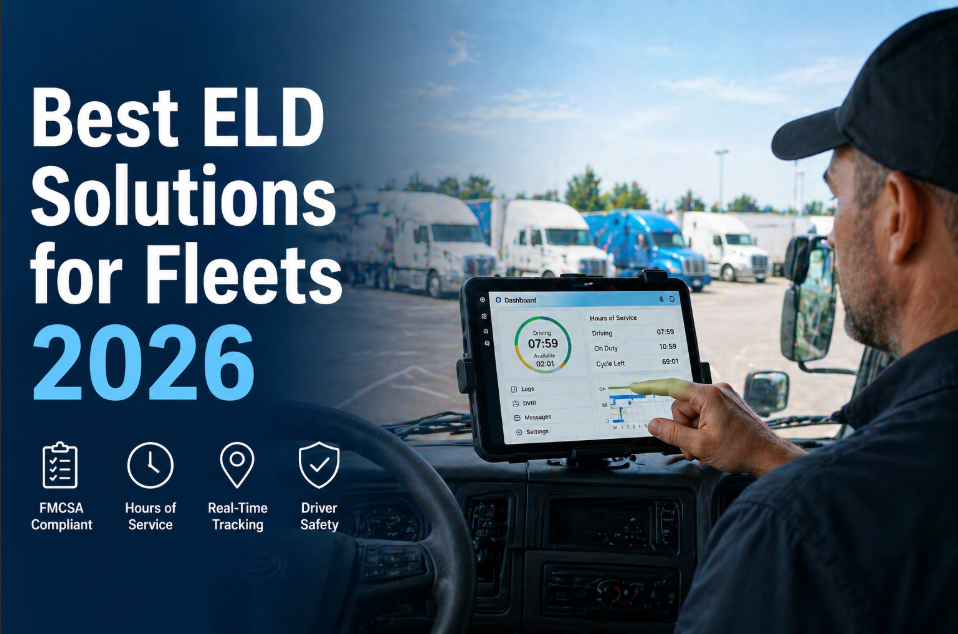
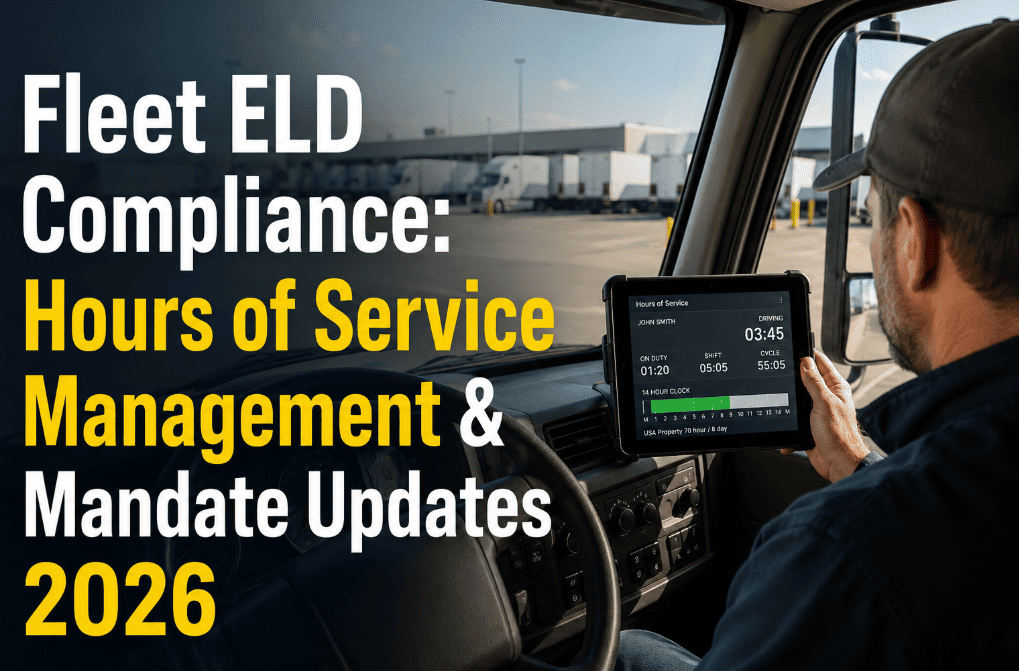
The ELD mandate changed commercial trucking permanently. Since the FMCSA enforcement deadline, paper logbooks are no longer a legal option for carriers operating commercial motor vehicles requiring a CDL. Yet in 2026, 34% of fleets still experience HOS violations during DOT audits — not because drivers are cheating, but because their ELD solution is disconnected from dispatch, maintenance, and real-time operations. The wrong ELD creates compliance risk instead of eliminating it. A missed HOS violation costs $16,000 per incident. An ELD that fails to sync with your fleet management system means your compliance data lives in a silo while your vehicles operate in the dark. The right FMCSA-compliant ELD solution in 2026 does more than log hours — it connects driver status, vehicle condition, and maintenance records into one operational picture. This guide compares the best ELD solutions for commercial fleets so you can make the right decision with full information — and if you want to see how OxMaint integrates ELD compliance with full fleet maintenance management, start a free trial or book a demo today.
ELD Solutions · FMCSA Compliant · 2026 Guide
Best ELD Solutions for Commercial Fleets in 2026 — FMCSA Compliance Compared
Hours of service tracking, driver logs, vehicle diagnostics, DOT audit exports, and fleet management integration — evaluated side by side for fleets of every size and operational structure.
$16,000
Maximum fine per HOS violation in 2026
34%
of fleets still fail HOS compliance during DOT audits
6,800+
FMCSA-registered ELD devices on the 2026 certified list
91%
reduction in HOS violations after proper ELD deployment
Understanding the Standard
What FMCSA Actually Requires from Your ELD in 2026
Being on the FMCSA registered list is the floor — not the ceiling. Thousands of devices are technically certified but operationally inadequate for real fleet compliance. Here is what the regulation demands versus what your operation actually needs to stay violation-free.
FMCSA Required
Automatic duty status recording when vehicle moves above 5 mph
Engine synchronization — CMV engine hours and miles
Tamper-evident data with driver authentication
Transfer of ELD data to roadside enforcement officers
Data retention of 6 months minimum
24-hour graph grid display of driver HOS records
Operations Need
Real-time HOS dashboard for dispatch to avoid violations before they happen
Predictive HOS alerts — warning dispatchers when drivers approach limits
Two-way messaging integrated with driver duty status
Vehicle fault code capture alongside HOS data
Integration with fleet maintenance CMMS for complete asset records
Automated DOT audit packet generation — not manual file assembly
2026 Platform Rankings
Top ELD Solutions for Commercial Fleets — Ranked and Compared
Evaluated across seven criteria that matter to fleet compliance officers and operations managers: FMCSA status, HOS accuracy, API flexibility, maintenance integration depth, hardware reliability, driver experience, and total cost of ownership. OxMaint leads where it counts most — connecting compliance to operations. Want to see our ELD integration workflow live? Start a free trial or book a demo to walk through it.
The Hidden Cost
What Poor ELD Integration Actually Costs Your Fleet Operation
The sticker price of an ELD is the smallest number in this equation. The real cost is what happens when your ELD is disconnected from everything else your fleet depends on. These are the six operational failure modes that emerge when ELD compliance sits in a silo.
01
Dispatch Sends Drivers Into Violations
Without real-time HOS visibility at the dispatch level, load assignments push drivers past legal limits. Average violation fine: $16,000. Average CSA score impact: 7 points per event.
02
Vehicle Defects Go Uninvestigated
ELD captures engine hours and fault codes but with no CMMS connection, defects generate alerts nobody acts on. 29% of roadside inspection failures trace back to known, logged-but-ignored fault codes.
03
DOT Audit Preparation Takes Days
When ELD data, DVIR records, and maintenance logs live in separate systems, compliance officers spend 3–5 days assembling audit packets that should take 20 minutes to export.
04
Driver Credential Expiry Causes Violations
HOS compliance means nothing if the driver logging hours has an expired medical certificate or CDL endorsement. Without credential tracking linked to ELD assignment, fleets operate with undetected compliance gaps.
05
Insurance Premiums Stay High
Insurers discount premiums 8–15% for fleets with documented ELD compliance and clean CSA BASIC scores. Disconnected ELD data prevents fleets from presenting the behavioral documentation insurers require.
06
Maintenance Gaps Create Safety Violations
Overdue PM on ELD-equipped vehicles creates dual liability — the vehicle was tracked, the fault was logged, and the repair was not made. Courts treat logged-but-ignored data as negligence evidence.
How OxMaint Solves It
ELD Compliance That Connects to Your Entire Operation
OxMaint does not sell an ELD as a standalone compliance checkbox. It connects hours of service data, vehicle diagnostics, driver credentials, DVIR inspections, and maintenance workflows into one platform — so every compliance event triggers the right operational response automatically.
1
Driver Logs In — ELD Activates
Driver authenticates via mobile app. ELD session begins. Credential status verified automatically — CDL, medical certificate, and drug test compliance checked before any HOS recording starts.
Expired credential detection: automatic before every shift
2
Pre-Trip DVIR Completed Digitally
Driver completes mobile inspection checklist with mandatory photo documentation. Any defect flagged generates an instant work order to the maintenance team — before the vehicle leaves the yard.
DVIR completion rate: 98% with digital enforcement vs. 67% paper
3
HOS Tracked — Dispatch Alerted Proactively
Live HOS dashboard shows every driver's remaining drive time. Dispatch receives alerts 90 minutes before any driver approaches their limit — enabling load reassignment before a violation occurs.
HOS violations reduced 91% with predictive dispatch alerts
4
Engine Fault Codes Trigger Work Orders
Vehicle ECU fault codes captured via ELD hardware automatically generate maintenance work orders. No missed alerts. No action-required emails lost in inboxes. Repair tracked to completion in the same platform.
Fault-to-repair cycle time reduced 58% vs. manual alert workflows
5
Audit Packet Generated in 60 Seconds
DOT or FMCSA audit request received. Fleet manager selects vehicle, date range, and export type. Complete compliance packet — ELD logs, DVIR records, maintenance history, driver credentials — exported in under 60 seconds.
Audit prep time: 60 seconds vs. 3–5 days manual assembly
6
CapEx Forecast Updated Automatically
Vehicle mileage from ELD data feeds into OxMaint's rolling 5–10 year CapEx model. Replacement timelines recalculate automatically. No spreadsheet updates required.
CapEx accuracy improves 44% when built on real mileage data
ELD + CMMS + Compliance
ELD Compliance Is Only Valuable When It Connects to the Rest of Your Operation
OxMaint unifies ELD hours-of-service tracking, digital DVIRs, driver credential management, fault-code-triggered maintenance workflows, and DOT audit documentation into one platform. Stop managing compliance in a silo — start operating with complete visibility across every driver, every vehicle, and every maintenance record.
ROI in Numbers
What Fleets Report After Deploying Integrated ELD + Maintenance Management
91%
Fewer HOS Violations
Predictive dispatch alerts prevent violations before they occur — not after drivers are already at the limit.
58%
Faster Fault Resolution
Auto-generated work orders from ELD fault codes cut average repair cycle time nearly in half.
$9,200
Avg Annual Savings Per Vehicle
Combined violation avoidance, downtime reduction, and fuel savings across integrated ELD fleets.
12%
Insurance Premium Reduction
Clean CSA scores and documented compliance earn average 8–15% premium discounts from commercial insurers.
Buyer Questions Answered
ELD Solutions — Everything Fleet Managers Ask Before Deciding
Which vehicles are required to have an ELD under FMCSA rules?
+
The ELD mandate applies to commercial motor vehicle drivers who are required to prepare Hours of Service records of duty status. This includes drivers of CMVs in interstate commerce that are above 10,001 lbs GVWR, designed to transport 9 or more passengers including the driver for compensation, or 16 or more passengers without compensation, or used in transporting hazardous materials requiring placarding. Exemptions exist for short-haul drivers, those operating under the timecard exception, drive-away/tow-away operations, and vehicles manufactured before model year 2000. If you are unsure whether your fleet falls under the mandate,
book a demo and our compliance team will walk through your specific vehicle classes.
What is the difference between a registered ELD and a compliant operation?
+
A registered ELD is a device that appears on the FMCSA technical specifications compliance list — meaning the hardware and software meet minimum technical requirements. A compliant operation means your fleet correctly uses that device with proper driver training, correct duty status entries, accurate vehicle data linkage, and complete supporting documentation including DVIRs and maintenance records. 34% of fleets with registered ELD devices still fail DOT audits because device registration does not equal operational compliance. OxMaint builds the operational compliance layer — training records, DVIR documentation, maintenance history, and audit export — on top of the registered ELD device.
Start a free trial to see the complete compliance stack.
How does ELD data connect to preventive maintenance scheduling?
+
In a standalone ELD system, it does not. The ELD logs engine hours and mileage — but that data stays in the ELD platform. A maintenance manager has to manually transfer mileage figures to a separate PM scheduling system, which introduces delays and errors. In OxMaint, ELD mileage data feeds directly into the preventive maintenance module. When a vehicle reaches its service interval — whether mileage-based, hour-based, or calendar-based — a work order is generated automatically and assigned to the appropriate technician. Fault codes captured by the ELD hardware follow the same path: detected fault becomes a tracked work order within minutes. Fleets using this integrated workflow see 41% fewer unplanned breakdowns in the first year.
Book a demo to see the workflow.
What should a fleet manager look for beyond FMCSA registration when evaluating ELD solutions?
+
Eight factors matter beyond the registration checkbox: first, real-time HOS visibility at the dispatch level — not just the driver's device. Second, predictive alerts before violations occur, not notifications after the fact. Third, open API access so ELD data can flow to your maintenance platform, TMS, and fuel management systems. Fourth, driver app usability — poor driver experience drives workaround behaviors that create compliance risk. Fifth, fault code capture and workflow integration. Sixth, DVIR completion enforcement with digital signatures. Seventh, automated audit-ready export capability. Eighth, total cost of ownership including hardware, installation, training, and any integration fees. OxMaint covers all eight in a single subscription without third-party integration costs.
Start a free trial to evaluate the full platform.
OxMaint · ELD + Fleet Compliance Platform
Every Hour Logged. Every Fault Tracked. Every Inspection Documented. Every Audit Ready.
OxMaint delivers FMCSA-compliant ELD hours-of-service tracking connected to preventive maintenance, digital DVIRs, driver credential management, real-time dispatch visibility, and automated audit documentation — built for operations teams who cannot afford compliance gaps or disconnected systems.


-compliance-eld-rules-and-fleet-management-best-practices.png)
