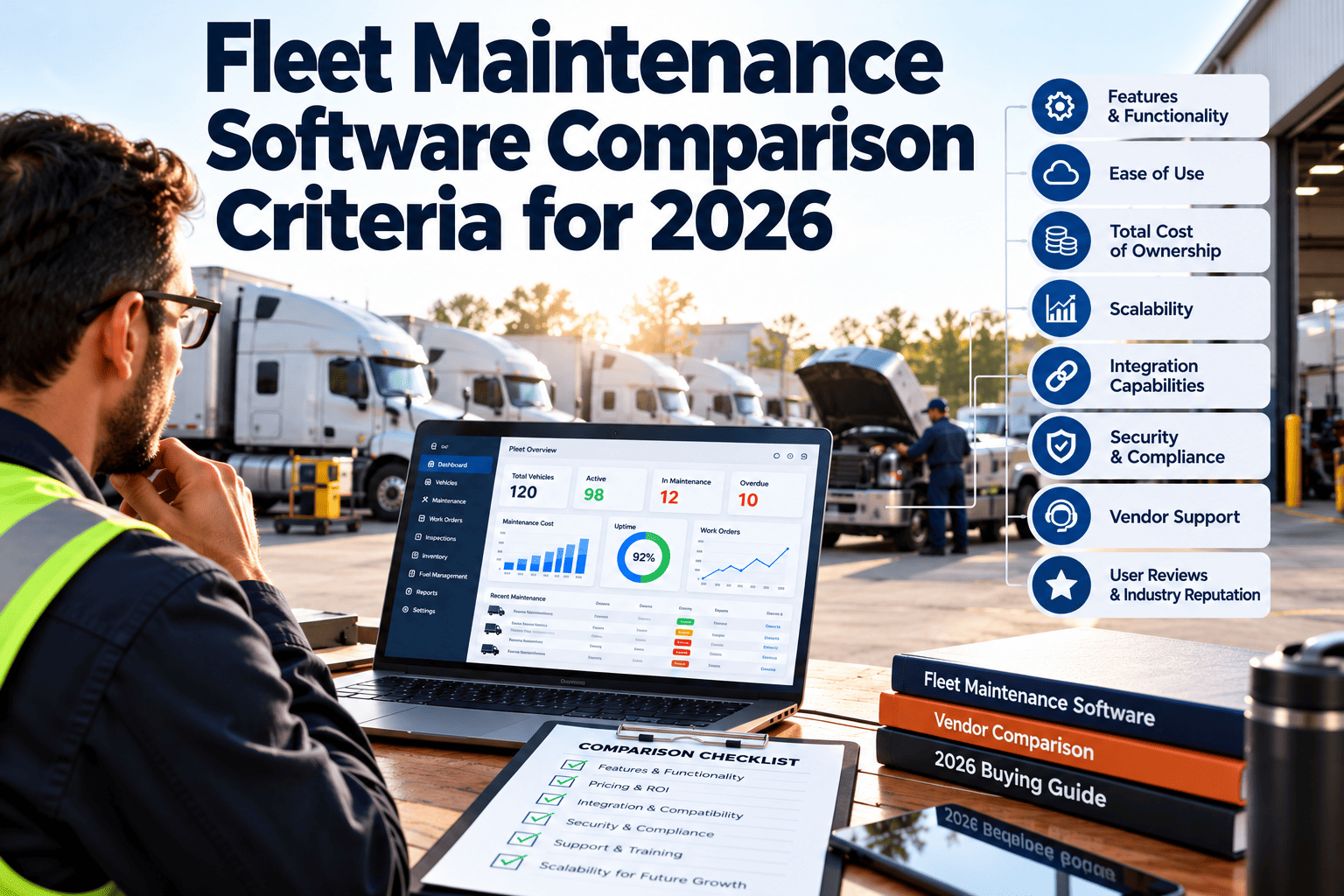
Every fleet software vendor claims to do everything — track, maintain, predict, and optimize — but a GPS platform, a telematics provider, and a CMMS solve three different problems, and stacking three point tools rarely beats one platform built to connect them. The market is growing past $32 billion in 2026 as fleets replace spreadsheets and standalone trackers with integrated systems, yet most buyers still can't answer a basic question: what does each category actually do, and where does the overlap end? This page breaks CMMS, GPS, and telematics apart by capability, shows where they're supposed to connect, and where most fleets lose money because they never do — or start a free trial to see one platform run all three.
CMMS, GPS, or telematics — you probably need more than one and less than three
Fleet managers are told to buy a tracking tool, a maintenance tool, and a driver-safety tool separately, then wire them together with exports and manual entry. Here's what each category actually covers, where they overlap, and why 41% of fleets say their telematics data never reaches the people who fix the trucks.
Why every fleet is re-evaluating its software stack right now
The fleet management software market is on pace to grow from roughly $28 billion in 2025 to over $32 billion in 2026, and 2026 is also the year embedded telematics becomes the default rather than the add-on. That shift is forcing a decision fleets used to be able to postpone: keep three disconnected logins, or consolidate onto a platform where tracking, diagnostics, and maintenance share one record.
What each category is actually built to do
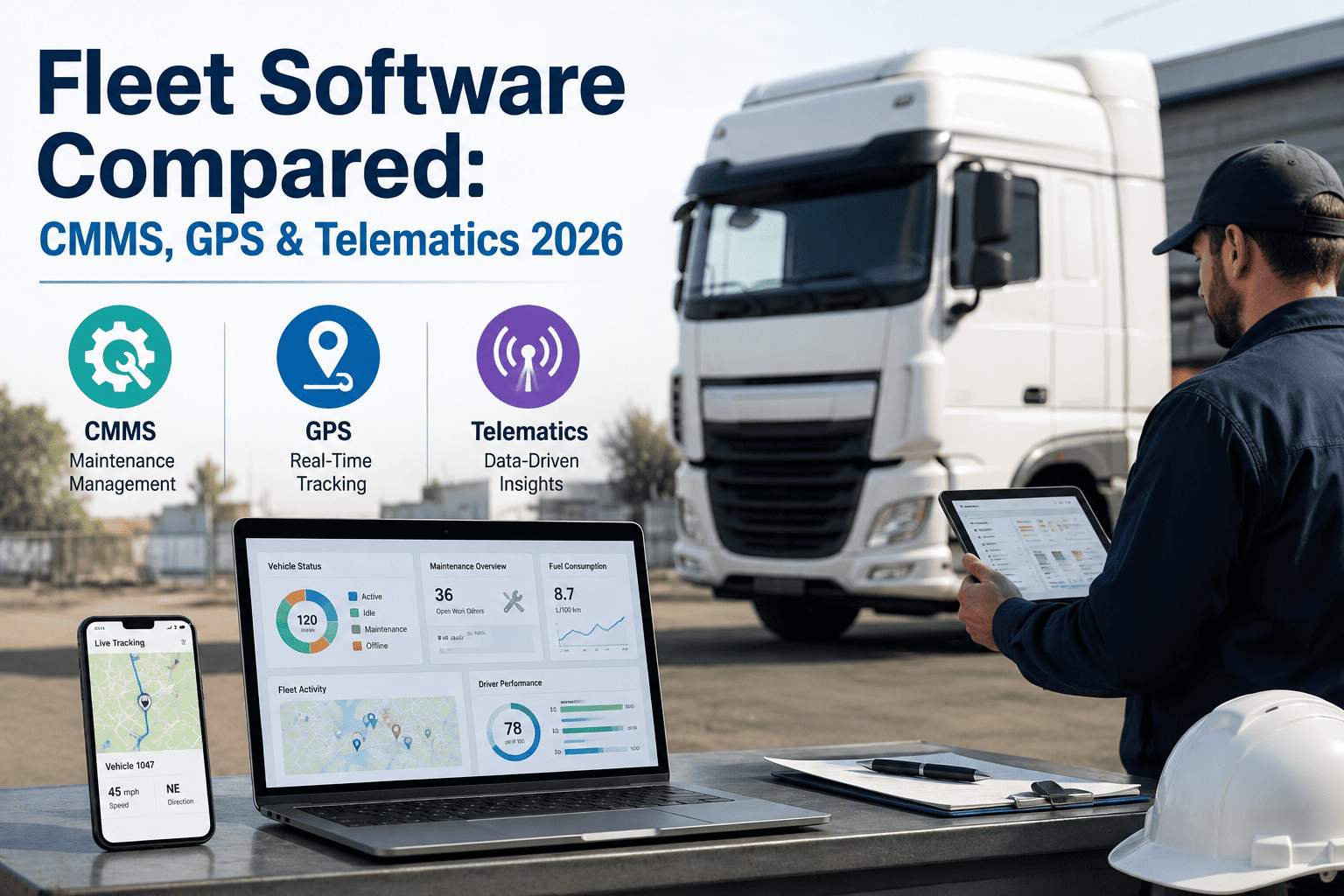
GPS, telematics, and CMMS get used interchangeably in sales decks, but they answer different questions. GPS tells you where a vehicle is. Telematics tells you how it's being driven and how it's running. CMMS tells you what needs to be fixed and who's fixing it. The table below maps each capability to the category that actually owns it.
| Capability | GPS tracking | Telematics | CMMS |
|---|---|---|---|
| Real-time vehicle location | Core function | Included | Not covered |
| Engine diagnostics / DTC codes | Not covered | Core function | Consumes the alert |
| Driver behavior scoring | Not covered | Core function | Not covered |
| Work order generation | Not covered | Not covered | Core function |
| PM scheduling by mileage/hours | Not covered | Feeds the trigger | Core function |
| Parts and inventory tracking | Not covered | Not covered | Core function |
| Fuel and idle reporting | Basic | Detailed | Cost rollup only |
| DTC-to-work-order automation | Not possible alone | Generates the signal | Needs the connection |
The bottom row is where most fleets lose value: a diagnostic code from telematics is only useful if it automatically becomes a work order in the CMMS. Without that link, someone has to notice the alert and manually create the ticket — and that step is where preventable breakdowns start.
Where three separate logins quietly cost you money
Buying GPS, telematics, and CMMS from three different vendors isn't wrong — it's how most fleets start. The cost shows up later, in the handoffs between systems that never happen automatically.
The DTC code nobody actioned
Telematics flags an engine fault, but the alert lands in a dashboard the maintenance team doesn't log into. The vehicle keeps running until the fault becomes a roadside breakdown.
The PM trigger stuck in a spreadsheet
GPS reports mileage, but PM schedules live in a separate calendar. Someone has to manually cross-check odometer readings against due dates every week.
The fuel anomaly no one flagged
Fuel card data and GPS location live in different systems, so a purchase far from the vehicle's actual route goes unnoticed until the monthly reconciliation, if it's caught at all.
The utilization number nobody trusts
GPS shows idle time, CMMS shows downtime for repairs, and neither matches the utilization report leadership sees, because the two datasets were never reconciled.
See what a connected stack looks like on your fleet
Oxmaint links telematics diagnostics, GPS mileage triggers, and CMMS work orders into one record — so a fault code becomes a work order without anyone re-typing it.
Matching the platform to your fleet size
The right stack depends less on budget and more on fleet size and how much manual reconciliation your team can absorb. Use fleet size as the first filter, then check whether the platform closes the loop between diagnostics and work orders.
Five questions that expose whether a platform actually integrates
Every vendor will say they "integrate" — the word means nothing until you ask how. These questions separate a real API connection from a CSV export someone has to upload by hand.
Does a DTC code create a work order automatically, or just an email alert?
An email alert still requires a human to read it and manually open a ticket. Ask to see the automation live, not described.
Can PM schedules trigger off live mileage, not a monthly import?
Monthly odometer imports mean PM due dates can already be weeks stale by the time anyone acts on them.
What happens if we already own GPS or telematics hardware?
Ask whether the CMMS connects to your existing provider's API or requires ripping out hardware you already paid for.
Does the platform support mixed ICE and EV assets in one view?
EV maintenance tracks battery health and charging infrastructure instead of oil changes — a platform built only for combustion engines will force a second system later.
Who owns the data if we switch providers later?
Confirm you can export full maintenance and telematics history in a usable format — vendor lock-in on historical data is a common and avoidable trap.
Common questions when comparing fleet software
Do I need GPS, telematics, and CMMS, or can one tool cover all three?
Most modern CMMS platforms now include or connect to GPS and telematics data rather than replacing it, so you get location and diagnostics inside the same record as work orders. Try the combined view at app.oxmaint.ai to see how the connection works.
What's the real difference between GPS tracking and telematics?
GPS tracking is location only — where the vehicle is right now. Telematics is a superset that adds engine diagnostics, driver behavior, fuel data, and DTC codes on top of location, which is why telematics feeds maintenance decisions and plain GPS doesn't.
Is it worth switching if we already have GPS and telematics installed?
Usually yes, without replacing hardware — most CMMS platforms connect to existing GPS and telematics providers through an API, so the fix is adding the maintenance layer, not re-installing devices. Book a walkthrough at calendly.com/oxmaintapp/30min to check compatibility with your current provider.
How much does fragmented software actually cost a fleet?
Beyond the separate subscription fees, consolidating GPS, telematics, and maintenance onto one connected stack typically cuts software costs by around 34%, mostly by eliminating duplicate data entry and the staff time spent reconciling systems that don't talk to each other.
Is predictive maintenance realistic for a mid-size fleet, or only enterprise?
Predictive maintenance is increasingly accessible for fleets in the 50–200 vehicle range through telematics integration alone — you don't need a dedicated data science team, just condition-based triggers connected to your CMMS.
Stop paying for three systems that don't talk to each other
See how Oxmaint connects GPS, telematics, and maintenance into one record — so a diagnostic code becomes a completed work order without a single manual step.
Free 14-day trial · No credit card