Fleet telematics generates more operational data per vehicle than any other source in the fleet technology stack — but that data is only as useful as the system it flows into. Fleets running Samsara for location, Geotab for OBD diagnostics, and KeepTruckin for ELD compliance face the same problem: three dashboards, three data sets, and no unified view of vehicle health, driver compliance, and maintenance status. OxMaint connects with 50+ telematics providers, OBD-II devices, and ELD systems — pulling all data streams into a single CMMS dashboard where maintenance scheduling, compliance tracking, and predictive analytics operate on the same data, in real time.
Fleet Technology · Article · 2026
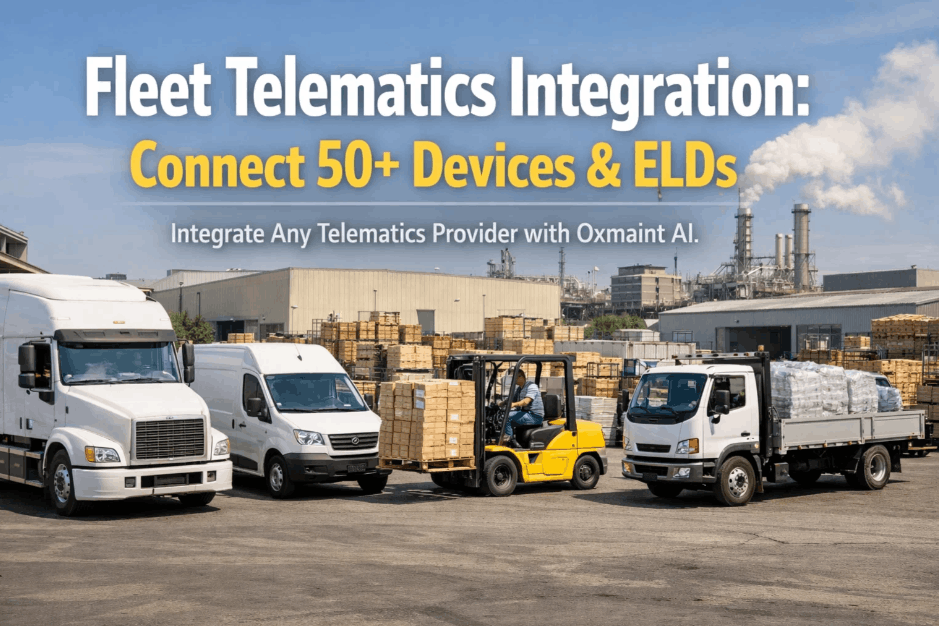
Fleet Telematics Integration: Connect 50+ Devices and ELDs in One Platform
Integrate any telematics provider with OxMaint AI — OBD-II devices, ELD systems, and GPS trackers unified in a single dashboard with cross-platform analytics, predictive maintenance triggers, and real-time fleet health monitoring.
50+Telematics providers, OBD-II devices, and ELD systems supported
4 minAverage API connection time — device live in OxMaint dashboard
−62%Maintenance cost reduction when telematics feeds CMMS directly
94%Fault code detection accuracy — OBD to CMMS work order in <4 hours
Supported Providers — Connect What You Already Have
OxMaint integrates with the telematics infrastructure already deployed in your fleet — no rip-and-replace, no proprietary hardware requirement. Whether you run a single provider across the entire fleet or a mix of platforms inherited through fleet acquisitions, OxMaint's API layer reads all streams simultaneously. The provider tiles below show the major integration categories — each connecting automatically via REST API or J1939/OBD-II direct protocol. Every connection takes under 4 minutes to configure — credentials in, dashboard live.
GPS Trackers
Samsara Fleet
Geotab GO
Verizon Connect
Fleet Complete
Teletrac Navman
+12 more
OBD-II Devices
Delphi DS-series
Bosch OBD Dongle
Autel MaxiLink
Zubie Key
Mojio Connect
+16 more
ELD Systems
KeepTruckin ELD
Omnitracs XRS
PeopleNet
Rand McNally DC
Lytx DriveCam
+10 more
ERP / SAP
SAP S/4HANA
SAP ECC
Oracle Fleet Cloud
Microsoft D365
Workday HCM
+8 more
How Data Flows — From Device to Actionable Insight
Telematics integration without a structured data architecture produces more noise, not more insight — a dashboard with 47 data points from three platforms that no one knows how to act on. OxMaint's four-layer integration architecture transforms raw device signals into maintenance work orders, predictive alerts, and board-level performance reports — automatically, without manual data assembly. The data flow from device fault to technician work order takes under 4 hours in a correctly configured OxMaint integration.
Layer 4
Insights & Action
Board dashboards · PM work orders · Cost reports · Predictive alerts — all automated
KPI ReportsWork OrdersSAP SyncDriver Alerts
data flows down
Layer 3
AI Analytics Engine
AI Digital Twin per vehicle · Predictive failure scoring · Anomaly detection · OBD fault triage
Digital TwinFault ScoringAnomaly FlagPM Prediction
REST API · J1939 CAN bus · OBD-II · ELD FMCSA feed · GPS NMEA · PLC sensors
REST APIJ1939OBD-IIELD FeedGPSPLC
Integration Readiness Scoring — How Connected Is Your Fleet Right Now?
Telematics integration maturity in fleet operations follows a clear progression — from disconnected platforms generating siloed reports, to a fully integrated stack where every device feeds a single AI-powered CMMS in real time. The scoring framework below lets fleet technology directors and operations managers assess their current integration maturity — identifying the specific gaps that are preventing predictive maintenance, automated work orders, and board-level fleet visibility.
All telematics, OBD, ELD, and ERP data flowing into OxMaint. AI Digital Twin active per vehicle. Work orders auto-generated from fault codes. SAP sync live.
Profile: Top 10% of connected fleets globally. Predictive maintenance operating 4–8 weeks ahead of failure events.
4
Primary Platform Connected · Manual ERP
Main telematics provider integrated. OBD fault codes triggering CMMS work orders. ERP not yet connected — cost data assembled manually from exports.
Action: Connect ERP integration. This is the step that makes fleet cost-per-mile visible to finance without manual reporting.
3
Telematics Active · CMMS Disconnected
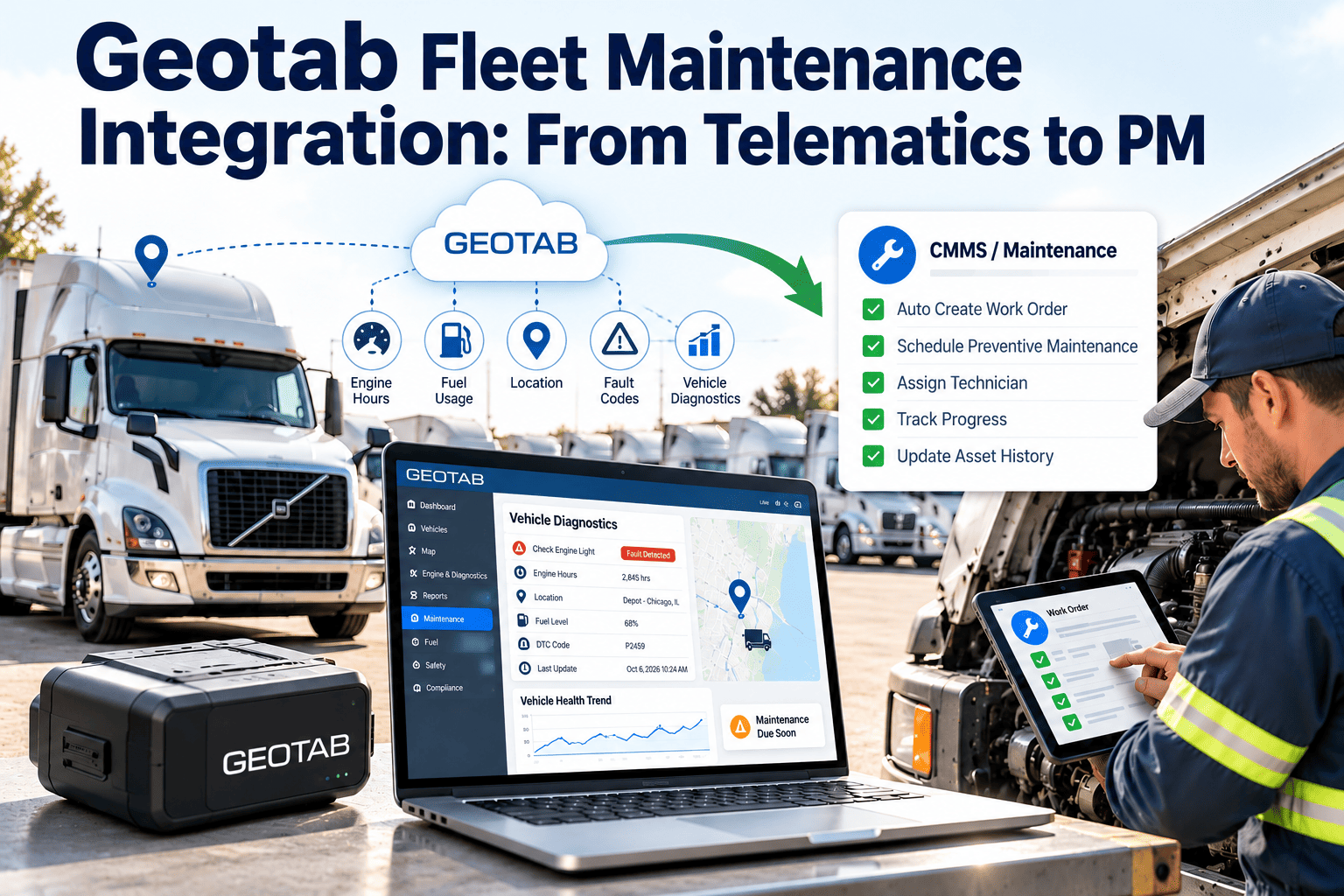
Telematics dashboard live but not connected to maintenance system. Fault codes reviewed manually. Work orders created by dispatcher, not triggered automatically.
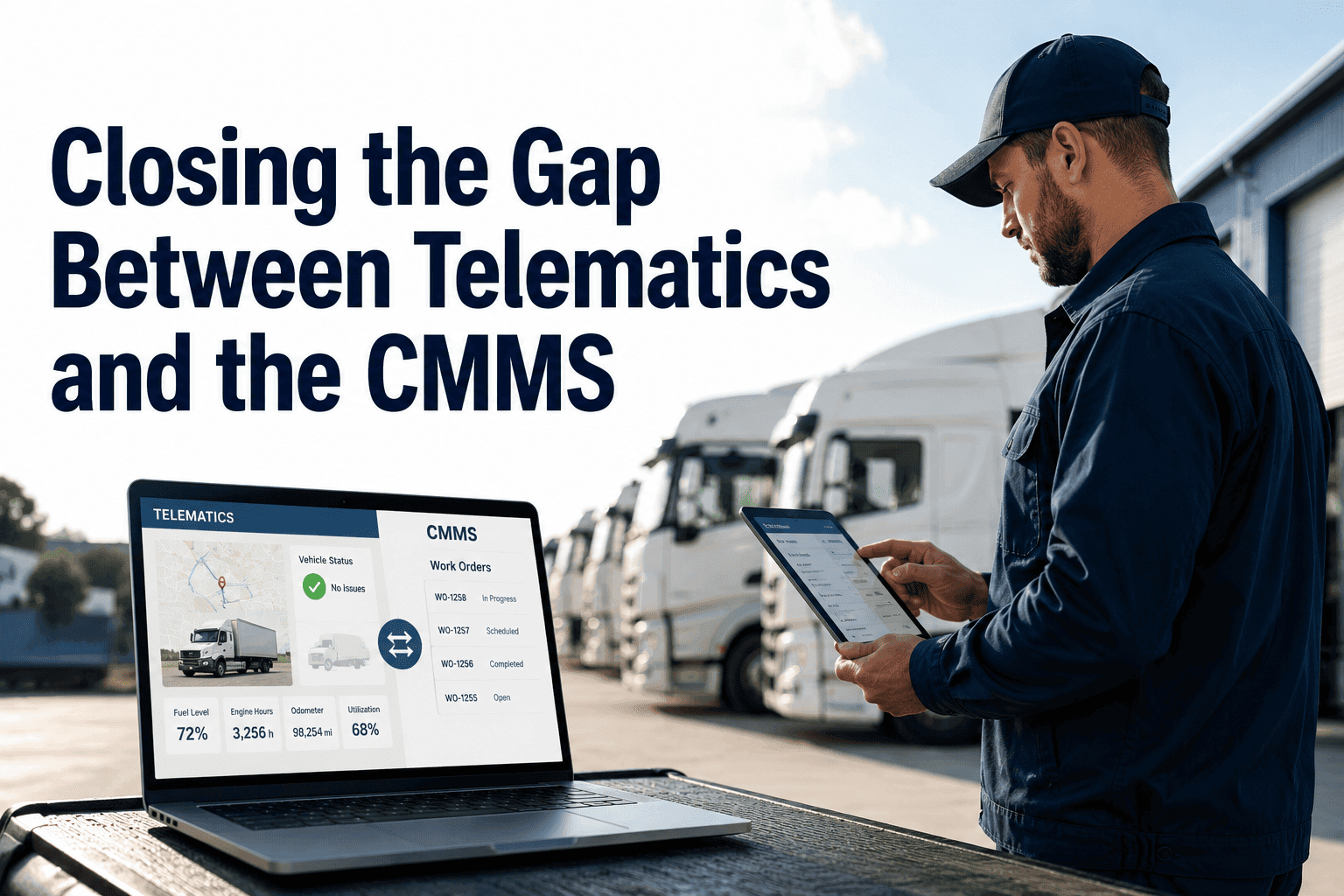
Gap: API integration between telematics and CMMS is the highest-ROI configuration step available — 4 minutes to connect.
2
Multiple Platforms · No Unified View
GPS, OBD, and ELD data in separate systems. No cross-platform analysis. Fleet reports assembled manually by combining CSV exports from each platform.
Risk: Critical fault codes visible in one platform but never reaching maintenance team in another. Breakdown risk is active.
1
No Integration · Manual Paper Tracking
Vehicle data not systematically captured. Maintenance scheduled by calendar or mileage estimate only. No real-time fault visibility. No predictive capability.
Risk: Operating at 40–60% higher maintenance cost per mile than fully integrated competitors. Immediate OBD deployment recommended.
Technology: AI Digital Twin, Camera Vision, SAP, and PLC Integration
OxMaint's telematics integration layer is the data foundation for the full AI fleet intelligence stack. AI Digital Twin models per vehicle are trained on the combined telematics stream — OBD fault history, GPS operating pattern, idle time, and load profile — learning each vehicle's individual degradation rate and predicting component failures 2–6 weeks before fault code activation. AI Camera Vision connects to the same vehicle profile — depot scans and in-cab coaching clips tagged to the vehicle's telematics ID, adding visual condition data that sensors cannot capture. SAP and ERP integrations close the financial loop — maintenance cost from OxMaint work orders syncs to the correct cost centre in SAP automatically, giving CFOs fleet cost visibility without manual data transfer. PLC sensor integration extends the platform beyond mobile assets to fixed depot infrastructure — fuel bowsers, vehicle lifts, and wash systems all feeding the same CMMS.
AI Digital Twin
Per-Vehicle Model
Learns each vehicle's degradation pattern
Trained on OBD + GPS + idle data. Predicts component failures 2–6 weeks ahead. Adjusts PM intervals to actual usage, not generic calendar.
AI Camera Vision
Visual Data Layer
Depot scans tagged to vehicle telematics ID
Physical condition data merged with OBD sensor stream. Fluid leaks, tyre wear, and body damage detected overnight — before next dispatch.
SAP / ERP
Financial Sync
Maintenance cost → SAP cost centre auto
Work order cost syncs to correct SAP company code and cost centre. CFO gets fleet cost-per-mile without any manual data transfer or CSV export.
OBD + PLC
Full Site Coverage
Vehicles + depot infrastructure on one CMMS
OBD covers mobile assets. PLC covers fixed depot equipment. One platform, one maintenance view, one report for leadership.
"
We had Samsara for tracking, KeepTruckin for HOS, and a separate spreadsheet for maintenance. Three systems no one could see across simultaneously. Connecting all three to OxMaint took one afternoon. The first week we got 14 automated work orders from OBD fault codes that had never triggered any action before. We caught a failing alternator before it left two drivers stranded on the same run.
Can I connect multiple telematics providers simultaneously?
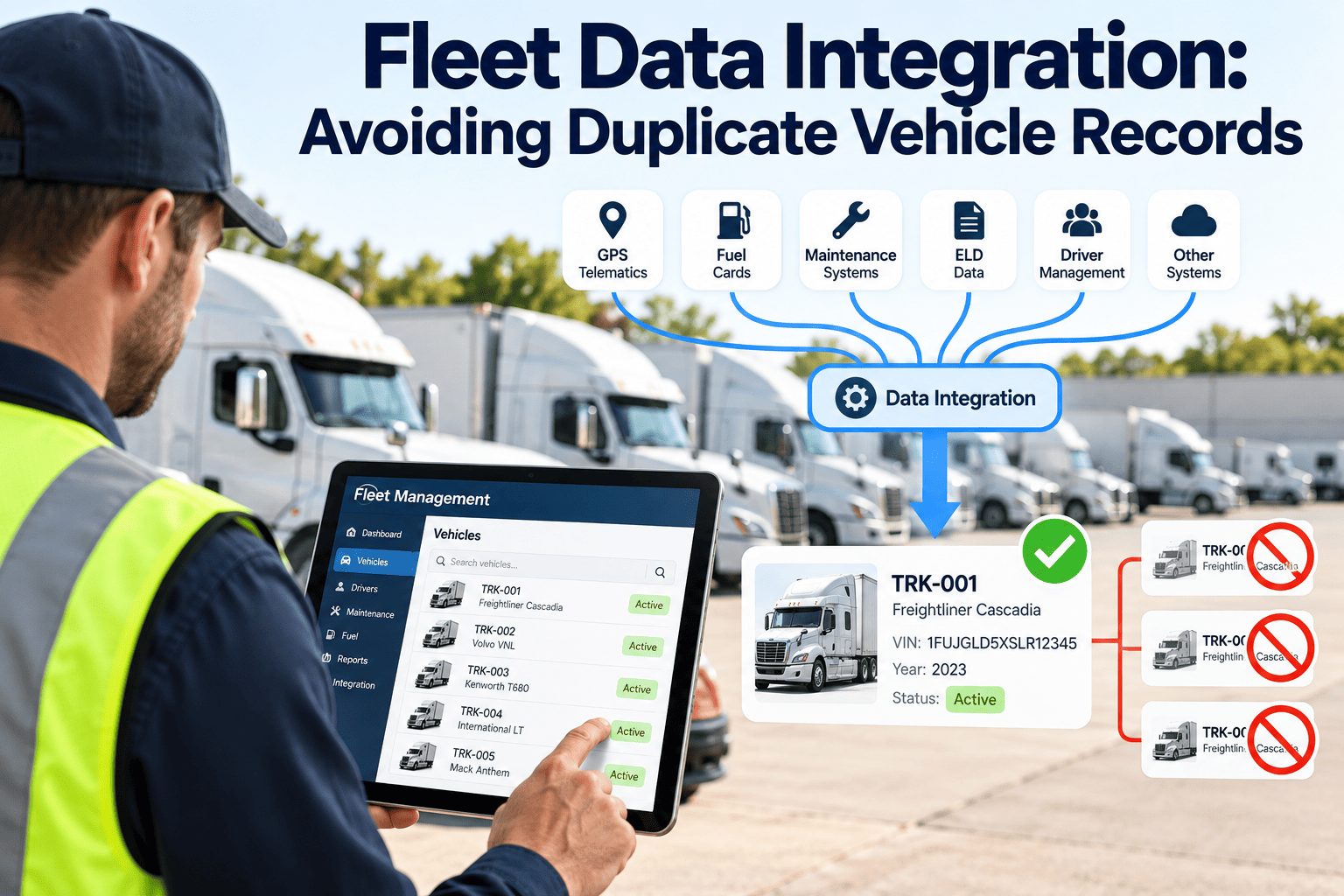
Yes — OxMaint supports multi-provider integration with unified vehicle profiles. GPS data from Provider A, OBD fault codes from Provider B, and ELD hours from Provider C all merge into a single vehicle record with no duplicate management required.
Does OxMaint support J1939 CAN bus integration for heavy commercial vehicles?
Yes — OxMaint supports J1939 CAN bus for Class 6–8 commercial vehicles directly. Engine hours, coolant temperature, fuel consumption, and transmission data all ingest natively alongside standard OBD-II and ELD feeds.
How does SAP integration work with OxMaint telematics data?
OxMaint CMMS work orders trigger SAP purchase orders for parts and sync maintenance cost to the correct SAP cost centre and company code. Telematics data stays in OxMaint — only structured financial transactions pass to SAP, keeping ERP clean and audit-ready.
Connect Your Telematics. See Your Whole Fleet in One Dashboard.
50+ providers supported. API connection in under 4 minutes. Free to start.