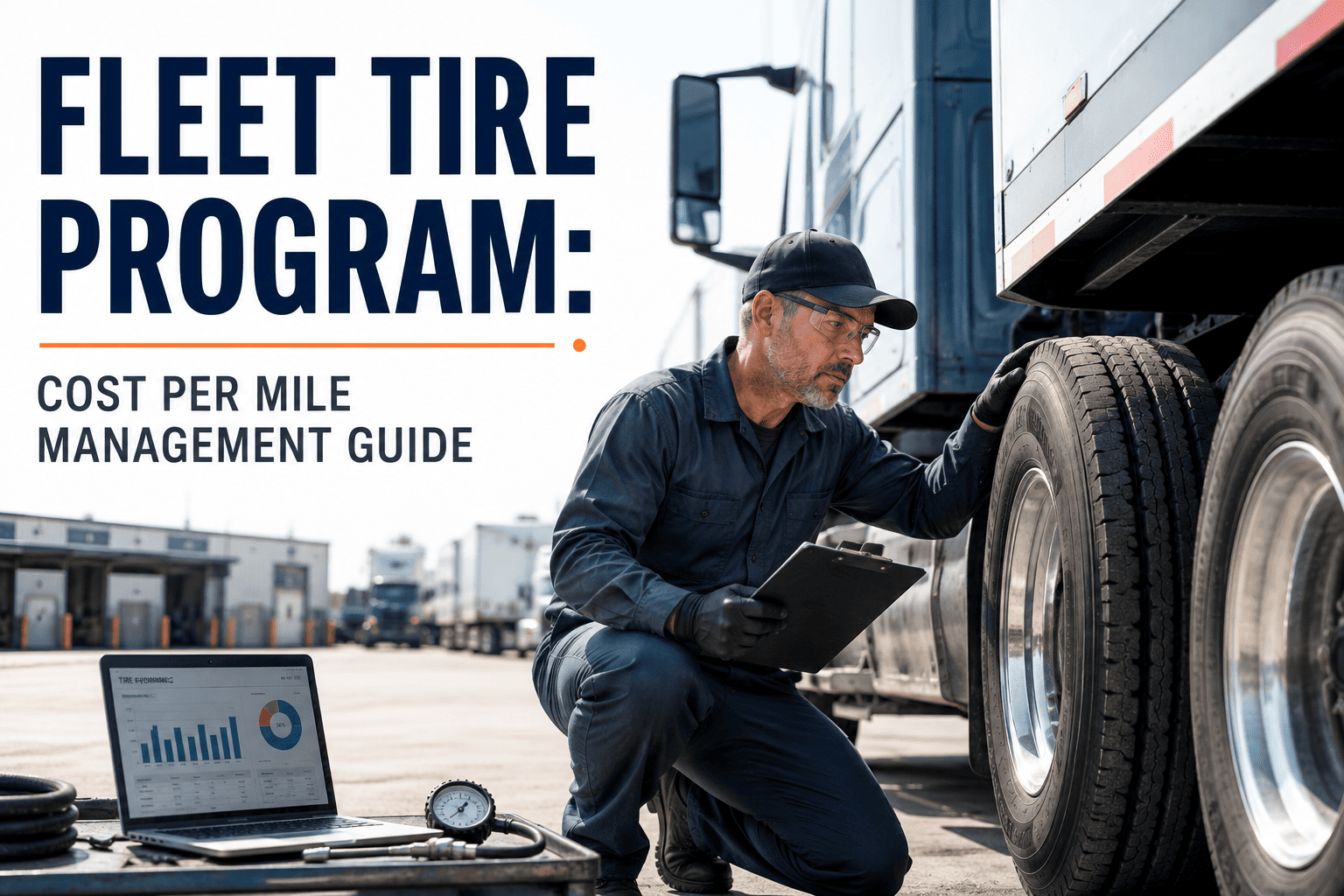
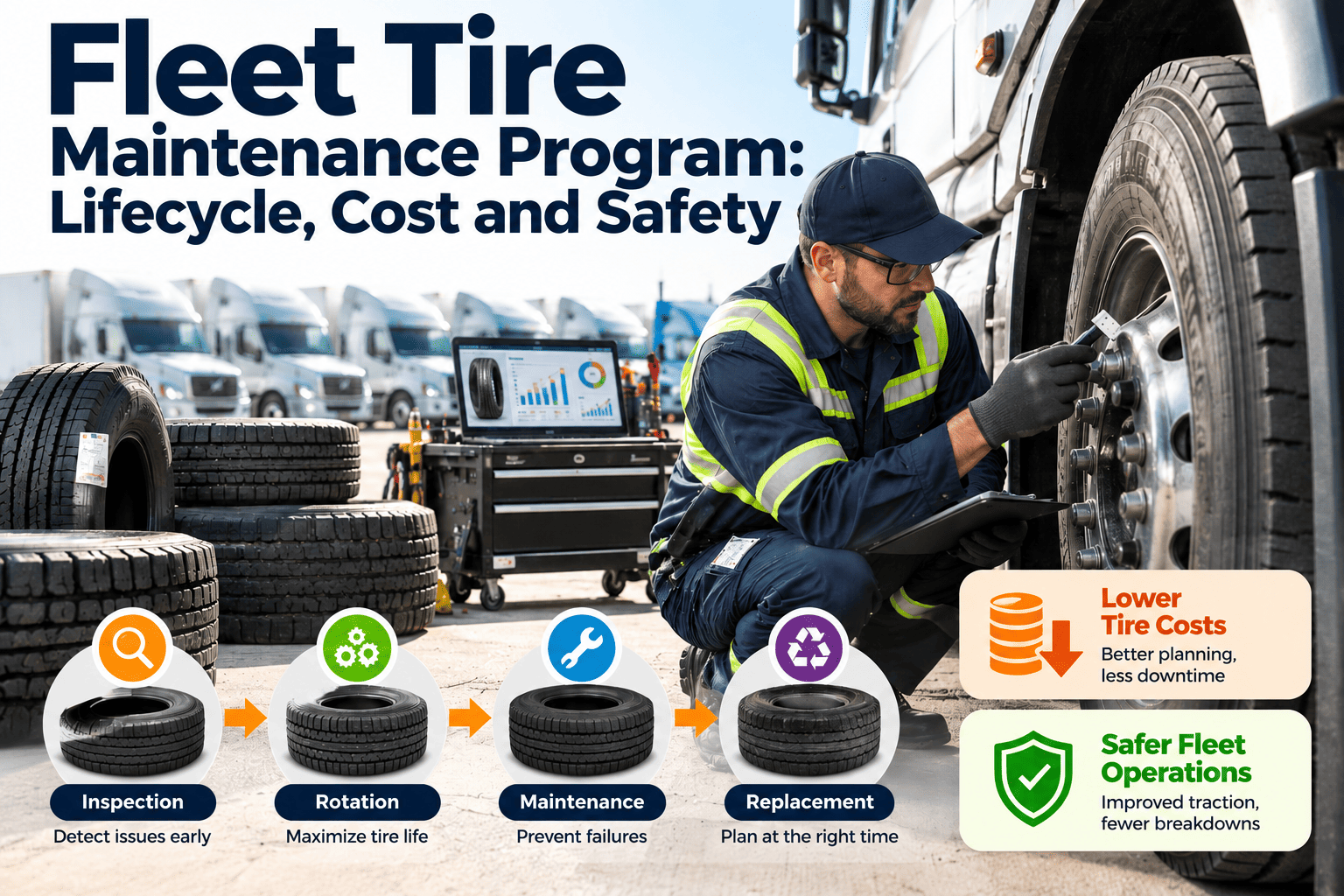
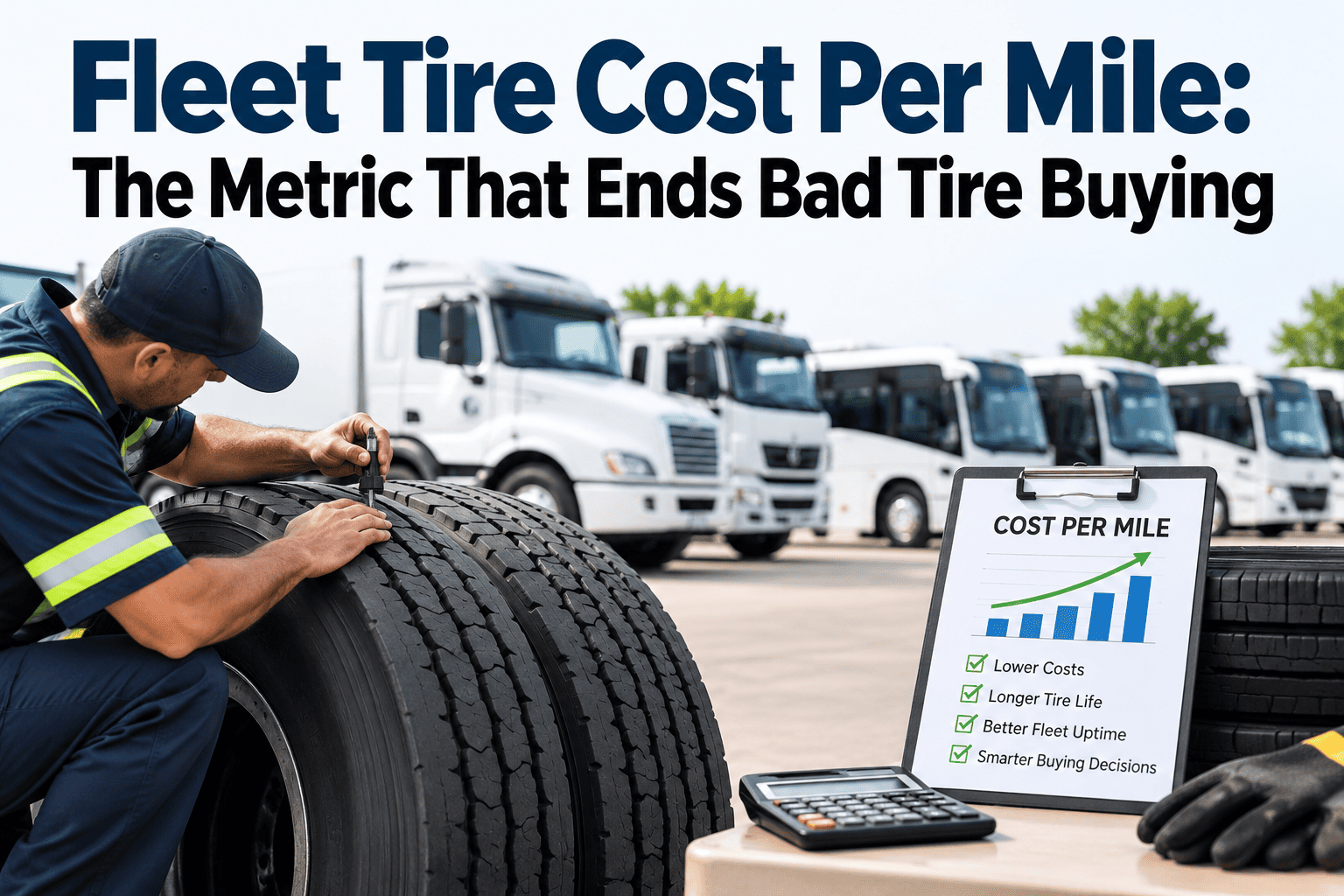
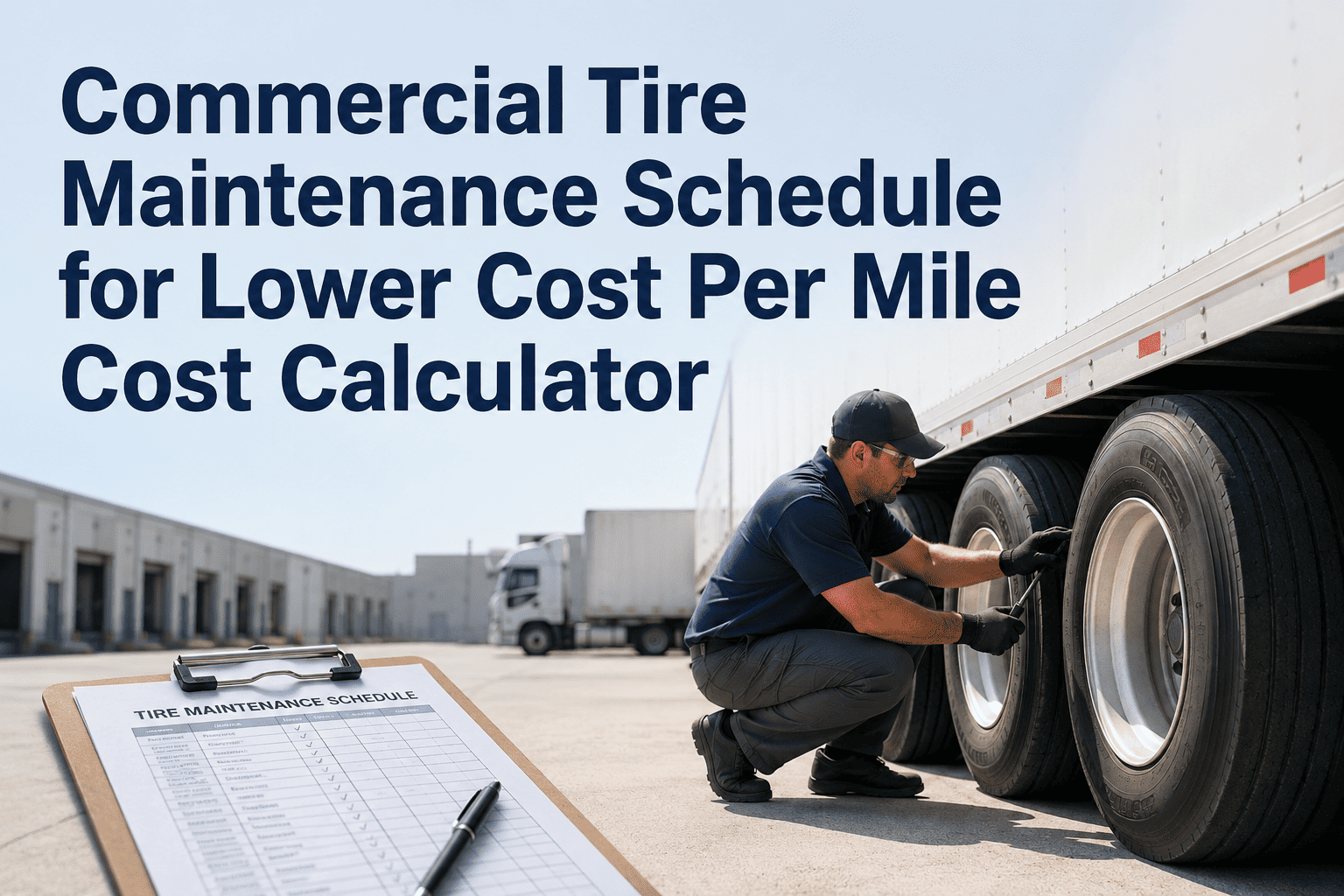
Tires are one of the largest recurring costs on a fleet's P&L, yet most shops still track them by gut feel instead of cost per mile. A single truck can burn through thousands of dollars a year in avoidable tire spend from underinflation, misalignment, skipped rotations, and casings pulled before they should be retreaded. Multiply that across a hundred trucks and the gap between a disciplined tire program and an undermanaged one can run into six figures annually. Cost per mile is measurable once every tire is tracked from install to removal, and every lever — inflation, alignment, retreading, technician accountability — becomes something a maintenance team can actually manage. Sign in to OxMaint to start tracking tire cost per mile fleet-wide, or book a demo to see the tire program module in action.
Tire Cost Per Mile · Fleet Maintenance · OxMaint CMMS
Stop Guessing What Your Tires Cost. Start Managing Cost Per Mile.
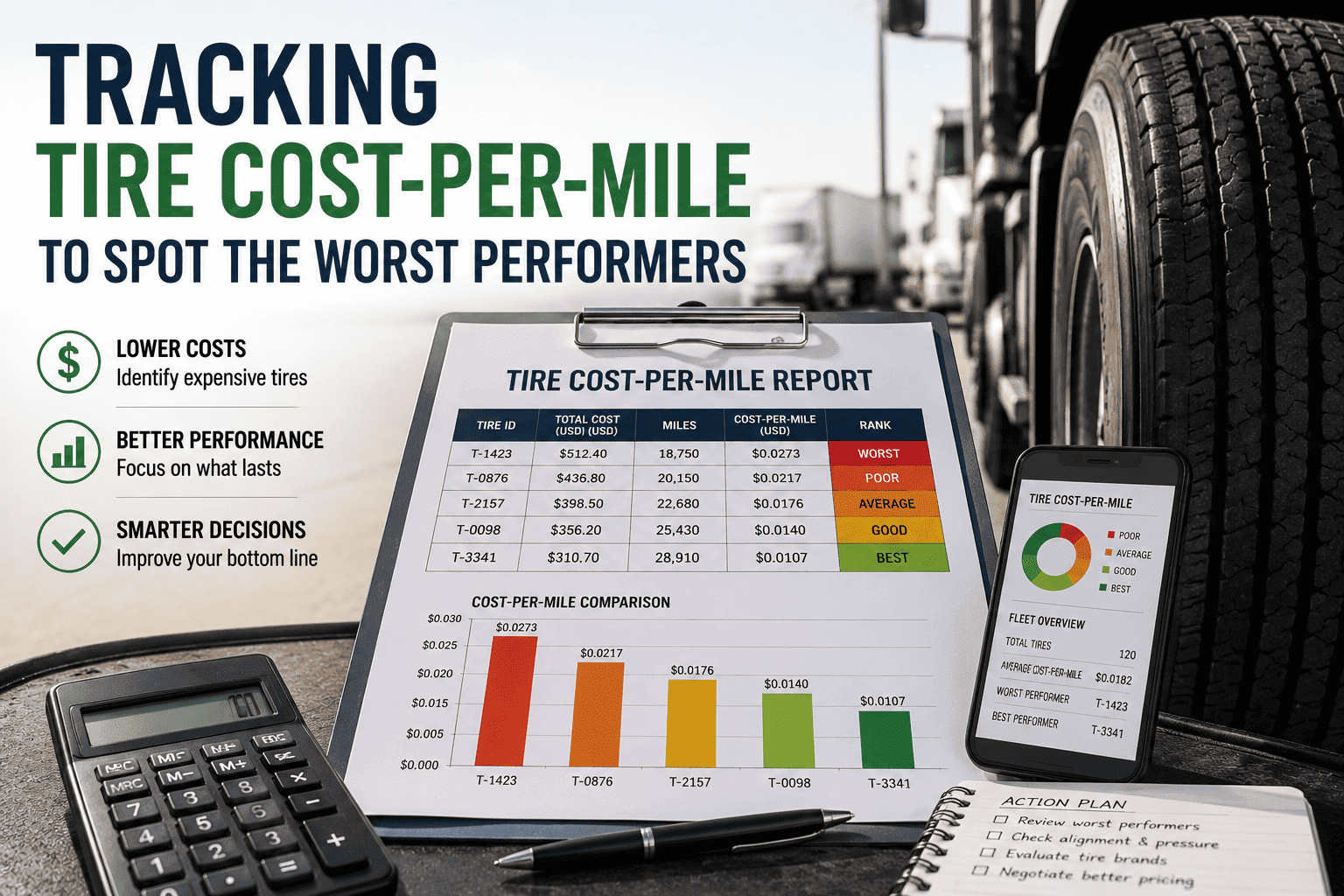
OxMaint tracks every tire from install to removal — pressure checks, tread depth, rotation history, retread cycles, and casing value — so fleet parts and maintenance managers can see cost per mile by tire, by axle, by vehicle, and by yard.
4–5¢
industry-average tire cost per mile for long-haul fleets running disciplined inspection cycles
3¢
tire cost per mile achievable by best-in-class fleets with strict inflation and retread discipline
7¢+
tire cost per mile on undermanaged fleets with no rotation schedule or retread program
$450K+
typical annual tire budget for a 100-truck fleet running 100,000 miles per truck
$100K
Is roughly what one cent per mile is worth to a 100-truck fleet running 100,000 miles per truck each year. Most fleets that calculate tire cost per mile from memory or spreadsheets are sitting two to three cents higher than they need to be — and never see it, because tire spend gets buried inside general parts and maintenance budgets instead of tracked against every mile driven.
The Four Pillars of Tire Cost Per Mile
01
Purchase & Casing Cost
The sticker price of a new tire or replacement casing — the number most fleets stop tracking at, and the smallest piece of the true cost picture.
02
Retread & Casing Value
What a casing is worth across two or three retread cycles versus what it's worth as scrap when it's pulled early from a preventable failure.
03
Service & Labor
Mounting, balancing, rotation, alignment checks, and dismounts — recurring labor cost that scales with how often a tire program requires intervention.
04
Downtime & Road Calls
The cost that never shows up on a tire invoice — a blowout on the highway, a missed delivery window, and a service call that could have been a scheduled swap.
Where Does Your Tire Program Fall on the Cost Per Mile Scale?
Best-in-class fleets run structured retread programs, log tire pressure at every PM, and rotate on mileage triggers instead of memory.
Average fleets replace tires reactively, track retreads loosely, and rarely tie tire spend back to individual vehicles.
Undermanaged fleets have no rotation schedule, no casing tracking, and discover underinflation only after a blowout.
Six Program Levers That Move Cost Per Mile
Inflation Discipline
Underinflated tires wear unevenly, run hotter, and drag down fuel economy — logging pressure at every PM catches drift before it becomes a replacement.
Alignment Checks
A steer axle out of specification scrubs tread sideways with every mile driven — a scheduled alignment check protects tires that would otherwise wear out early.
Rotation Scheduling
Rotating on a mileage trigger instead of a technician's memory keeps wear even across positions and extends the miles every tire delivers before removal.
Retread Program Management
Tracking casing history and retread eligibility turns a tire into two or three tires' worth of mileage instead of one — the single biggest lever on cost per mile.
Technician Accountability
Tread depth and pressure readings tied to a technician ID and timestamp turn tire checks from a box-ticking exercise into a record you can audit.
TPMS & Sensor Integration
Real-time pressure and temperature sensors flag a slow leak days before it becomes a roadside failure, feeding directly into the same maintenance record.
How OxMaint Tracks Tire Cost Per Mile — Install to Removal
Step 1 · Inspect
Log at Every PM
Tread depth, pressure, and position are logged against the vehicle and tire ID at every scheduled inspection — no spreadsheet, no memory.
→
Step 2 · Track
Position & History
Every tire's install date, axle position, rotation history, and retread count is tracked as a single record across its full life on the fleet.
→
Step 3 · Analyze
Cost Per Mile
OxMaint calculates cost per mile per tire, per vehicle, and fleet-wide — surfacing which units, positions, or yards are dragging the average up.
→
Step 4 · Act
Automated Work Orders
Rotation, alignment, and retread-eligible tires trigger work orders automatically — before a tire becomes a road call.
OxMaint CMMS · Tire Cost Per Mile Module
See Your Fleet's Real Tire Cost Per Mile — Not the Number on the Invoice.
OxMaint turns tire tracking from a spreadsheet chore into a live cost-per-mile dashboard your parts and maintenance teams actually use.
OxMaint Tire Program Module — Full Capability
Tire Cost-Per-Mile Dashboard
A live view of cost per mile by tire, vehicle, axle position, and yard — pulling purchase cost, retread cost, labor, and mileage into one calculation.
Tread Depth & Pressure Logging
Technicians log tread depth and pressure against every tire ID at each PM, on mobile, without a separate paper form or spreadsheet.
Retread Program Tracking
Every casing's retread count, eligibility, and remaining value is tracked so retreadable tires never get scrapped by mistake.
Position History & Casing Lifecycle
A full history of every position a tire has held, every rotation, and every retread — searchable by tire ID, vehicle, or work order.
Automated Rotation & Replacement Work Orders
Mileage-based triggers generate rotation and replacement work orders automatically, instead of relying on a technician to remember the schedule.
Vendor & Warranty Claim Tracking
Tire vendor, purchase order, and warranty terms are logged against every tire so early-failure claims are documented and easy to file.
Tire Programs by Fleet Type
Fleet Type · Long-Haul
Long-Haul Line-Haul Fleets
High mileage per truck makes retread economics the biggest lever — a well-run casing program can carry a steer or drive tire through two extra retread cycles.
Fleet Type · Regional / LTL
Regional & LTL Fleets
More stops and more urban driving mean faster tread wear on steer positions — rotation discipline matters more here than on line-haul routes.
Fleet Type · Vocational
Vocational & Severe-Service Fleets
Off-road exposure and heavy loads shorten tire life regardless of program quality, making early-failure and warranty claim tracking essential to cost control.
High
warranty claim volume
Spreadsheet Tire Tracking vs OxMaint Tire CPM Module
Spreadsheet Tracking
Data entryManual, after the fact
CPM accuracyEstimated from memory
Retread visibilityTracked separately or not at all
Replacement timingReactive, technician-dependent
ReportingManual export, out of date fast
OxMaint Tire Module
Data entryLogged at every PM, on mobile
CPM accuracyCalculated from real records
Retread visibilityFull casing lifecycle tracked
Replacement timingAutomated, mileage-triggered
ReportingLive dashboard, always current
What Neglect Actually Costs — By Category
25–40%
typical gap in total tire cost between a good tire program and a great one
$100K
value of a single cent-per-mile improvement on a 100-truck, 100K-mile fleet
2–3
extra retread cycles a tracked casing can deliver versus an untracked one
Before we tracked tire cost per mile in OxMaint, tires were just a line item that kept growing every quarter. Once every tire had an ID, a position, and a rotation history, we found we were scrapping casings that still had two retreads left in them. That alone paid for the platform.
— Maintenance Director, 140-truck regional carrier
A tire you can't trace back to a purchase date, a position, and a rotation history is a tire you can't manage.
OxMaint gives every tire on your fleet a record — from the day it's mounted to the day it's scrapped or retreaded.
Frequently Asked Questions
How do I actually calculate fleet tire cost per mile?
Add purchase cost, retread cost, service labor, and downtime cost for a rolling 12-month period, then divide by total miles driven across those tires.
Sign in to OxMaint to run this automatically from logged inspection and work order data.
What's a realistic tire cost-per-mile target for my fleet?
Most long-haul fleets land between four and five cents per mile, with disciplined retread-heavy programs reaching closer to three cents. Anything above seven cents usually points to a missing rotation or retread program.
How much does a retread program actually save?
A tracked casing that survives two to three retread cycles can deliver several times the mileage of a single new tire at a fraction of the incremental cost, provided casing damage is caught early.
Can OxMaint track tires alongside my existing PM schedules?
Yes — tire tread depth, pressure, and rotation checks are logged as part of the same PM work order, so technicians aren't filling out a separate form.
Book a demo to see it on your PM checklist.
How does OxMaint help with tire warranty claims?
Every tire record includes vendor, purchase order, and warranty terms, so an early-failure claim can be filed with mileage, position, and inspection history already attached.
Turn Tires From a Guess Into a Managed Cost.
Every untracked tire is a few cents per mile you're leaving on the table. OxMaint gives every tire a record — and every fleet a real cost-per-mile number.