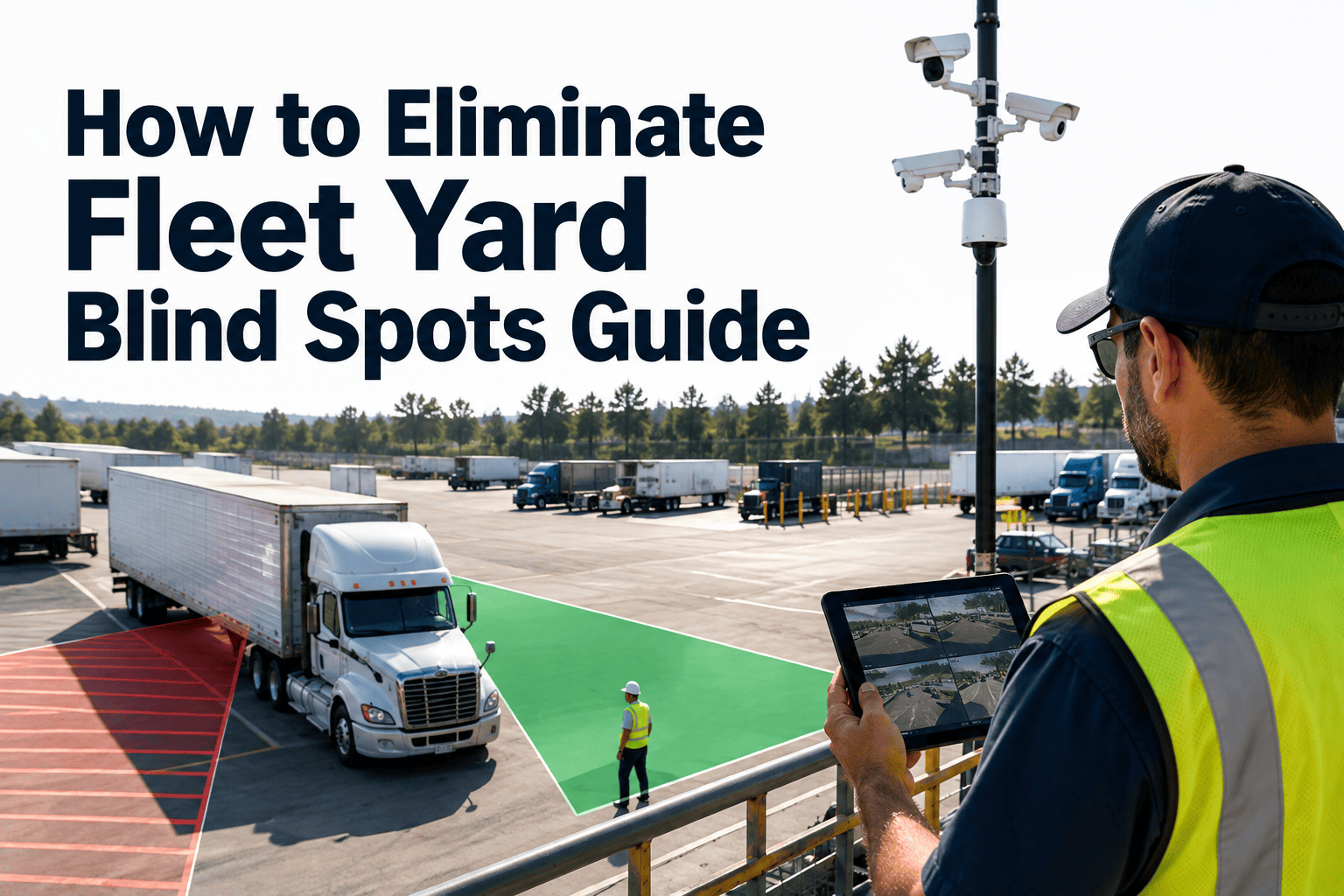
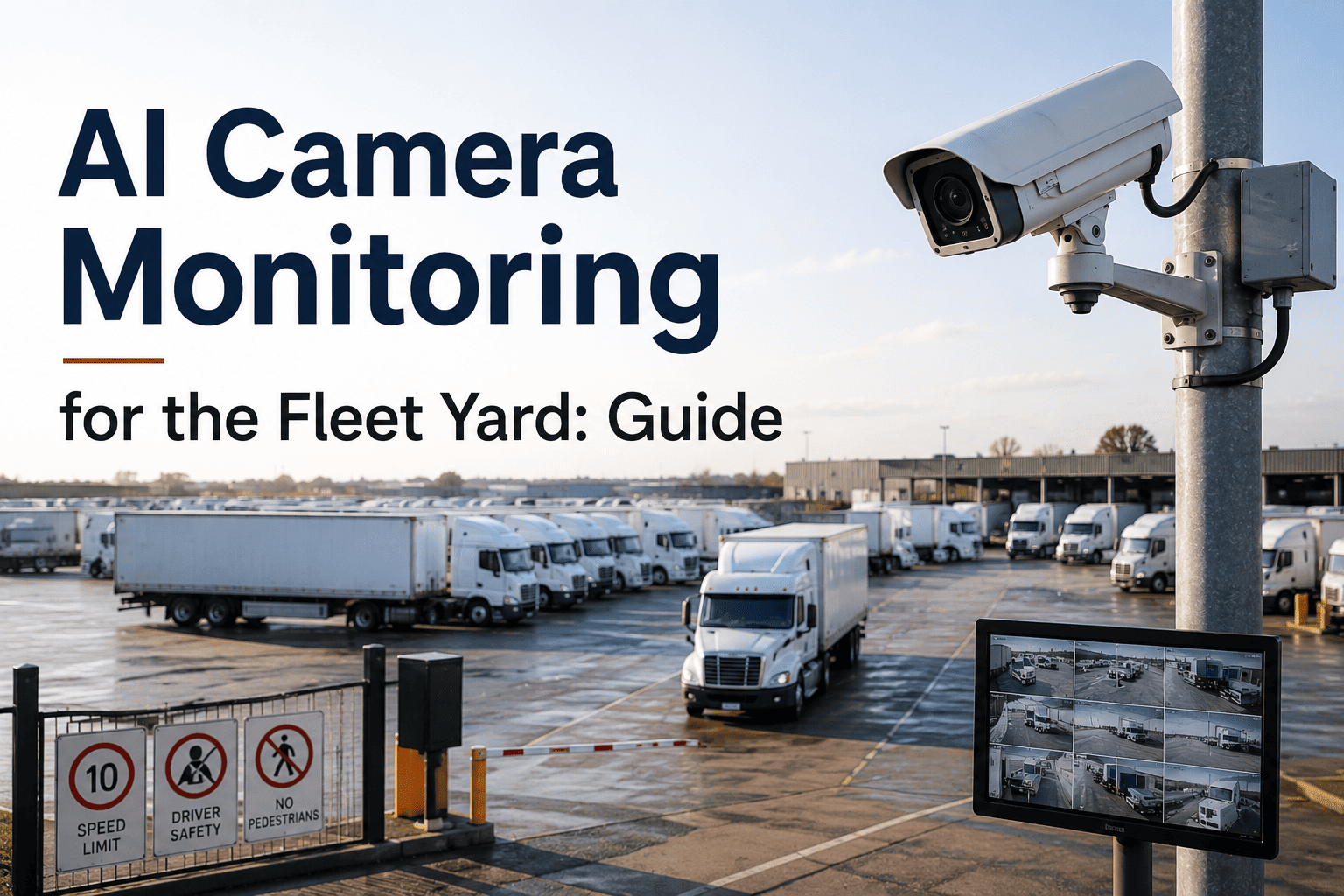
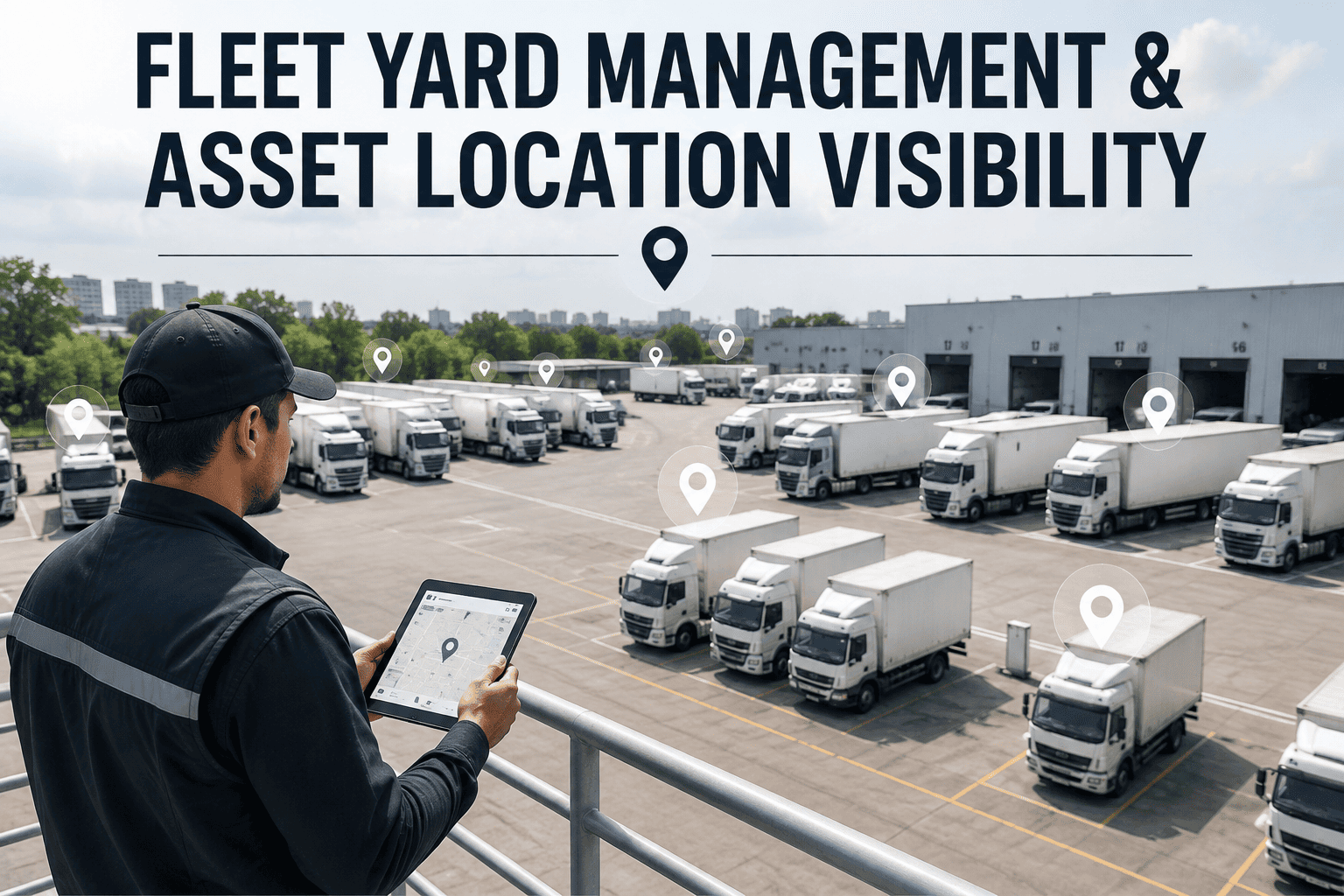
Every fleet yard has a few feet of ground no camera ever reaches — the far end of a trailer row, the space behind a stacked container, the minute between one guard's round and the next. That's exactly where damage goes unrecorded and where a trailer quietly disappears overnight. Industry theft data shows a large share of stolen trailers are taken directly out of distribution yards during shift changes or after hours, and the losses tied to those gaps have been climbing fast. Closing a blind spot isn't really about buying another camera — it's about mapping every unwatched zone and tying that coverage to an inspection and maintenance workflow that runs around the clock. See how it maps to your own yard layout by choosing to book a demo with our team.
Yard Operations · Blind Spot Elimination
Your Yard Isn't As Watched As You Think — Here's How to Fix That
Blind spots don't announce themselves. They sit quietly between your last fixed camera and your fence line, between one inspection and the next, until a trailer goes missing or a claim lands with no evidence behind it. This guide walks through where yard blind spots actually form, why they're getting more expensive, and the coverage-plus-workflow approach that closes them for good.
60%
year-over-year rise in reported cargo theft losses, driven largely by unmonitored yard activity
40%+
of stolen trailers are taken straight out of distribution and warehouse yards, not the open road
$270K+
average reported loss per yard theft incident once cargo and equipment value are combined
1,500%
growth in strategic theft by deception since 2022, exploiting weak yard identity checks
45 sec
is roughly how long an unwatched dwell window at a gate or corner needs to be for an experienced crew to act — most yard losses trace back to a gap that small, repeated night after night until someone tests it.
The Six Places Blind Spots Actually Form in a Working Yard
Perimeter Fence Runs
Fence lines that extend well past the last fixed camera give crews a quiet approach that never crosses a lens, especially along the back or side boundary.
Staged Trailer Rows
Rows of loaded trailers parked overnight are the highest-value target in the yard, and the middle of a long row is rarely covered from more than one angle.
Gate & Checkpoint Handoffs
Paper logs and verbal check-ins leave no lasting record of who entered, when, and with what — the exact gap that identity-based theft is built to exploit.
Shift-Change Windows
Coverage naturally thins for a few minutes during handovers, and that predictable dip is precisely when organized crews time their move.
Unlit Corners & Dead Zones
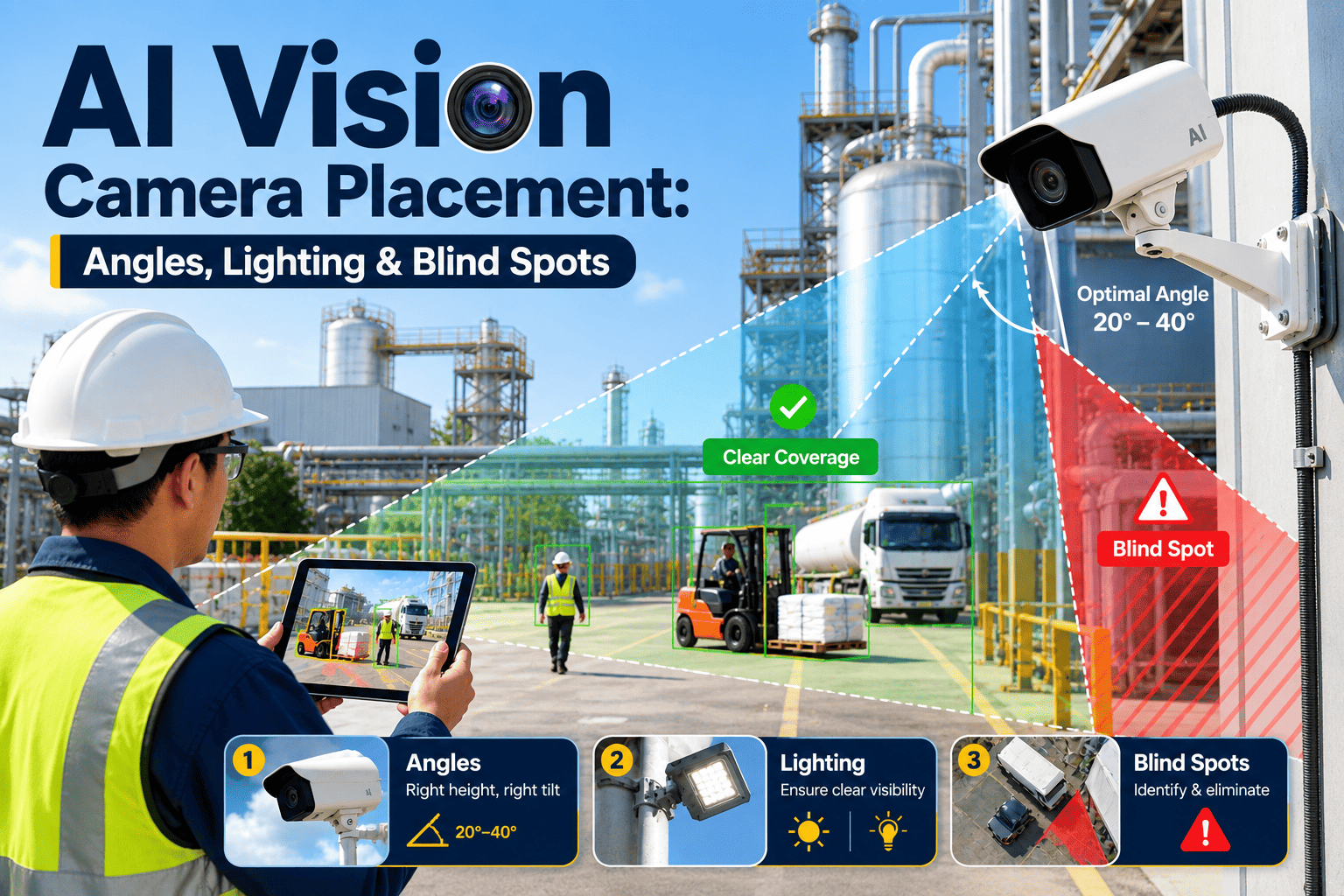
Older yards were lit for foot traffic, not for camera contrast — the darkest corner of the lot is usually the one furthest from any working sensor.
Between-Inspection Gaps
A trailer inspected on arrival and not touched again until departure can sit unverified for days, long enough for damage or tampering to go unnoticed.
Why These Gaps Keep Opening Up
Cameras Were Added Piecemeal
Most yards grew their camera coverage reactively, one incident at a time, rather than from a single coverage map — so overlap exists in some spots and nothing exists in others.
Security and Maintenance Don't Talk
Camera footage sits in one system while inspection and work order records sit in another, so nobody can connect a damage finding to the exact handling event that caused it.
Inspections Happen Once, Not Continuously
A single check-in inspection tells you the condition at one moment — it says nothing about what happened to that asset for the rest of its time on the lot.
Yard Layouts Change Faster Than Coverage Plans
New rows, new staging patterns, and seasonal volume shifts move where trailers actually sit — coverage maps drawn once and never revisited fall out of date quietly.
A Blind Spot You Can't See Is a Claim You Can't Defend
Mapping your yard's actual coverage gaps takes less time than most teams expect — and it's the single highest-leverage step before adding another camera.
How OxMaint Closes the Gap — Coverage to Closed Work Order
Step 1
Map the Yard
Every camera, gate, dock door, and dead zone is plotted against actual trailer staging patterns to reveal where real coverage gaps sit today.
then
Step 2
Close the Gaps
Fixed and mobile coverage is added at the exact points identified, tied to asset IDs rather than general lot-wide surveillance.
then
Step 3
Route Into Workflow
Every finding creates a work order automatically inside OxMaint, so a flagged trailer never waits on someone to notice it manually.
What a Blind-Spot-Free Yard Program Includes
Coverage Gap Assessment
A structured walk of every fence run, row, gate, and dark corner, scored against actual overnight staging patterns rather than a generic checklist.
Continuous Inspection Cycles
Trailers get checked on a recurring schedule while they sit, not just at arrival and departure, so condition changes get caught while they're still small.
Damage-to-Work-Order Linking
A flagged condition finding creates a maintenance or claims work order in the same system automatically, closing the gap between spotting an issue and acting on it.
Asset-Level Identity Tracking
Every trailer and container carries a scannable identity record, so gate and checkpoint handoffs are logged instead of relying on a paper sheet.
Shift-Change Coverage Rules
Coverage assignments are built to hold through handover windows specifically, closing the predictable dip that most incidents time themselves around.
Unified Evidence Trail
Inspection photos, timestamps, and work orders live in one searchable OxMaint record per asset, ready the moment a claim or dispute comes in.
Unmonitored Yard vs. OxMaint-Covered Yard
6
recurring blind spot categories most yards carry before a coverage assessment is run
Days
that a damage finding can go unnoticed without recurring inspection cycles in place
1
single record per asset once coverage, inspections, and work orders sit in one workflow
Frequently Asked Questions
What actually counts as a fleet yard blind spot?
Any point where an asset sits or moves without a camera, log entry, or inspection covering it — a fence run past the last sensor, a mid-row trailer, or the gap between one check-in and the next all qualify.
Do we need new cameras to fix this, or can we work with what we have?
Most yards close the majority of their gaps by remapping existing coverage against real staging patterns first. New hardware, if needed, gets added only at the points a proper assessment identifies — you can
book a demo to see this mapped against your own layout.
How does OxMaint connect a damage finding to a maintenance action?
Every flagged condition finding writes directly into an OxMaint work order tied to the asset record, so the same platform that caught the issue also tracks it through to resolution without a manual handoff.
Can this run alongside our existing TMS or WMS?
Yes — OxMaint is built to sit alongside transportation and warehouse management systems, syncing asset and work order data rather than replacing tools your team already relies on.
How long does a first yard coverage assessment take?
A typical single-site assessment runs a few days from walkthrough to a documented gap map. You can
sign in to OxMaint to see the format the assessment report follows.
Stop Guessing Where Your Yard Is Exposed
A mapped, continuously inspected yard turns blind spots into a closed loop — coverage, inspection, and work order, all in one place.