Managing Fleet Security: Protecting Your Vehicles & Drivers

By Kimi Norris on March 9, 2026

managing-fleet-security-protecting-vehicles-drivers

A regional logistics company managing 280 delivery trucks was spending more time reacting to breakdowns than running routes. Their maintenance coordinator was fielding 15–22 emergency calls per week. Three of their vehicles failed DOT roadside inspections in a single quarter — each inspection failure triggering $4,200–$16,000 in fines, out-of-service penalties, and rushed emergency repairs. Their annual maintenance spend had climbed 34% over two years while fleet utilization had dropped from 87% to 71%. The problem wasn't their mechanics. It wasn't their trucks. It was their system — or more accurately, the absence of one. Paper DVIRs, spreadsheet PM schedules, disconnected GPS, and a whiteboard work order tracker couldn't scale past 40 vehicles without collapsing under its own weight. After implementing OxMaint's cloud-native fleet CMMS, the same fleet reduced vehicle downtime by 45%, improved utilization from 71% to 94%, achieved a 100% clean DOT compliance record, and saved $580,000 in its first year. This page explains exactly how modern fleet management software makes those results structurally inevitable — not exceptional. Book a demo to see the platform in action for your fleet.

Fleet Operations  ·  CMMS Guide  ·  2026

Fleet Maintenance Management Software: Cut Downtime by 45% and Take Full Control of Your Fleet

In 2026 the fleet management software market crossed $30 billion. The fleets driving that growth aren't buying software as an expense — they're investing in a structural competitive advantage. OxMaint is the cloud-native CMMS built specifically for commercial fleet operations: maintenance, inspections, compliance, analytics, and driver communication unified in a single platform.

The Core Problem

Reactive Maintenance Is Not a Strategy — It's a Cost Spiral

Most fleets don't choose reactive maintenance. They slide into it. A PM schedule that started on a spreadsheet gets missed for one cycle, then two. Defect reports go in a paper DVIR folder that nobody checks until an inspection. One breakdown leads to a rental, a missed delivery, an unhappy customer, and a rushed repair that costs 11× the planned alternative. Here's how the spiral compounds.

01
Missed Preventive Maintenance
Manual PM schedules — mileage tracked on spreadsheets, time intervals on calendars — miss triggers when vehicles operate irregularly. One missed oil change at 3,000 miles leads to accelerated engine wear. One skipped brake inspection leads to a pad-to-rotor contact that turns a $180 brake job into a $1,400 rotor and caliper replacement.
Incremental cost: $800–$2,400 per missed PM event

02
Undetected Defects Become Failures
Paper DVIRs have a 23% non-actioning rate — defects reported by drivers that never become maintenance work orders because the paper form got lost, misread, or deprioritized. Each unactioned defect is a vehicle operating with a known problem accumulating mechanical stress until failure.
Incremental cost: $2,200–$5,800 per unactioned defect

03
Roadside Breakdown
The vehicle fails in service. Emergency towing: $450–$900. Roadside repair markup over shop rate: 60–80%. Driver detention time: $35–$55/hr for every hour waiting. Missed delivery: $200–$600 in direct customer costs plus contract penalty exposure. Vehicle rental to cover route: $180–$350/day.
Total breakdown event cost: $3,800–$8,200

04
Compliance Exposure
A vehicle that broke down because of an unresolved DVIR defect creates a paper trail regulators follow directly. FMCSA out-of-service orders: $16,000 per violation. DOT audit failures from poor documentation: fines plus mandatory compliance reviews. Insurance premium increases from incident history: 15–25% annual premium uplift.
Compliance exposure: $16,000–$45,000+ per incident
Reactive fleet (10 vehicles)
$68,000–$142,000/yr
in avoidable maintenance, breakdown, and compliance costs
vs
OxMaint-managed fleet (10 vehicles)
$31,200 avg savings/yr
$3,120 per vehicle × 10 — industry average from fleet management software adoption
Platform Overview

6 Pillars of Complete Fleet Management — All in One Platform

OxMaint is built on six integrated operational pillars. In disconnected systems, each of these is a separate product creating a separate data silo. In OxMaint, they share a unified data layer — every inspection feeds the maintenance record, every maintenance record feeds compliance, every compliance record feeds analytics. Here's what each pillar delivers.

01
Preventive Maintenance Scheduling
Schedule PM based on mileage, engine hours, calendar intervals, or a combination — updated automatically from GPS telematics data rather than manual odometer entry. OxMaint sends automated maintenance alerts before intervals are due, assigns work orders to available technicians, and tracks completion. PM compliance rates improve from the industry average of 67% to 94–98% within 60 days of deployment.
94–98% PM compliance rate
02
Digital Work Order Management
Create, assign, prioritize, and track work orders from a single digital interface — accessible to shop managers, technicians, and fleet managers on desktop or mobile. Work orders capture parts used (linked to inventory), labor hours, repair notes, and photo documentation. Completion timestamps create the service history record DOT and insurance auditors require. Median work-order-to-start time in OxMaint: under 8 minutes vs. the industry average of 6.7 days for paper-based operations.
8 min avg work order start time
03
Digital Vehicle Inspections (DVIR)
Replace paper DVIRs with digital pre-trip and post-trip inspection checklists completed on the OxMaint driver mobile app. Each inspection captures photos, digital signature, GPS-timestamped defect reports, and condition ratings per inspection point. Flagged defects automatically generate maintenance work orders — eliminating the 23% non-actioning rate endemic to paper-based reporting. Every inspection is stored in the vehicle's permanent compliance record.
Zero missed defect follow-throughs
04
DOT Compliance Automation
OxMaint's compliance layer covers FMCSA, DOT, and OSHA requirements with pre-configured inspection templates for trucks, trailers, buses, vans, and heavy equipment. Driver qualification files, vehicle inspection records, maintenance histories, and service documentation are stored and indexed for instant audit retrieval. Fleets using OxMaint consistently achieve 100% DOT compliance documentation rates — not because their operations are perfect, but because every action is automatically documented.
100% audit-ready documentation
05
Real-Time GPS and Telematics Integration
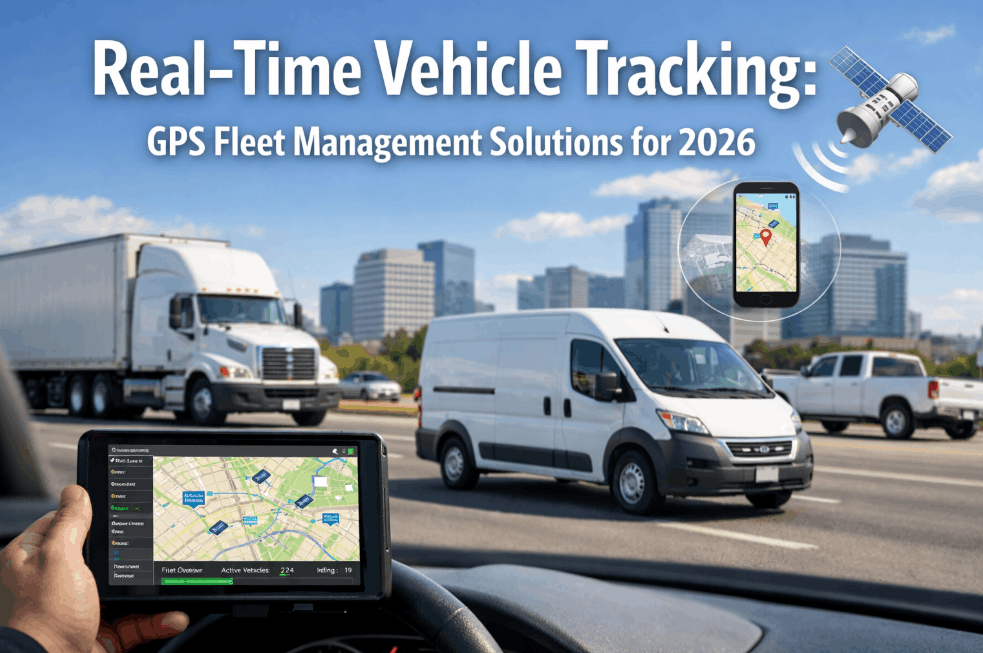
OxMaint integrates with 40+ GPS and telematics providers to pull real-time vehicle location, mileage, engine hours, fault codes, and fuel consumption data directly into the CMMS. Mileage-based PM triggers update automatically from telematics feeds — eliminating manual odometer entry errors that cause a 12% PM trigger failure rate in manual systems. Fault code alerts generate maintenance work orders automatically when diagnostic codes appear.
40+ telematics integrations
06
Fleet Analytics and Reporting
Live dashboards cover vehicle status, PM schedule adherence, maintenance cost per vehicle per mile, fuel consumption trends, technician utilization, and fleet availability. Custom analytics modules surface the fleet utilization and lifecycle cost data needed for vehicle replacement decisions — converting gut-feel assessments into data-supported capital allocation. Historical reporting with trend analysis enables proactive budget planning rather than reactive cost absorption.
Real-time cost-per-mile dashboard
Mobile-First Platform

Empower Drivers and Technicians With a Mobile App Built for Fleet Operations

Fleet management software that lives only on a desktop serves the office, not the fleet. OxMaint is built mobile-first — every core workflow is designed to be completed on a smartphone in the field, by a driver who has 90 seconds and dirty hands. The platform's offline capability ensures that connectivity gaps in remote areas don't break the data capture loop.

OxMaint
Today's Jobs
Job #4821 — Complete
Job #4822 — In Progress
Job #4823 — Assigned
Vehicle Inspection
Unit 114 — Pre-Trip Due
Start Inspection
Defect Alert
Brake pad — flagged Unit 107
Work order auto-generated
Digital Pre-Trip and Post-Trip Checklists
Customizable inspection checklists for every vehicle type — completed in the app with photo capture, condition ratings, and driver signature. Results stored instantly in the compliance record. No paper, no filing, no lost forms.
Instant Defect-to-Work Order Conversion
When a driver flags a defect during inspection, a maintenance work order is auto-generated and assigned in the OxMaint CMMS — in under 4 minutes, with zero manual handoff. The driver receives a push notification when the repair is cleared.
Vehicle History and Maintenance Logs On Demand
Drivers and technicians access a vehicle's complete service history, open work orders, and upcoming PM schedule directly from the mobile app — eliminating the "I didn't know this was due" excuse that leads to deferred maintenance.
Offline Sync Architecture
Inspections, work order updates, and defect reports submitted offline are queued and automatically synced with original timestamps when connectivity is restored — preserving the audit trail even in remote or low-signal environments.

Experience a Cloud-Native Fleet CMMS Built for Real Operations

OxMaint combines maintenance management, asset tracking, compliance automation, and fleet analytics in a single platform. Deploy in days. See results in weeks.

DOT Compliance

DOT Compliance Is Not Optional — and Manual Documentation Won't Protect You

FMCSA fines for out-of-service violations start at $16,000 per incident. A single DOT audit failure from missing maintenance documentation can trigger mandatory compliance reviews, elevated insurance premiums, and reputational damage in a market where carrier scorecards are public. OxMaint's compliance framework makes full documentation the automatic byproduct of normal fleet operations — not a separate administrative task.

1
Pre-Trip Digital DVIR
Driver completes digital pre-trip inspection on mobile app. Photos, condition ratings, and signature captured and GPS-timestamped. Stored automatically in compliance record.

2
Defect Detection and Auto Work Order
Any flagged defect auto-generates a work order, assigned to the next available technician. Defect severity determines priority routing — safety-critical defects trigger immediate out-of-service flags.

3
Maintenance Execution and Documentation
Technician completes repair, documents parts used and labor hours, adds photo confirmation. Completion timestamp and technician ID stored with the work order record linked to the inspection that triggered it.

4
Vehicle Cleared and Post-Trip Verified
Driver notified that defect is resolved and vehicle is cleared. Post-trip inspection closes the loop. Both inspection records — pre and post-trip — stored with work order in the vehicle's permanent compliance file.

5
One-Click Audit Export
DOT/FMCSA auditor requests records. Fleet manager exports complete inspection history, maintenance documentation, and driver qualification files in a single operation — in under 10 minutes, for any date range requested.
$16,000+
FMCSA out-of-service fine per violation. OxMaint-managed fleets consistently achieve zero safety violations and 100% clean DOT audit records — because every required document is generated automatically during normal operations, not assembled retrospectively before an audit.
Analytics Dashboard

Real-Time Fleet Intelligence — Stop Guessing, Start Managing With Data

Fleet managers in 2026 who make decisions from gut feel are operating at a structural disadvantage to peers using data-driven analytics. OxMaint's live analytics dashboard turns every vehicle interaction, maintenance event, and inspection into actionable intelligence — available in real time, from any device.

Cost Per Mile by Vehicle
The single most important fleet finance metric — and the one most fleets can't calculate on demand. OxMaint aggregates fuel spend, maintenance labor, parts costs, and depreciation per vehicle per mile in a live dashboard, updated daily from telematics and work order data. Identify the 20% of your fleet consuming 60% of your maintenance budget before they consume it — not after.
Unit 114

$0.38/mi
Unit 107

$0.61/mi
Unit 092

$0.89/mi
Unit 128

$0.42/mi
Fleet Utilization Rate
Track the percentage of vehicles that are generating revenue vs. sitting out-of-service for maintenance, waiting for parts, or idle. OxMaint's utilization tracking identifies the operational patterns — days of week, vehicle age, route type — that predict utilization drops before they become problems.
94%
Utilization
PM Schedule Adherence
Percentage of scheduled preventive maintenance tasks completed on time vs. deferred or missed. OxMaint's PM adherence dashboard identifies which vehicles, which technicians, and which maintenance categories have the highest deferral rates — enabling targeted management attention before deferred maintenance becomes breakdown.
Oil/Filter

97%
Brakes

94%
Tires

96%
Electrical

91%
Proven Results

Real Results From Fleets Using OxMaint

Numbers from OxMaint's actual fleet customer base — not marketing projections. These are the outcomes documented by fleet managers 60–180 days after full platform deployment.

45%
Reduction in Vehicle Downtime
A logistics company with 280 delivery trucks reduced vehicle downtime by 45% after implementing OxMaint's preventive maintenance scheduling and digital inspection workflows. Fleet availability improved from 71% to 94%.
$580K
Annual Cost Savings
The same 280-vehicle fleet saved $580,000 in its first year from reduced breakdown costs, lower emergency repair markups, improved fleet utilization, and eliminated compliance penalties.
38%
Higher Fleet Utilization
Fleet utilization — the percentage of vehicles generating revenue vs. sitting in the shop or waiting for maintenance — improved by 38% as PM adherence prevented the unplanned downtime events that had pulled vehicles from routes without notice.
100%
DOT Compliance Record
A transportation company with 340 vehicles achieved zero safety violations in 12 months and passed their DOT audit with a perfect compliance record after deploying OxMaint's automated documentation workflows.
"OxMaint's preventive maintenance scheduling reduced our truck downtime by 45% and eliminated unexpected breakdowns. The mobile app works perfectly for our drivers, and DOT compliance tracking helped us pass our FMCSA audit with flying colors."
Fleet Operations Manager — Logistics Company, 280 vehicles

Ready to Reduce Your Fleet Downtime by 45%?

Join 1,000+ fleet operations that have unified their maintenance, inspections, compliance, and analytics in OxMaint. Free to start. Full platform access from day one.

Frequently Asked Questions

Answers to the questions fleet managers, maintenance directors, and operations executives ask when evaluating fleet management software.

What makes a fleet CMMS different from general maintenance software?
General CMMS platforms are built for fixed assets — buildings, production equipment, facilities. Fleet CMMS is built around mobile assets that change location, accumulate mileage, cross regulatory jurisdictions, require driver-facing inspection tools, and operate under DOT/FMCSA compliance frameworks that have no equivalent in facility maintenance. Specifically, fleet CMMS must handle: mileage and engine-hour-based PM triggers (not just time intervals), digital DVIR workflows that connect driver inspection reports to maintenance work orders, telematics integration for real-time vehicle health data, DOT-compliant documentation storage, and driver mobile app access for field inspection completion. OxMaint is designed around these fleet-specific requirements from the ground up — not a general CMMS with a fleet add-on module. Sign up free to explore the full platform, or book a demo to see fleet-specific features in action.
How does OxMaint integrate with our existing GPS and telematics system?
OxMaint integrates with 40+ GPS and telematics providers through pre-built API connections — including Samsara, Geotab, Verizon Connect, KeepTruckin, Lytx, and most major platforms. Integration setup typically takes 1–3 days depending on your telematics provider. Once connected, OxMaint pulls real-time vehicle location, mileage, engine hours, fuel consumption data, and OBD fault codes into the CMMS automatically. This means PM triggers update from live telematics data rather than manual odometer entry — eliminating the 12% PM trigger error rate that manual entry creates. Fault codes from the OBD system can be configured to auto-generate maintenance work orders when they appear, catching developing mechanical issues before they become breakdowns. If your telematics provider isn't on the standard integration list, OxMaint's developer API supports custom connections. Book a demo to confirm compatibility with your specific telematics system.
What does the deployment process look like, and how long until we see results?
OxMaint deploys in three structured phases. Phase 1 (Days 1–7): Platform configuration — fleet structure, vehicle records, PM schedules, user accounts, telematics integration, and inspection templates. This work is completed collaboratively with OxMaint's onboarding team in 2–3 configuration sessions. Phase 2 (Days 7–21): Parallel operation and driver onboarding. The OxMaint platform runs alongside existing processes for 1–2 weeks. Drivers are onboarded through a 45-minute mobile app session. Most deployments see voluntary full adoption before the parallel period ends because the platform is materially simpler for drivers than paper-based alternatives. Phase 3 (Day 21 onward): Full live operation. Legacy processes are retired, OxMaint becomes the primary management platform. Most fleet managers report measurable PM compliance improvement within 30 days and visible maintenance cost reduction within 60–90 days. The 280-vehicle logistics company referenced on this page achieved their 45% downtime reduction result within 90 days of full deployment. Sign up free to begin your fleet configuration today.
How does OxMaint handle DOT compliance documentation for FMCSA audits?
OxMaint's compliance layer is designed so that the documentation FMCSA auditors require is automatically generated during normal fleet operations — not assembled retrospectively when an audit is scheduled. Every pre-trip and post-trip DVIR is stored with GPS timestamp, driver identity, vehicle unit, and condition data. Every maintenance work order is linked to the inspection that triggered it and stored with parts documentation, technician ID, and completion timestamp. Driver qualification files, certification records, and inspection history are indexed and searchable by date range, vehicle unit, or driver. When an FMCSA audit request arrives, fleet managers export the complete compliance record — covering whatever date range the auditor specifies — in a single operation that takes under 10 minutes. Fleets using OxMaint report that audit preparation, which previously required 3–5 days of records assembly, is now a same-day task. Book a demo to see the compliance documentation workflow.
What is the ROI of fleet management software, and how long is the payback period?
Industry data shows average annual savings of $3,120 per vehicle from fleet management software — combining fuel optimization (38%), maintenance reduction (31%), administrative efficiency (18%), and insurance and compliance savings (13%). For a 50-vehicle fleet, that's $156,000 in annual savings against an OxMaint investment that scales proportionally with fleet size. The payback calculation has four concrete components: Maintenance cost reduction — the difference between planned repair costs ($380 average) and unplanned breakdown costs ($4,200 average), multiplied by the number of breakdowns prevented annually. Administrative efficiency — dispatcher, coordinator, and manager time recovered when manual scheduling, paper filing, and phone-based communication are replaced with automated digital workflows. Compliance cost avoidance — the cost of a single FMCSA violation ($16,000+) vs. the annual platform cost. And fleet utilization improvement — each percentage point of utilization improvement on a $45,000/year revenue-generating vehicle is worth $450 in annual revenue capacity. Most fleets in the 20–100 vehicle range achieve full payback within 45–75 days of deployment. Sign up free to run the calculation with your fleet's actual numbers.
Does OxMaint work for mixed fleets with different vehicle types and maintenance requirements?
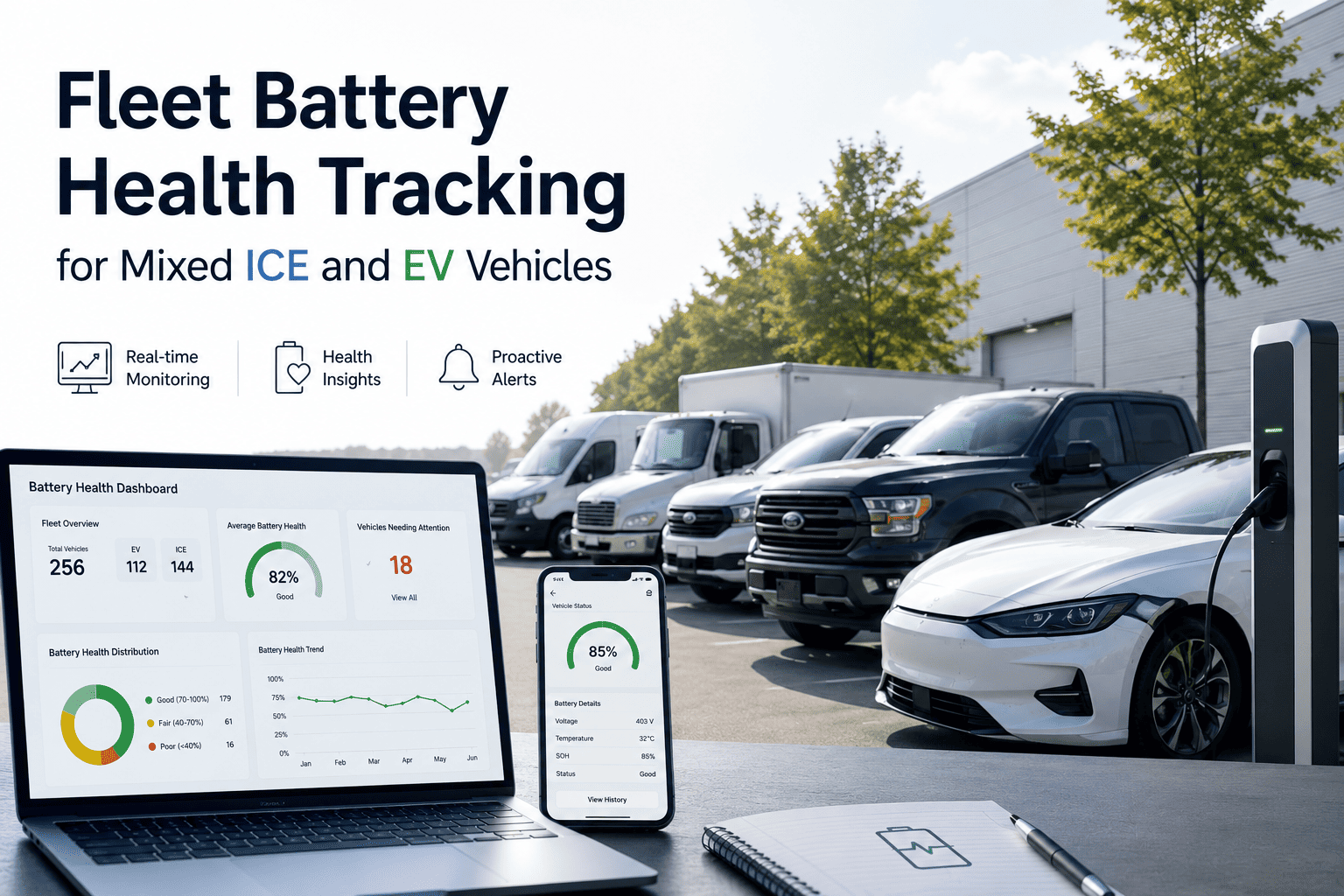
OxMaint is built for mixed-fleet environments. Vehicle profiles are fully customizable — each unit can have its own make, model, year, vehicle type (truck, van, trailer, heavy equipment, bus), PM schedule structure (mileage vs. engine hours vs. calendar vs. a combination), inspection checklist template, and compliance documentation requirements. A fleet running 40 delivery vans, 15 flatbed trucks, 8 trailers, and 12 pieces of heavy equipment manages all of them in a single OxMaint instance — with type-specific PM schedules and inspection checklists that don't interfere with each other. Fleet-wide reporting aggregates across all vehicle types while per-vehicle and per-type analytics allow comparison. Mixed fleets with EV units can manage electric vehicle-specific maintenance requirements (battery health, charging documentation, range monitoring) alongside ICE vehicle PM schedules in the same platform. Book a demo to see how your specific fleet composition would be configured in OxMaint.

Share This Story, Choose Your Platform!