Multi-stop route planning at scale is not a map problem — it is a combinatorics problem. A driver with 20 stops has over 2 trillion possible sequences. A driver with 30 stops has more sequences than there are atoms in the observable universe. No dispatcher can solve this manually. The result of manual multi-stop sequencing is predictable: drivers backtrack, high-priority stops are missed, time windows are violated, and total daily mileage is 18–28% higher than an optimised route would require. A pharmaceutical distributor in Chicago running 24 drivers with an average of 34 stops per driver was spending $162,000 annually in excess fuel from sub-optimal routing alone — before counting the overtime from missed time windows and the customer penalties from late deliveries. Sign in to OxMaint to activate AI multi-stop route optimisation for your fleet, or book a demo to see 100+ stop routes optimised live across your actual delivery zones.
Multi-Stop Route Optimisation · Fleet Route Planning · OxMaint AI
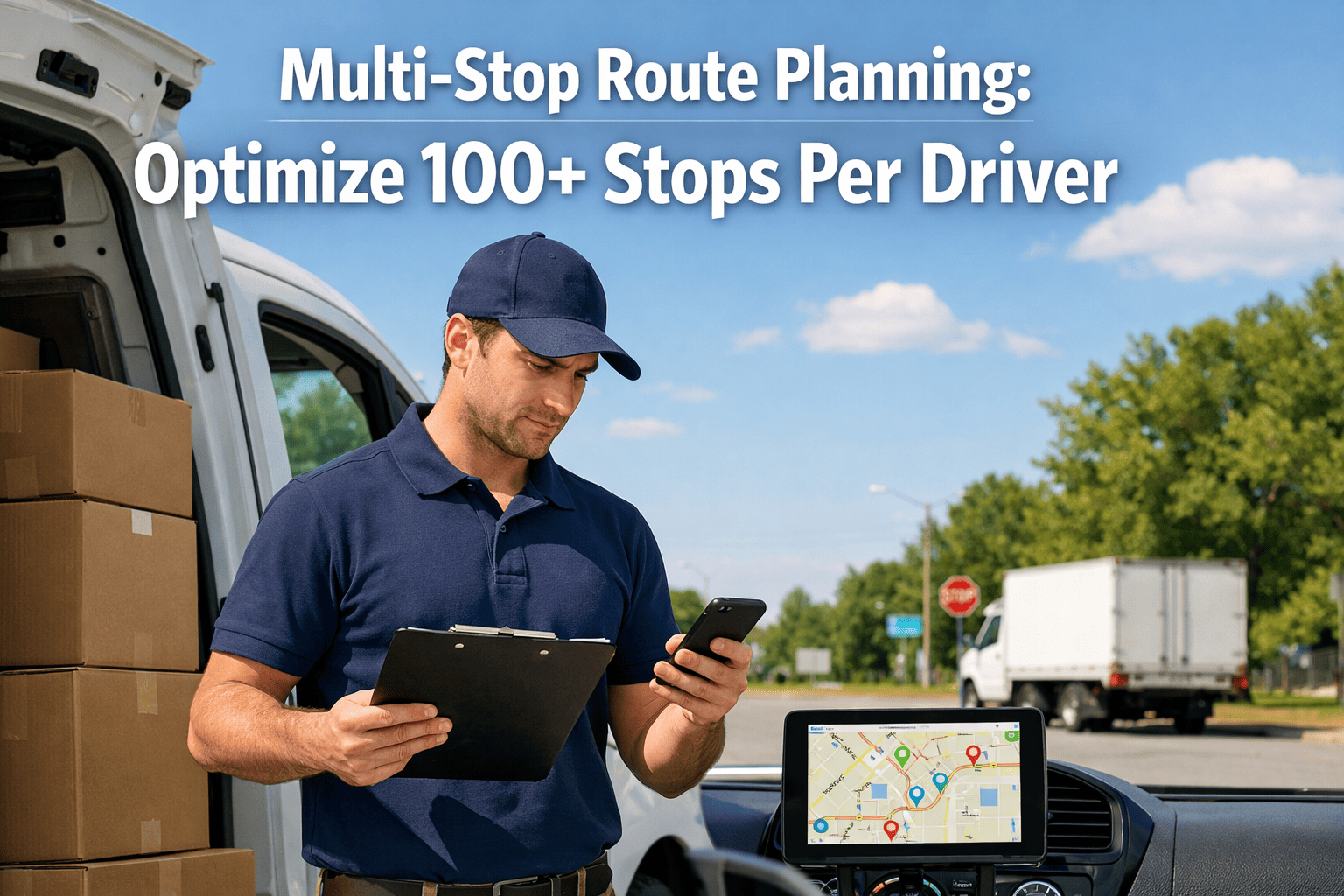
100+ Stops. Every Time Window. Every Vehicle Capacity Constraint. Optimised in Under 30 Seconds.
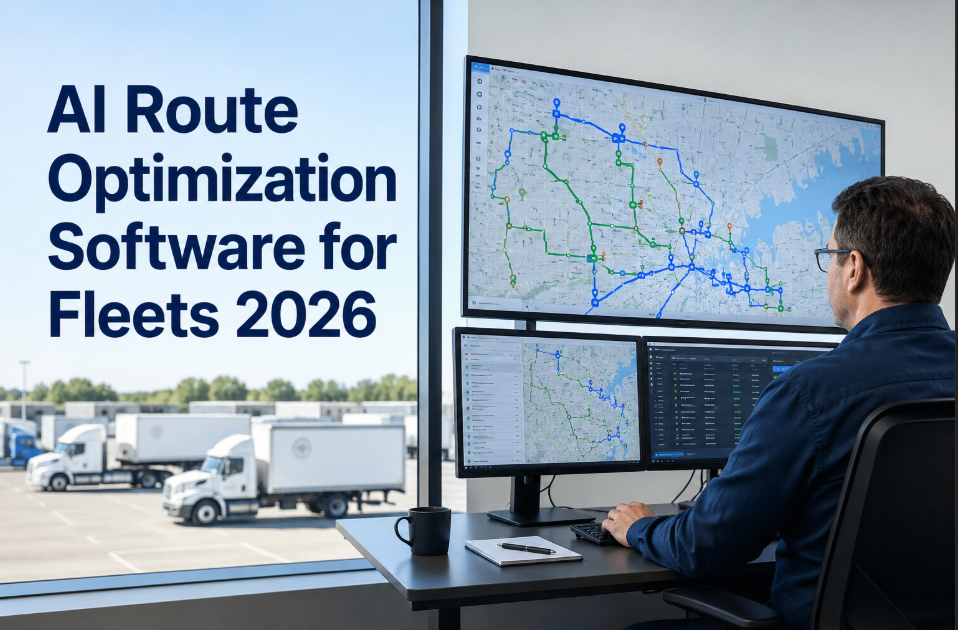
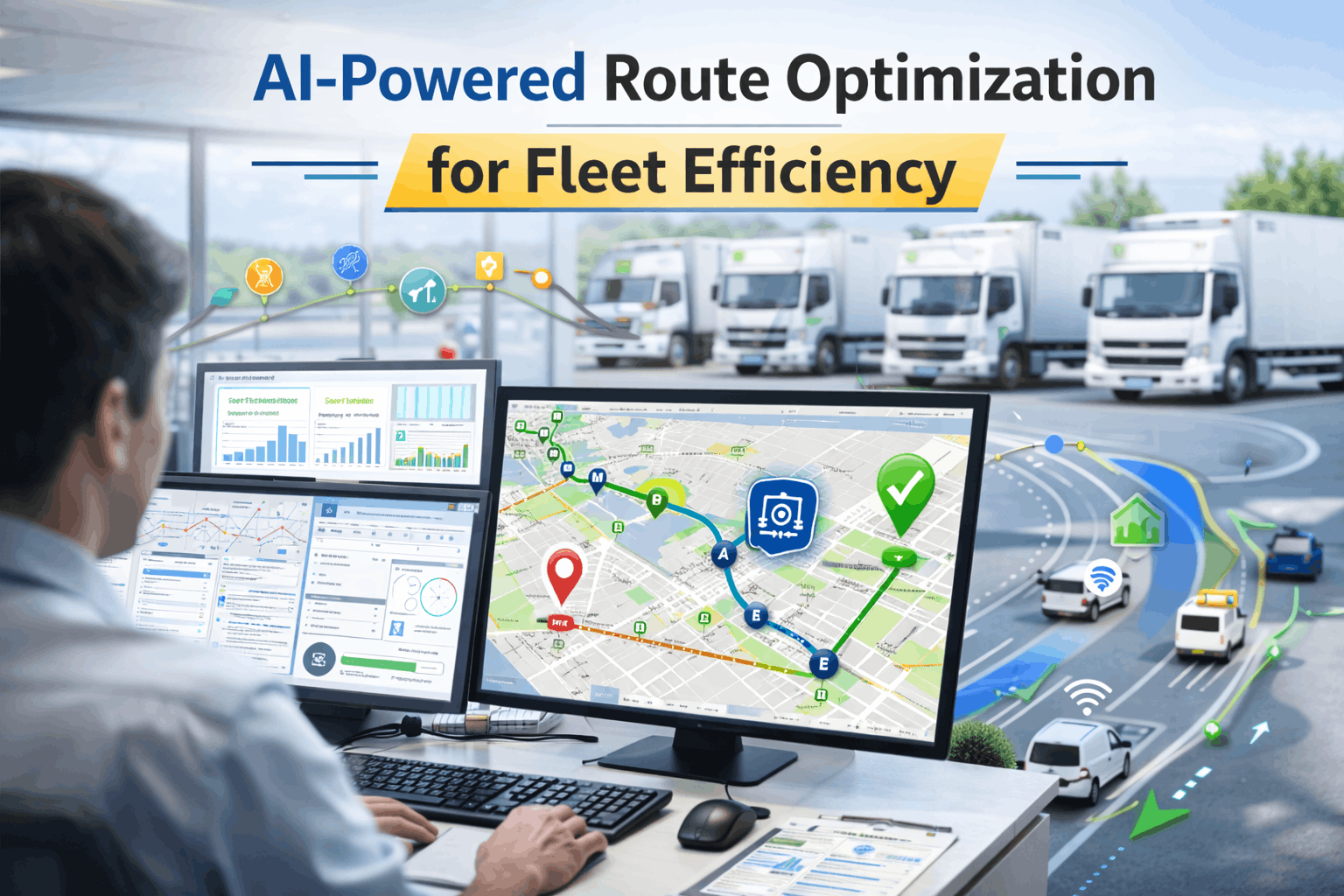
OxMaint's AI route planning engine solves the vehicle routing problem at full commercial scale — time windows, capacity constraints, driver hours, priority deliveries, and regulatory compliance — continuously updated as conditions change through the day.
28%
Average reduction in total fleet mileage after AI multi-stop optimisation vs manual sequencing
$162K
Annual excess fuel cost from sub-optimal routing at a 24-driver pharmaceutical fleet in Chicago
30 sec
Time for OxMaint AI to optimise 100+ stop routes across a full fleet — not 45 minutes of manual planning
94%
Time window compliance rate with AI routing — vs 71% with manual sequencing at the same fleet
2.4T+
Possible sequences for a driver with just 20 stops. No dispatcher can manually compare more than a fraction of these options — and the sequence they choose is rarely optimal. Every sub-optimal stop adds 2–4 miles of backtracking, burns additional fuel, and pushes every downstream time window later. OxMaint's AI solves the full combinatorial problem in under 30 seconds — for every driver, every day, updated in real time when conditions change.
Sign in to OxMaint to run your first optimised route plan today.
The Four Route Optimisation Constraints OxMaint Solves Simultaneously
TWC — Time Windows
Time Window Compliance — Customer Commitments Respected
Time window constraints are the most common reason multi-stop routes fail — a stop that must be served between 9 AM and 11 AM cannot be sequenced after a stop that would push arrival to 11:30 AM, even if it is geographically closer. OxMaint's routing engine evaluates time window feasibility at every possible insertion point before committing a stop to a sequence — eliminating the time window violations that generate customer penalties and service failures. Priority windows (pharmaceutical cold chain, medical supply, time-critical B2B) are flagged and locked in the sequence before lower-priority stops are optimised around them.
Sign in to OxMaint to configure time window constraints for your delivery stops.
Key Optimisation Parameters
Hard windows — stop cannot be served outside the window under any condition
Soft windows — penalty applied if window is missed, but stop is still served
Priority ranking — P1 stops locked before P2/P3 stops are sequenced
Service time per stop — OxMaint uses historical actual service time, not estimates
VCC — Vehicle Capacity
Vehicle Capacity Constraints — No Overloaded Routes
Capacity-constrained routing is a different problem from unconstrained optimisation — a vehicle that reaches its weight, volume, or temperature zone limit before completing its stop list requires a depot reload or a route split. OxMaint's vehicle routing engine models weight, volume, pallet count, and mixed-temperature zone constraints simultaneously — allocating stops to vehicles so that no vehicle exceeds its operational limit, while minimising total mileage across the fleet. For fleets with mixed vehicle types, OxMaint automatically matches stop requirements to vehicle capabilities.
Book a demo to see capacity-constrained routing modelled across your actual vehicle fleet.
Key Optimisation Parameters
Weight limit per vehicle — per axle and gross vehicle weight
Volume / pallet capacity — cubic metres or pallet positions
Temperature zone separation — ambient, chilled, frozen on same vehicle
Vehicle type matching — stop requirements matched to vehicle capability
DHR — Driver Hours
Driver Hours & HOS Compliance — Regulatory Constraints Built In
Route plans that violate Hours of Service regulations are not just operationally inefficient — they are FMCSA compliance failures that carry per-violation fines and CSA score penalties. OxMaint's routing engine builds HOS constraints into the optimisation — drivers cannot be assigned a route that would require exceeding their available hours, and mandatory rest breaks are built into the schedule before the route plan is confirmed. For fleets operating across state lines or under ELD monitoring, OxMaint's route plans are always compliant before a driver leaves the depot.
Sign in to OxMaint to configure HOS constraints for your driver pool.
Key Optimisation Parameters
Available drive hours per driver at route start
Mandatory break points — FMCSA 30-minute break rule
Maximum shift length — including service time and breaks
ELD integration — actual hours pulled from electronic logs
DYN — Dynamic Re-routing
Dynamic Re-optimisation — Routes That Adapt as the Day Changes
A route optimised at 6 AM is based on conditions that no longer exist by 9 AM. Traffic incidents, customer delays, vehicle breakdowns, and last-minute additions all break the original plan. OxMaint's dynamic re-routing engine detects deviations from the optimal plan in real time and recalculates the remaining route sequence — inserting new stops at the lowest disruption point, removing stops when capacity is reached, and updating all downstream ETAs automatically. The driver's app shows the updated sequence immediately. No dispatcher intervention required for routine deviations.
Book a demo to see dynamic re-routing in action for a 30-stop driver route.
Key Re-optimisation Triggers
Traffic incident detected on current route segment
Stop service time exceeding estimate by configurable threshold
Emergency stop insertion — priority P1 received mid-day
Stop cancellation — capacity freed for additional stop insertion
OxMaint Multi-Stop Route Optimisation · Fleet Route Planning
100+ Stops, Every Constraint, Optimised in 30 Seconds — Then Updated All Day.
Manual route planning wastes 18–28% of your fleet's mileage every day. OxMaint AI recovers it automatically.
Route Optimisation Performance — OxMaint vs Manual Planning
Three Areas Where AI Optimisation Consistently Outperforms Manual Sequencing
Savings Type · Fuel
Total Fleet Mileage Reduction
AI route optimisation reduces total fleet daily mileage 18–28% by eliminating backtracking, cross-routing, and inefficient stop sequencing that manual planning produces in every multi-stop scenario above 15 stops per driver.
Typical saving: $38,000–$162,000/yr fuel at a 20-driver fleet
Savings Type · Compliance
Time Window Compliance Improvement
AI routing sequences every stop with time window feasibility verified before assignment — eliminating the late deliveries and missed windows that generate customer penalties, chargebacks, and service level agreement failures.
Typical improvement: 71% → 94% time window compliance
Savings Type · Labour
Dispatcher Planning Time Recovered
Manual multi-stop planning for a 20-driver fleet takes 45–90 minutes every morning and breaks down whenever a driver calls in sick or a route changes. OxMaint AI re-plans the entire fleet in under 30 seconds — giving that planning time back to exception management.
Typical recovery: 45–90 min/day dispatcher time
Route Optimisation Benchmarks — US Fleet Data by Stop Count and Vehicle Type
Risk by Stop Count — Where Manual Planning Breaks Down
5–10 Stops
Manual Planning — Manageable
Dispatchers can reasonably sequence 5–10 stops manually. Mileage waste is typically 8–14%. AI optimisation still delivers savings but manual planning is not critically sub-optimal at this scale.
15–25 Stops
Manual Planning — Significantly Sub-Optimal
Above 15 stops, manual sequencing misses 18–26% of optimal mileage every day. Time window conflicts appear regularly. AI delivers clear ROI — savings typically exceed platform cost within 60 days.
30+ Stops
Manual Planning — Operationally Unsustainable
Above 30 stops, manual planning produces routes that are 22–34% longer than optimal and time window compliance falls below 70%. AI optimisation at this scale is not an efficiency improvement — it is a baseline operational requirement.
Technology Stack Behind OxMaint Route Optimisation
AI Solver
OxMaint uses a vehicle routing problem (VRP) solver combining constraint programming and machine learning — solving 100+ stop routes in under 30 seconds with provably near-optimal results
OBD Live
Real-time telematics feeds live vehicle positions into the re-routing engine — dynamic re-optimisation triggered automatically when deviations exceed configured thresholds
SAP PO
OxMaint route plans trigger SAP load planning and dispatch documentation — capacity allocation, route manifests, and delivery confirmations all flowing automatically
2.4T+
possible sequences for a 20-stop driver route — impossible to optimise manually
30 sec
OxMaint AI optimisation time for 100+ stop fleet-wide route plan
28%
average fleet mileage reduction — same stops, same drivers, AI sequence
90 sec
dynamic re-routing time when a stop changes or traffic incident is detected mid-day
Your drivers are completing their stops in the same sequence a dispatcher chose in 10 minutes at 6 AM. That sequence is costing you 18–28% more fuel than the optimal route — every single day.
OxMaint AI calculates the optimal sequence for every driver, every stop, every constraint — in 30 seconds.
Frequently Asked Questions — Multi-Stop Route Optimisation
How many stops per driver can OxMaint optimise?
OxMaint supports up to 250 stops per driver and unlimited drivers per fleet optimisation run. The AI solver handles pharmaceutical cold chain routes with 45 time-windowed stops as readily as bulk delivery routes with 120 unconstrained stops.
How does OxMaint handle last-minute stop additions or cancellations during the day?
OxMaint's dynamic re-routing engine inserts or removes stops in under 90 seconds — calculating the lowest disruption insertion point for additions and re-sequencing the remaining route for cancellations. The driver's app updates automatically with no dispatcher intervention required for routine changes.
Does OxMaint route optimisation account for driver skill requirements as well as geography?
Yes — OxMaint matches stops requiring specific vehicle types, driver certifications, or equipment handling skills to the appropriate drivers before the geographic optimisation runs. Stops that cannot be served by the assigned vehicle are flagged before the route is confirmed.
How does OxMaint integrate with existing TMS or ERP systems?
OxMaint integrates with SAP, Oracle TMS, and major transportation management platforms via API. Stop data, vehicle capacity, and driver availability can be imported automatically from your existing systems — optimised routes export back in standard formats for load planning and manifest generation.
What is the typical time saving in dispatcher planning after deploying OxMaint route optimisation?
Most dispatchers recover 45–90 minutes of daily planning time within the first two weeks. The time is reallocated to exception management, customer escalation handling, and driver support — the tasks that actually require human judgment.
Every Sub-Optimal Stop Sequence Is Costing You Miles, Fuel, and Missed Windows. AI Solves It in 30 Seconds.
OxMaint route optimisation handles every constraint your fleet operates under — time windows, vehicle capacity, driver hours, priority deliveries — and delivers the optimal sequence for every driver before they leave the depot.



.png)