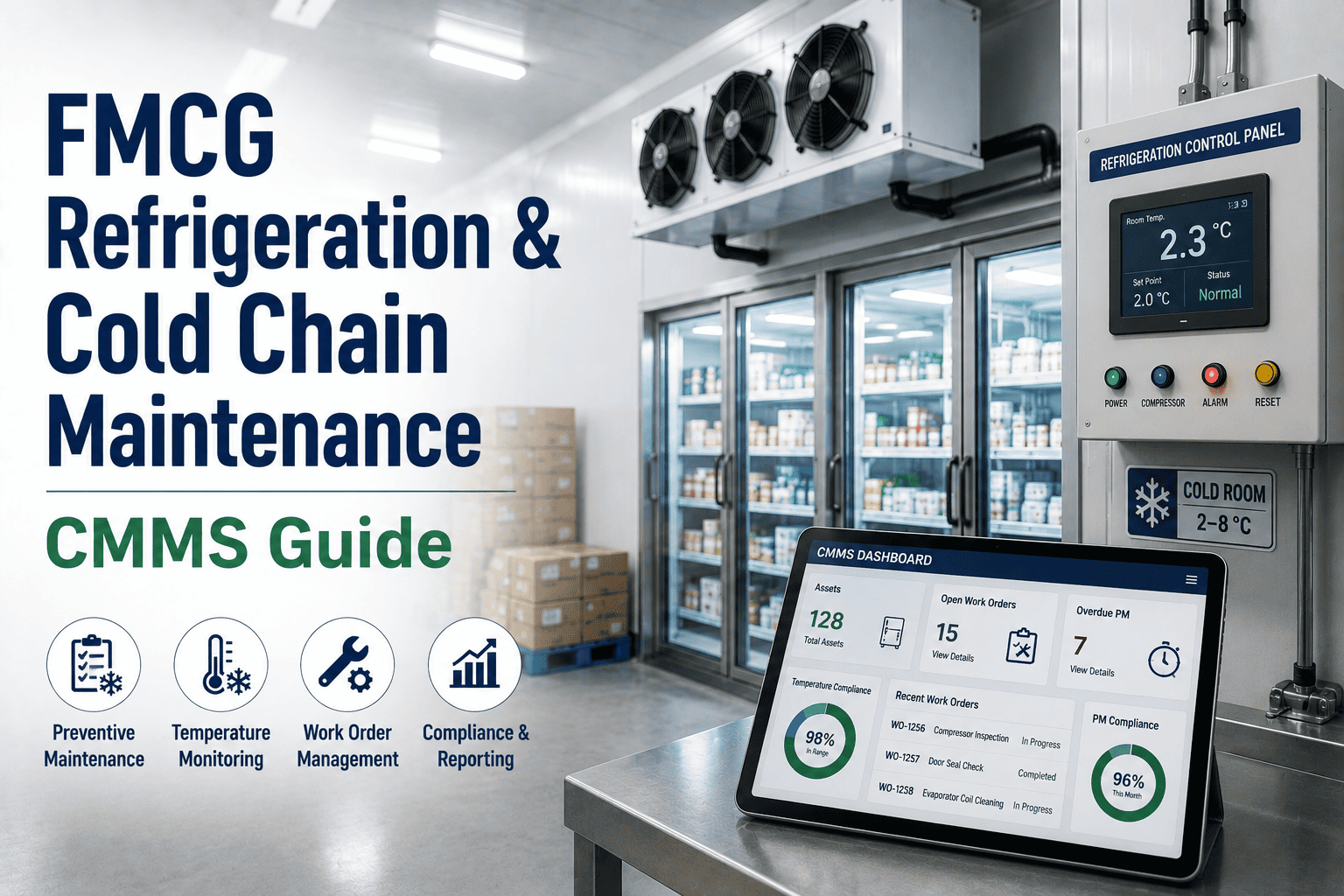
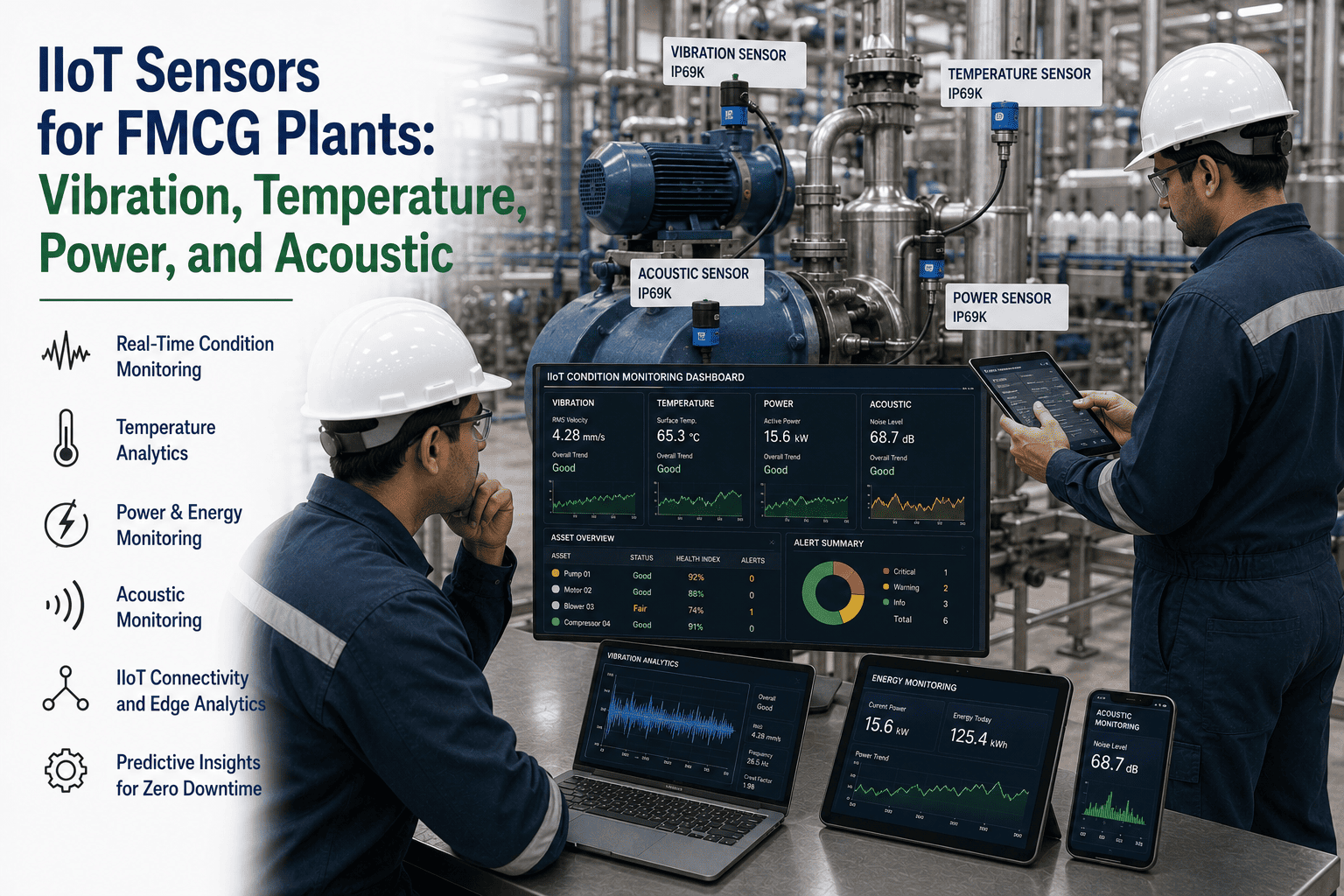
A mid-sized frozen food manufacturer was losing $380,000 per cold chain failure event — and averaging seven compressor breakdowns per year. After integrating Oxmaint's CMMS with their IoT sensor network, temperature monitoring systems, and defrost controllers, they cut unplanned cold storage downtime by 35%, avoided five critical failures in the first year, and achieved 100% compliance in every FSSAI and HACCP audit. This is the full breakdown of how they did it, what the sensor data revealed, and what every FMCG plant can replicate.
FMCG Cold Chain
Frozen Food Plant Slashes Cold Chain Failures by 35%
IoT Sensor Integration + AI Failure Prediction + Digital Compliance Logs
35%
Reduction in cold storage downtime
$1.9M
Product loss avoided in Year 1
21 days
CMMS deployment to first alert
The Plant: What Was at Stake
The facility is a frozen food manufacturing plant running three cold storage chambers, two blast freezer units, and a refrigerated processing zone serving a regional distribution network. Operating under FSSAI and HACCP mandates, every temperature excursion triggered a dual penalty: product batch condemnation and a mandatory compliance incident report. At $380,000 per cold chain failure event, the seven unplanned breakdowns recorded in the 12 months before deployment represented $2.66 million in combined losses. The maintenance team was reactive by design — not because they lacked skill, but because their systems gave them no early warning. Temperature alarms fired when problems were already critical. Compressor oil analysis results sat in maintenance diaries. Vibration readings were logged monthly by hand, not tracked in real time.
The Problem Landscape Before Cold Chain CMMS
Siloed Sensor Data
Temperature loggers, compressor PLCs, and energy meters existed in three separate systems with no cross-correlation. A compressor showing rising vibration and falling suction pressure triggered no combined alert — technicians had to manually piece the signals together.
Calendar-Based PM
Compressor servicing ran on fixed monthly intervals regardless of actual operating hours or condition. Components in good health were opened unnecessarily, while others showing real degradation fell through the gap between scheduled dates.
No Failure Trending
When a cold storage failure occurred, a root cause report was filed — but findings were not feeding back into future maintenance decisions. The same compressor failure modes repeated across chambers because there was no structured learning loop in place.
Manual Compliance Logs
Temperature records were maintained in paper logbooks. Verifying whether a corrective action from a temperature excursion report had actually been executed required searching through physical files — delays that allowed further product risk to accumulate undetected.
The Integration Architecture: How Oxmaint Connected the Cold Chain
The deployment was not a rip-and-replace exercise. The plant's existing IoT infrastructure — temperature data loggers, compressor PLCs, and energy monitoring panels — remained untouched. Oxmaint connected to each data stream through standard protocols and transformed isolated readings into a unified cold chain health picture that maintenance planners could act on before failures occurred.
How Three Data Streams Became One Cold Chain Maintenance Signal
IoT Temperature Network
Chamber temperatures, suction/discharge pressure, defrost cycle timing, and door open events — streamed continuously via MQTT into Oxmaint's condition monitoring layer.
Oxmaint CMMS
Cross-correlates all three data sources. Detects combined anomaly signatures. Auto-generates prioritised work orders with failure timeline estimates and recommended interventions for cold chain assets.
Maintenance Team
Receives mobile work orders with asset health context, photos, parts lists, and timing guidance. Closes work orders with digital sign-off, building a searchable cold chain maintenance history.
Compressor Vibration Monitoring
Bearing vibration and motor current data imported via daily API sync — velocity and acceleration readings tracked against degradation baselines per ISO 10816 for refrigeration compressors.
Energy & Defrost Analytics
Energy meter data auto-parsed on receipt. Defrost cycle duration, frequency, and energy consumption per chamber mapped to specific asset records with trend graphing and efficiency scoring.
Your Cold Chain Sensor Data Is Already There. Connect It.
Oxmaint integrates with existing temperature loggers, compressor PLCs, and energy monitors in under 3 weeks — no infrastructure replacement required. See what your cold chain data looks like when it's working together.
Phase-by-Phase: What Actually Happened
The improvement did not arrive overnight. It unfolded in three distinct phases over 12 months, each building on the previous. Understanding this sequence matters because it shows the realistic trajectory any FMCG cold chain operation can expect — and where each phase delivers its ROI.
Phase 1 — Weeks 1–4
Sensor Integration & Baseline Establishment
IoT temperature network connected via MQTT. Compressor vibration API configured. Energy meter data ingested for the preceding 18 months to seed trending baselines. All 124 critical cold chain assets registered in Oxmaint's asset hierarchy. Existing PM schedules migrated from spreadsheets to digital work orders. The team began seeing their full maintenance picture for the first time — and the gap between scheduled PMs and actual completions was immediately exposed: 31% of due PMs had no verified completion record in the prior 6 months.
Outcome: Full cold chain asset visibility, PM compliance gap exposed, historical trending established.
Phase 2 — Weeks 5–16
First Anomaly Detections & Avoided Failures
Oxmaint flagged a cross-correlation anomaly on Compressor Unit C-2: temperature in Chamber 3 trending 1.8°C above setpoint over 9 days while suction pressure simultaneously dropped 6% below baseline. Vibration data from the same compressor showed a 14% velocity increase at the bearing location. The three signals combined crossed Oxmaint's degradation threshold and generated a Priority 1 work order. The compressor was inspected and valve plates replaced during a planned weekend window — 3 weeks before Oxmaint estimated a forced breakdown. Avoided cost: $380,000 in product loss and emergency repair.
Outcome: First forced failure avoided. Team confidence in the system established.
Phase 3 — Months 5–12
Systematic Shift to Condition-Based Maintenance
With 5+ months of correlated data, Oxmaint's trending models became progressively more accurate for each cold chain asset. Defrost cycle intervals on Blast Freezer 2 were optimised beyond OEM calendar defaults — validated by condition data showing frost accumulation within spec. Chamber 1 insulation inspection scope was expanded after energy meter work orders flagged recurring high consumption events consistent with door seal degradation. Five cold chain failures were avoided in the full 12-month period. Three were compressor degradation events caught via combined pressure-vibration signal correlation. Two were defrost system anomalies detected via energy pattern changes 2–4 weeks before they would have caused temperature excursions.
Outcome: 5 failures avoided, defrost intervals optimised, maintenance budget reduced by 25%.
The Numbers: Before vs. After
12-Month Cold Chain Performance: Before Oxmaint vs. After Oxmaint
Three Cold Chain Failures That Were Caught in Time
The aggregate numbers tell the business story. The individual catches tell the technical story — and show exactly what integrated cold chain condition monitoring looks like in practice for an FMCG freezing plant.
01
Compressor C-2: Pressure Drop + Vibration Signal Combination
Suction pressure on Compressor C-2 had drifted 8% below the established baseline over 18 days — a change invisible in manual weekly log reviews because the absolute value remained within operator alarm limits. Simultaneously, Oxmaint's vibration trending model flagged a 0.4 mm/s increase in bearing velocity at the same unit. Combined, the two signals crossed Oxmaint's refrigeration degradation threshold and generated a Priority 1 work order. Inspection found worn valve plates causing reduced compression efficiency — a failure mode that, if allowed to progress, causes complete compressor seizure and a forced shutdown requiring 5–8 days of repair and re-commissioning. Cost of intervention: $14,000. Avoided product loss and downtime cost: $380,000.
02
Blast Freezer 1: Defrost Cycle Anomaly 2 Weeks Before Temperature Excursion
Oxmaint's energy trending model detected a 22% increase in defrost cycle energy consumption on Blast Freezer 1 over a 14-day window — a change invisible in manual monthly utility reviews because individual cycle readings stayed within normal range. The trending model flagged the rate of change, not the level. Investigation found a faulty defrost termination sensor causing cycles to run 40% longer than programmed — progressively overloading the refrigeration system and building toward a thermal excursion event. Sensor replaced during a planned night shift window. Total avoided downtime: 4 days of blast freezer outage. Avoided product loss: approximately $260,000 in frozen inventory at risk.
03
Chamber 3 Door Seals: Energy Pattern Leading to Scope Expansion
Oxmaint logged 19 energy exceedance events in the Chamber 3 refrigeration circuit over a 60-day period — each individually below alarm threshold, but collectively forming a pattern consistent with cold air leakage increasing compressor load. The work order system automatically escalated insulation and door seal inspection scope during the next planned maintenance window. Physical inspection found three door seal sections with visible compression failure and one hinge misalignment increasing gap width. All four defects were corrected before any temperature excursion occurred. The finding was linked back to a loading dock procedure change made 2 months earlier — and the operating procedure was updated to prevent seal impact from forklift traffic. This is the compounding benefit: one Oxmaint finding created a permanent process improvement.
Ready to Catch Cold Chain Failures Before They Spoil Product?
Oxmaint connects your temperature sensors, compressor data, and energy meters into one prioritised maintenance signal. Talk to our FMCG team and see how the integration works for your specific cold chain configuration.
ROI: The Financial Case for FMCG Plant Leadership
Year 1 Financial Summary — Cold Chain Predictive Maintenance
Avoided Product Loss
$1.9M
5 cold chain failures avoided × avg. $380K per event
Maintenance Cost Reduction
$170K
Condition-based servicing vs. over-scheduled calendar PM
Energy Savings
$84K
Optimised defrost cycles and reduced cold air leakage
Oxmaint Annual Platform Cost
$36K
Full deployment including IoT integration and mobile field tools
Total Year 1 Net Benefit
$2.12M
58.9x ROI on platform investment
What the Maintenance Manager Said
Before Oxmaint, we had temperature loggers, a compressor PLC, and an energy meter that each told us part of the story. We had to manually connect the dots — and we missed things. Now when a compressor starts showing early pressure drift, there's already a work order in our queue with the vibration trend and energy data attached. The system does the correlation we never had time to do ourselves. That first catch on C-2 alone paid for two years of the platform.
— Maintenance Manager, Frozen Food Manufacturing Plant, India
Frequently Asked Questions
Does Oxmaint require replacing existing temperature loggers or compressor PLCs?
No replacement is required.
Oxmaint connects to existing IoT temperature loggers, compressor PLCs, and energy meters through standard protocols including MQTT, Modbus, and REST API, layering predictive analytics on top of infrastructure already in place. Most FMCG facilities complete the initial cold chain integration within 2 to 3 weeks using existing hardware, and the system begins learning asset baselines immediately on connection. Your existing sensor investment is preserved and extended, not discarded.
How quickly does Oxmaint detect the first meaningful cold chain anomalies?
Most plants see their first flagged anomalies within 2 to 3 weeks of data ingestion, as the system begins comparing live readings against the historical baseline established during onboarding. Detection accuracy improves continuously over the following 2 to 4 months as the models learn each asset's specific operating envelope across load conditions and seasonal ambient temperature variation.
Book a demo to walk through the exact onboarding sequence for your cold chain configuration.
Can Oxmaint generate audit-ready reports for FSSAI, HACCP, and ISO 22000?
Yes. Oxmaint automatically maintains digital temperature logs, maintenance completion records, and corrective action trails in formats directly usable for FSSAI, HACCP, and ISO 22000 audits. All records are timestamped, tamper-evident, and exportable in PDF or CSV. Plants using Oxmaint consistently report audit preparation time dropping from days to hours.
Start a free trial to see the compliance reporting module for your specific regulatory requirements.
Does Oxmaint cover the entire cold chain — from raw material storage through dispatch?
Oxmaint tracks all cold chain stages — raw material cold rooms, processing zones, blast freezers, finished goods cold storage, and refrigerated dispatch bays — as a single interconnected asset hierarchy. Temperature exceedance events in one zone are automatically linked to compressor load data and energy consumption across the full chain, enabling the kind of root cause tracing described in the Chamber 3 case above. Explore the full
Oxmaint platform to see how multi-zone FMCG cold chain tracking works in practice.
What does the deployment process look like for an FMCG cold chain plant?
For a mid-sized FMCG cold chain facility, the standard deployment runs in three phases: asset hierarchy setup and historical data import in weeks 1 through 2, IoT sensor and PLC integration in weeks 2 through 4, and full condition-based work order automation by week 6. Oxmaint's FMCG team manages the integration configuration — the plant's maintenance team does not need an IT project to go live.
Schedule a call and we will build a specific deployment timeline for your facility.