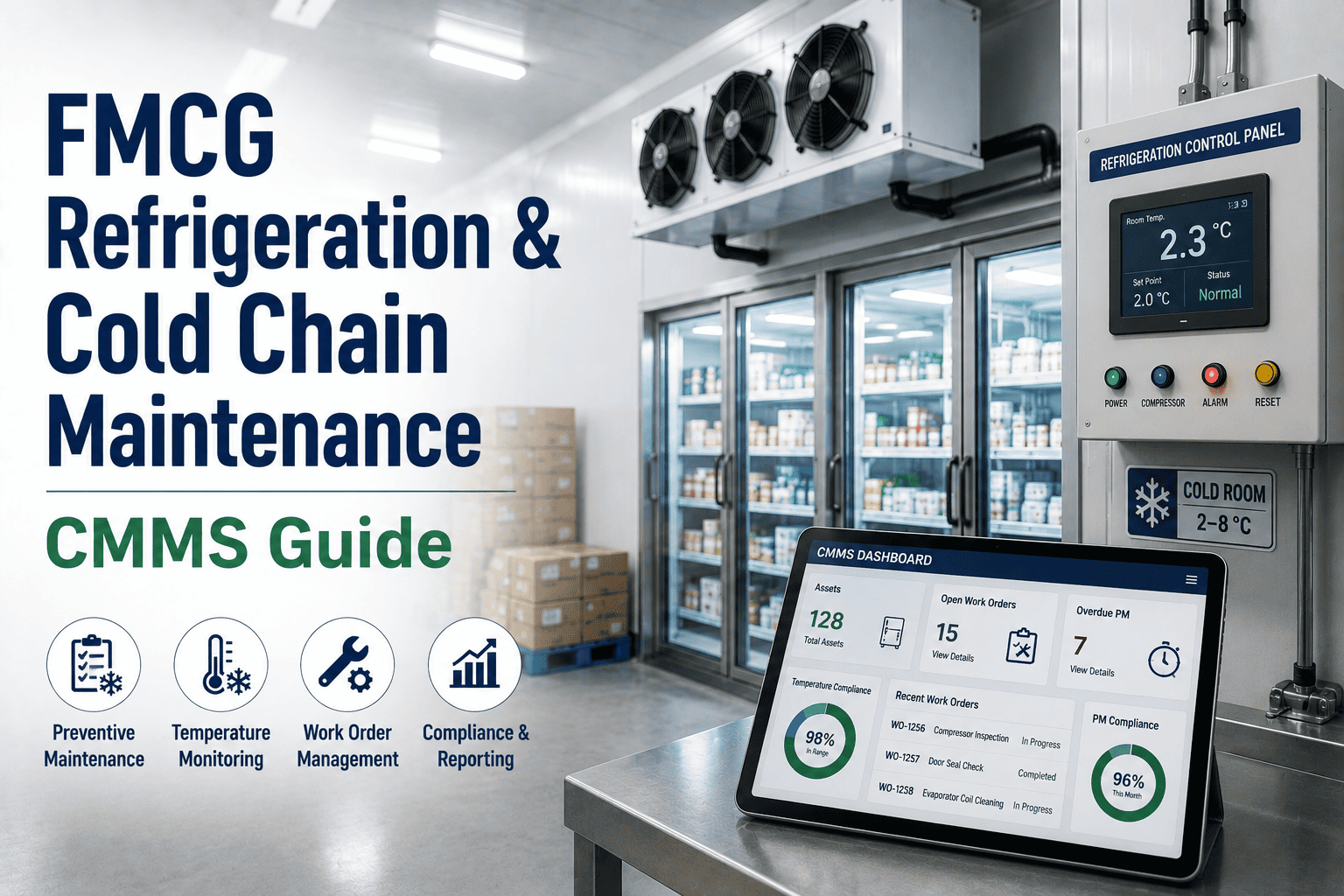
Cold chain failure is never gradual in its consequences — a compressor that trips at 2am, a condenser coil fouling for weeks, or a door seal that stopped working months ago all produce the same outcome: temperature exceedance, product loss, and regulatory exposure. OxMaint's IoT Sensor Integration & Edge AI connects to your refrigeration monitoring systems — logging temperature data, scheduling PM tasks, and raising alerts before exceedances occur. Book a free demo to see automated cold chain maintenance in action.
PM Coverage Across the 4 Cold Chain Zones
Cold chain maintenance data — refrigerant readings, temperature logs, defrost records, and compliance certificates — is only useful if it is captured consistently, stored systematically, and available instantly during an inspection or incident investigation. OxMaint captures every task at completion against the asset record, with automatic escalation to the duty manager when any temperature or system reading falls outside its defined range.
Before You Start: Asset Registration and Baseline Setup
Cold chain PM without an asset baseline is just activity. Every cold room, blast freezer, chiller, and refrigeration unit must be registered with its design operating temperatures, refrigerant type and charge, alarm thresholds, and service history before meaningful PM scheduling can begin. OxMaint registers every cold chain asset and links IoT temperature sensor data to the PM record.
| # | Task | Schedule | Acceptance Criteria | Sign-Off | |
|---|---|---|---|---|---|
| 1.1 | Oil level checked in sight glass and topped up if below minimum. Oil condition assessed for discolouration or emulsification. Running hours confirmed against OEM oil change interval. | Daily | Oil level within min-max marks. No discolouration or emulsification. Hours to next oil change logged. Deviation triggers maintenance hold. | ________ | |
| 1.2 | Suction pressure, discharge pressure, and suction superheat recorded and compared against design operating conditions. Rising discharge pressure or reduced superheat indicates condenser fouling or refrigerant overcharge. | Daily | All pressures within design envelope. Superheat within OEM specification. Values logged and trended per shift. Deviation triggers engineer review. | ________ | |
| 1.3 | Compressor body temperature checked at motor housing, bearing points, and discharge line with an infrared thermometer. Hot spots indicate bearing wear, refrigerant loss, or blocked oil passages. | Daily | All temperature readings within 10°C of baseline for the ambient. Any hot spot above threshold triggers engineer inspection before continued operation. | ________ | |
| 1.4 | Condenser coils inspected for fouling, dust build-up, and fin damage. Air-cooled condenser fans checked for damage, correct rotation, and blade condition. Condenser inlet area confirmed clear of obstruction. | Weekly | Coils clean with no fouling reducing airflow. Fans confirmed correct rotation. No fin damage above 10%. Fouled coils cleaned before next production week. | ________ | |
| 1.5 | Drive belts on belt-driven compressors and condenser fans inspected for tension, wear, and cracking. Flexible couplings checked on direct-drive units for rubber element condition. | Weekly | Belt tension within OEM specification. No cracking, fraying, or glazing. Flexible coupling elements intact. Defective components replaced before next service interval. | ________ | |
| 1.6 | Full compressor PM per OEM schedule: oil and filter change, valve inspection, safety controls tested, and refrigerant charge verified by superheat and subcooling measurement. Service record completed. | Monthly | All PM tasks completed per OEM schedule. Refrigerant charge within specification. Safety controls confirmed functional. PM record archived per compressor asset ID. | ________ | |
| 1.7 | Refrigerant leak test on all joints, valves, and connections using electronic detector or UV dye. Leaks quantified and logged per F-gas regulation. Repair timeline documented with engineer certificate reference. | Monthly | No leaks detected, or all leaks quantified, logged, and repair timeline documented per F-gas regulations. Record archived with refrigerant handling certificate reference. | ________ |
| # | Task | Schedule | Acceptance Criteria | Sign-Off | |
|---|---|---|---|---|---|
| 2.1 | All evaporator fans confirmed running at shift start — motor running, blade rotation confirmed, and airflow felt at the outlet. Any stopped fan triggers immediate investigation before product is stored. | Daily | All fans confirmed running with audible and felt airflow. Any stopped fan triggers engineer call-out before product storage. Logged per cold room. | ________ | |
| 2.2 | Door seals on all cold room and freezer access doors physically inspected — seal continuity checked around the full perimeter for tears, compression failures, or gaps. Door closer mechanism confirmed functional. | Daily | Seal continuous with no tears, gaps, or compression failure. Door closer confirmed pulling door to full seal. Any defective seal replaced before the next shift. | ________ | |
| 2.3 | Evaporator coil visually inspected for ice build-up between defrost cycles. Ice above 5mm on the coil face indicates defrost frequency or duration is insufficient for the current product load. | Daily | No ice accumulation above 5mm between defrost cycles. Ice above threshold triggers defrost review and engineer assessment of defrost settings. | ________ | |
| 2.4 | Defrost cycle completion confirmed from the controller log — each scheduled defrost confirmed as completing fully and terminating on temperature. Drain pan and drain line confirmed clear of ice and blockage after defrost. | Weekly | All defrost cycles completing on temperature termination. Drain pan clear and flowing freely. Truncated defrosts trigger engineer review of defrost settings. | ________ | |
| 2.5 | Drain heater function confirmed — heater continuity and temperature confirmed during defrost to prevent drain pan and drain line from refreezing. Blocked drains overflow into the cold room floor. | Weekly | Drain heater confirmed active and reaching temperature during defrost. Drain pan confirmed draining fully. No ice in drain pan or drain line after a complete defrost cycle. | ________ | |
| 2.6 | Full evaporator service: coil cleaned with approved cleaner, fan motors lubricated per OEM schedule, fins straightened where damage has reduced airflow, and defrost termination thermostat tested for correct set point. | Monthly | Coil clean with no fouling. Fan motors lubricated. Fins straightened where damaged. Defrost termination thermostat confirmed at correct set point. Service record archived per asset. | ________ | |
| 2.7 | Cold room air circulation verified — temperature measured at entry, mid-room, and back wall at product height. Excessive stratification indicates blocked airflow, overloaded racking, or fan failure in a multi-fan system. | Monthly | Temperature difference between entry and back wall below 1.5°C at product height. Stratification above 2°C triggers airflow investigation. Results mapped and archived. | ________ |
| # | Task | Schedule | Acceptance Criteria | Sign-Off | |
|---|---|---|---|---|---|
| 3.1 | Temperature logger data reviewed for the previous 24 hours — all cold rooms and freezers confirmed within target range with no exceedances, data gaps, or unreviewed alarms from the overnight period. | Daily | All assets within target range. No unreviewed alarms. No data gaps above 15 minutes. Every exceedance has a documented corrective action. Signed by quality technician. | ________ | |
| 3.2 | Alarm system function confirmed — a test alarm triggered on one cold room and confirmed received by the duty manager via the monitoring alert route. Acknowledgement and reset procedure confirmed operational. | Daily | Test alarm received within defined response time. Acknowledgement and reset confirmed functional. Test event logged with timestamp and confirming receiver name. | ________ | |
| 3.3 | Independent reference thermometer reading compared against the monitoring system display for each cold room. Discrepancy between the independent thermometer and monitoring probe indicates probe drift or display fault. | Weekly | Discrepancy within ±0.5°C. Discrepancy above 1°C triggers probe recalibration before further use. Results logged per probe. | ________ | |
| 3.4 | Data logger battery level and memory status checked across all standalone loggers. Logger confirmed uploading data without missed transmission events. Housing and probe connection inspected for physical damage. | Weekly | Battery above replacement threshold. No missed transmissions in previous 7 days. Housing and probe connection intact. Low-battery loggers replaced before a data gap occurs. | ________ | |
| 3.5 | All temperature probes calibrated against a certified reference standard in an ice bath or dry block calibrator. Result recorded with probe ID, reference standard certificate number, and technician name. | Monthly | All probes within ±0.5°C of certified reference. Out-of-tolerance probes replaced and affected data reviewed for product impact. Calibration record archived per probe ID. | ________ | |
| 3.6 | Full temperature monitoring system audit — data continuity confirmed for all assets over the previous month, all alarm events reviewed with corrective actions, and monitoring system firmware confirmed current. | Monthly | 100% data continuity for all assets. All alarms have documented corrective actions. Firmware current. Monthly audit signed by quality manager and refrigeration engineer. | ________ |
| # | Task | Schedule | Acceptance Criteria | Sign-Off | |
|---|---|---|---|---|---|
| 4.1 | Daily temperature log reviewed and signed for all cold rooms and freezers — every asset within target range for the full 24-hour period, or exceedances confirmed with documented corrective actions attached. | Daily | All logs complete and signed. No unsigned data gaps. Every exceedance has an attached corrective action with outcome recorded. Signed per shift by quality technician. | ________ | |
| 4.2 | Product disposition reviewed for any temperature exceedances from the previous 24 hours — product formally assessed against specification and disposition decision documented by quality before release. | Daily | Every exceedance has a formal disposition decision — accept, quarantine, or reject — signed by quality. No product released from a room with an unresolved exceedance. | ________ | |
| 4.3 | Alarm log reviewed for the previous 7 days — all alarm events confirmed with documented corrective action, root cause identified for recurring alarms, and open corrective actions reviewed for overdue status. | Weekly | All alarm events have documented corrective actions. No recurring alarm without root cause. No overdue corrective actions. Review signed by quality manager. | ________ | |
| 4.4 | PM completion rate reviewed — all scheduled refrigeration PM tasks for the previous week confirmed completed on time. Overdue tasks reviewed for risk impact and rescheduled with an approved revised date. | Weekly | 100% of scheduled PM tasks completed on time, or overdue tasks have documented risk assessment and revised completion date. Reported to site management weekly. | ________ | |
| 4.5 | Temperature probe and monitoring system calibration certificates reviewed — all certificates confirmed current with next due dates within schedule. Any expired certificate triggers immediate probe quarantine and recalibration. | Monthly | All calibration certificates current. Next due dates within schedule. No expired certificates in active use. Certificates accessible in OxMaint per probe asset ID. | ________ | |
| 4.6 | F-gas compliance records reviewed — refrigerant leak test records current for all systems above the regulatory threshold, engineer F-gas certificates confirmed valid, and cumulative top-up log reviewed for signs of an unrepaired leak. | Monthly | All F-gas records current and filed per regulation. No engineer with expired certificate handling refrigerant. Cumulative top-ups within expected limits — excess triggers leak investigation. | ________ | |
| 4.7 | Full cold chain compliance audit — all four zone PM records reviewed, temperature exceedance trend assessed, corrective action closure rate calculated, and compliance readiness score reported to site quality and operations management. | Monthly | All PM records complete. Exceedance trend stable or improving. Corrective action closure above 95%. Compliance score reported and signed by quality manager and engineering manager. | ________ |
Audit Sign-Off — All 4 Zones Confirmed
& Condensers ✓
& Air Flow ✓
Monitoring ✓
& Docs ✓
Confirmed
Performance Metrics — Cold Chain Maintenance Programme
Percentage of monitoring hours where all cold rooms and freezers remained within the target range. Target 99.9% — any rate below 99% requires immediate investigation of PM compliance and system condition.
Mean time from temperature alarm trigger to confirmed duty manager response. Target below 15 minutes — delays beyond 30 minutes during a genuine refrigeration failure can result in product loss and regulatory exposure.
Percentage of scheduled refrigeration PM tasks completed on time across all four zones. Any rate below 100% represents an uncontrolled cold chain risk — deferred PM is the leading predictor of unplanned failure.
Percentage of corrective actions from exceedances closed within the defined response timeframe. Open corrective actions are non-conformances during regulatory inspections regardless of whether the product was affected.