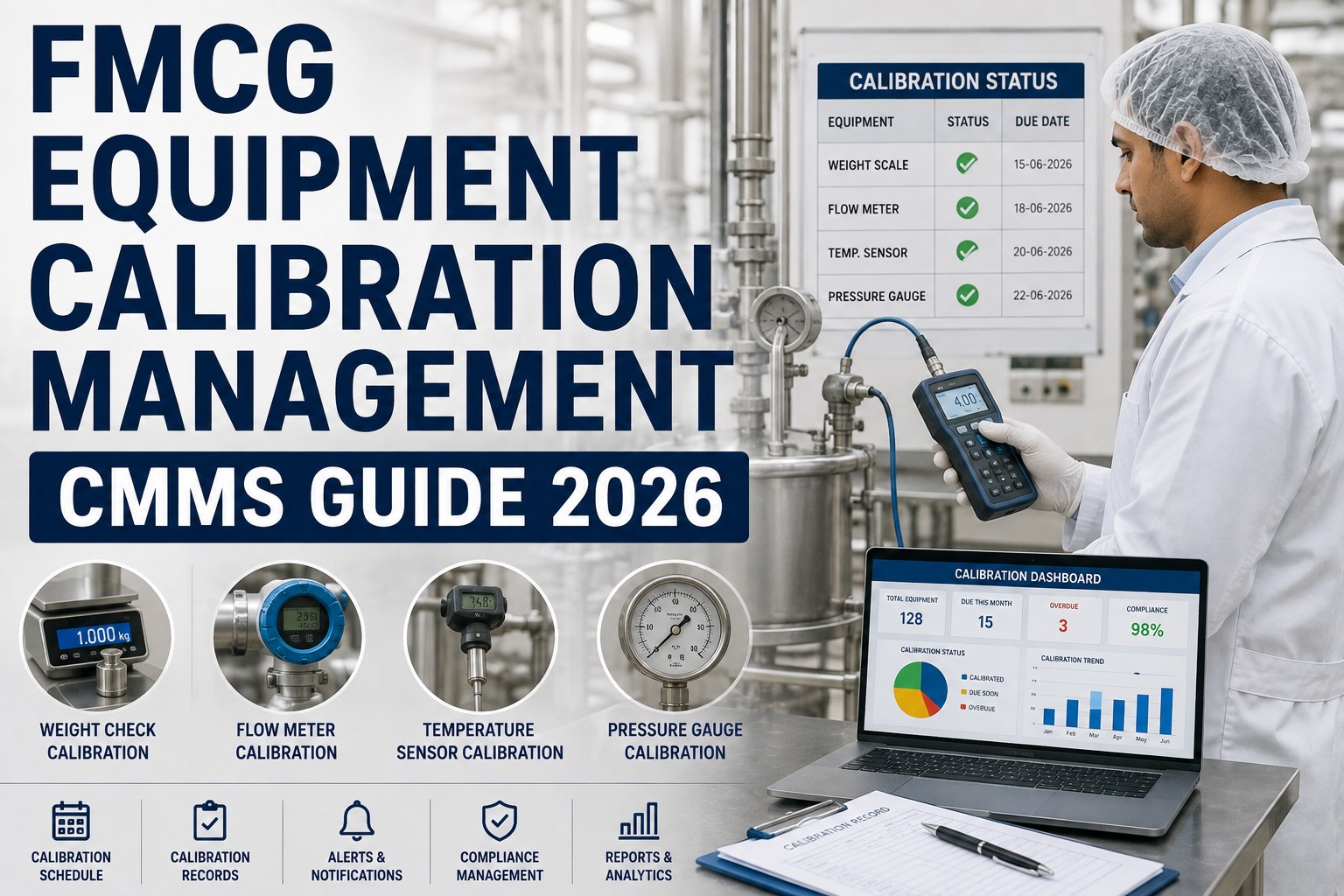
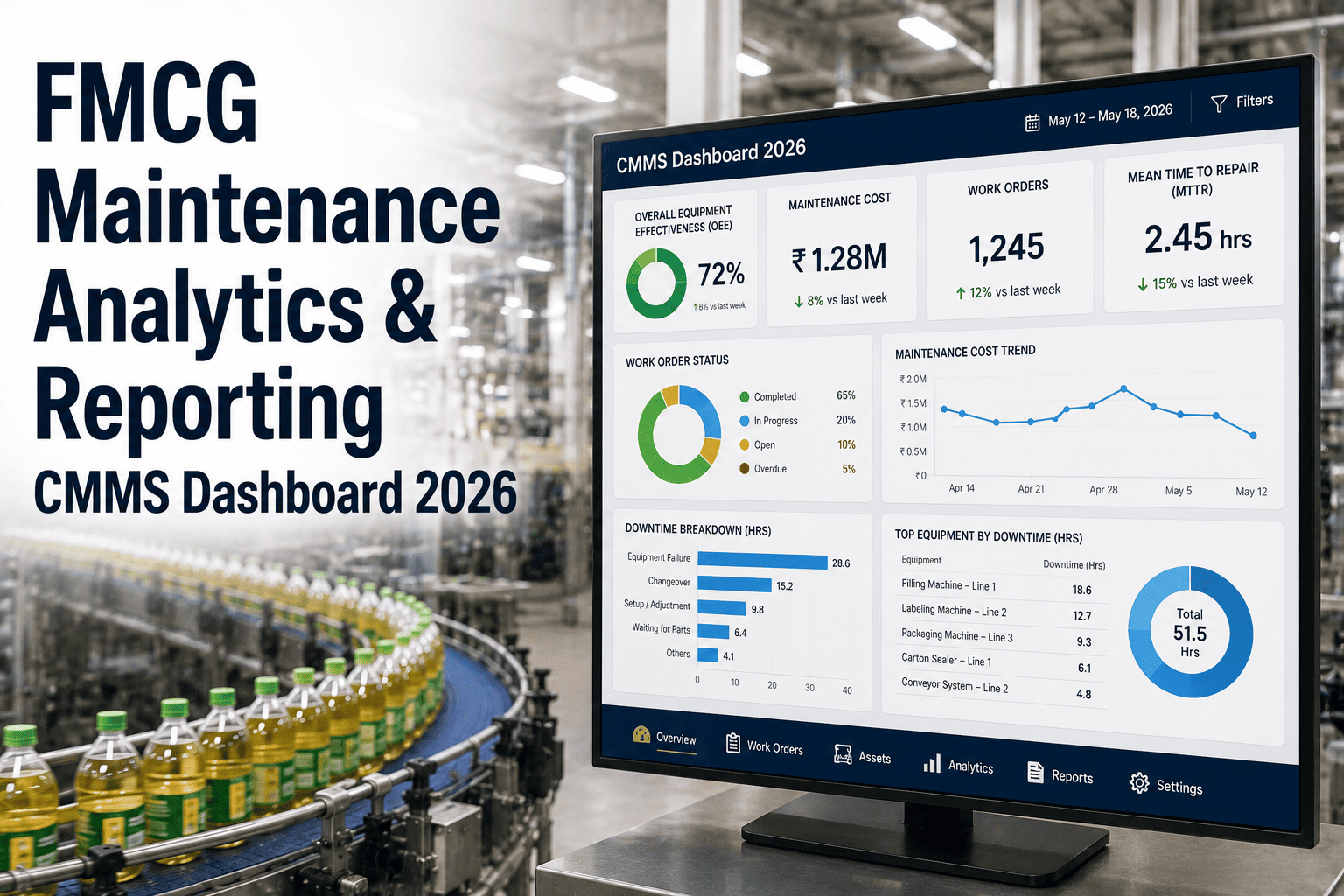
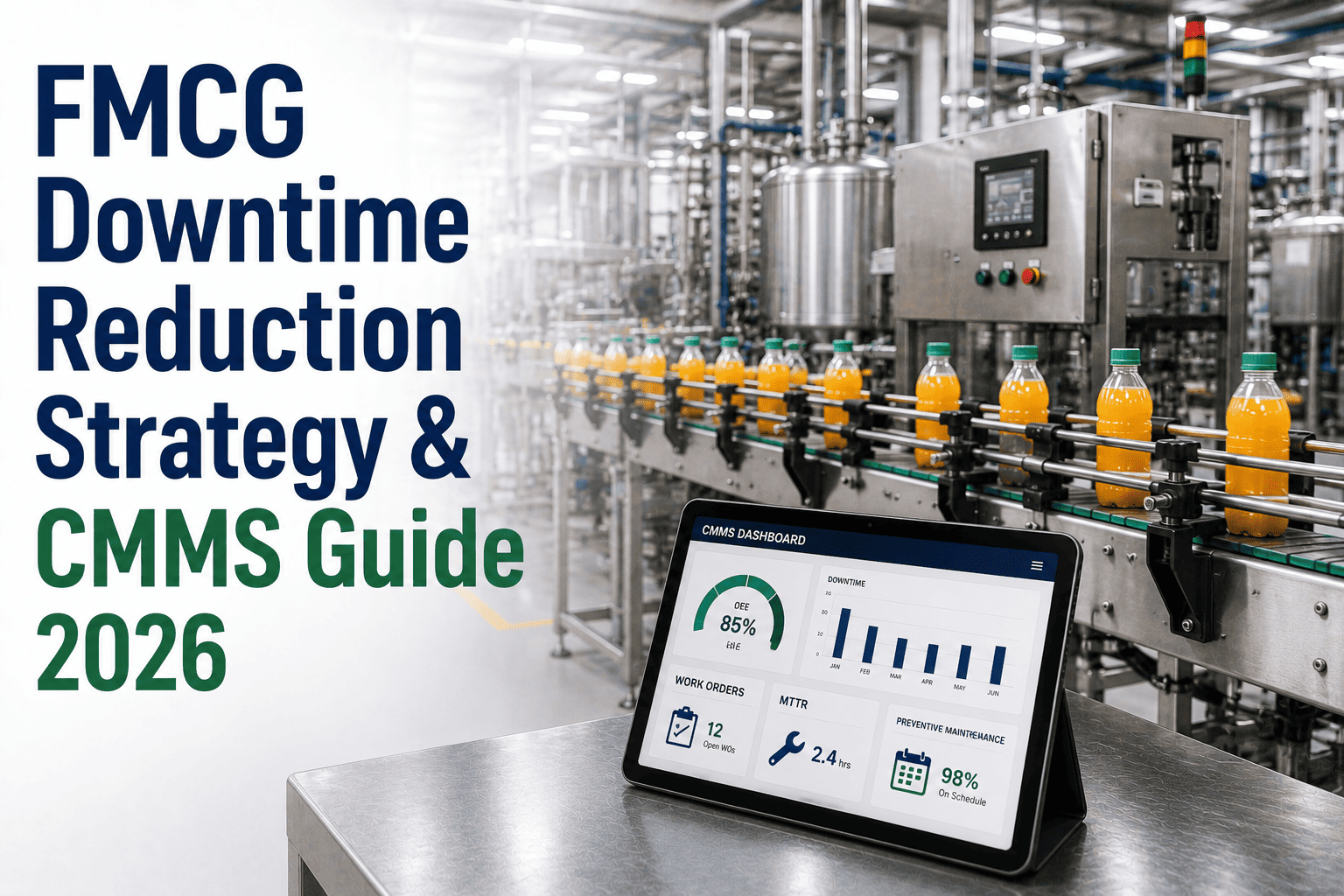
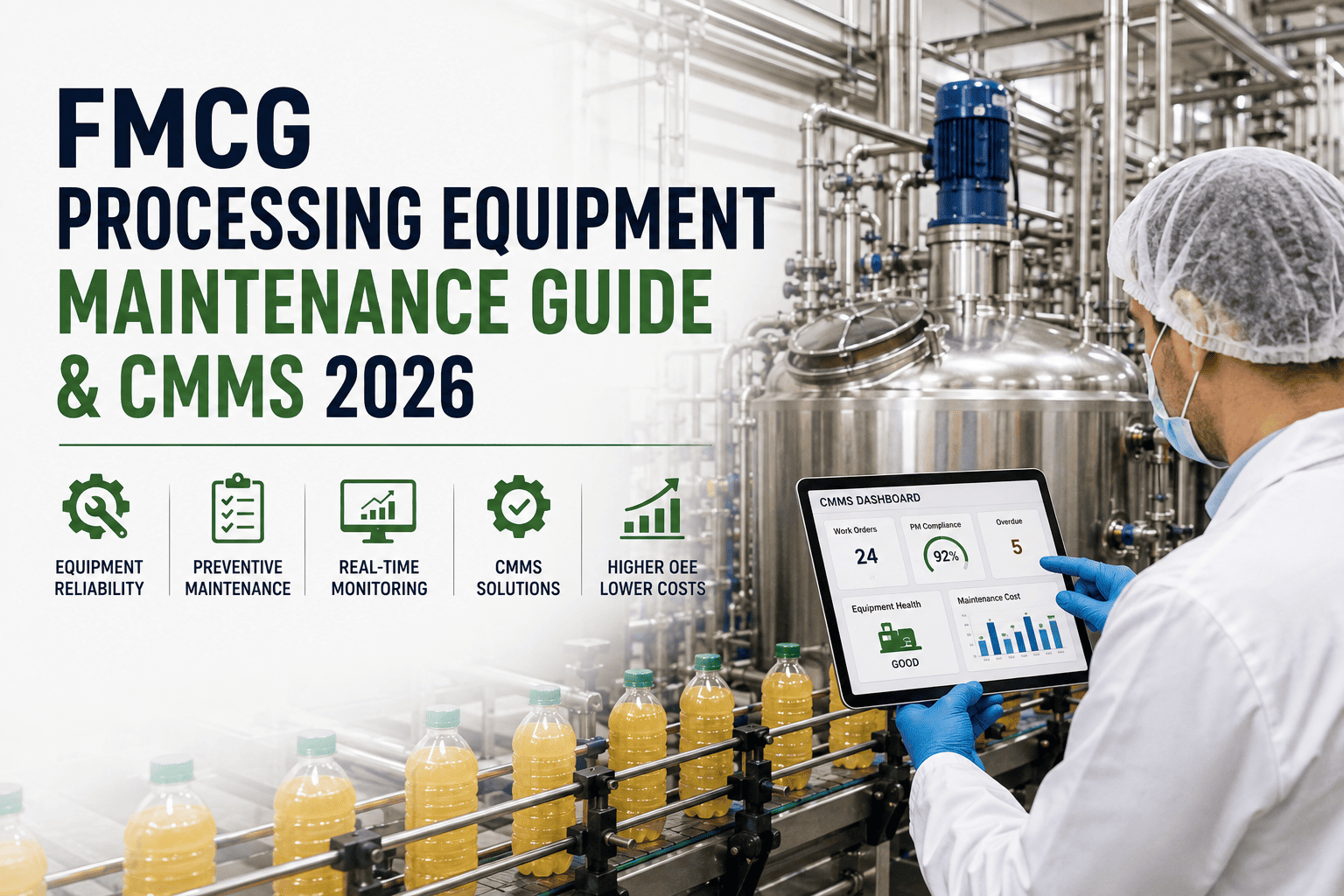
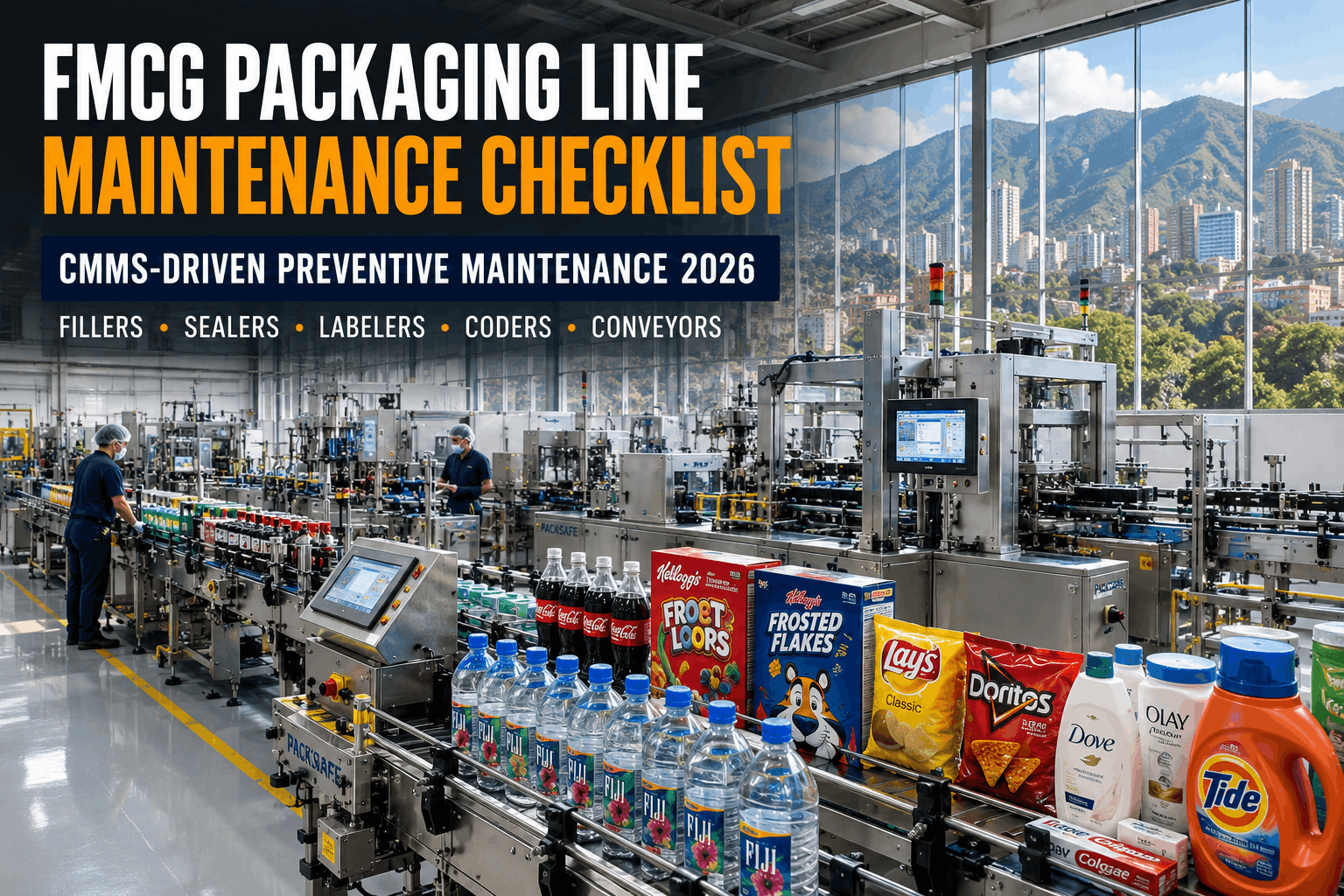
Every measurement instrument in an FMCG plant that affects product safety, quality, or label compliance requires documented calibration with NIST-traceable standards — and a single missed calibration on a checkweigher, thermometer probe, or flow meter can cost tens of thousands in lost product before anyone notices. This 2026 guide covers the FMCG calibration landscape: instrument-specific frequencies, NIST traceability chain, out-of-tolerance workflow, and how OxMaint's maintenance management software keeps calibration defensible across scales, meters, thermometers, and quality instruments. Start free or book a demo.
FMCG · Calibration Management · Metrology · CMMS 2026
FMCG Equipment Calibration Management CMMS Guide 2026
Equipment calibration management guide for FMCG plants: weight check calibration, flow meter verification, temperature sensor calibration, and OxMaint's CMMS-based calibration workflow.
6 Classes
Standard FMCG instrument categories requiring calibration
$187K
Lost product from a single flow meter drift over 6 weeks
38%
Missing calibration records commonly found at FDA audits
±0.5°C
Tolerance standard for CCP thermometers (±1°F)
The 6 Instrument Classes Every FMCG Plant Must Calibrate
Not all instruments carry the same risk. FMCG plants calibrate across six distinct instrument classes, each with distinct frequencies, tolerance standards, and failure consequences. Getting the class-to-frequency mapping right is what separates a defensible calibration program from a compliance liability. Below is the standard FMCG calibration frequency matrix. Sign up free and OxMaint's FMCG library ships with pre-configured calibration templates for all six instrument classes — each with its default frequency, tolerance, traceability chain, and out-of-tolerance workflow ready on day one.
01
Scales & Checkweighers
FrequencyShift-start verification + quarterly full calibration
StandardNIST-traceable test weights (min, nominal, max load)
Regulatory FrameNIST Handbook 44 (US), EU MID Directive, Measurement Canada
Consequence If MissedUnderweight = regulatory violation · Overweight = giveaway loss
02
Thermometers & RTDs (CCP)
FrequencyDaily ice-point verification + monthly full calibration
Standard±1°F / ±0.5°C tolerance to calibrated reference thermometer
Regulatory FrameFSMA 21 CFR 117, HACCP, SQF Element 11.7.3
Consequence If MissedTemperature drift at CCP = HACCP major finding + product hold
FrequencyBefore every use / batch — two-point calibration
StandardNIST-traceable buffer solutions (pH 4, 7, 10 as applicable)
Regulatory FrameCritical for acidified foods, beverages, fermented products
Consequence If MissedAcidification miss = pathogen safety risk + recall exposure
04
Metal Detectors & X-Ray
FrequencyStart / mid / end of every production shift
StandardHACCP test pieces — Fe, non-Fe, SS at documented sensitivity
Regulatory FrameSQF, BRC, FSSC 22000 — CCP monitoring records mandatory
Consequence If MissedImmediate line stop + product hold on any failure
05
Pressure Gauges & Flow Meters
FrequencySemi-annual (pressure) / annual (flow) — ISO/IEC 17025
StandardNIST-traceable primary standards, ANAB-accredited lab preferred
Regulatory FrameCIP hold-time, pasteurization retention, fill volume accuracy
Consequence If MissedPasteurization miss = microbial risk · Fill drift = giveaway loss
FrequencyBefore every batch
StandardCertified saturated salt solutions, tolerance ±0.005 aw
Regulatory FrameShelf-stable low-moisture products, dry mixes, snack foods
Consequence If Missedaw miss = mold/microbial growth = spoilage / recall
The NIST Traceability Chain — What "Traceable" Actually Means
Every FMCG calibration record must show an unbroken traceability chain back to a national measurement standard — NIST in the US, NPL in the UK, PTB in Germany, or their national equivalents. When an FDA or SQF auditor asks "prove this scale reads true," the answer is the chain: your scale → your test weight → the calibration lab's master weight → the accredited primary standard → NIST. Break any link and the whole chain fails. Book a 30-minute demo and an OxMaint calibration specialist will walk the traceability chain against your specific instrument portfolio — you'll leave with a chain-integrity map before you commit to a trial workspace.
NIST TRACEABILITY CHAIN · SHOP-FLOOR INSTRUMENT ← NATIONAL STANDARD
NIST
National Standard
Primary reference held by NIST (US), NPL (UK), PTB (DE), Measurement Canada
→
L1
Accredited Primary Lab
ISO/IEC 17025 accredited (ANAB-accredited in US) — calibrates against NIST
→
L2
Working Reference Standard
Your test weight, buffer solution, or reference thermometer — with current certificate
→
◉
Shop-Floor Instrument
Your scale, thermometer, meter — verified against the working reference on interval
Every certificate in the chain must be current. An expired certificate anywhere in the chain — from national standard down to the shop-floor instrument — invalidates every calibration performed against it since expiry.
The Out-of-Tolerance Workflow — What Happens When a Calibration Fails
An out-of-tolerance result is not a small problem. Under FSMA, SQF, BRC, and FSSC 22000, an OOT finding on any food-safety instrument triggers an immediate structured response — and the response itself is audited. Below is the mandatory workflow every FMCG plant needs to have on paper AND in practice. Sign up free and OxMaint enforces this 5-step OOT workflow automatically — the moment an out-of-tolerance result is captured, the system triggers product hold, root cause investigation, and re-calibration workflow with mandatory verification.
1
Immediate Instrument Quarantine
Instrument tagged out-of-service, physically or electronically. Cannot be used until re-calibrated and verified.
→
2
Product Hold — All Since Last Verified Cal
Every batch processed against this instrument since the last verified calibration goes on hold pending disposition decision.
→
3
Root Cause Investigation
Structured investigation — instrument fault, drift, mechanical damage, environmental factor, calibration standard issue.
→
4
Re-Calibration + Verification
Instrument recalibrated against NIST-traceable reference, verification performed, as-found and as-left values documented.
→
5
Product Disposition + CAPA Closure
QA determines held product disposition (release, rework, destroy). CAPA record closed with effectiveness verification.
A Missed Calibration Doesn't Look Like Anything Until It Costs $187,000 in Overfilled Product.
Real 2024 case: an FMCG beverage manufacturer discovered a single uncalibrated flow meter had overfilled by 2.3% for six weeks — 41,000 liters of lost product worth $187,000, because the calibration certificate expired 14 days before the drift began and nobody was watching the schedule. OxMaint's maintenance management software auto-schedules every calibration on interval, escalates before overdue, and flags any expired certificate in the traceability chain.
Calibration Certificate Anatomy — What Auditors Actually Read
A calibration certificate is not a Pass/Fail sheet. A certificate that satisfies FDA, SQF, BRC, and FSSC 22000 auditors contains specific documented fields — and the absence of any single field can trigger a finding. Below is the minimum certificate anatomy. Book a scoping call and an OxMaint compliance specialist will walk your current calibration certificates against this anatomy — you'll leave with a defect list before your next audit window.
Instrument Identification
Machine ID, serial number, manufacturer, model, physical location
Calibration Date + Due Date
Date performed, next due date, interval basis (calendar/usage)
Reference Standard Used
Specific standard identifier, its calibration date, chain to NIST
As-Found Values
Instrument readings BEFORE any adjustment — shows drift over interval
As-Left Values
Instrument readings AFTER calibration — shows current accuracy
Tolerance Limits
Acceptance criteria per point (min, nominal, max load / temp range)
Measurement Uncertainty
Stated per point — required under ISO/IEC 17025 accredited calibration
Technician E-Signature
Named technician, credentials, timestamp — meets 21 CFR Part 11
Spreadsheet Calibration Tracking vs. OxMaint Calibration-Management CMMS
Most FMCG plants still track calibration in some combination of spreadsheet, wall calendar, and the cal-lab's email folder. That combination produced the 2024 $187K beverage-line loss above — and it produces the 38% missing calibration records auditors commonly find at FDA inspections. Here's what changes when calibration lives inside OxMaint. Start free — no credit card, unlimited users, and OxMaint's FMCG library ships with instrument-class calibration templates pre-configured for all six categories above.
FMCG operations that put calibration inside OxMaint stop finding missing records at audit and start catching drift before it costs six figures. Start your free forever workspace to configure your first instrument-class template this week, or book a demo to see live calibration-drift trending before you commit.
"
We operate two beverage lines — carbonated and still — with 47 calibration-critical instruments across scales, checkweighers, flow meters, and thermometer probes. Our calibration program was a shared spreadsheet with color-coded due dates that everyone treated as a suggestion. We had a near-miss last year when a checkweigher on our 500ml line drifted 1.2% low for 11 days before QC caught it in daily net-weight audit — recovered before regulatory but the internal investigation surfaced 8 other overdue calibrations across the site. Rolled OxMaint's calibration module across both lines with instrument-class templates and NIST traceability chain per certificate. Six months in, zero overdue calibrations, our external cal-lab uploads certificates directly into the instrument record, and our last SQF audit closed with zero calibration-related findings.
Quality Systems Manager · 2-Line Beverage Manufacturer · US Northeast
Frequently Asked Questions
Which FMCG instruments actually need calibration?
Any instrument affecting product safety, quality, or label compliance — grouped into six standard classes: (1) scales and checkweighers; (2) thermometers and RTDs at CCPs; (3) pH meters; (4) metal detectors and x-ray systems; (5) pressure gauges and flow meters on CIP, pasteurization, and filling; (6) water activity meters. Each class has distinct frequency, tolerance, and traceability requirements — none are optional under FSMA, HACCP, SQF, BRC, or FSSC 22000.
What does "NIST-traceable" mean and why does it matter?
NIST-traceable means an unbroken documented chain from your shop-floor instrument, through your working reference standard, through the accredited calibration lab's primary standards, back to NIST (or NPL/PTB in other countries). This chain is what makes your calibration legally defensible during FDA, SQF, or BRC audit. Break any link — expired certificate, unaccredited lab, missing chain-of-custody — and the whole chain fails.
Sign up free to build NIST-traceable calibration records.
How often should FMCG instruments be calibrated?
Frequency varies by class: scales and checkweighers — shift-start verification plus quarterly full calibration; CCP thermometers — daily ice-point verification plus monthly full calibration; pH meters — before every use with two-point buffer calibration; metal detectors — start/mid/end of every production shift with test pieces; pressure and flow meters — semi-annual to annual with ISO/IEC 17025 accredited lab; water activity meters — before every batch. Frequency is risk-based, not calendar-based — historical stability performance and criticality both factor in.
What happens when an instrument fails calibration?
Mandatory 5-step out-of-tolerance workflow: (1) immediate instrument quarantine — tagged out-of-service; (2) product hold on all batches processed since last verified calibration; (3) root cause investigation — instrument fault, drift, mechanical damage, or reference standard issue; (4) re-calibration and verification with as-found and as-left values documented; (5) product disposition decision (release/rework/destroy) and CAPA closure with effectiveness verification. OxMaint enforces this workflow automatically the moment an OOT result is captured.
What fields must a calibration certificate contain?
Eight minimum fields: instrument identification (ID, serial, manufacturer, model, location); calibration date plus next due date; reference standard used with its chain to NIST; as-found values before adjustment; as-left values after calibration; tolerance limits per measurement point; measurement uncertainty (required under ISO/IEC 17025); and technician e-signature with credentials and timestamp (meets 21 CFR Part 11). Missing any single field can trigger an audit finding.
Book a demo to see certificate-anatomy validation live.
Can our external calibration lab upload certificates directly into OxMaint?
Yes. OxMaint provides a supplier/lab portal where your accredited calibration lab uploads certificates directly against the specific instrument record — no email, no manual filing, no lost PDFs. The uploaded certificate captures all eight required fields, and the instrument's next-due date auto-updates from the certificate. Third-party cal-lab integration is one of the highest-ROI features for FMCG plants outsourcing calibration to accredited providers.
Is a credit card or CAPEX approval needed to start?
No. OxMaint's free forever plan requires no credit card, no CAPEX request, and no consulting engagement — you can
sign up in under 2 minutes and register your first calibration-critical instrument the same shift. FMCG calibration templates ship pre-built for scales, checkweighers, CCP thermometers, pH meters, metal detectors, x-ray systems, pressure gauges, flow meters, and water activity meters — each with its standard frequency, tolerance, and OOT workflow loaded.
Catch Instrument Drift Before It Costs Six Figures in Lost Product.
OxMaint's maintenance management software delivers auto-scheduled calibration, NIST-traceable chain per instrument, structured as-found/as-left capture, enforced out-of-tolerance workflow, and one-click multi-scheme audit exports — across scales, meters, thermometers, and quality instruments. Start free — no credit card, unlimited users, forever. Or book a demo for a plant-specific calibration walkthrough.