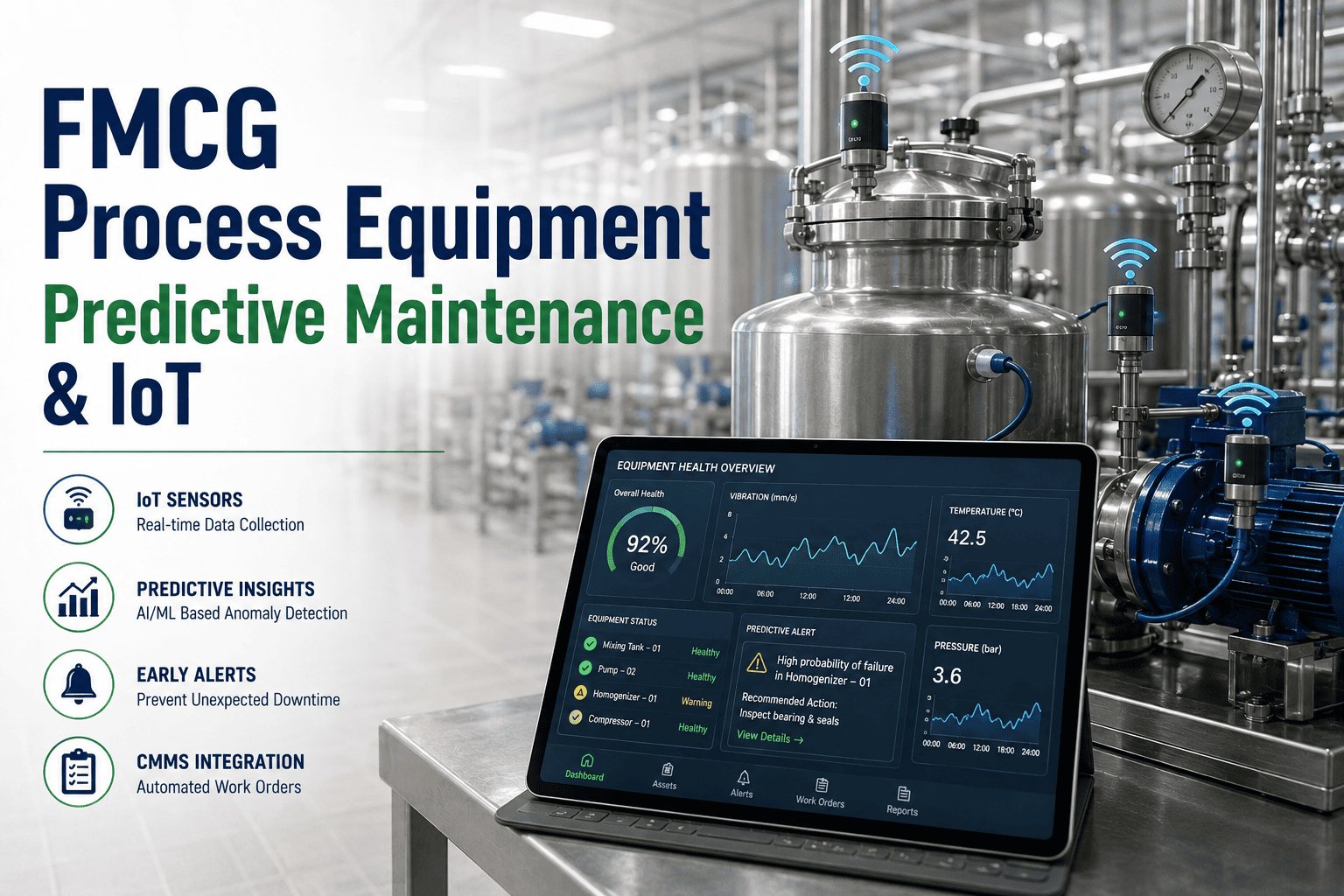
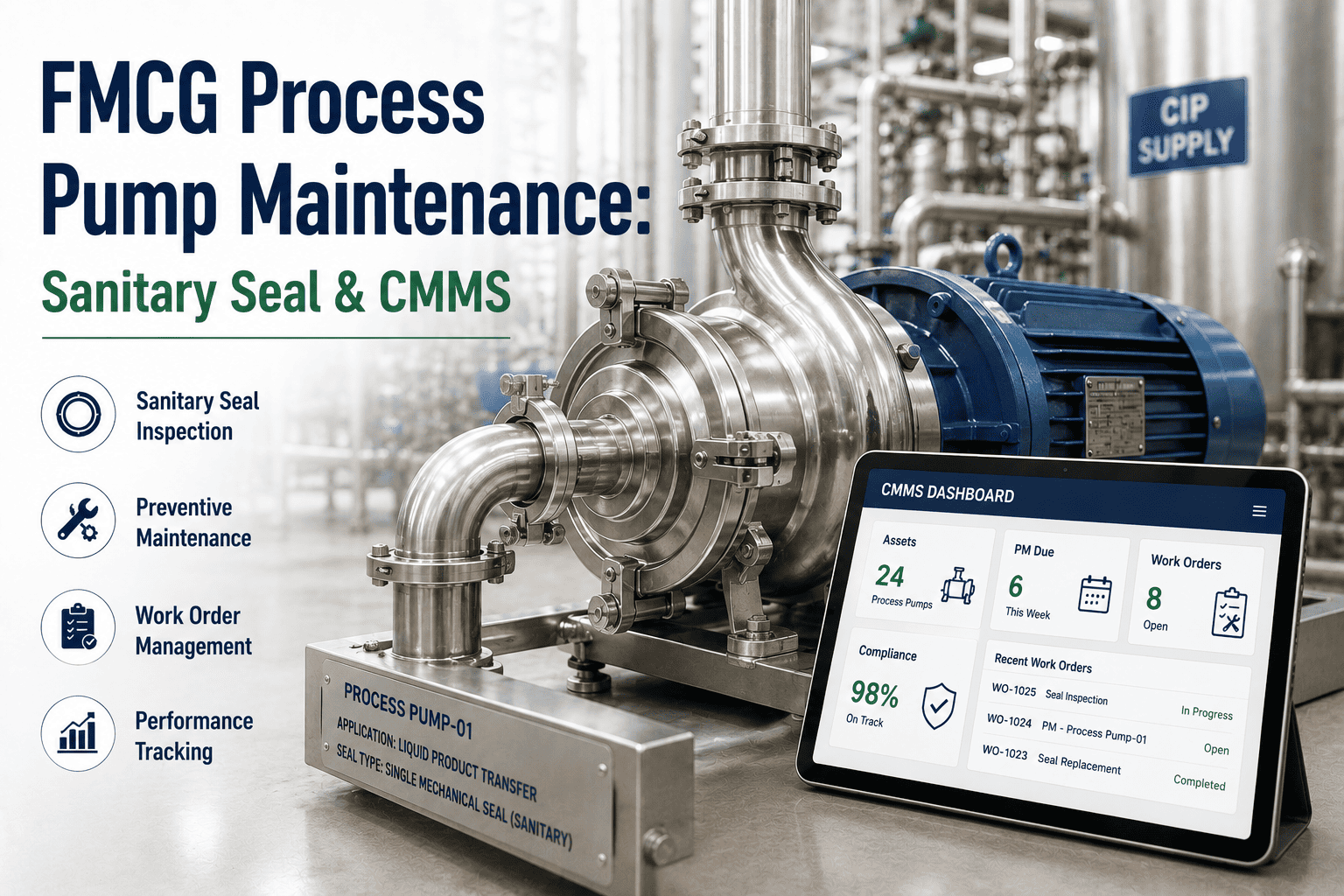
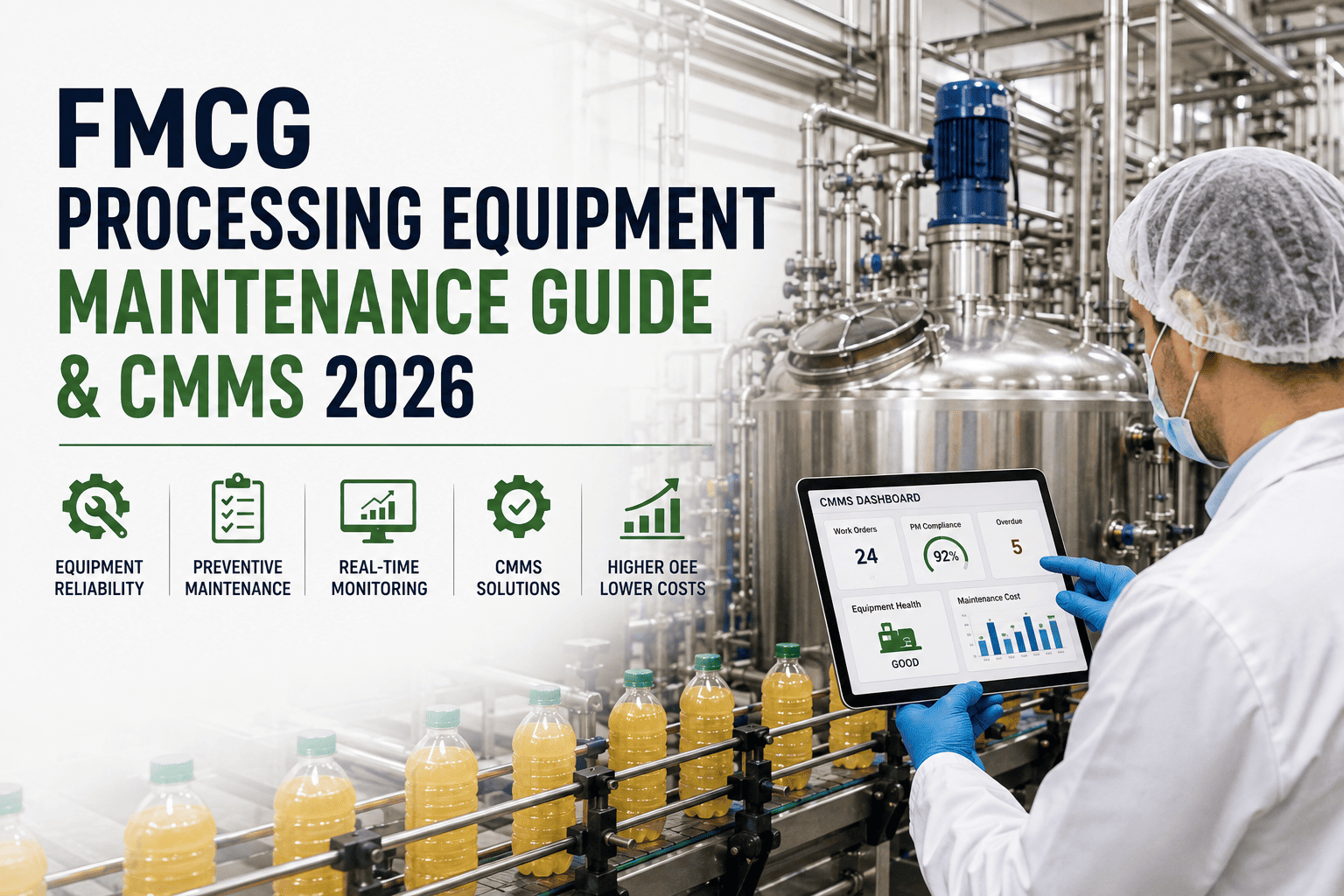
A mixer bearing starts showing abnormal vibration weeks before it fails audibly. A pump edges into cavitation long before an operator hears it. A heat exchanger loses transfer efficiency gradually enough that nobody notices until throughput has already dropped. IoT sensors can catch all three, but the sensor data only pays off once it's actually routed into a work order instead of sitting on a dashboard nobody checks. Sign up to connect vibration, temperature, and flow sensors on your process equipment directly to scheduled maintenance action.
Why It Matters
Predictive maintenance on process equipment isn't about adding more sensors, it's about closing the loop between what a sensor detects and what a technician actually does. A vibration spike or a fouling trend that never reaches a work order is just data, and plants that stop at monitoring without action see little of the downtime reduction PdM is supposed to deliver.
The Failure Modes IoT Sensors Actually Catch
Mixer Bearing Vibration
Rising vibration amplitude at specific frequencies flags bearing wear well before it's audible on the floor
Pump Cavitation
Acoustic and pressure signatures detect cavitation onset before it erodes impeller surfaces
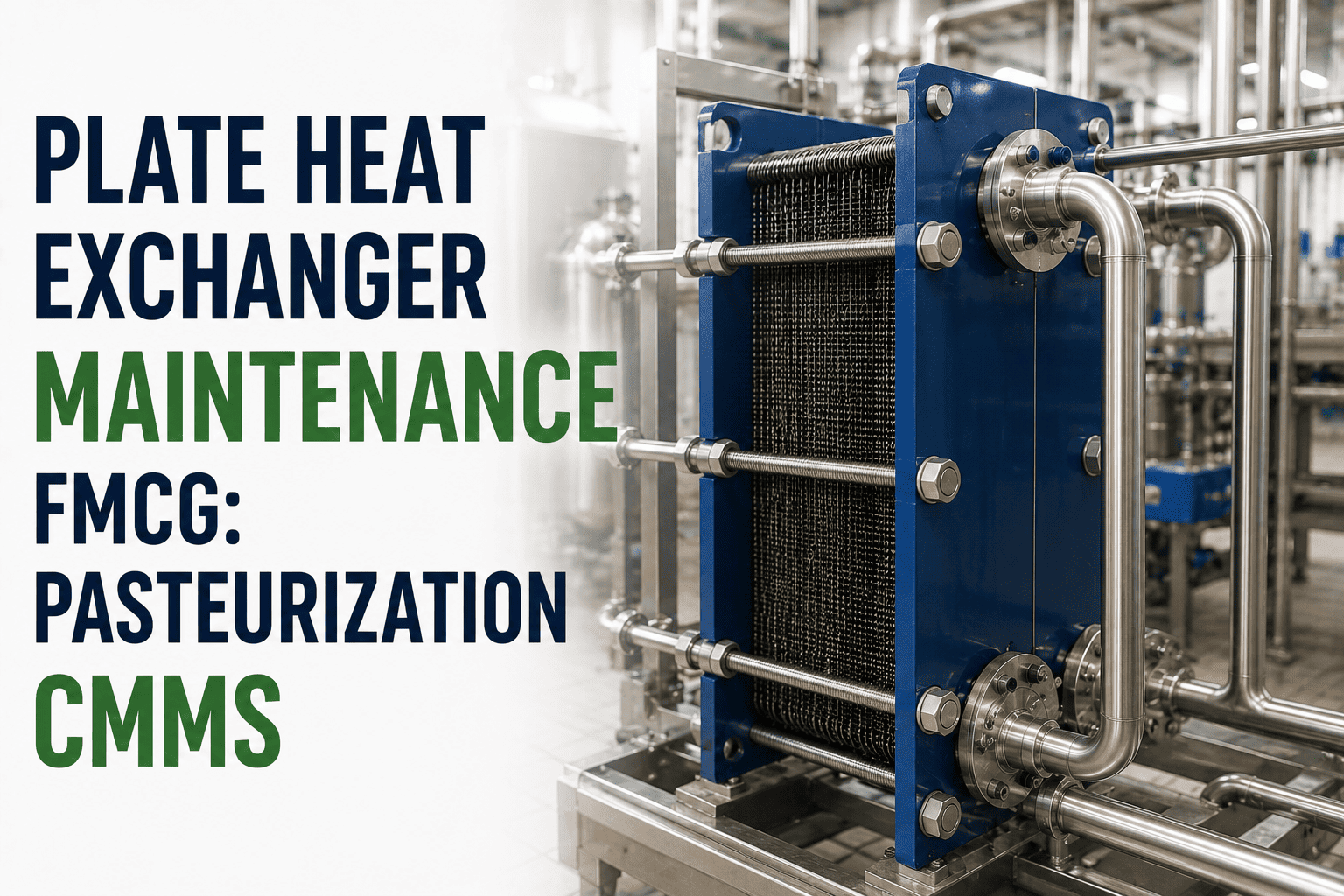
Heat Exchanger Fouling
Falling delta-T against flow rate reveals fouling building up long before output temperature visibly drifts
Motor & Drive Health
Current draw and temperature trends on motors catch winding stress before an unplanned trip
Turn Sensor Alerts Into Scheduled Work, Not Dashboards
OxMaint takes vibration, temperature, and flow alerts from your IoT sensors and opens a work order against the exact pump, mixer, or exchanger that triggered it, before the fault becomes a stoppage. Sign up for a free trial to connect your sensor data to real maintenance action, or book a demo to see PdM alerts becoming work orders live.
Sensor Type By Equipment And What It Predicts
| Equipment |
Sensor Type |
What It Predicts |
| Mixers & agitators |
Vibration accelerometer |
Bearing wear, shaft misalignment, coupling looseness |
| Process pumps |
Pressure transducer, acoustic sensor |
Cavitation onset, seal degradation, flow instability |
| Heat exchangers |
Inlet and outlet temperature, flow meter |
Fouling buildup, declining heat transfer efficiency |
| Motors & drives |
Current sensor, thermal sensor |
Winding stress, overload conditions, insulation degradation |
From Sensor Signal To Closed Work Order
Sense
Stream Condition Data Continuously
Vibration, temperature, and flow readings feed in from each asset in near real time
Analyze
Flag Deviation From Baseline
Trend logic catches gradual drift, not just hard threshold breaches that arrive too late
Act
Route The Alert To A Technician
A work order tied to the exact asset and fault closes the loop between detection and repair
The Payoff
Plants that route predictive alerts into real work orders see fewer unplanned stoppages, because the fault gets addressed while it's still a scheduled repair instead of an emergency one. It also means production teams stop treating sensor data as background noise and start trusting it as a signal worth acting on.
Frequently Asked Questions
Q
Which process equipment gives the fastest ROI from predictive sensors?
Rotating equipment with high replacement cost or high downtime impact, like critical process pumps and mixers, tends to pay back fastest, since a single avoided failure often covers the sensor investment outright.
Q
Why do so many PdM programs stall after the sensors go in?
The most common reason is that alerts land on a dashboard nobody owns. Without a direct path from alert to work order and an assigned technician, the data collects but doesn't translate into fewer failures.
Q
Does heat exchanger fouling really show up before output temperature changes?
Yes, tracking delta-T against flow rate reveals a widening gap from the fouling-free baseline well before the outlet temperature itself drifts enough for an operator to notice on the process display.
Close The Loop Between Sensors And Repairs
OxMaint connects vibration, temperature, and flow data from your process equipment directly to work orders, so predictive alerts turn into scheduled repairs instead of dashboard noise. Sign up for a free trial to start closing the loop on your process fleet, or book a demo to see predictive-to-work-order routing live.