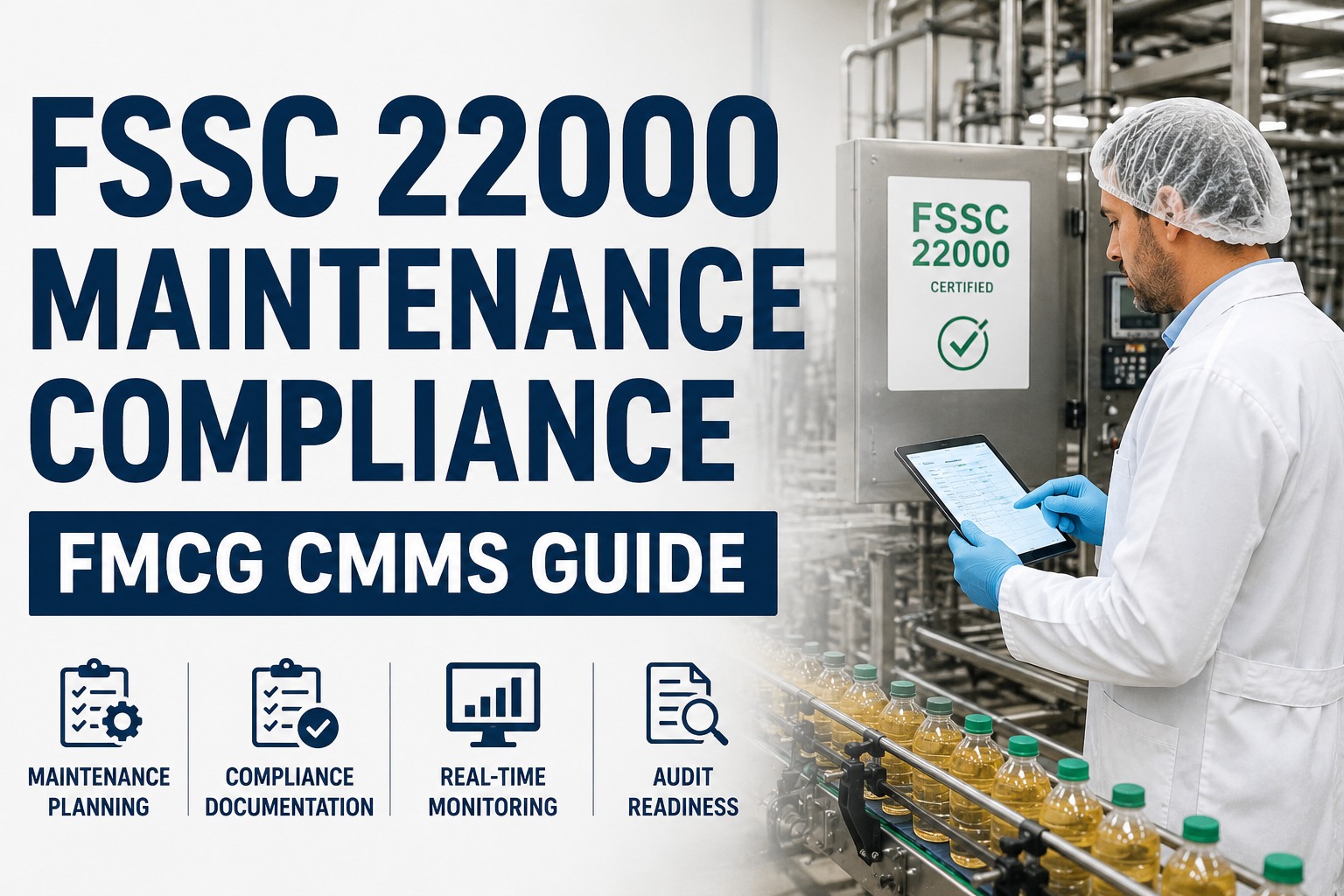
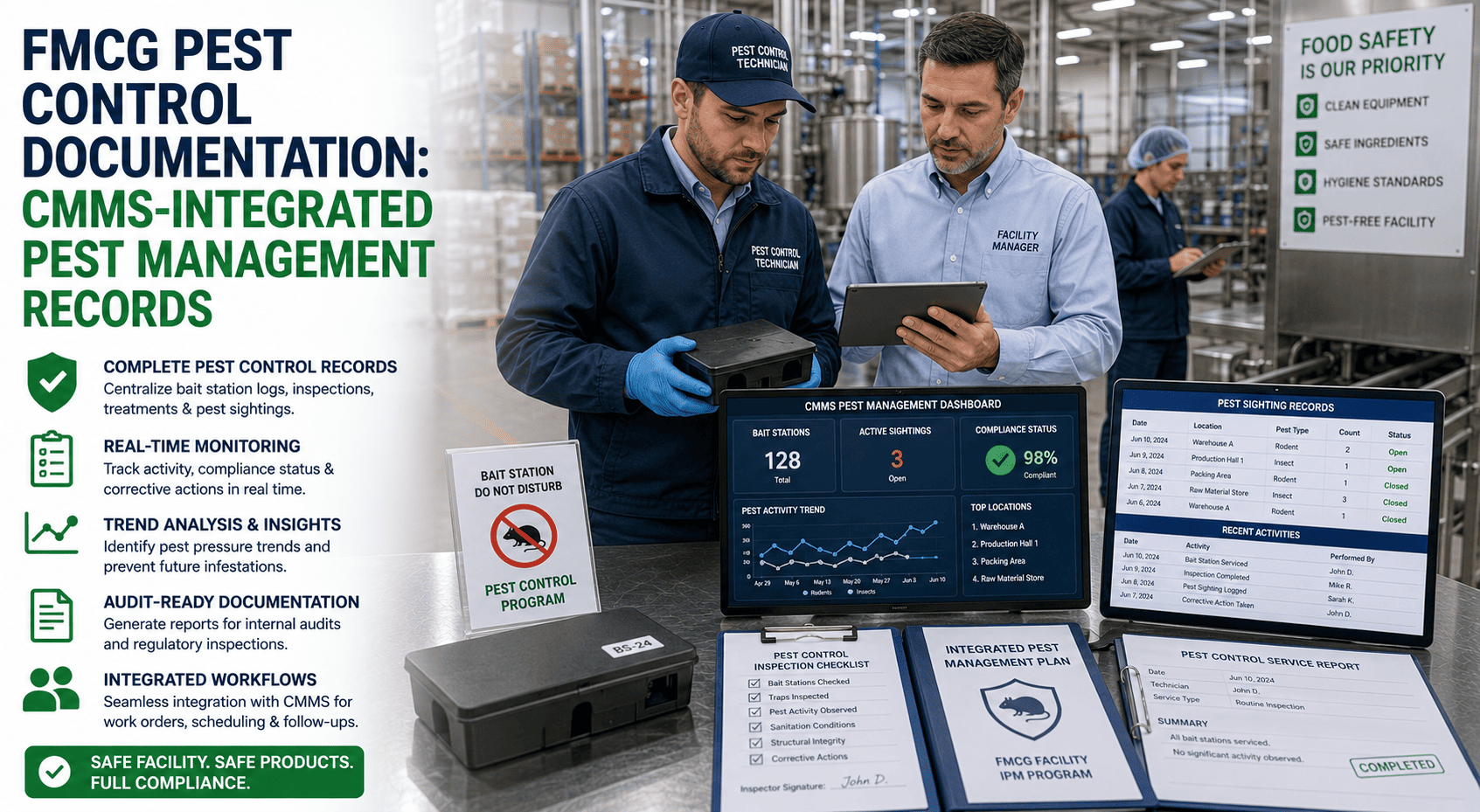
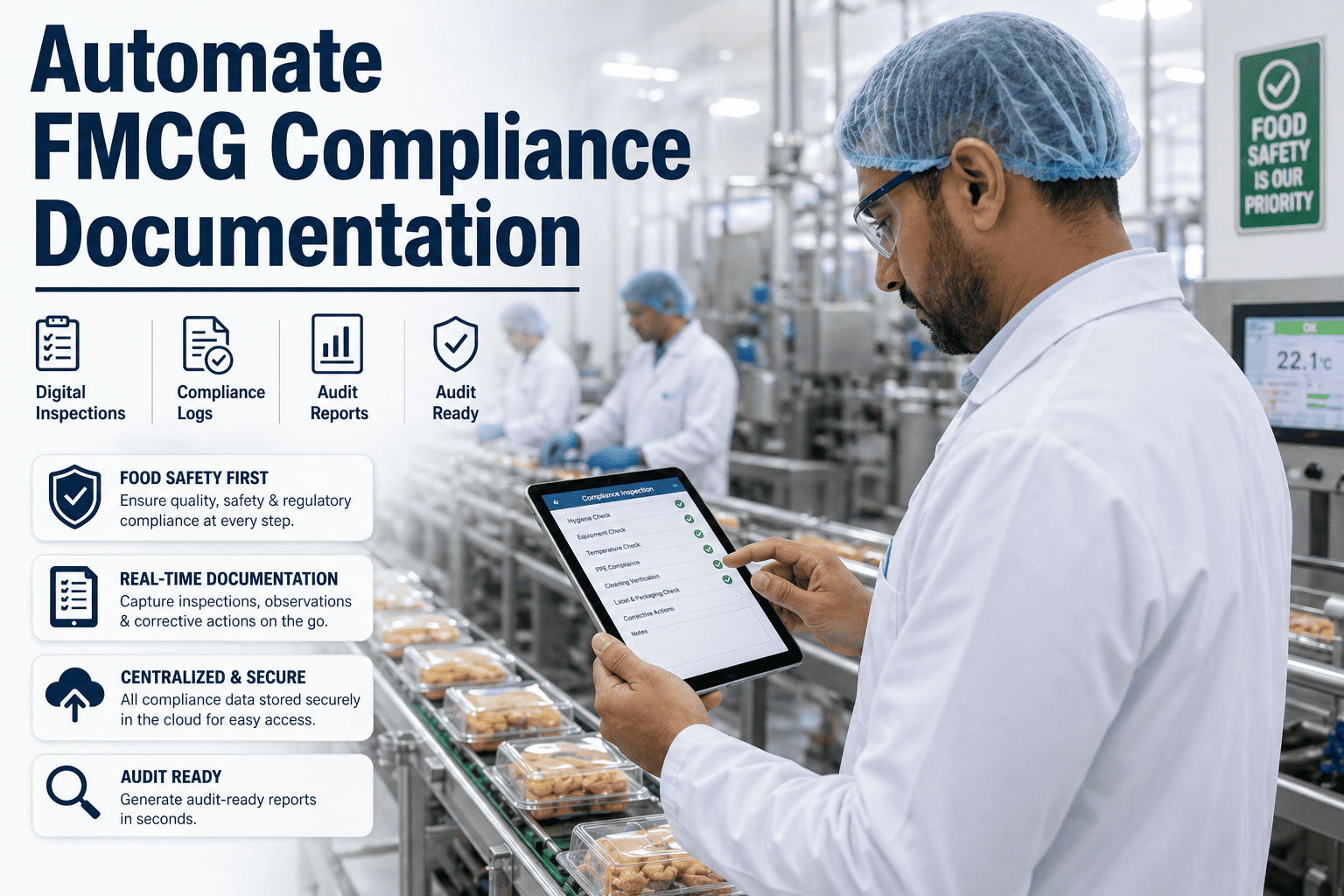
Most FMCG plants think of FSSC 22000 as a food-safety standard and of maintenance as the thing that keeps the line running. The auditor sees them as the same thing. FSSC 22000 isn't one document — it's three layers stacked on top of each other, and maintenance sits inside all three at once, so an auditor can move from the management-review record to the prerequisite-program floor check to the equipment-management clause without warning. That's exactly why maintenance gaps go unnoticed until certification is on the line: a food-grade lubricant logged against the wrong asset, a temporary repair with no permanent-fix date, a PM completed but never evidenced. Keeping an FSSC-certified operation continuously audit-defensible is a maintenance-management problem, and OxMaint is the maintenance management software built to solve it — turning daily maintenance work into the exact evidence auditors look for, automatically. This guide covers FSSC 22000 maintenance compliance for FMCG: the three-layer structure, the six maintenance areas auditors verify, and how OxMaint keeps the whole program continuously defensible. Book a free FSSC-readiness review.
To the Auditor, Maintenance and Food Safety Are the Same Thing
FSSC 22000 is three layers stacked — and maintenance sits inside all three at once. OxMaint makes it audit-defensible.
3
Interlocking layers, with maintenance embedded in every one
6
Maintenance areas an FSSC auditor verifies against your assets
V6
Made Equipment Management its own explicit requirement with KPIs
3 yr
Recertification cycle — plus annual surveillance audits between
The Three Layers · Where Maintenance Lives in Each
FSSC 22000 is deliberately layered, and the maintenance requirements are embedded across all of them rather than sitting in one section. Missing any single thread creates a non-conformity — so understanding where maintenance appears in each layer is the foundation of staying certified.
LAYER 1
ISO 22000:2018 — The Management System
The food-safety management backbone. Clause 9.3 requires maintenance trend data — breakdown frequency, PM completion, open corrective actions — as a formal input to management review, not a side conversation. OxMaint compiles it automatically.
LAYER 2
ISO/TS 22002-1 — The Sector PRP
The prerequisite program for food manufacturing. Section 8 defines the maintenance programme — preventive and corrective, food-grade lubricants, tool control, post-maintenance sanitation — as core hygiene conditions the auditor checks against physical assets.
LAYER 3
The 14 Additional FSSC Requirements
Food fraud, food defense, allergen management, and — new in V6 — Equipment Management as its own explicit clause. Auditors now expect a measurable, managed programme with defined KPIs, not just proof that tasks happened.
The Six Maintenance Areas Auditors Verify
When the audit reaches maintenance, it's specific. Auditors evaluate six areas, each against the physical assets and the evidence behind them — and each is a common source of non-conformances. OxMaint generates the evidence for every one from daily operations.
01
Documented PM Program
A systematic preventive-maintenance program covering all food-contact and safety-critical equipment. OxMaint holds the schedules and auto-generates the tasks — the managed programme V6 now demands.
02
Completed Work-Order Evidence
Every job closed with date, technician identification, and what was done. OxMaint captures it on mobile as the work happens — proof of execution, not a reconstructed logbook.
03
Calibration Records
Monitoring and measuring equipment calibrated or verified at specified intervals, with records retained. OxMaint schedules calibration and stores the certificates against each device.
04
Food-Grade Lubricant Register
An H1 lubricant register with certifications linked to specific equipment. When OxMaint raises a PM for food-contact equipment, it specifies the approved lubricant — preventing the non-food-grade errors that trigger major non-conformances.
05
Temporary-Repair Control
Temporary repairs documented with a defined maximum duration and a timeline for the permanent fix, so they never introduce a food-safety hazard. OxMaint tracks each with an expiry that won't let it be forgotten.
06
Post-Maintenance Sanitation
A verified sanitation checkpoint after maintenance before production restarts. OxMaint logs the sign-off against the food-contact asset — closing the loop between a repair and a safe line.
See Your FSSC Evidence Generated Live in 30 Minutes
Working session with our FMCG team — bring your equipment list and current records. We'll map the six audit areas onto your assets and show how OxMaint produces the PM, calibration, lubricant, and sanitation evidence auditors ask for, automatically.
The V6 Shift · From "Tasks Happened" to "Managed Programme"
The single biggest change FMCG plants need to absorb is what FSSC 22000 Version 6 did to equipment maintenance — it raised the bar from proof to management, and it's where paper-based programs now fall short.
Before V6 · Proof of Tasks
Show that PMs were completed
Produce records when asked
Maintenance checked as PRP execution
Paper logs reconstructed for the audit
V6 · Managed Programme
Defined KPIs and trend monitoring
PM compliance and overdue rates tracked
Equipment Management as its own clause
Evidence generated continuously, not rebuilt
Change Management · The Clause Behind the Clauses
One requirement ties the whole program together and is a frequent non-conformance: any change to food-contact equipment must run through a controlled workflow, not a quiet swap. This is where an ad-hoc maintenance culture gets caught.
Every Equipment Change, a Documented Workflow
FSSC 22000 expects a structured path for equipment changes: change request, risk assessment, food-safety impact analysis, approval, implementation, then verification — with a digital audit trail documenting every step. A new part on a food-contact machine, a modified guard, a re-routed line: each must be assessed for food-safety impact before it goes live, not after an auditor finds it. OxMaint runs this as a workflow with the audit trail built in, so a change to a food-contact asset can't bypass the risk assessment and sign-off the standard requires — turning the clause most plants handle informally into a controlled, evidenced process.
How OxMaint Keeps FSSC 22000 Continuously Defensible
OxMaint is the maintenance management software that turns FSSC 22000 from an audit-season scramble into a daily byproduct of doing maintenance — the documented PM programs, calibration tracking, lubricant registers, and change workflows auditors look for, generated automatically, from one dashboard on desktop or mobile.
Program
Documented PM by Asset
Systematic PM schedules for every food-contact and safety-critical asset, auto-generating tasks and closing with dated, technician-signed evidence.
Calibrate
Calibration & Certificates
Schedule calibration for monitoring and measuring devices at defined intervals and store the certificates against each asset — retained and retrievable.
Lubricants
H1 Food-Grade Register
A central H1 lubricant register linked to equipment, with PM work orders specifying the approved lubricant — stopping the errors that cause major non-conformances.
Control
Temp-Repair & Sanitation
Track temporary repairs with expiry timelines and log post-maintenance sanitation sign-offs against food-contact assets before restart.
Change
Equipment Change Workflow
Change request, risk assessment, food-safety impact, approval, and verification as one workflow with a complete digital audit trail.
Review
KPIs for Management Review
PM compliance, overdue rates, and failure trends compiled automatically as ready-made input for management review — the KPIs V6 expects.
Make Every Day Audit Day — Without the Scramble
Keep your FSSC-certified operation continuously defensible by turning daily maintenance into the evidence auditors look for. See how OxMaint generates FSSC 22000 documentation automatically across your FMCG plant. Free forever plan available.
Frequently Asked Questions
How does FSSC 22000 treat maintenance?
As a food-safety requirement embedded across the whole standard, not a facilities afterthought. FSSC 22000 is built on three layers — ISO 22000:2018 for the management system, ISO/TS 22002-1 for the sector prerequisite programs, and 14 additional FSSC requirements — and maintenance appears in all three: as a management-review input under ISO 22000 Clause 9.3, as a core hygiene PRP under ISO/TS 22002-1 Section 8, and as its own Equipment Management clause under the V6 additional requirements. Auditors evaluate it from all these angles, so missing any one thread creates a non-conformity. OxMaint is the maintenance management software that keeps every thread evidenced.
Book a review.
What maintenance records do FSSC 22000 auditors check?
Six areas specifically: a documented preventive-maintenance program covering all food-contact and safety-critical equipment; completed work orders with dates and technician identification; calibration records for monitoring and measuring equipment; a food-grade (H1) lubricant register with certifications linked to specific equipment; temporary repairs documented with a maximum duration and permanent-fix timeline; and post-maintenance sanitation verification before production restart. Each is a common non-conformance source. OxMaint generates the evidence for all six automatically from daily maintenance, so the records exist as a byproduct of doing the work rather than an audit-season reconstruction.
What changed for maintenance in FSSC 22000 Version 6?
V6 added Equipment Management as one of its explicit additional requirements, separate from the ISO/TS 22002-1 PRP maintenance clauses. The practical effect is that auditors now evaluate maintenance not just as a PRP execution check — did the tasks happen? — but as a formal managed programme with defined KPIs, trend monitoring, and management oversight. Proof that PMs were completed is no longer enough; you need to show PM compliance rates, overdue trends, and failure data being tracked and reviewed. This is exactly where paper-based programs fall short and where OxMaint's automatic KPI compilation closes the gap.
Start free.
Why is food-grade lubricant control such a common non-conformance?
Because it's easy to get wrong and serious when you do. Food-contact equipment must use H1 food-grade lubricants, and the plant must prove which lubricant is approved for which asset with certifications on file. In practice a technician grabs a non-food-grade lubricant, or uses the right one but can't evidence it, and a major non-conformance follows. OxMaint prevents this by holding a central H1 register linked to equipment and specifying the approved lubricant directly on the PM work order for food-contact assets — so the correct lubricant is designated at the point of work and the record is automatic.
How does OxMaint keep FSSC 22000 continuously audit-defensible?
By generating the evidence auditors look for as a byproduct of daily maintenance rather than a scramble before the audit. OxMaint holds documented PM programs for every food-contact and safety-critical asset, schedules calibration and stores certificates, maintains an H1 food-grade lubricant register that populates PM work orders, tracks temporary repairs with expiry timelines and post-maintenance sanitation sign-offs, and runs equipment changes through a request–risk-assessment–approval–verification workflow with a full audit trail. It compiles PM compliance, overdue rates, and failure trends automatically as management-review input. With mobile execution and SAP and Maximo overlay, it makes every day audit-ready. A free forever plan is available.