Every FMCG plant runs on secrets — proprietary recipes, process parameters, formulation ratios, supplier blends, and quality control algorithms that took decades and millions in R&D to develop. When you push that data to the cloud for AI processing, you're sending your competitive advantage through infrastructure you don't own, managed by people you don't employ, stored in locations you can't control. IBM's 2025 Cost of a Data Breach Report puts the average manufacturing breach at over $5 million. Verizon's 2025 DBIR shows manufacturing breaches nearly doubled year-over-year, with 34% of manufacturers citing IP theft as their top cyber threat. And 62% of FMCG leaders cite data security as the primary blocker to wider AI adoption.
On-premise AI eliminates the tradeoff. You get the full power of machine learning — predictive maintenance, real-time quality inspection, demand forecasting, process optimization — without a single byte of proprietary data leaving your facility. When integrated with a closed-loop CMMS, on-prem AI doesn't just run models — it feeds AI-generated insights directly into maintenance workflows, quality logs, and compliance documentation, creating a system that's both intelligent and secure. Book a Demo — see how on-prem AI insights feed directly into maintenance workflows.
Why FMCG Plants Can't Afford Cloud-Only AI
The FMCG industry generates and depends on some of the most commercially sensitive data in manufacturing. Here's what's at risk — and why on-premise is the only architecture that fully protects it:
Proprietary IP at Risk
Regulatory & Compliance Pressure
Operational Latency Demands
Financial Exposure
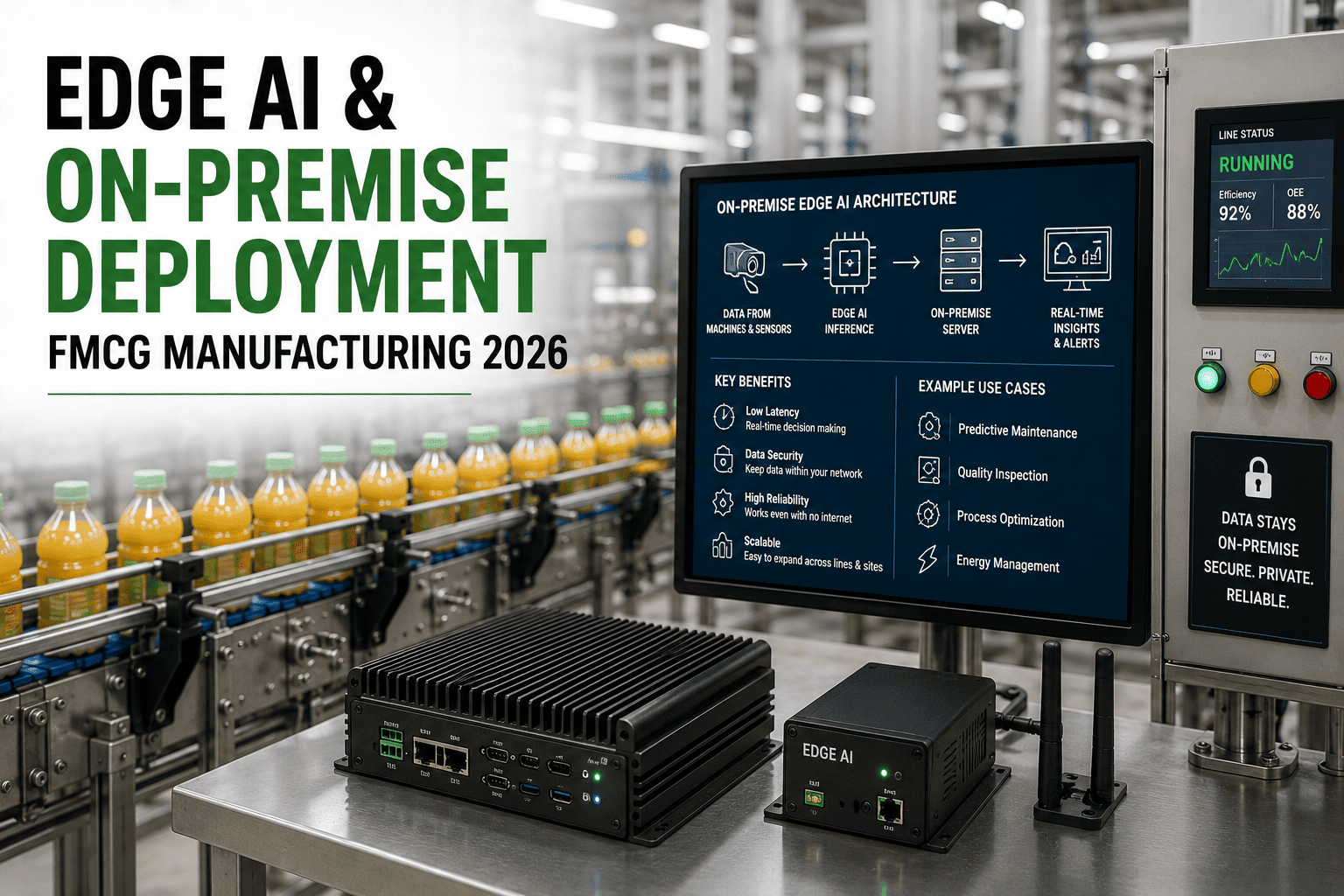
The On-Premise AI Architecture for FMCG Plants
On-premise AI isn't "cloud without the cloud." It's a purpose-built architecture designed for the specific security, latency, and regulatory demands of food and consumer goods manufacturing. Here's the complete stack:
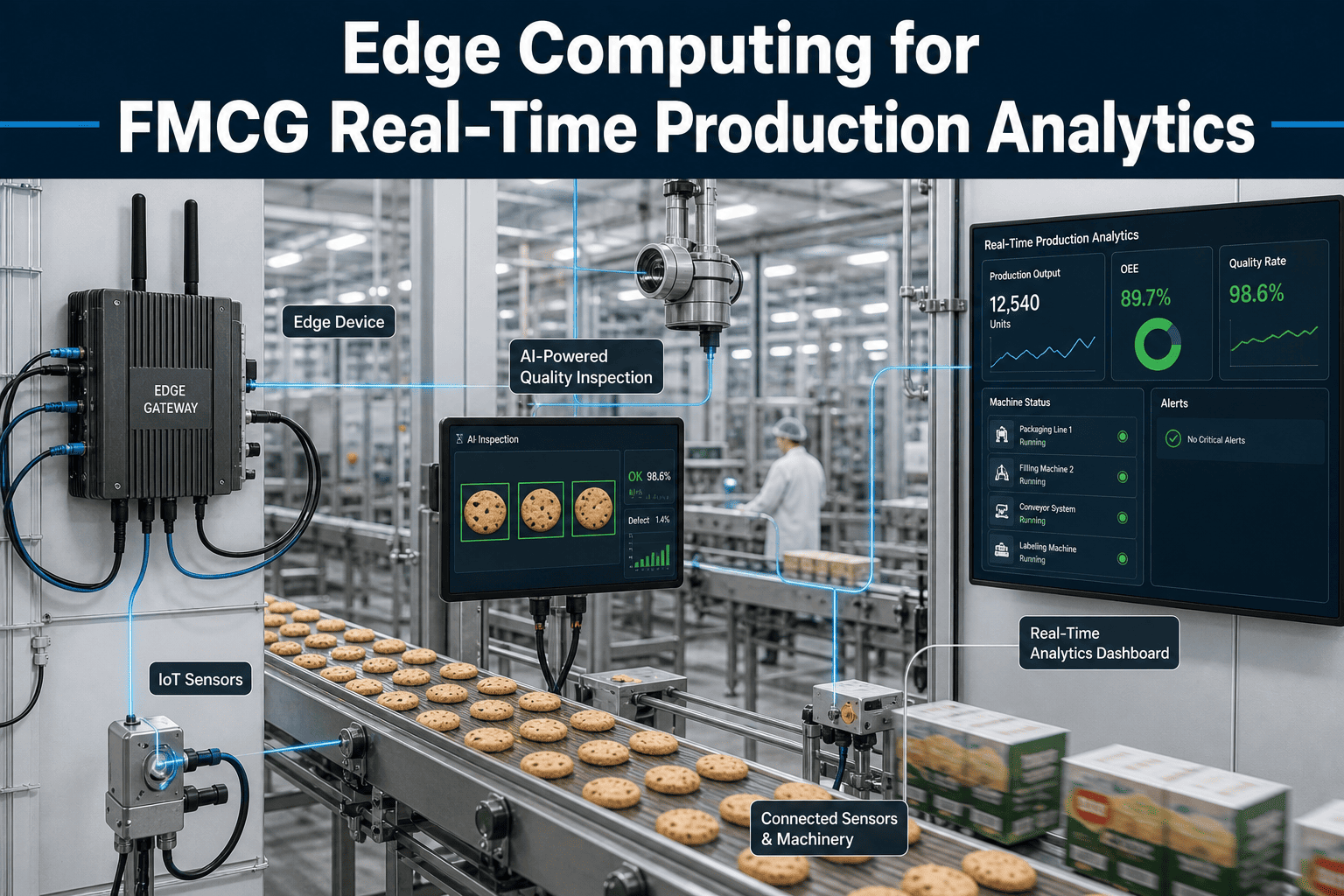
Edge Inference & Data Capture
Secure On-Premise AI Engine
CMMS Integration & Closed-Loop Action
Secure AI. Local Data. Automated Maintenance. One Platform.
Oxmaint connects on-premise AI insights directly to maintenance workflows — so when the AI detects a failing pump seal or a drifting fill level, the work order is already created before the line goes down. Your recipes stay behind your firewall. Your compliance logs write themselves. Your technicians get the right alert at the right time.
Five AI Use Cases Running On-Premise in FMCG Plants Today
On-premise AI isn't theoretical — leading FMCG manufacturers are already deploying these capabilities behind their own firewalls, with measurable results:
Predictive Maintenance
ML models analyze vibration, temperature, and power draw from mixers, fillers, and conveyor drives to predict failures 24-72 hours ahead. Reduces unplanned downtime by up to 70%. Nestle already uses AI-driven predictive maintenance to boost operational resilience.
Vision-Based Quality Inspection
Computer vision cameras inspect labels, fill levels, seal integrity, and packaging defects at line speed. Edge AI processes thousands of items per minute with 99%+ accuracy — without sending a single product image to external servers.
Batch Process Optimization
AI models trained on historical batch data optimize mixing times, temperatures, and ingredient ratios to maximize yield and consistency. Proprietary formulation intelligence stays entirely within the plant — no cloud exposure of recipe parameters.
Energy & Utility Optimization
Real-time AI analysis of HVAC, refrigeration, compressed air, and steam systems identifies waste patterns and optimizes setpoints. FMCG plants typically cut energy consumption by 10-20% — with all control logic running on local edge devices.
Food Safety & HACCP Monitoring
AI continuously monitors critical control points — temperatures, pressures, pH levels, metal detection — and flags deviations instantly. Automated logging creates audit-ready HACCP documentation without manual data entry. Book a Demo — see automated HACCP logging in action for your plant.
ROI of On-Premise AI in FMCG Manufacturing
The business case for on-premise AI goes far beyond security. Here's a typical ROI breakdown for a mid-size FMCG plant running 3-5 production lines:
Reduced Unplanned Downtime
Predictive maintenance catches equipment failures 24-72 hours before they occur. Every hour of unplanned downtime on an FMCG production line costs $10,000-$50,000 in lost output, wasted raw materials, and expedited repairs.
Reduced Quality Rejects & Recalls
AI vision inspection catches defects human inspectors miss — label errors, fill variances, seal failures, foreign objects. Detection rates jump from 85% to 99%+, cutting customer complaints and recall risk dramatically.
Avoided Data Breach Costs
Average manufacturing breach costs $5M+ (IBM 2025). On-prem AI eliminates cloud data transit, reduces attack surface, and keeps proprietary recipes and process data within your air-gapped facility network.
Energy & Yield Optimization
AI-optimized batch processes and utility systems cut energy costs 10-20% and reduce raw material waste by 3-8%. All optimization models run locally — no external visibility into your consumption patterns or cost structure.
Maintaining Your On-Premise AI Infrastructure
On-premise AI hardware runs in the same harsh conditions as your production equipment — heat, humidity, vibration, and dust. Without rigorous preventive maintenance tracked through a CMMS, model accuracy and system reliability degrade within weeks. Sign Up — set up automated PM schedules for your AI infrastructure alongside your production assets.
System Health Checks
Monitor GPU temperatures, fan speeds, and inference latency on edge servers. Verify camera and sensor feeds are active. Check network connectivity between edge nodes and central AI engine. Log any anomalies.
Model Accuracy Validation
Run calibration samples through vision inspection systems. Compare AI predictions against known-good references. Monitor drift in predictive maintenance models. Log accuracy metrics in inspection records.
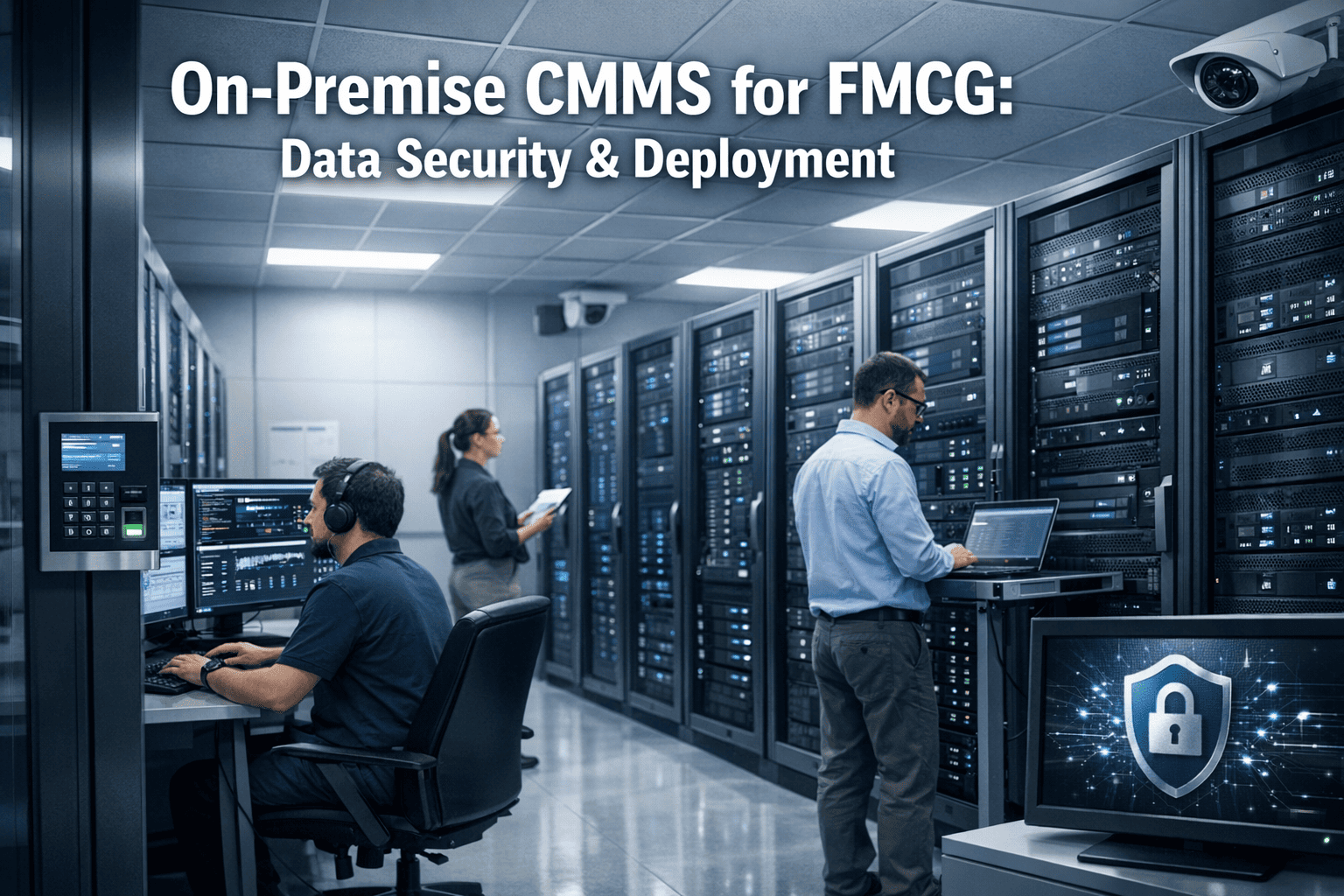
Hardware & Security Audit
Inspect server enclosures, cooling systems, and air filtration. Apply security patches to local OS and AI frameworks. Review access logs for unauthorized attempts. Verify backup integrity and disaster recovery readiness.
Model Retraining Cycle
Retrain AI models with newly collected production data. Validate updated models against test datasets before deployment. Archive previous model versions. Update CMMS rule sets for any new failure signatures or quality patterns.
Full Infrastructure Review
Assess GPU/server hardware lifecycle and plan replacements. Evaluate AI model performance against KPIs. Review cybersecurity posture with penetration testing. Audit regulatory compliance documentation completeness.
Protect Your Recipes. Predict Your Failures. Automate Your Compliance.
Oxmaint closes the loop between on-premise AI and plant operations — turning predictions into work orders, anomalies into inspections, and sensor data into audit-ready compliance logs. Every alert, every repair, every validation step is documented automatically within your secure network. No cloud. No exposure. No gaps in your audit trail.
Frequently Asked Questions
What's the difference between on-premise AI and edge AI?
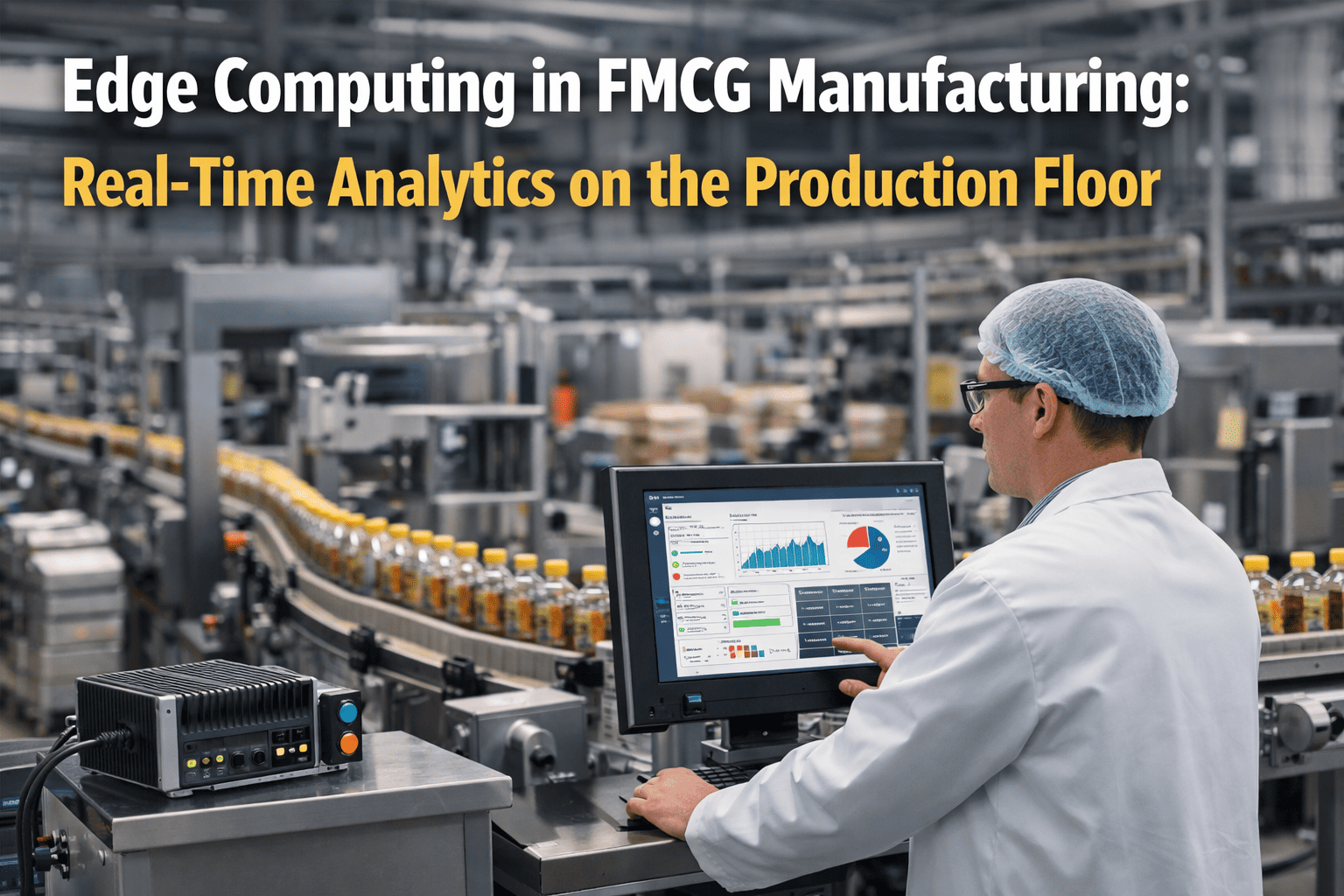
Edge AI refers to running AI inference on devices physically close to the data source — sensors, cameras, or ruggedized compute nodes on the plant floor. On-premise AI is the broader architecture: it includes edge devices plus the local servers for model training, data storage, and system management — all within your facility. In FMCG plants, you typically deploy edge AI at the production line for real-time decisions (quality inspection, process control) and on-prem servers in the plant's IT room for model training, analytics, and CMMS integration. Together, they form a complete AI stack with zero cloud dependency.
Can on-premise AI match cloud performance for FMCG applications?
For inference (running trained models) — absolutely. Modern edge GPUs handle real-time quality inspection, predictive maintenance, and process optimization with latency under 10ms, which is actually faster than cloud because there's no network round-trip. For training large models, on-prem requires more upfront hardware investment, but FMCG AI models are typically smaller and more specialized than, say, large language models. A single rack of GPU servers can train and retrain production-specific models on quarterly cycles. Many companies use a hybrid approach: train on-prem with production data, and use cloud only for non-sensitive R&D experimentation.
How does Oxmaint integrate with on-premise AI systems?
Oxmaint connects to your on-prem AI infrastructure via local API integration. When the AI system detects an anomaly — a vibration signature indicating bearing wear, a vision system catching label misalignment, or a sensor reading drifting outside tolerance — it pushes that signal to the CMMS. Oxmaint automatically creates a prioritized work order, assigns it to the right technician, and logs the AI-generated insight as part of the maintenance record. After the repair, the AI system validates the fix, and Oxmaint updates the asset's health profile. Everything runs on your local network. Book a Demo — see the full AI-to-work-order loop running on a local network.
What does an on-premise AI deployment cost for a mid-size FMCG plant?
A typical deployment for 3-5 production lines includes: edge compute nodes ($30K-$80K for GPU-accelerated servers), vision cameras and sensors ($50K-$150K depending on line count), on-prem AI server cluster ($80K-$300K for training and inference), network and security infrastructure ($20K-$50K), and integration, training, and deployment services ($50K-$200K). Total: $200K-$800K fully installed. With annual savings of $1M-$4M+, most plants achieve payback in 3-9 months. The hardware becomes a depreciating asset — unlike cloud subscriptions that never stop billing.
How do you keep on-premise AI models current without cloud access?
On-prem AI models are retrained quarterly using your own production data — which is actually an advantage, because your models learn from your specific equipment, your products, and your failure modes rather than generic datasets. New training data is collected continuously from sensors, cameras, and maintenance records. Model retraining happens on local GPU servers during planned maintenance windows. Updated models are validated against test datasets before deployment. For framework updates and security patches, these are applied through controlled, air-gapped update procedures — no always-on internet connection required. Sign Up — start collecting the production data your AI models will train on.