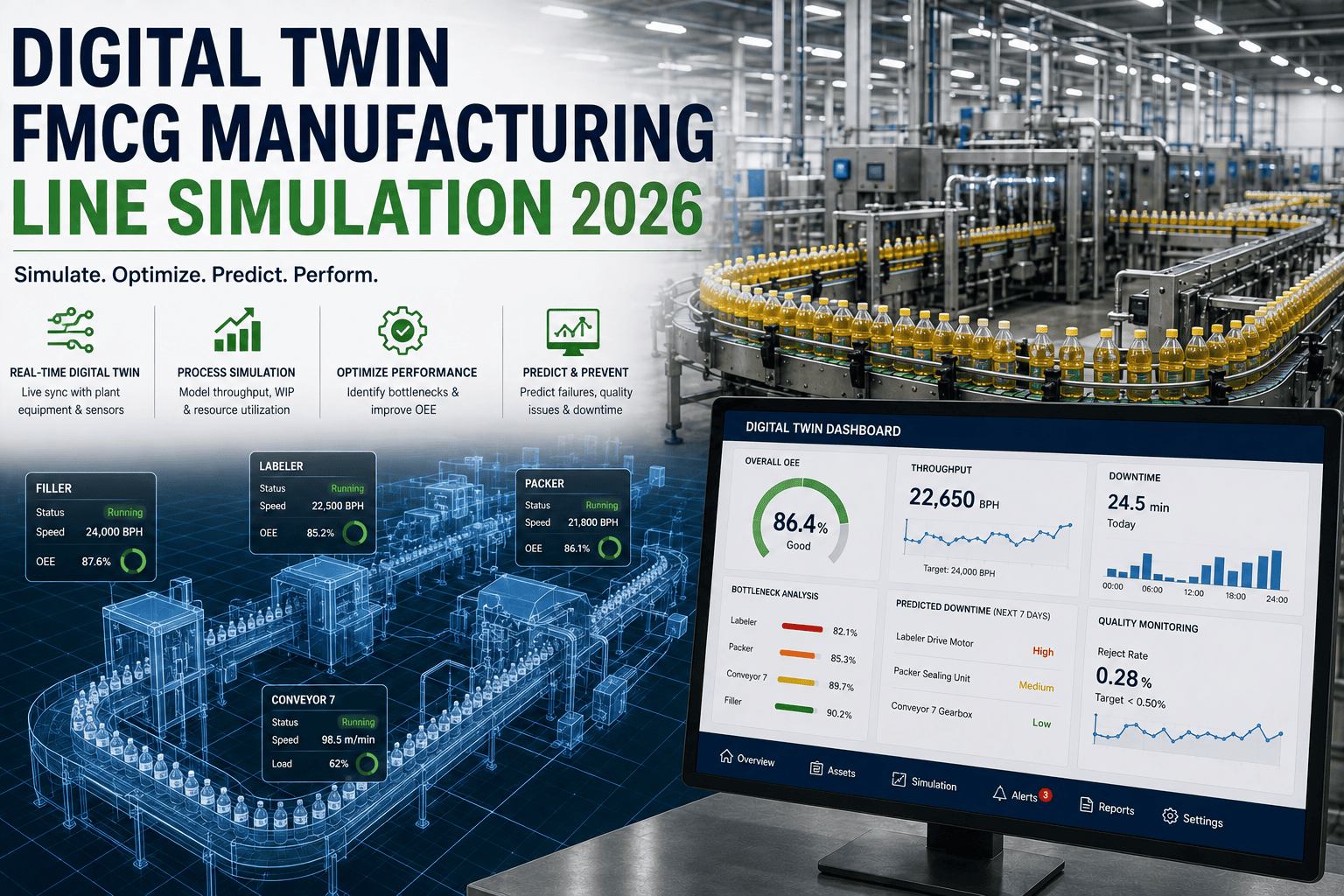
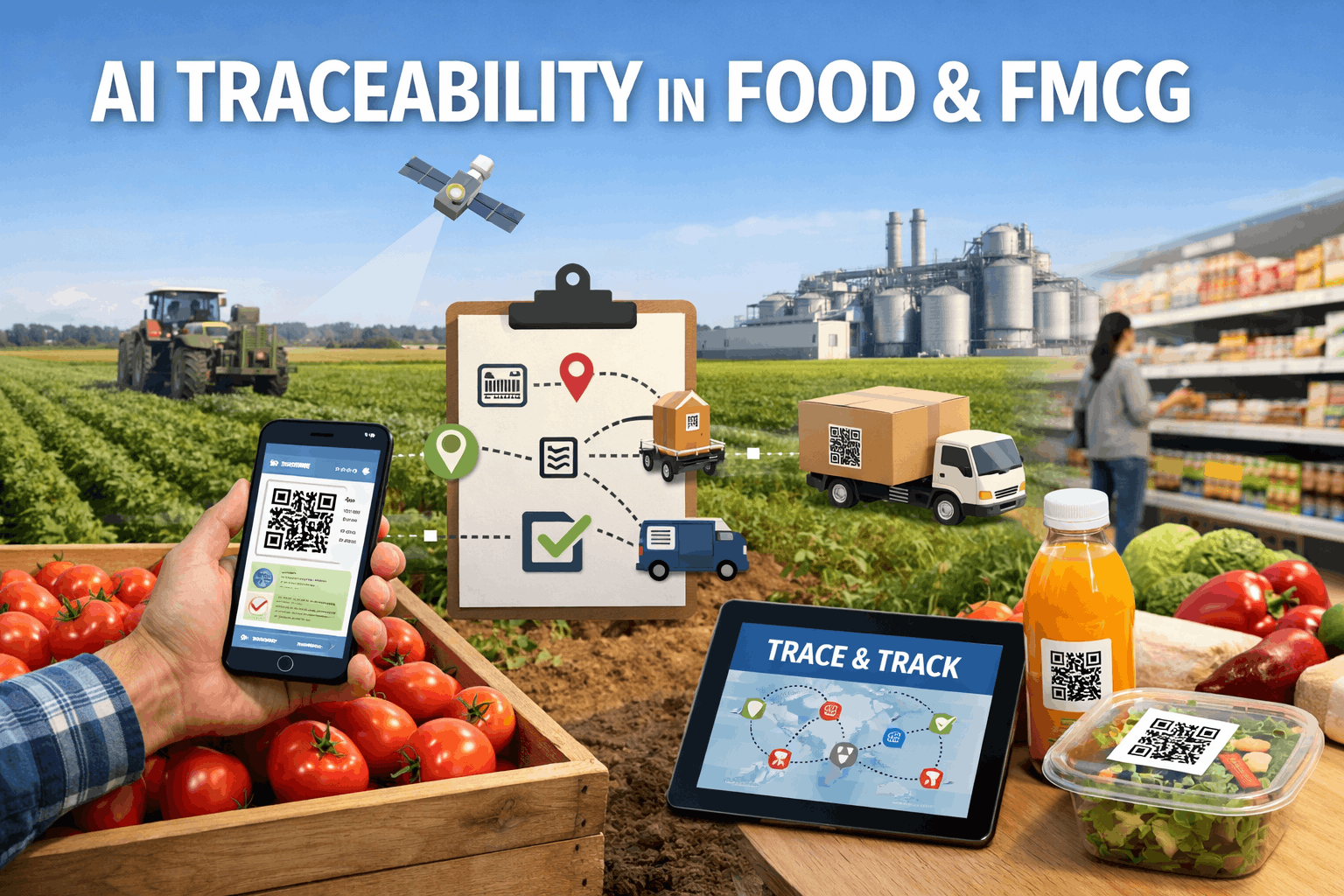
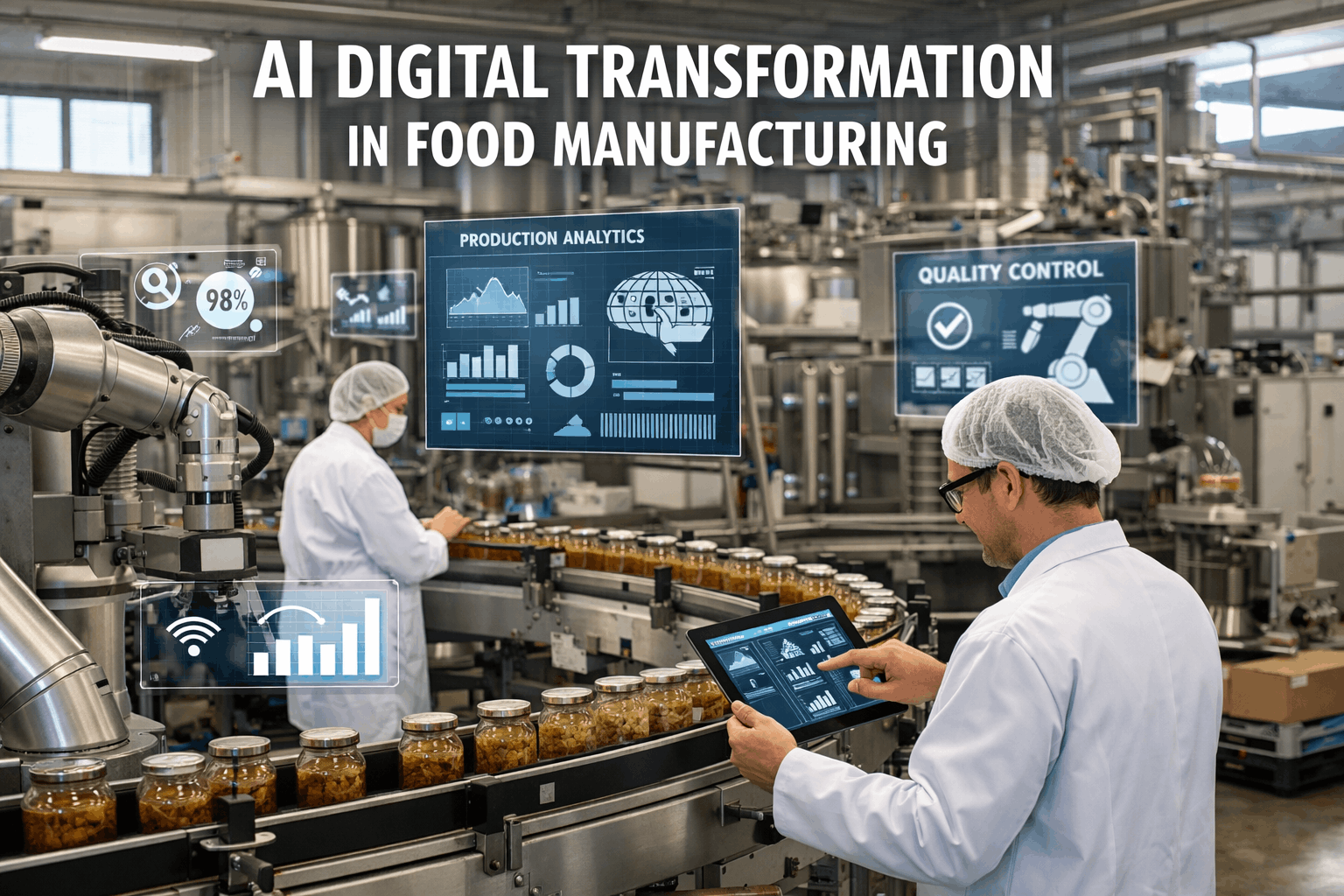
FMCG manufacturing plants are under relentless pressure — shorter product cycles, tighter margins, consumer demand volatility, and aging equipment that silently erodes throughput. The factories that will win the next decade are not those spending the most on technology, but those executing digital transformation in a structured, phased sequence that generates measurable ROI at every stage. According to McKinsey, FMCG manufacturers that successfully digitize operations reduce manufacturing costs by 15–25% and improve delivery reliability by 30–50%. If your plant still runs on paper work orders and spreadsheet-based maintenance logs, you are already operating at a structural cost disadvantage — start a free trial to see how Oxmaint builds digital operations into your FMCG plant from day one, or book a demo and walk through your specific facility structure with our team.
FMCG Digital Transformation
See Your Operational ROI in 30 Minutes
See how much cost you can eliminate from reactive maintenance and untracked assets in your FMCG facility.
- Real-time asset visibility across every production line
- Predictive failure alerts before costly breakdowns occur
- 5–10 year CapEx forecasting with investor-grade reporting
Used by operations teams managing 10,000+ assets — live in days, not months
What Is Digital Transformation in FMCG Manufacturing?
Digital transformation in FMCG manufacturing is the systematic replacement of manual, paper-based, and siloed operational processes with integrated digital systems that share data, automate workflows, and produce actionable intelligence in real time. It is not a single technology purchase — it is a phased operational redesign spanning asset management, production scheduling, quality control, maintenance, and supply chain.
For FMCG plants specifically, transformation must address the sector's unique pressures: rapid SKU proliferation, strict food safety compliance (HACCP, GMP, BRC), high-frequency changeovers, and consumer demand volatility that makes unplanned downtime catastrophically expensive. A line stoppage during a peak production run is not a maintenance event — it is a revenue loss event that can cascade into missed shipments and retailer penalties.
Effective digital transformation starts with operational data integrity — knowing exactly what assets you have, their condition, their maintenance history, and their projected lifecycle cost. Without that foundation, advanced technologies like AI analytics and IoT monitoring have nothing meaningful to act on. Teams that start a free trial with Oxmaint typically establish this asset intelligence layer within the first 30 days, then build upward from there — or book a demo to see how the hierarchy maps to your facility.
The 8-Phase FMCG Digital Transformation Roadmap
Successful FMCG digitization follows a sequenced framework — not a big-bang implementation. Each phase builds on the last, delivering measurable ROI before the next investment is committed.
Asset Intelligence Foundation
Build a complete asset registry with condition scoring, hierarchy mapping (Portfolio → Property → System → Asset → Component), and maintenance history digitization.
Preventive Maintenance Automation
Replace reactive breakdown cycles with PM scheduling, mobile work order execution, and compliance-ready inspection checklists for GMP and food safety audits.
Production Line OEE Monitoring
Deploy OEE dashboards that track availability, performance, and quality in real time. Identify chronic micro-stoppages that collectively reduce output by 10–15%.
IoT and Sensor Integration
Connect vibration, temperature, energy, and pressure sensors to your CMMS. Condition-based alerts replace time-based maintenance intervals with actual need signals.
Supply Chain Visibility Layer
Integrate procurement, spare parts inventory, and MRO management. Eliminate emergency purchases at 3× standard cost by predicting parts consumption ahead of need.
AI-Powered Predictive Analytics
Apply machine learning to historical failure patterns, condition data, and environmental variables to predict failures 2–6 weeks ahead with actionable confidence scores.
CapEx Planning and Lifecycle Models
Build rolling 5–10-year capital expenditure forecasts based on actual asset condition and failure probability. Replace budget surprises with investor-grade financial planning.
Multi-Site Portfolio Optimization
Consolidate data across plants, regions, and portfolios into unified dashboards. Benchmark performance, share best practices, and allocate capital where ROI is highest.
Why FMCG Digital Transformation Stalls: 6 Critical Pain Points
Most FMCG plants attempt digital transformation but only 30% achieve sustained results (Capgemini). The barriers are predictable — and solvable. Teams that identify these early start a free trial with a platform designed to remove them systematically, rather than layer technology on top of broken processes.
No Asset Data Foundation
AI and IoT tools produce noise, not insight, when the underlying asset registry is incomplete, outdated, or scattered across spreadsheets. Every advanced initiative stalls without clean data at the base.
Siloed Technology Stacks
ERP, MES, CMMS, and quality systems operate in isolation. Maintenance teams do not see production schedules; production teams do not see asset health. Decisions are made blind.
Heavy Implementation Projects
Legacy enterprise software requires 6–18 month implementations with expensive consultants. By go-live, the business has changed, adoption is low, and the ROI case has collapsed.
Workforce Resistance to Change
Floor-level technicians and supervisors trained on paper processes resist complex digital systems. Mobile-first, intuitive tools are not optional — they are the difference between adoption and shelfware.
ROI Invisibility at the C-Suite
Maintenance and operations teams cannot translate asset health improvements into financial language that boards and investors understand. CapEx forecasting remains a guessing exercise.
Compliance Gaps in Digital Systems
Food safety regulations (HACCP, GMP, BRC, FDA 21 CFR) require documented, auditable inspection records. Systems not built for food manufacturing compliance create regulatory exposure during audits.
How Oxmaint Powers FMCG Digital Transformation
Oxmaint is purpose-built for multi-site FMCG operations — combining asset intelligence, maintenance automation, and CapEx forecasting in a mobile-first platform that deploys in days. No heavy onboarding. No consultant fees. No 12-month implementation timelines.
Asset Registry with Condition Scoring
Build a complete, hierarchical asset database with real-time condition scores that drive maintenance prioritization and lifecycle forecasting across every production line and facility.
Automated PM Scheduling
Set PM frequencies by asset criticality, operating hours, or condition thresholds. Oxmaint auto-generates work orders, assigns technicians, and tracks completion with full audit trails.
GMP-Compliant Inspections
Digital inspection checklists with photo capture, timestamped sign-offs, and automatic non-conformance escalation. Audit-ready reports generated instantly for BRC, HACCP, and FDA reviews.
IoT and SCADA Integration
Connect existing sensors and SCADA systems to trigger condition-based maintenance alerts. Real-time equipment health data flows directly into work order creation without manual intervention.
Rolling 5–10yr CapEx Models
Asset condition scores and failure probabilities feed automatically into capital expenditure forecasts. Present investor-grade CapEx models to boards and lenders with data they can trust.
Multi-Site Portfolio Dashboards
Aggregate performance data across all facilities into a single portfolio view. Benchmark plants, identify underperformers, and allocate maintenance resources where they generate maximum ROI.
Reactive vs. Digital-First FMCG Operations
| Operational Area | Reactive / Traditional | Digital-First with Oxmaint |
|---|---|---|
| Asset Visibility | Incomplete spreadsheets, no condition data | Real-time registry with condition scores for every asset |
| Maintenance Trigger | Breakdown occurs, emergency response dispatched | Condition alerts trigger PM before failure, planned downtime only |
| Compliance Documentation | Paper checklists, manual filing, audit scrambles | Digital logs, instant audit reports, GMP-compliant by default |
| CapEx Planning | Annual budget guesswork, surprise equipment failures | Rolling 5–10yr forecasts driven by actual asset condition data |
| Repair Cost | 4.8× higher emergency repair rates vs planned work | 25–40% reduction in total maintenance spend within 12 months |
| Multi-Site Oversight | Separate systems per plant, no cross-site benchmarking | Unified portfolio dashboard with instant plant-to-plant comparison |
| Implementation Time | 6–18 months, expensive consultants required | Live in days, mobile-first, no heavy onboarding required |
Digital Transformation ROI: Measurable Outcomes
FMCG plants that complete phased digital transformation report consistent, compounding returns. The financial case is not theoretical — start a free trial and begin measuring your baseline in the first week, then track improvement month over month, or book a demo to see how ROI tracking works on your asset data.
Frequently Asked Questions
How long does FMCG digital transformation take with Oxmaint?
Does Oxmaint integrate with existing FMCG ERP and MES systems?
How does Oxmaint handle GMP and food safety compliance requirements?
Can Oxmaint support multi-site FMCG portfolio management?
Stop Losing Millions to Reactive Maintenance
Turn Every FMCG Asset Into a Predictable, Trackable System
Oxmaint gives FMCG operations teams the asset intelligence, maintenance automation, and CapEx forecasting they need to compete on operational excellence — not just production volume.
- Real-time asset visibility across every production line and facility
- Predictive failure alerts that eliminate unplanned downtime
- 5–10 year CapEx forecasting with investor-grade reporting
No heavy implementation required · Works across multi-site portfolios · Live in days, not months