A meat processing plant in the Midwest learned this the hard way. On a Tuesday night, their primary blast freezer compressor failed after running undetected with elevated head pressure for three weeks. The result: 18 hours of downtime, $34,000 in spoiled product, a scrambled team sourcing emergency parts, and an FDA auditor visit the following week that found incomplete temperature documentation. What triggered the failure was not mystery — dirty condenser coils had been restricting airflow for over a month, forcing the compressor to overwork until it gave out. A simple weekly coil inspection would have caught it. A structured cold storage maintenance checklist running inside a CMMS would have ensured that inspection actually happened, been documented, and flagged the deteriorating head pressure trend before the compressor ever reached breaking point. Sign up for Oxmaint and run your entire cold chain maintenance program from one platform — with pre-built checklists, automated scheduling, and full compliance documentation built for food manufacturing.
Cold Chain Systems · Preventive Maintenance · Compliance
A refrigeration failure in a food plant is never just a mechanical problem. It is a spoilage event, a compliance violation, and a production emergency — all at once. This complete maintenance checklist covers every inspection interval from daily to annual, across every critical system component, so your cold chain never becomes the reason product is lost or an audit fails.
90%
of refrigeration breakdowns preventable with regular coil and compressor maintenance
30%
energy efficiency loss from dirty condenser coils alone — avoidable with weekly cleaning
$37,500
per-day EPA fine for refrigerant leak non-compliance under updated Section 608 rules
19.3%
CAGR cold storage market growth 2025–2029 — maintenance quality now a competitive differentiator
The Three Patterns Behind Every Refrigeration Failure We See in Food Manufacturing
Most cold storage failures in food plants are not sudden. They are gradual — building up over days or weeks through missed inspections, undocumented observations, and checklists that exist on paper but never make it to the floor consistently. The cold storage market is growing at 19.3% CAGR through 2029, meaning more facilities, more equipment, and more pressure on maintenance teams to keep systems running. Here are the three failure patterns that account for the majority of cold chain downtime events.
01
The Dirty Coil Spiral
Condenser coils accumulate grease, dust, and debris in food plant environments faster than in any other industry. Once coil fouling reduces heat transfer efficiency, the compressor must work harder to maintain setpoint — raising head pressure, increasing amp draw, and generating excess heat. Each week without cleaning accelerates the spiral. By the time the compressor faults, the coils may have been degrading cooling efficiency by 15–30% for a month or more. The checklist fix: weekly condenser coil inspection and cleaning logged in a CMMS with photographic verification.
02
The Gasket Ignored Until It Costs Thousands
Door gaskets on walk-in coolers and blast freezers degrade continuously from temperature cycling, frequent traffic, and cleaning chemical exposure. A failing gasket allows warm, humid air infiltration that forces the refrigeration system to work harder, causes frost buildup on evaporator coils, and creates product temperature excursions near the doorway. In HACCP-regulated environments, a temperature excursion near a cooler door can trigger a product hold or destruction decision. The fix is a $40 gasket replacement — but only if the inspection caught it before the hold was triggered. CMMS-tracked weekly gasket checks are the difference.
03
The Undocumented Temperature Excursion
Many food plants experience temperature excursions they never formally document — a brief spike during a busy loading window, a minor deviation when a cooler door was left ajar, a defrost cycle that ran longer than intended. In isolation, each may seem insignificant. During an FDA or USDA inspection, a pattern of undocumented temperature events — even ones where no product was ultimately compromised — signals systemic compliance weakness. FSMA Rule 204 requires traceability linking product records to environmental conditions. Without automated temperature logging linked to maintenance records, your exposure is significant.
The Complete Maintenance Checklist
Cold Storage & Refrigeration Maintenance Checklist — Daily Through Annual
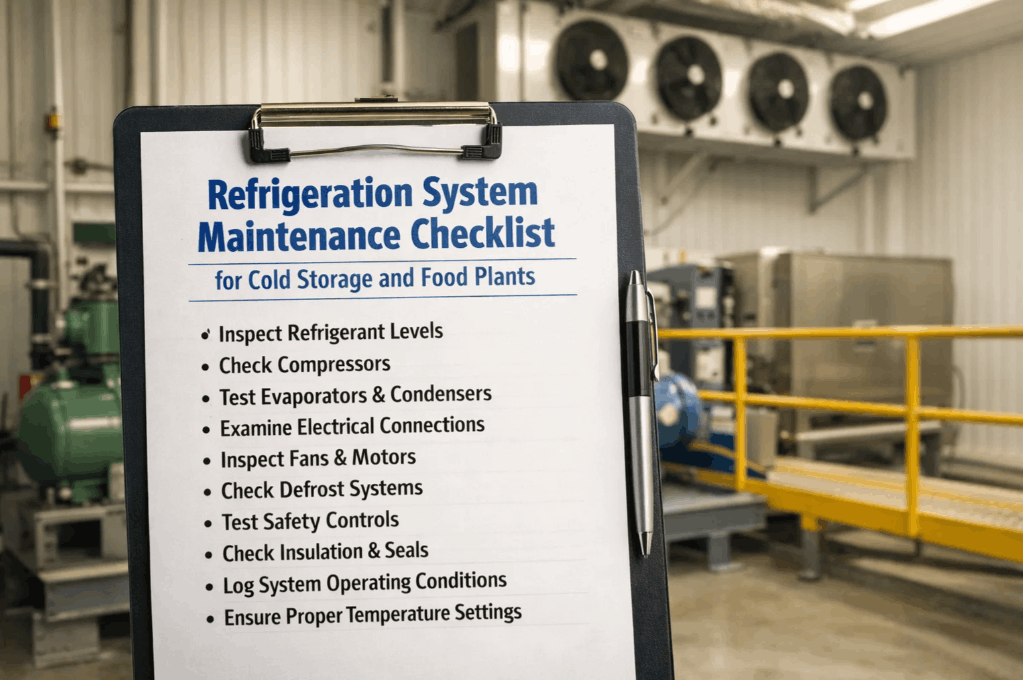
Every task below is sequenced by interval, component, and the failure mode it prevents. Use this as the foundation for your CMMS-based PM schedule. Tasks marked with a compliance flag carry documentation requirements under FSMA, HACCP, or EPA Section 608.
Every Shift / Daily
Temperature verification, visual checks, anomaly logging — 15–20 minutes per shift
Verify all zone temperatures are within ±2°F of setpoint
Temperature excursions outside this band trigger immediate investigation under FSMA and HACCP protocols — document any deviation with timestamp and corrective action
FSMA
Visual compressor check — listen for abnormal noise, check for oil leaks
Unusual sounds (grinding, clanking, or silence when running) indicate developing mechanical failures — early detection saves $8,000–$15,000 in compressor replacement
Verify refrigerant alarm panel — no active fault codes or pressure alerts
Unaddressed refrigerant alarms escalate to EPA compliance violations — fines up to $37,500 per day under Section 608 for chronic leakers above 15 lb threshold
EPA
Check all cooler and freezer door seals — confirm full closure and seal contact
Warm air infiltration through failed gaskets forces compressors to overwork and causes product temperature excursions near doorways — the most common overlooked daily check
Confirm defrost cycle completed and coil returned to setpoint within expected window
Defrost cycles that run long or fail to terminate indicate defrost termination sensor or timer faults — frost buildup blocks airflow completely within 2–4 days of defrost failure
Log any loading dock temperature deviations during product transfer windows
Warm-loading coolers after ambient temperature product transfer is the second most common cause of temperature excursion records that appear in FDA inspection findings
Inspect and clean condenser coils — remove grease, dust, and debris buildup
Dirty coils are the single leading cause of elevated head pressure and compressor overload in food plants — weekly cleaning in food environments prevents the 15–30% efficiency loss that drives compressor failure
Record compressor suction and discharge pressures — compare to design conditions
Abnormal pressure ratios indicate valve wear, refrigerant restrictions, or developing compressor faults — catching this trend early provides 2–4 weeks of warning before failure
Check evaporator fan blades and motors — verify operation, check for frost accumulation
Fan motor failure creates uneven temperature distribution and product hot spots — frost-blocked fans cause complete airflow blockage and forced room downtime of 4–8 hours for manual defrost
Inspect door gaskets on all walk-in coolers and freezers for cracks or separation
Gasket integrity determines whether warm humid air infiltrates storage spaces — a failed gasket costs $40 to replace; the product exposure from a temperature excursion costs far more
Low oil or degraded oil pressure differential signals bearing wear or oil system issues — unaddressed oil problems progress to compressor seizure requiring $5,000–$12,000 rebuild
Check drain lines — clear any blockages, verify drainage from evaporator drain pan
Blocked drain lines cause water pooling, ice buildup, mold growth, and foul odors — in food plants, drain line blockages near food-contact zones create HACCP corrective action requirements
Inspect refrigerant lines for leaks — UV dye check or electronic leak detector
Early refrigerant leak detection prevents gradual capacity loss, compressor overheating, and EPA Section 608 violations that require leak reports and repair within 30 days of discovery
EPA
Record compressor motor amperage on all phases — compare to nameplate rating
Elevated or imbalanced amperage signals winding degradation, mechanical binding, or single-phase operation — catching this monthly provides enough lead time to schedule planned replacement
Tighten all electrical connections at control panels, contactors, and terminal blocks
Loose electrical connections cause voltage drops, arcing, and component failure — in cold, moist food plant environments, connections loosen faster than in dry industrial settings
Inspect pipe insulation condition on suction and liquid lines
Degraded line insulation causes heat gain that makes compressors work harder, increasing energy costs — damaged insulation near wash zones deteriorates especially quickly in dairy and meat environments
Clean evaporator coils with approved food-safe evaporator coil cleaner
Monthly deep cleaning of evaporator coils removes biofilm and scale that daily defrost cycles do not eliminate — critical in dairy and seafood environments where airborne deposits accumulate on coil fins
Review and export temperature logs — verify completeness of documentation record
Monthly documentation review catches gaps in the temperature record before an FDA inspection finds them — FSMA Rule 204 requires complete, traceable records for two years
Full refrigerant system analysis — charge verification, moisture test, oil analysis
Quarterly system analysis by a certified technician validates refrigerant charge, checks for moisture contamination that causes ice formation and acid buildup, and evaluates oil condition before it causes compressor damage
Temperature mapping — verify uniformity across all storage zones under load conditions
Temperature mapping under actual storage load conditions reveals hotspots, dead zones, and airflow deficiencies that static sensor readings miss — required for cold chain certification and HACCP validation
Annual compressor performance testing identifies progressive capacity loss before the system can no longer maintain setpoint — plan proactive replacement rather than emergency replacement costing 3–5x more in expedited parts and overtime
Proactive parts replacement based on lifecycle data rather than run-to-failure is the single highest-ROI maintenance strategy for refrigeration systems — a $200 contactor replaced on schedule prevents a $15,000 unplanned shutdown
Annual
Run this entire checklist inside Oxmaint
Pre-built cold storage PM templates, automated scheduling, and compliance documentation — live in 48 hours.
The Five Refrigeration Components That Cause 80% of All Cold Storage Failures
Understanding what to inspect on each component — and what the warning signs mean — is the difference between a maintenance team that prevents failures and one that responds to them. Each component below includes the specific inspection points, failure indicators, and the cost of missing them.
Compressor
Replacement: $8,000–$15,000
Inspect For:
Suction and discharge pressure ratios vs. design spec
Motor amp draw on all three phases vs. nameplate
Oil level and oil pressure differential at sight glass
Abnormal noise — grinding, knocking, or excessive vibration
Operating temperatures — suction and discharge line temperatures
Visible grease, oil, dust, or debris on fin surfaces
Fin damage — bent or collapsed fins restricting airflow
Condensing temperature vs. ambient — excessive differential indicates fouling
Fan blade condition and rotation direction
Air inlet clearance — minimum 12 inches on all sides
Warning signs: High condensing temperature, elevated head pressure, compressor short-cycling, increased energy consumption
Evaporator Coils & Fans
Fan motor: $300–$800 | Coil replacement: $2,000–$8,000
Inspect For:
Frost or ice accumulation between defrost cycles
Discharge air and return air temperature differential across coil
Fan motor amp draw and rotation speed
Coil fin cleanliness — biofilm and scale in food environments
Defrost termination — confirm coil reaches setpoint within expected window
Warning signs: Frost buildup between defrost cycles, reduced airflow, uneven zone temperatures, extended defrost run times
Door Gaskets & Seals
Gasket replacement: $40–$120 | Cost of failure: Product holds
Inspect For:
Full perimeter contact — run a $1 bill test around entire door seal
Cracks, tears, or deformation in gasket profile
Hinge alignment — door must close squarely without lifting or dragging
Latch engagement — positive engagement with keeper strike
Frost patterns at door perimeter — indicates air infiltration point
Warning signs: Frost at door perimeter, condensation on exterior, temperature variance near door threshold, ice buildup at floor level
Refrigerant System & Controls
EPA fine for non-compliance: Up to $37,500/day
Inspect For:
Refrigerant leak indicators — oil staining at fittings, connections, and valve stems
Suction line frosting pattern — abnormal frosting indicates liquid slugging or metering issues
Expansion valve operation — superheat setting and hunting behavior
Control setpoints — verify temperature controller calibration against NIST-traceable reference
Compliance Requirements:
Document all refrigerant additions per EPA Section 608 — required for systems above 15 lb charge threshold
Leak inspection required within 30 days of discovering a chronic leak
Maintain equipment service records for minimum 3 years per EPA requirements
FSMA Rule 204 requires temperature controller calibration records linked to production records
The Business Case
What Refrigeration Failures Actually Cost — And What Structured Maintenance Saves
Reactive Maintenance Reality
Compressor replacement (emergency)
$12,000–$18,000
Expedited parts & overtime labor
$3,000–$8,000
Product spoilage (per incident)
$10,000–$50,000+
Production downtime (per hour)
$8,000–$30,000
EPA refrigerant violation fine
Up to $37,500/day
Energy penalty from dirty coils
+15–30% annual energy cost
Typical annual impact: $80,000–$250,000+
Structured PM with Oxmaint
Planned compressor component replacement
$1,500–$3,000
Scheduled technician labor (quarterly)
$800–$1,500
Product spoilage (prevented)
$0 — failures caught in advance
Production downtime (avoided)
Planned windows only
Compliance documentation
Auto-generated, audit-ready
Energy savings from clean coils
15–30% reduction in cooling energy
Typical annual PM cost: $8,000–$20,000
Plants that implement structured refrigeration PM programs consistently report 70–90% fewer major cold storage incidents per year. The average ROI on a complete CMMS-based cold chain maintenance program is 8:1 to 15:1 within the first 12 months — driven primarily by avoided emergency repairs, prevented product losses, and energy savings from clean, well-maintained equipment.
Detailed FAQ
Everything Food Plant Maintenance Teams Ask About Cold Storage Maintenance
How often should condenser coils be cleaned in a food manufacturing environment?
In food manufacturing environments — particularly meat, dairy, seafood, and bakery plants — condenser coils should be inspected and cleaned weekly, not monthly as general commercial refrigeration guidelines recommend. Food plants produce significantly more airborne grease, flour dust, protein particles, and steam than typical commercial refrigeration environments. These contaminants foul condenser coils far faster and create more severe heat transfer restrictions. A coil that might need monthly cleaning in a grocery store may need weekly cleaning in a meat processing plant. The rule of thumb: if you can see any visible buildup on the fin surface, clean it. Dirty coils are the number one cause of elevated head pressure and compressor overload — and the most preventable. Log every cleaning in your CMMS with a before-and-after inspection record. Sign up for Oxmaint to set automated weekly coil cleaning reminders with mobile checklist execution and photo documentation.
What temperature variance is acceptable in a food plant cold storage room, and what triggers a HACCP response?
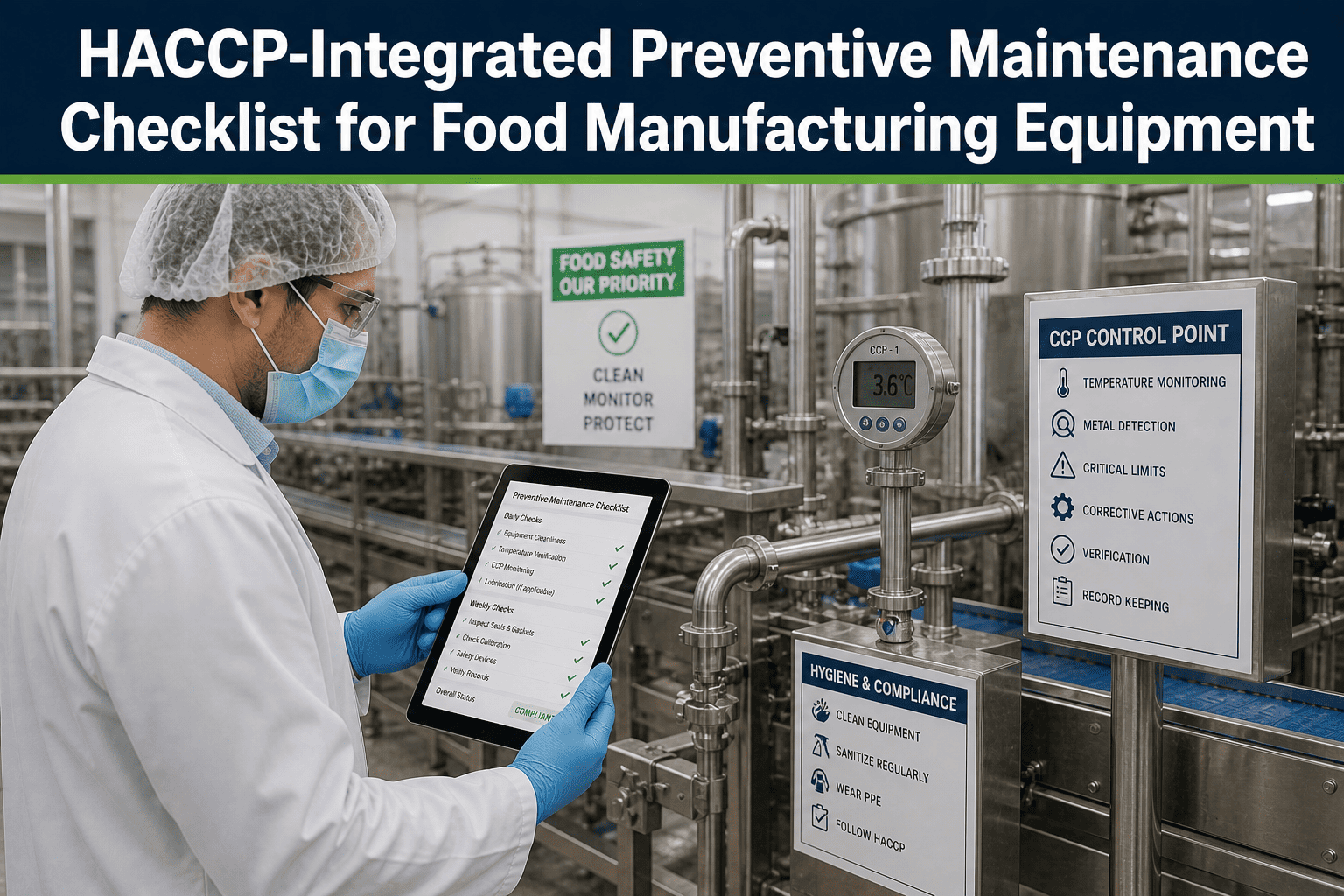
For most food cold storage applications, temperature should remain within ±2°F of the validated setpoint during normal operation. Under HACCP protocols, any temperature excursion that exceeds this tolerance triggers a formal corrective action requirement — which means documenting the deviation, identifying the cause, recording the duration, evaluating whether stored product was affected, and taking corrective action to restore temperature. Under FSMA Rule 204, all of these records must be maintained and traceable to the specific product lots that were in the affected room during the excursion. This is where many food plants have compliance exposure: the temperature excursion was minor and product was fine, but the documentation linking the event to a formal corrective action and specific batch records does not exist in a format an inspector can review. Oxmaint automatically generates time-stamped maintenance and temperature event records linked to batch traceability, creating the complete chain of documentation FSMA requires.
What are the early warning signs of compressor failure we can catch during routine inspections?
Compressor failure almost never happens without warning — the warning just gets missed because nobody was looking for it systematically. The most reliable early indicators are: elevated head pressure during normal ambient conditions (indicates condenser fouling or refrigerant overcharge); rising motor amp draw on one or more phases (indicates winding degradation or mechanical binding); unusual operating sounds including knocking, chattering, or excessive vibration (indicates valve wear, bearing deterioration, or liquid slugging); reduced suction pressure below design spec (indicates refrigerant shortage or expansion valve issues); and oil consumption that requires more frequent additions than historical baseline. When three or more of these indicators appear simultaneously, you are typically within two to four weeks of a hard failure. A CMMS that records these parameters at each inspection and trends them over time makes the pattern visible long before the failure becomes inevitable. Book a demo to see how Oxmaint tracks compressor health metrics across your entire cold chain fleet.
What refrigerant compliance documentation does a food plant need to maintain under EPA Section 608?
Under EPA Section 608 (as updated with recent HFC refrigerant changes), food plants with refrigeration systems containing 15 pounds or more of HFC refrigerant must maintain: a complete service record for every refrigerant addition, including date, amount added, and technician certification number; a leak inspection record within 30 days of discovering the system qualifies as a "chronically leaking" appliance (defined as one requiring refrigerant addition at each service visit); documentation of refrigerant recovery, recycling, and disposal when servicing or decommissioning equipment; and records of all refrigerant purchases with end-use identification. The EPA can issue fines of up to $37,500 per day per violation for non-compliance. All of these records must be maintained for a minimum of three years. Oxmaint generates and stores all required EPA documentation automatically at each refrigerant-related work order completion, creating a defensible compliance record without manual paperwork.
How do we maintain cold storage documentation to survive an FDA or USDA inspection?
FDA and USDA inspectors evaluating cold chain maintenance during a food safety inspection look for four things: completeness (are all required inspections documented for every piece of cold storage equipment?), timeliness (are inspections happening at the required frequency?), traceability (can maintenance records be linked to specific production batches that were stored in the facility during the relevant time period?), and corrective actions (when deviations or failures occurred, is there a documented response?). Paper-based or spreadsheet systems almost always fail the completeness and traceability tests — not because the inspections were not done, but because the documentation was not structured to prove they were done systematically. A CMMS that auto-schedules inspections, requires technician sign-off with timestamps, and links maintenance events to production records satisfies all four criteria in a format inspectors can review in minutes rather than hours. Plants using Oxmaint export a complete inspection record for any date range in under 60 seconds.
Can we run our cold storage maintenance checklists on mobile devices without returning to a desktop system?
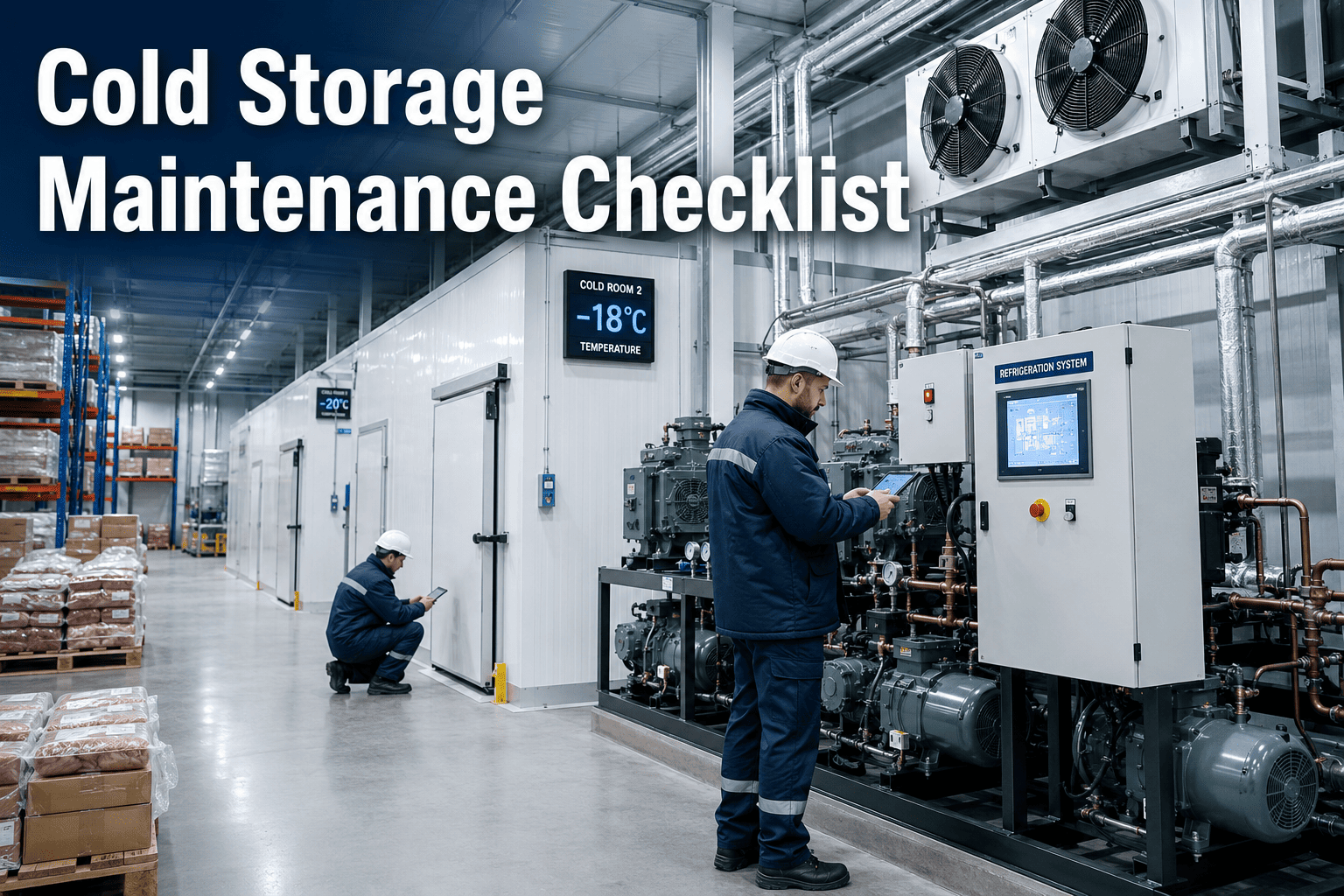
Yes — and this is one of the most operationally significant capabilities to look for in a CMMS for cold storage environments. Technicians working in walk-in freezers at -18°C should not have to return to a control room to log inspection results on a desktop. Oxmaint's mobile app works in extreme cold environments and allows technicians to complete checklists, record measurements, take photos of anomalies, and close work orders directly from their phone or tablet at the point of inspection. Completed checklists sync instantly to the centralized record, making data available to supervisors and compliance teams in real time. For facilities with multiple cold rooms, blast freezers, and refrigerated processing areas, mobile-first inspection workflows cut inspection time by 30–45% compared to paper-based recording followed by desktop entry — and eliminate the transcription errors that create compliance record gaps.
How do we build a CMMS-based PM program for cold storage from scratch if our current records are on paper?
Starting from paper or spreadsheets is the most common situation for food plants implementing CMMS for the first time, and it is entirely manageable. The process with Oxmaint takes four steps: first, create an asset registry entry for every piece of cold storage equipment — compressors, condensers, walk-in units, blast freezers, and ancillary components — using Oxmaint's guided import templates (completable in one day for most plants). Second, import your existing paper maintenance history using the data import tool — even partial historical records are valuable because they establish baseline failure patterns and PM interval starting points. Third, configure the PM schedules using Oxmaint's pre-built cold storage PM template library, which includes all the intervals and task descriptions in this checklist, mapped to the correct asset categories. Fourth, activate mobile assignments and launch — most cold chain operations are fully live on Oxmaint within 48 hours of go-live. Historical paper records do not need to be complete to start — the system begins building your digital maintenance record from day one and the compliance documentation value compounds over time.
Your cold chain compliance starts with a completed checklist
Stop managing cold storage maintenance on paper. Run every inspection, every interval, on every piece of equipment — from one platform built for food manufacturing.
Pre-built refrigeration PM templates. Automated scheduling. Mobile execution. Full compliance documentation. FDA-ready audit exports in under 60 seconds.



.png)
