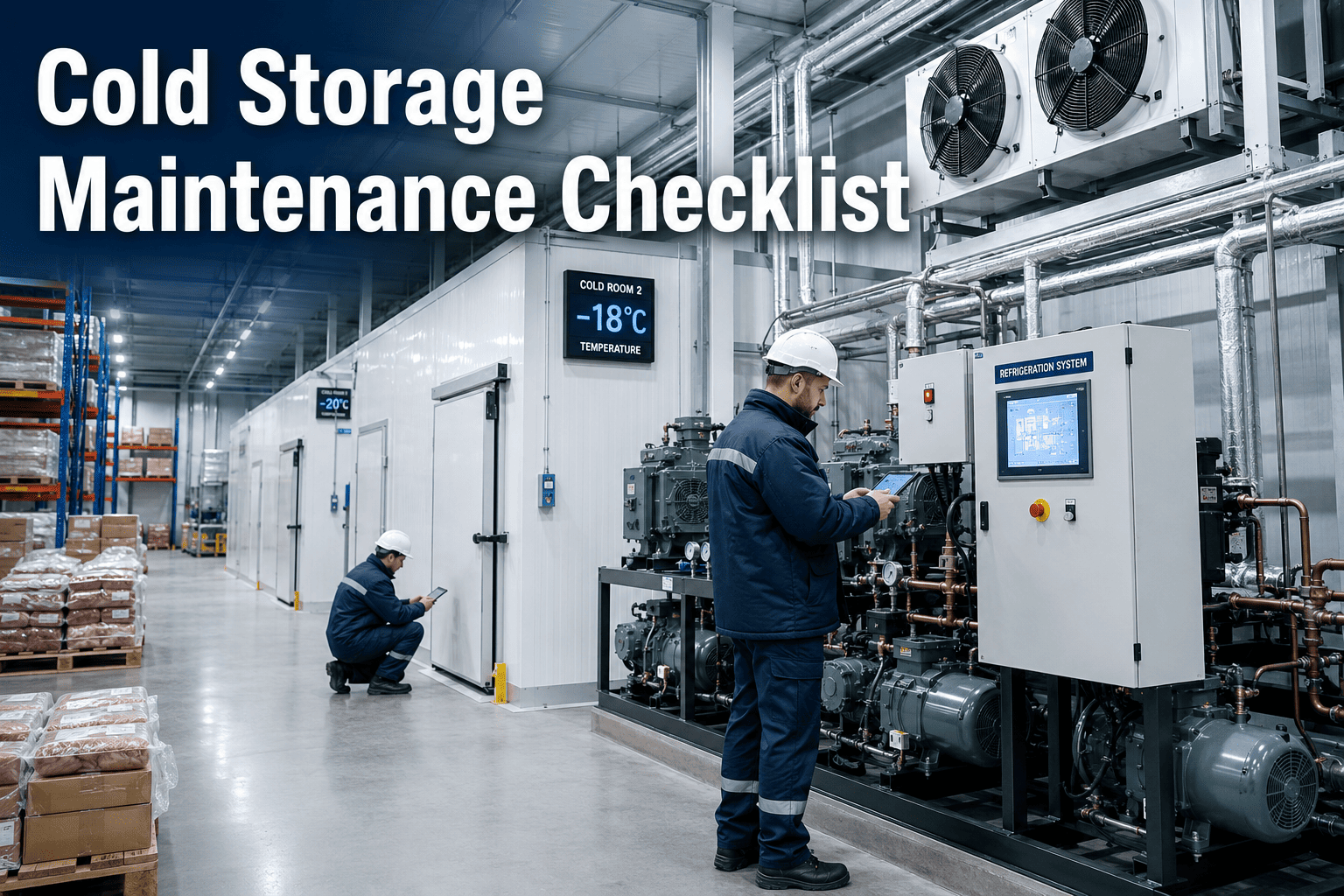
Cold chain equipment maintenance is the backbone of food safety and operational continuity in any food processing or distribution facility. Refrigeration systems — chillers, compressors, walk-in coolers, and blast chillers — operate under relentless thermal and mechanical stress around the clock. When these systems fail, the consequences cascade rapidly: product loss, regulatory non-compliance, spoilage claims, and costly emergency repairs. A structured, preventive maintenance program for cold chain equipment is not optional — it is a business-critical discipline that protects both product integrity and operational margins. Start your free trial to see how a CMMS-driven maintenance platform keeps your refrigeration systems performing at peak reliability.
Why Cold Chain Equipment Maintenance Is a Non-Negotiable Priority
Modern food manufacturing and distribution facilities depend on uninterrupted refrigeration to preserve product quality, comply with HACCP and FDA food safety mandates, and meet customer shelf-life commitments. A single unplanned chiller failure during a peak production run can result in tens of thousands of dollars in product loss — not counting the downstream cost of line stoppages, emergency service calls, and regulatory documentation burdens. Yet many facilities still manage cold chain equipment reactively, responding to failures rather than preventing them. This reactive posture is expensive, predictable, and entirely avoidable with a disciplined preventive maintenance strategy anchored in real-time data and CMMS-based scheduling.
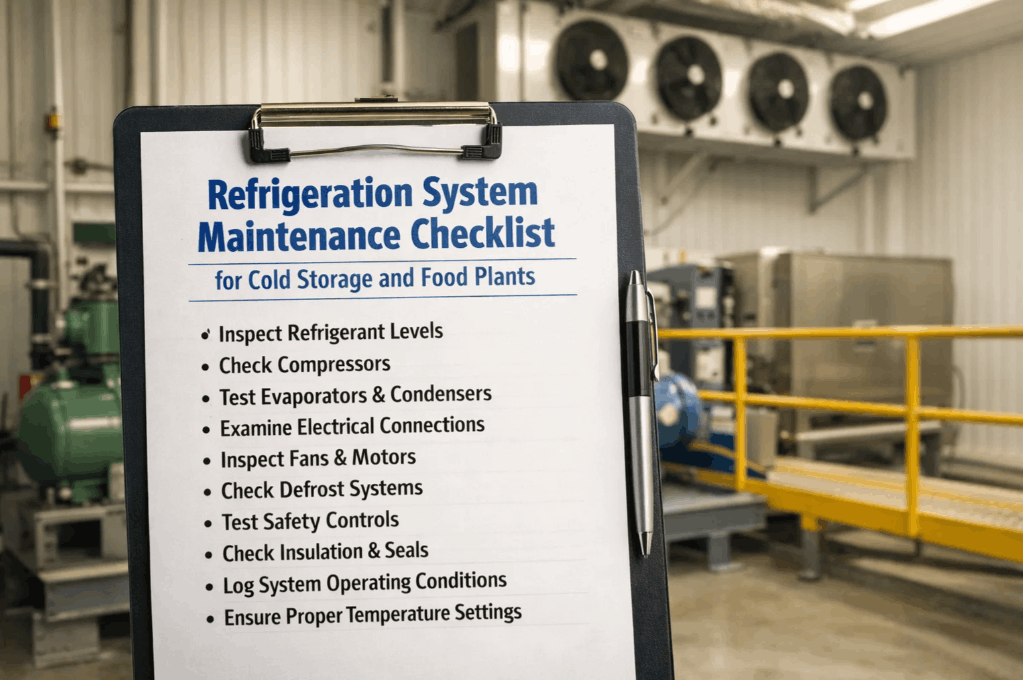
The scope of cold chain maintenance extends far beyond topping off refrigerant and cleaning condenser coils. A comprehensive refrigeration PM program covers every system in the cold chain network: air-cooled and water-cooled chillers, walk-in cooler and freezer units, blast chillers and freezers, compressor racks, evaporators, expansion valves, control systems, door seals, and temperature monitoring infrastructure. Each asset class has distinct failure modes, maintenance intervals, and compliance documentation requirements. Facilities that treat these systems as a unified, CMMS-managed asset portfolio consistently outperform those managing refrigeration reactively — in uptime, energy efficiency, and regulatory audit readiness.
Core Components of a Cold Chain Preventive Maintenance Program
Effective cold chain equipment maintenance requires a systematic approach to each major asset category. The following breakdown outlines the critical PM tasks, inspection intervals, and failure indicators that maintenance engineers in food plants must actively manage.
Refrigerant Management and EPA Compliance in Food Plants
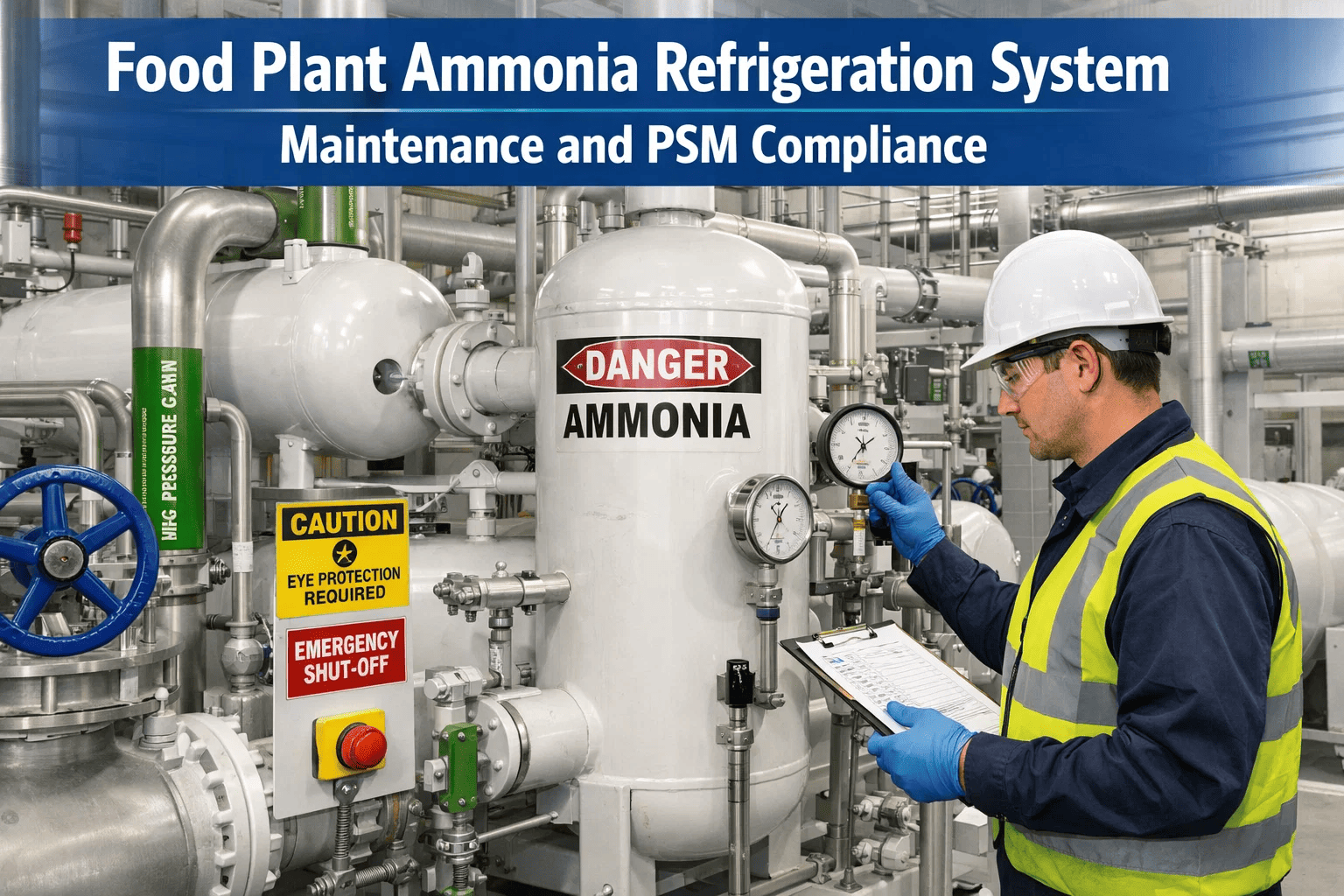
Refrigerant management is a specialized and regulatory-sensitive component of cold chain equipment maintenance. Food manufacturing facilities operating refrigeration systems charged with regulated refrigerants — including HFCs, HCFCs, and natural refrigerants such as ammonia (R-717) — must comply with EPA Section 608 requirements, which mandate leak inspection intervals, leak rate thresholds, repair deadlines, and certified technician qualifications. Facilities using ammonia refrigeration systems are additionally subject to OSHA PSM and EPA RMP regulations, which require formal process hazard analyses, written operating procedures, and mechanical integrity programs for covered equipment.
A CMMS-integrated refrigerant management module enables facilities to track refrigerant charges by asset, log all addition and recovery events with technician certification records, schedule leak inspections at regulatory intervals, and generate automatic compliance reports for EPA recordkeeping. This eliminates the manual spreadsheet tracking that creates audit risk and documentation gaps — and ensures that emerging leaks are identified and repaired before they breach EPA leak rate thresholds that trigger mandatory reporting obligations. Start your journey toward fully automated refrigerant compliance tracking.
Temperature Alarm Systems: The First Line of Cold Chain Defense
A temperature alarm system is not a replacement for preventive maintenance — but it is an essential complement to it. In any cold chain environment, continuous temperature monitoring with automated alerting closes the gap between PM inspection intervals, providing real-time notification when refrigeration system performance degrades between scheduled maintenance visits. Effective food plant temperature alarm systems must cover all cold storage zones with calibrated sensors, define alarm setpoints at both warning and critical threshold levels, route alerts to responsible personnel via multiple channels, and generate timestamped records of every alarm event and response action for regulatory audit purposes.
CMMS integration with temperature monitoring infrastructure transforms alarm events into maintenance triggers. When a walk-in freezer temperature rises above its warning setpoint, the integrated CMMS can automatically generate a work order for the responsible technician — pre-populated with the asset's maintenance history, recent PM records, and the most probable failure causes based on historical data. This closes the response time gap from hours to minutes, and ensures that every temperature excursion is documented as both a quality event and a maintenance activity, creating an integrated compliance record that satisfies both food safety auditors and regulatory inspectors. Book a demo to see live how CMMS transforms temperature alarm events into instant maintenance actions.
| Maintenance Dimension | Reactive Maintenance | Preventive Maintenance (CMMS) |
|---|---|---|
| Failure Response | Emergency service after breakdown; product at risk | Proactive intervention before failure; product protected |
| Compressor Life | Shortened by undetected oil, pressure, and wear issues | Extended through regular oil analysis and vibration checks |
| Energy Consumption | 20–35% higher due to fouled coils and refrigerant loss | Optimized via scheduled coil cleaning and charge verification |
| Compliance Readiness | Manual logs; gaps in refrigerant and alarm records | Automated CMMS records per asset, batch, and regulation |
| Product Loss Risk | High — failures discovered after temperature excursion | Low — drift detected before threshold breach |
| Maintenance Cost | Unpredictable; emergency rates inflate repair costs | Planned and budgeted; lower total cost of ownership |
| Audit Preparation | Days of manual record assembly before inspections | On-demand compliance reports generated from CMMS data |
CMMS-Based Scheduling for Cold Chain Equipment Maintenance
A Computerized Maintenance Management System transforms cold chain maintenance from a calendar reminder into a data-driven operational discipline. CMMS-based PM scheduling for refrigeration equipment enables maintenance teams to build asset-specific PM plans with task lists, inspection checklists, and OEM-aligned intervals — and then execute those plans with automated work order generation, technician assignment, parts reservation, and completion verification. Every PM event is logged against the asset record, building a historical maintenance dataset that informs future scheduling decisions, supports warranty claims, and provides the audit trail that food safety compliance requires.
For multi-site food manufacturing and distribution networks, CMMS platforms provide centralized visibility into the PM status of every refrigeration asset across every location — enabling maintenance managers to identify deferred PMs, track overdue inspections, compare equipment performance across facilities, and reallocate technician resources dynamically as priorities shift. This enterprise-level coordination is impossible with spreadsheet-based scheduling and becomes essential as cold chain asset portfolios grow in scale and complexity. Start your journey with a CMMS built for multi-site cold chain operations.
Cold Chain Compliance: HACCP, FDA, and Regulatory Documentation
Cold chain maintenance is inseparable from food safety compliance. HACCP plans for food manufacturing and distribution facilities routinely identify refrigeration system performance as a critical control point — and the verification records for those control points must be maintained with the same rigor as production and quality records. FDA regulations under the Food Safety Modernization Act (FSMA) require facilities to demonstrate that cold chain controls are consistently effective, which in practice means documented temperature monitoring, calibration records for sensors and controls, and maintenance histories for refrigeration equipment that demonstrate ongoing system integrity.
CMMS platforms purpose-built for food plant environments simplify HACCP compliance by making maintenance records an automatic byproduct of normal maintenance operations. Every PM completion, temperature alarm event, refrigerant service record, and corrective repair is timestamped, linked to the relevant asset and production batch, and instantly reportable in audit-ready format. This eliminates the documentation scramble that typically precedes regulatory inspections and ensures that the evidence trail for cold chain compliance is continuously maintained rather than retroactively assembled. Book a demo to see how audit-ready compliance documentation works in a live food plant environment.