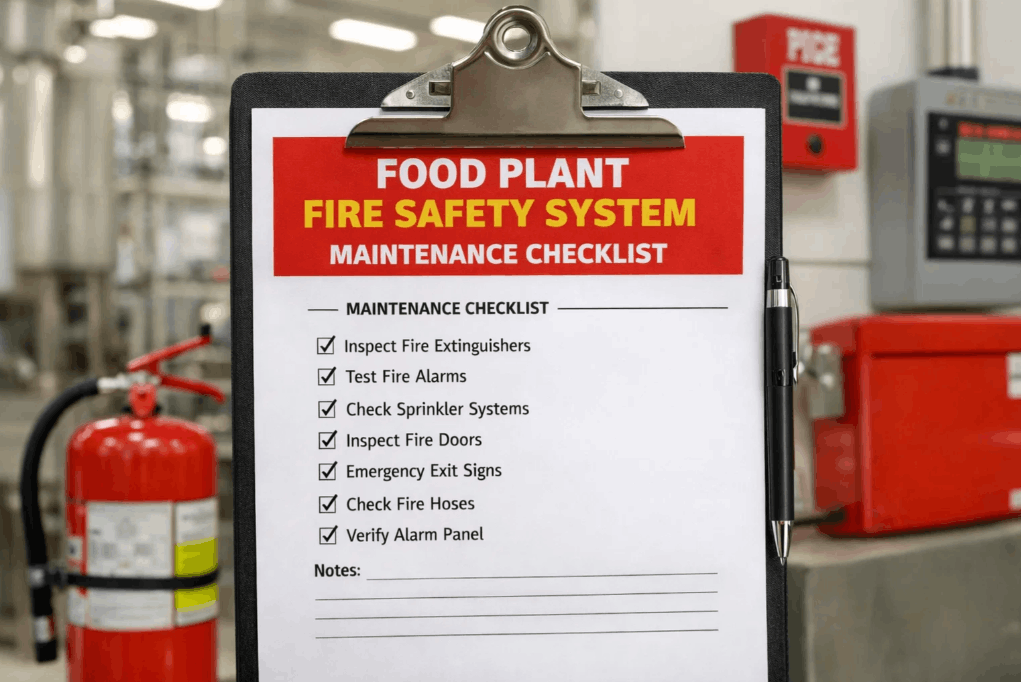
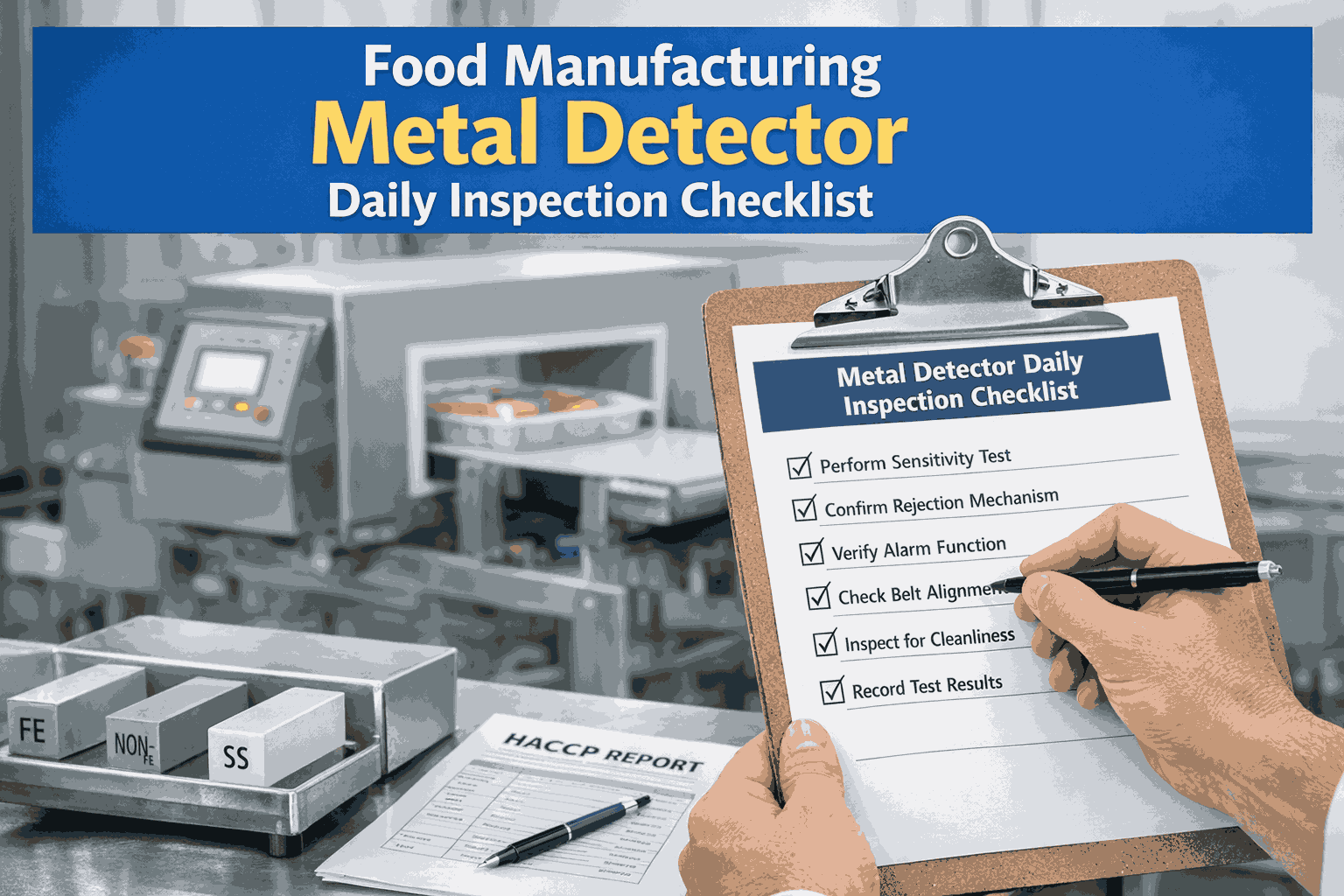
Food Manufacturing Emergency Equipment Maintenance Checklist

By Josh Turley on March 31, 2026

food-manufacturing-emergency-equipment-maintenance-checklist

Emergency equipment in food manufacturing facilities is the last line of defense between a routine incident and a life-altering injury, regulatory shutdown, or catastrophic production loss. Emergency showers, eyewash stations, fire extinguishers, backup generators, and evacuation systems must be verified, tested, and documented on a structured schedule — not discovered defective when seconds count. OSHA 29 CFR 1910.151 and ANSI Z358.1 standards mandate specific inspection frequencies for emergency response equipment, and FSMA Preventive Controls auditors increasingly treat emergency preparedness gaps as systemic food safety failures. A structured food manufacturing emergency equipment maintenance checklist ensures every device is functional, compliant, and audit-ready across every shift and facility area. Book a Demo to see how OxMaint automates emergency equipment PM scheduling and OSHA compliance tracking for food plants.

OxMaint: Emergency Equipment Compliance for Food Manufacturing

Automate emergency shower activation logs, eyewash station test records, fire extinguisher inspection cycles, and generator run-test documentation — all from one mobile-ready CMMS built for food plant EHS and facilities teams.

Why Emergency Equipment Maintenance Is Non-Negotiable in Food Plants

Food processing environments combine chemical wash-down agents, high-temperature steam, pressurized systems, and enclosed processing areas — creating a hazard profile that demands fully operational emergency response equipment at all times. An eyewash station with blocked nozzles or a generator that fails to start during a power outage does not just create OSHA liability; it places workers at irreversible risk and can trigger a facility-wide shutdown order from a single inspector visit. Consistent preventive maintenance of emergency equipment is both a regulatory mandate and a foundational element of every credible food safety culture. Sign Up Free to digitize your emergency equipment PM program and stay ahead of every compliance deadline.

ANSI Z358.1
standard mandating weekly activation tests for all emergency eyewash and shower equipment
10 sec
maximum reach time to emergency eyewash or shower from any chemical hazard area per OSHA
$15,625
maximum OSHA penalty per violation for non-compliant emergency equipment in food facilities
30%
of food plant fire extinguisher failures traced to missed monthly inspection or improper placement

Weekly Emergency Equipment Checks

Weekly verification tasks target the highest-risk emergency response devices that must be ready for immediate use at any moment. All activation tests and visual checks must be logged with timestamps, inspector name, and pass/fail outcome in your facility CMMS. Book a Demo to digitize weekly emergency equipment rounds and generate automatic compliance logs.

Weekly — Eyewash, Emergency Shower, and Immediate-Response Equipment

Monthly Emergency Equipment Maintenance Checklist

Monthly inspections provide deeper assessment of fire suppression systems, first aid resources, and spill containment readiness that weekly operational checks cannot fully characterize. These tasks must be completed by designated EHS personnel and recorded in the facility CMMS with corrective action tracking for any deficiencies. Sign Up Free to start tracking monthly emergency equipment PM tasks with automated reminders and digital work orders.

Monthly — Fire Suppression, First Aid, Spill Response, and Equipment Integrity

Emergency Generator and Backup Power Maintenance Checklist

Backup generator failure during a power outage in a food manufacturing facility creates cascading consequences: product temperature loss in cold chain storage, loss of process control in thermal treatment systems, failed emergency lighting, and disabled alarm systems. Generator maintenance must follow a formal schedule with documented run tests and load verification. Book a Demo to automate generator run-test scheduling and fuel management tracking in your CMMS.

Generator and Backup Power — Weekly, Monthly, and Annual Verification

Quarterly and Annual Emergency Preparedness Verification

Quarterly and annual emergency preparedness reviews validate the systemic readiness of all emergency response systems, confirm third-party certification compliance for fixed suppression systems, and ensure evacuation procedures remain current with facility layout and workforce changes. These tasks generate the compliance documentation required for insurance audits, OSHA inspections, and food safety certification bodies. Sign Up Free to track quarterly and annual emergency equipment deadlines with automated certificate renewal alerts.

Quarterly and Annual — Suppression Systems, Drills, and Compliance Certification

Critical Emergency Equipment Failure Patterns in Food Plants

Tepid Water Supply Failure on Eyewash Stations
Eyewash stations connected to untempered cold water lines in refrigerated processing areas deliver water that causes hypothermic shock during prolonged 15-minute irrigation — forcing the injured worker to stop treatment before flushing is complete and worsening chemical injury outcomes.
Fix: Install thermostatic mixing valves on all plumbed eyewash stations; verify tepid water delivery (60–100°F) at each weekly activation test.
Fire Extinguisher Placement Violations Near Food Lines
Dry chemical fire extinguishers stored adjacent to open food processing lines create a cross-contamination hazard when discharged — and their presence near food contact surfaces may itself constitute a food safety violation during SQF or BRC audits even before discharge occurs.
Fix: Replace dry chemical units near exposed product lines with CO2 or wet chemical extinguishers; document placement rationale in the hazard assessment.
Generator Transfer Switch Failure During Peak Demand
ATS units tested only at low ambient temperature fail to transfer correctly during summer peak demand events when relay contacts are at elevated temperature — resulting in extended power outages that compromise refrigerated storage temperature logs and HACCP cold chain records.
Fix: Test ATS operation across the full ambient temperature range annually; replace units exceeding 15 years of service regardless of apparent condition.
Emergency Lighting Battery Failure in Cold Storage
Standard lead-acid emergency lighting batteries lose 40–50% of their rated capacity at freezer temperatures — meaning units that pass room-temperature 90-minute duration tests fail to sustain minimum illumination levels in cold storage evacuation routes during an actual power outage.
Fix: Specify cold-rated NiCd or lithium battery packs for all emergency lighting units inside refrigerated areas; test duration in-situ at operating temperature.

Emergency Equipment Inspection Frequency and Compliance Reference

Equipment Type Regulatory Standard Inspection Frequency Key Compliance Focus
Emergency Eyewash Stations ANSI Z358.1 / OSHA 1910.151 Weekly activation; annual compliance audit Flow rate, tepid water temperature, 10-second access, nozzle condition
Emergency Safety Showers ANSI Z358.1 / OSHA 1910.151 Weekly activation; annual audit 20 GPM flow rate, tepid water, valve actuation, drain clearance
Portable Fire Extinguishers NFPA 10 / OSHA 1910.157 Monthly visual; annual maintenance; 6-yr internal; 12-yr hydrostatic Pressure, seal, placement, agent type for hazard class, service tag
Emergency Generator NFPA 110 / NEC Article 700 Weekly start; monthly load test; annual full-load test Transfer time, voltage stability, fuel quality, battery condition
Emergency Lighting Units NFPA 101 / IBC Weekly function test; annual 90-minute duration test Battery backup, egress coverage, minimum lux levels, cold storage rating
AED Devices OSHA General Duty / State law Monthly status check; per-manufacturer pad/battery schedule Ready indicator, pad expiration, battery charge, placement accessibility
Fixed Fire Suppression NFPA 25 / NFPA 13 Quarterly inspection; annual trip test Sprinkler head condition, panel zone status, tamper switch position
First Aid Kits OSHA 1910.151 / ANSI Z308.1 Monthly inventory and expiry check Supply completeness, product expiration dates, location accessibility

Documentation Requirements for Emergency Equipment Compliance

Emergency equipment inspection records must be immediately accessible during OSHA compliance inspections, insurance underwriting reviews, and SQF or BRC food safety certification audits. Missing or incomplete records are treated as non-conformances equivalent to missing physical inspections — regulators operate on the principle that if it was not documented, it was not done. Sign Up Free to auto-generate audit-ready emergency equipment compliance records from every completed work order.

Eyewash and Shower Activation Logs
Weekly activation test records including date, location, flow confirmation, water temperature, and inspector name. Required for ANSI Z358.1 compliance verification and OSHA inspection response.
Retain: 3+ years
Fire Extinguisher Inspection Tags and Service Records
Monthly visual inspection logs, annual maintenance certificates, and hydrostatic test records by extinguisher serial number and location. Mandatory for NFPA 10 and OSHA 1910.157 compliance.
Retain: 5+ years
Generator Run-Test and ATS Transfer Logs
Weekly start logs, monthly load test records, annual full-load test reports with voltage, frequency, and fuel data. Required for NFPA 110 compliance and insurance continuity documentation.
Retain: 3+ years
Emergency Drill Records and EAP Review Documentation
Evacuation drill completion records, timing data, deficiency logs, and signed annual Emergency Action Plan review records. Required for OSHA 1910.38 compliance and FSMA Preventive Controls audit submissions.
Retain: 3+ years

Frequently Asked Questions

How often must emergency eyewash stations be tested in a food manufacturing plant?
ANSI Z358.1 requires that plumbed emergency eyewash stations be activated weekly to verify proper operation and flush the supply line of any stagnant water that could harbor microbial contamination. Each weekly activation must be documented with date, location, and confirmation of adequate flow from both nozzles. In addition to weekly tests, a full annual compliance audit must verify tepid water temperature (60–100°F), minimum flow rate of 0.4 GPM per nozzle, and travel time of no more than 10 seconds from any chemical hazard area. Self-contained eyewash units that use preserved water solutions must be inspected per the manufacturer's refill and solution replacement schedule in addition to weekly activation testing.
What type of fire extinguisher is required in food processing areas?
The correct extinguisher type in a food manufacturing environment depends on the specific fire hazard in each zone. Class K wet chemical extinguishers are mandatory in cooking areas where combustible cooking media including vegetable oils and animal fats are present, as dry chemical agents are ineffective against deep-fat cooking fires and can contaminate food contact surfaces when discharged. CO2 extinguishers are preferred in food processing areas where product exposure is a concern, as CO2 leaves no residue. Class ABC dry chemical extinguishers may be acceptable in mechanical, electrical, and warehouse areas away from exposed food or food contact surfaces. NFPA 10 and the facility's fire hazard assessment must be the primary reference for extinguisher type selection in each zone.
How frequently should emergency generators be tested in food plants?
NFPA 110 Standard for Emergency and Standby Power Systems requires that emergency generators be exercised weekly under no-load conditions and monthly under a load of at least 30% of the nameplate rating for a minimum of 30 minutes. In food manufacturing facilities where refrigerated storage, process control systems, and emergency lighting are generator-dependent, exceeding these minimums is strongly advisable. Annually, a full-load test at 100% rated capacity for a minimum of 2 hours should be conducted to validate generator performance under realistic emergency conditions. All test results including voltage, frequency, fuel consumption, and transfer switch timing must be logged and retained as part of the facility's emergency preparedness compliance records.
Is emergency equipment maintenance documentation required under FSMA?
FSMA Preventive Controls for Human Food requires documented preventive maintenance for equipment whose failure could result in a food safety hazard. Emergency equipment that directly interfaces with food safety — including steam system pressure relief devices, backup power for cold chain temperature controls, and CIP chemical emergency response equipment — falls within the scope of this requirement. Beyond FSMA, food safety certification schemes including SQF Edition 9 and BRC Global Standard Issue 9 require documented evidence of emergency preparedness equipment maintenance as part of site infrastructure compliance. OSHA requirements for eyewash stations, emergency lighting, and fire extinguishers generate their own independent documentation obligations that overlap with food safety audit programs. A CMMS that links emergency equipment PM records to compliance documentation packages satisfies all three regulatory frameworks simultaneously.

OxMaint: The CMMS for Food Plant Emergency Equipment Compliance

Schedule recurring emergency equipment inspections, track eyewash and shower activation logs, automate generator run-test reminders, and generate OSHA and SQF-ready audit documentation — all from one platform your EHS and facilities team can access from anywhere in the facility.
Share This Story, Choose Your Platform!