A propane forklift passes its morning check on a clipboard nobody really read. An operator's certification lapsed eight months ago and no one flagged it. A pedestrian aisle painted three years ago has faded past the point anyone notices it. None of this looks like a hazard — until the day it is one. Sign up to run forklift inspections, PM, and operator records through one system instead of three clipboards that never talk to each other.
What This Guide Covers
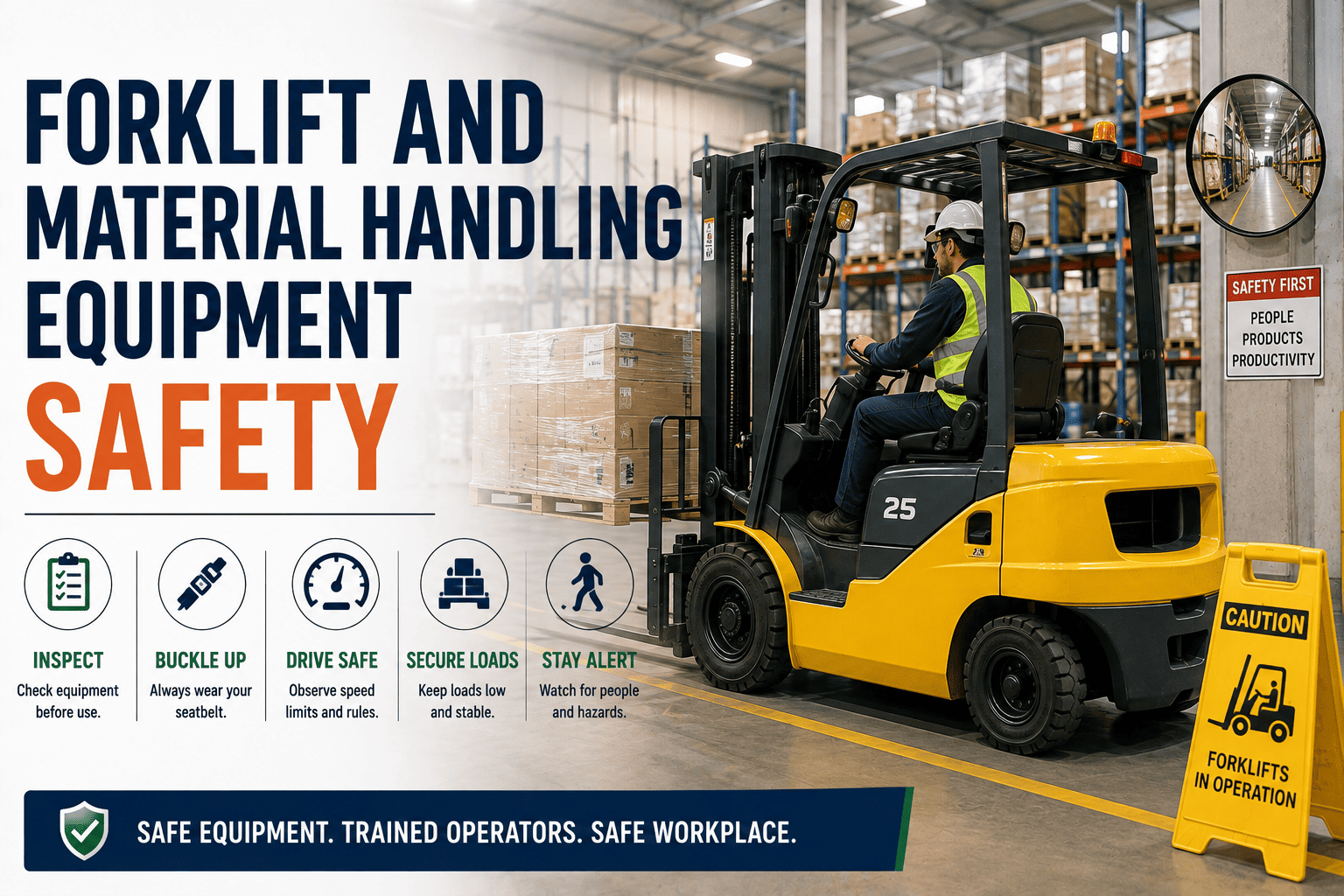
Forklift and material handling equipment safety in a food plant runs on OSHA 29 CFR 1910.178 — operator certification that stays current, a pre-shift inspection that actually gets done, a PM schedule that respects propane and electric fleets differently, real pedestrian separation, and a CMMS record tying it all together so nothing quietly expires.
Where Forklift Incidents Actually Start
| The Gap |
What It Actually Costs The Plant |
| Pre-shift check done from memory, not the sheet |
A cracked fork or leaking hydraulic line rides another full shift before anyone catches it |
| Operator certification tracked in a binder, not a system |
Lapsed certifications go unnoticed until an audit or an incident forces the question |
| Propane and electric units on the same PM clock |
One fleet gets over-serviced, the other gets missed, and both wear unevenly |
| Pedestrian and forklift traffic sharing the same aisle |
The single most common forklift-related injury in a food plant is a struck pedestrian, not a tip-over |
Building A CMMS-Driven Forklift Safety Program
1
Put The Pre-Shift Checklist On The Truck, Not In A Drawer
A digital pre-shift check that an operator completes before the key turns catches forks, brakes, horn, and hydraulics before the truck ever moves
2
Track Operator Certification Like An Asset, Not Paperwork
Under OSHA 29 CFR 1910.178, only evaluated and certified operators can run a powered industrial truck — a CMMS record flags renewals before they lapse, not after
3
Run Separate PM Schedules For Propane And Electric
Propane units need regular fuel system, exhaust, and hour-based service; electric units live and die by battery watering, charging discipline, and connector wear — one PM template can't cover both
4
Separate Pedestrians From Traffic Wherever They Cross
Marked lanes, mirrors at blind corners, and a documented pedestrian barrier plan turn a shared floor into two lanes that rarely meet
5
Let Telematics Catch What A Walkaround Can't
Impact sensors, speed alerts, and hour meters feed straight into the CMMS, turning near-collisions into data instead of a story someone tells later
One Fleet Record Instead Of Three Clipboards
OxMaint keeps pre-shift checks, PM schedules, operator certifications, and telematics alerts on every forklift in one place. Sign up for a free trial to put your fleet on a real record, or book a demo to see the forklift safety workflow end to end.
What A CMMS Adds To Fleet Safety
Pre-Shift Checks That Can't Be Skipped
A truck can't be dispatched until its digital checklist is submitted and clean
Certification Expiry Alerts
Renewals surface weeks ahead, so no operator is ever running on a lapsed card
Fuel-Type-Specific PM
Propane and electric units each run their own maintenance clock, not a shared guess
Impact And Speed Logging
Telematics data lands in the same record as the maintenance history, so patterns show up fast
Propane vs. Electric: Different Maintenance Clocks
A propane fleet needs regular fuel system checks, exhaust monitoring, and hour-based service intervals; an electric fleet lives on battery watering schedules, charge cycle discipline, and connector inspections. Running both fleets on one generic PM template is how a plant ends up over-servicing one and quietly under-servicing the other.
Frequently Asked Questions
Q
What does OSHA actually require for forklift operators?
Under 29 CFR 1910.178, operators must be trained and evaluated before operating a powered industrial truck, with a documented evaluation at least once every three years and after any near miss or accident involving that operator.
Q
How often should a pre-shift inspection actually happen?
Before every shift and every operator change. A truck handed off mid-shift to a new operator should get its own quick check, not ride on the previous operator's sign-off.
Q
Why separate pedestrian and forklift traffic if operators are trained?
Training reduces risk, it doesn't remove it. A forklift's blind spots and stopping distance don't change because the operator is skilled — physical separation is what actually keeps a shared floor safe.
Keep Every Truck On A Record, Not A Guess
OxMaint ties pre-shift checks, PM, operator certification, and telematics into one forklift safety record built for a food plant floor. Sign up for a free trial to get your fleet on the system today, or book a demo to walk through it with your team.