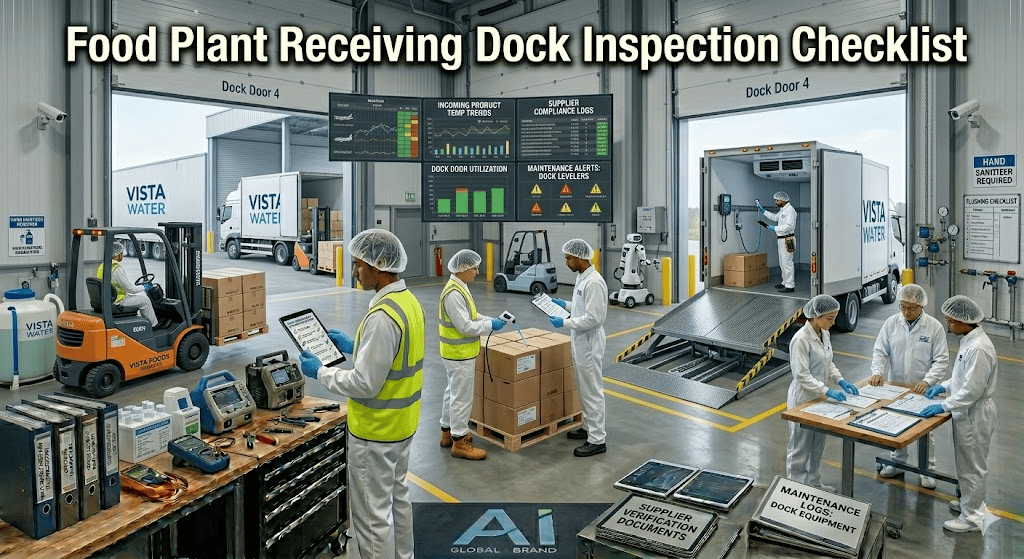
Loading docks and receiving areas in food manufacturing and processing facilities are among the highest-risk zones for contamination, cold chain failure, and regulatory non-compliance. A lapse in dock leveler function, a compromised door seal, or inadequate temperature monitoring at receiving can expose your entire operation to HACCP violations, FDA citations, and product safety incidents. Whether you manage a single cold storage facility or a multi-dock food distribution center, this checklist provides your facilities and receiving teams with a structured, audit-ready framework covering everything from pest exclusion and drainage to dock lighting, vehicle sanitation, and CMMS-tracked preventive maintenance. Track dock compliance with OxMaint's Audit & Compliance tools.
1. Dock Leveler Inspection and Mechanical Integrity
Dock levelers are the mechanical interface between your facility and every inbound vehicle. In food plant environments, a malfunctioning leveler creates not just a safety hazard but a direct pathway for pests, moisture, and temperature fluctuation into the receiving area. A documented inspection schedule prevents mechanical failure and ensures compliance during third-party audits. Sign up free to automate your dock leveler PM schedule in OxMaint.
Inspect Dock Leveler Platform and Lip Condition
Examine the leveler deck plate and lip extension for cracks, deformation, corrosion, or surface damage that could compromise load capacity or create a trip hazard. Confirm that the lip extends fully and locks securely onto the vehicle bed without gaps that could allow pest ingress or temperature infiltration.
Test Hydraulic or Mechanical Operation Under Load
Cycle the dock leveler through its full range of motion with and without load to verify smooth hydraulic actuation, correct float position, and proper return to stored position. Document any sluggish response, oil leaks, or abnormal noise that indicates hydraulic fluid loss or cylinder wear requiring immediate service.
Check Safety Leg and Maintenance Strut Function
Confirm that the safety leg or maintenance strut deploys correctly when the leveler is in the raised position and that it is used during any beneath-leveler maintenance activity. A missing or non-functional safety leg is a direct OSHA citation risk and a fatal injury hazard during routine inspection tasks.
Lubricate Hinges, Pivot Points, and Lip Actuators
Apply food-facility-appropriate lubricants to all dock leveler pivot points, hinge assemblies, and lip actuation mechanisms at manufacturer-specified intervals. Verify that lubricant type is compatible with food plant requirements to prevent contamination risk from lubricant overspray or drip onto incoming product.
Inspect Pit Area for Debris, Moisture, and Pest Activity
Clean the leveler pit of accumulated debris, standing water, and organic material that can attract rodents and insects. Inspect pit walls and floor for cracks or penetrations that provide pest harborage, and confirm that the pit drain is unobstructed and functional to prevent moisture accumulation between service visits.
2. Dock Door Seals, Shelters, and Environmental Barrier Integrity
Dock door seals and shelters are the primary environmental barrier between your controlled receiving area and outside conditions. Degraded seals allow warm, humid air to infiltrate cold zones, compromise temperature control at receiving, and create entry points for pests and airborne contaminants. Regular seal inspection is a foundational requirement in any food safety-compliant dock maintenance program. Book a demo to see how OxMaint tracks seal inspection and replacement cycles.
Inspect Dock Shelter Foam Pads and Fabric Condition
Examine dock shelter foam pads and fabric panels for tears, compression set, mold, or physical damage from repeated vehicle contact. Damaged shelter components create visible light gaps and air infiltration that directly impact temperature-controlled receiving zones and are a common citation in third-party food safety audits.
Check Door Bottom Seals and Head Seals for Gaps
With the dock door closed and sealed against a vehicle, perform a light inspection from inside the dock to identify any visible gaps at the door bottom, sides, or head seal interface. Any gap large enough to pass light is large enough to admit pest intrusion and should be documented for immediate corrective action.
Test Dock Door Operation, Tracks, and Safety Reverse Function
Cycle dock doors through full open and close cycles and verify that tracks are clean, properly aligned, and free of debris. Test the door safety reverse function to confirm the door stops and reverses on obstruction contact, and confirm that door speed controls are within safe operating parameters for pedestrian traffic in the receiving zone.
Inspect Vehicle Restraint and Wheel Chock Availability
Confirm that vehicle restraint systems or ICC bar hooks are operational at each dock position and that wheel chocks are available, properly stored, and in serviceable condition. A vehicle pulling away from an unsecured dock is one of the leading causes of serious dock fatalities and results in immediate regulatory scrutiny.
3. Temperature Monitoring and Cold Chain Verification at Receiving
For food plants receiving refrigerated or frozen product, temperature verification at the dock is a critical HACCP control point. Failures in dock temperature management — whether from ambient infiltration, improper staging, or non-functional monitoring equipment — can compromise entire product lots and trigger recall risk. A structured receiving temperature protocol protects product integrity and provides documented evidence of due diligence.
Calibrate and Verify Receiving Temperature Monitoring Equipment
Confirm that all thermometers and temperature probes used at receiving are within calibration per manufacturer and HACCP plan requirements. Maintain calibration logs with date, technician, and reference standard used. Out-of-calibration equipment generates unreliable receiving records that will not withstand regulatory or customer audit scrutiny.
Verify Dock Staging Area Temperature Compliance
Measure and record ambient temperature in the dock staging area prior to the start of receiving operations for refrigerated or frozen product. Confirm that staging area conditions meet the temperature requirements specified in your HACCP plan and that product dwell time in the dock staging zone is minimized and logged.
Document Inbound Product Temperature at Time of Receipt
Record internal product temperature readings for each refrigerated or frozen shipment at the point of receipt, using calibrated probes at representative sample points. Document readings on receiving logs alongside vehicle trailer temperature records and retain as part of the lot traceability record for each shipment received.
Inspect Dock HVAC, Strip Curtains, and Air Curtain Function
Test strip curtains or air curtain units installed at dock openings and confirm that they are maintaining the temperature differential between dock and receiving cooler zones. Inspect HVAC supply and return vents in the receiving area for proper airflow, clean filter condition, and absence of visible mold or moisture contamination.
4. Pest Exclusion and Sanitation Barriers
The loading dock is the highest-risk pest entry point in any food facility. Every open dock door, unsealed gap, and accumulated organic debris creates opportunity for rodent, insect, and bird ingress that can compromise food safety and trigger FDA or USDA enforcement action. A documented pest exclusion protocol specific to dock operations is a non-negotiable element of any food plant GMP program. Sign up free to build pest exclusion inspections into your dock maintenance schedule.
Inspect All Dock Penetrations and Utility Gaps for Sealing
Walk the perimeter of each dock bay and identify any unsealed pipe penetrations, conduit entries, utility gaps, or structural cracks at floor, wall, and ceiling junctions. All openings must be sealed with pest-resistant materials appropriate for food facility use, and any newly identified gaps must be assigned a corrective work order before the next receiving shift.
Check and Service Exterior Pest Monitoring Stations
Inspect all rodent monitoring stations, insect light traps, and glue boards positioned in and around the dock area. Document catch counts, station condition, and any evidence of unusual pest pressure. Elevated catch activity near dock positions requires immediate coordination with your pest control provider and a root cause investigation into potential entry points.
Remove Debris, Pallets, and Organic Waste from Dock Exterior
Ensure that the exterior dock pad and staging area are cleared of broken pallets, cardboard accumulation, spilled product, and standing water that serve as harborage and food sources for rodents and insects. Confirm that dumpsters and compactors are positioned at the required setback distance from dock openings per your pest control program requirements.
Verify Dock Door Closed Policy Compliance During Non-Receiving Hours
Confirm that all dock doors are fully closed and sealed when not actively receiving or shipping product. Doors propped open during breaks or for ventilation are a primary pest entry route and a GMP violation in most food safety standards. Document compliance verification as part of each shift's dock inspection record.
5. Floor Drainage, Housekeeping, and Spill Management
Floor drainage and housekeeping standards in the receiving area directly affect both food safety and slip-and-fall incident risk. Standing water, grease accumulation, and product spills create pathogen harborage conditions and OSHA-recordable injury risk in a zone with active forklift and pedestrian traffic. A structured cleaning and drainage verification protocol is essential for both SQF/BRC audit readiness and daily operational safety. Book a demo to see how OxMaint manages cleaning and sanitation work orders for dock areas.
Inspect Floor Drains for Flow Rate, Debris, and Cover Condition
Test all floor drains in the receiving and dock staging area to verify unobstructed flow. Remove and clean drain covers, inspect traps for proper water seal, and confirm that drain grates are intact and flush with the floor surface. Blocked or slow drains create standing water that supports microbial growth and is a direct food safety risk in product-contact-adjacent zones.
Verify Floor Condition, Grout Integrity, and Non-Slip Surface Status
Inspect receiving area floors for cracks, pitting, deteriorating grout, and surface delamination that create harborage points for bacteria and food debris. Confirm that floor surface treatment meets non-slip requirements under wet conditions and that any damaged floor areas are barricaded and scheduled for immediate repair before the next receiving shift.
Confirm Spill Response Materials Are Stocked and Accessible
Verify that spill kits, absorbent materials, and sanitizing agents appropriate for receiving area use are stocked at designated dock stations and are within expiration date. Confirm that receiving staff are trained on spill response procedures and that product spill documentation requirements are included in the receiving team's standard operating procedure.
Inspect Pallet Staging and Quarantine Zone Cleanliness
Confirm that inbound pallet staging areas and product quarantine zones are clearly marked, free of product debris, and maintained in a sanitary condition between receiving cycles. Mixed or unlabeled pallet staging is a leading source of product mix-up and cross-contamination risk and is a frequent corrective action finding in third-party food safety audits.
6. Dock Lighting, Electrical Safety, and Safety Signage
Adequate lighting in loading dock and receiving areas is both a food safety requirement — enabling visual product inspection and label verification — and a direct worker safety factor in a zone with active vehicle traffic. Electrical safety in the dock environment is also heightened by exposure to moisture, vehicle impact, and cleaning chemicals that accelerate equipment deterioration.
Verify Lighting Levels Meet Food Safety and OSHA Requirements
Measure foot-candle levels at receiving inspection stations, staging areas, and dock positions to confirm compliance with food safety standard minimums and OSHA illumination requirements. Replace failed or degraded fixtures promptly and confirm that shatter-resistant or shielded light covers are in place over all food-handling and product-inspection zones.
Inspect Electrical Panels, Conduit, and Outlet Covers for Damage
Check all electrical panels, conduit runs, and outlet covers in the dock and receiving area for physical damage, moisture intrusion, or exposed wiring. Confirm that all electrical enclosures are rated appropriately for the wet or damp location classification of the dock zone and that panel directories are current and legible.
Confirm Dock Safety Signage, Lane Markings, and Traffic Controls
Verify that forklift traffic lanes, pedestrian walkways, dock edge warnings, and vehicle restraint operation signs are clearly visible, properly positioned, and free of damage or fading. Confirm that dock edge safety markings are maintained in high-visibility color and that no stored product or equipment is encroaching on designated safety zones.
Test Dock Communication Systems and Alert Lights
Confirm that dock intercom or communication systems between receiving office and dock positions are functional, and that visual alert systems — including dock light signal units that communicate dock position status to drivers and receiving staff — are operating correctly. Communication failures between dock and receiving teams are a contributing factor in vehicle movement incidents.
7. Vendor and Carrier Compliance at Receiving
The receiving dock is the point where your facility's food safety controls intersect with your supplier and carrier network. Documented vendor compliance checks at receiving are required by FSMA, SQF, BRC, and most major retailer food safety standards. A structured receiving inspection protocol protects against supplier non-conformances reaching your production floor. Learn how OxMaint centralizes receiving compliance records for food facility audits.
Inspect Inbound Vehicle Trailer Sanitation and Condition
Before unloading, inspect the interior of each inbound trailer for evidence of pest activity, cross-contamination odors, water intrusion, or compromised refrigeration. Document trailer temperature records from the carrier and confirm they are within specification for the product type. Reject and quarantine any shipment arriving in an unsanitary or temperature-compromised trailer.
Verify Inbound Documentation, COAs, and Label Accuracy
Confirm that every inbound shipment is accompanied by the required certificates of analysis, bill of lading, and supplier documentation required by your approved supplier program. Verify that product labels match purchase order specifications for item, quantity, lot code, and use-by dating before releasing product into storage or staging.
Document All Non-Conforming Product Holds and Rejections
Record every inbound product hold, rejection, or non-conformance using a standardized form that captures lot identification, non-conformance description, disposition decision, and responsible approver. Maintain these records as part of your supplier corrective action system and use trend data to identify repeat non-conformances requiring supplier performance escalation.
8. Documentation, Work Orders, and Audit Readiness
Regulatory inspectors, third-party food safety auditors, and customer audit teams evaluate your dock and receiving maintenance program through one lens: documented evidence. A reactive file search during an audit is the fastest way to lose a certification. A proactive, centralized dock maintenance documentation system is what separates audit-ready food facilities from those facing corrective action findings.
Maintain a Dedicated Dock Equipment Inspection Log
Create and maintain a chronological inspection log for each dock bay covering dock leveler, door seal, drainage, lighting, and pest exclusion checks. This log is the primary document reviewed during SQF, BRC, and FDA audits of your receiving area and must be retrievable within minutes, not hours, during an unannounced inspection.
Issue and Track Corrective Work Orders for All Deficiencies Found
Every deficiency identified during dock inspection must be converted into a documented corrective work order with a priority classification, assigned technician, and target completion date. Confirm that all open work orders are reviewed at each subsequent inspection cycle and that no dock deficiency remains in open status beyond the maximum resolution timeframe defined in your maintenance program.
Build a Compliance Calendar with Automated PM and Deadline Alerts
Enter every recurring dock maintenance task — leveler PM, seal inspection, drain cleaning, pest station service, and calibration due dates — into a maintenance management platform that delivers automated alerts to responsible parties. Manual scheduling is insufficient for multi-dock food plant operations and routinely results in missed PM cycles that become audit findings.
Retain Receiving Temperature Logs and Product Inspection Records
Store all inbound temperature records, product inspection logs, rejection documentation, and carrier compliance records in a centralized system accessible to quality, operations, and compliance teams. Confirm that record retention periods meet the minimum requirements of applicable food safety standards and that records are protected from alteration or loss.
Frequently Asked Questions
Below are the most common questions facilities and receiving teams ask about food plant loading dock maintenance requirements, inspection schedules, and compliance documentation.
Most food safety standards and equipment manufacturers recommend a documented visual inspection of dock levelers at least monthly, with a comprehensive mechanical inspection including lubrication and safety device testing quarterly. High-throughput food distribution docks may require more frequent inspection cycles based on shift volume. All inspections should be documented and retained as part of the facility's maintenance records.
FSMA, HACCP plans, and most food safety certification schemes require documented temperature records at receiving for all refrigerated and frozen product. At minimum, this includes the ambient temperature of the dock staging area, the internal product temperature at time of receipt, and the vehicle trailer temperature record from the carrier. Records must be retained for the period specified in your HACCP plan, typically two years or more.
Food safety standards including SQF, BRC, and FDA regulations require that all dock penetrations are sealed, dock doors remain closed when not in active use, exterior pest monitoring stations are installed and serviced at defined intervals, and that dock areas are kept free of debris and organic waste. Documentation of all pest monitoring activity and corrective actions must be maintained for audit review.
Retain dock leveler and door seal inspection logs, temperature monitoring calibration records, inbound product receiving logs with temperature data, trailer inspection records, pest monitoring activity logs, corrective work order history, and any non-conforming product hold or rejection documentation. These records form the primary evidence package reviewed during FDA inspections, third-party food safety audits, and customer audit visits.
A CMMS platform like OxMaint allows food facility teams to automate dock leveler and door seal PM scheduling, build compliance calendars with automated deadline alerts, issue corrective work orders directly from inspection findings, and generate audit-ready reports for each dock bay. This eliminates fragmented spreadsheet tracking and ensures complete, retrievable documentation is available for every regulatory or customer audit event.