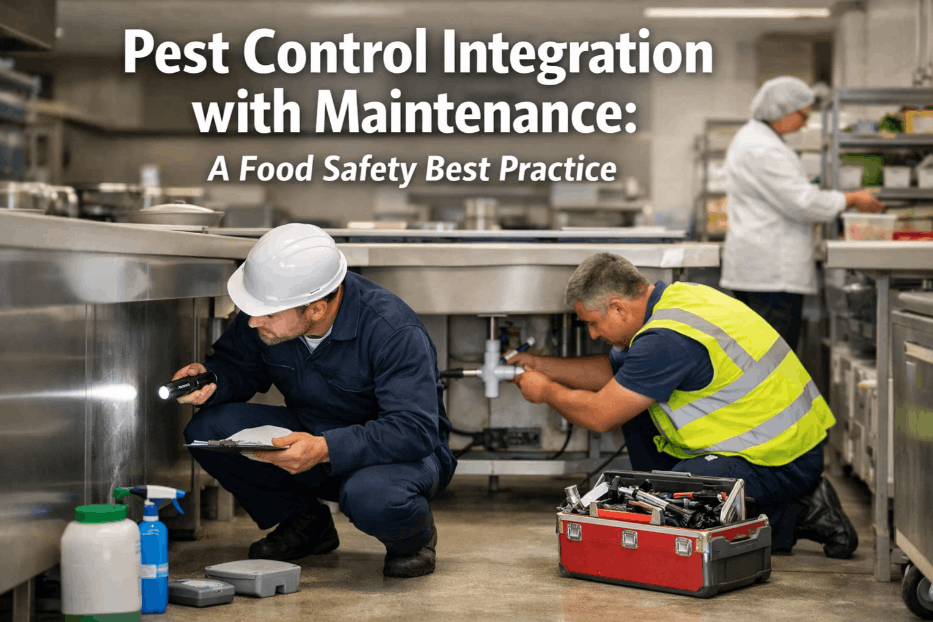
A rigorous pest control inspection program is not a reactive measure — it is a proactive, documented system that protects your food manufacturing facility from regulatory action, product contamination, and GFSI audit failures. Under FDA FSMA guidelines and leading GFSI schemes including SQF and BRC, food facilities must maintain verified pest management records, active monitoring devices, and corrective action documentation across every zone of the plant. Pest control supervisors and QA teams that depend on verbal walk-throughs and untracked paper logs expose their facilities to 483 observations, warning letters, and customer loss. A structured, checklist-driven pest inspection program ensures every bait station, insect light trap, door seal, roof penetration, and drain is inspected, documented, and corrected on a defensible schedule. Sign Up Free and build your audit-ready pest control documentation system today.
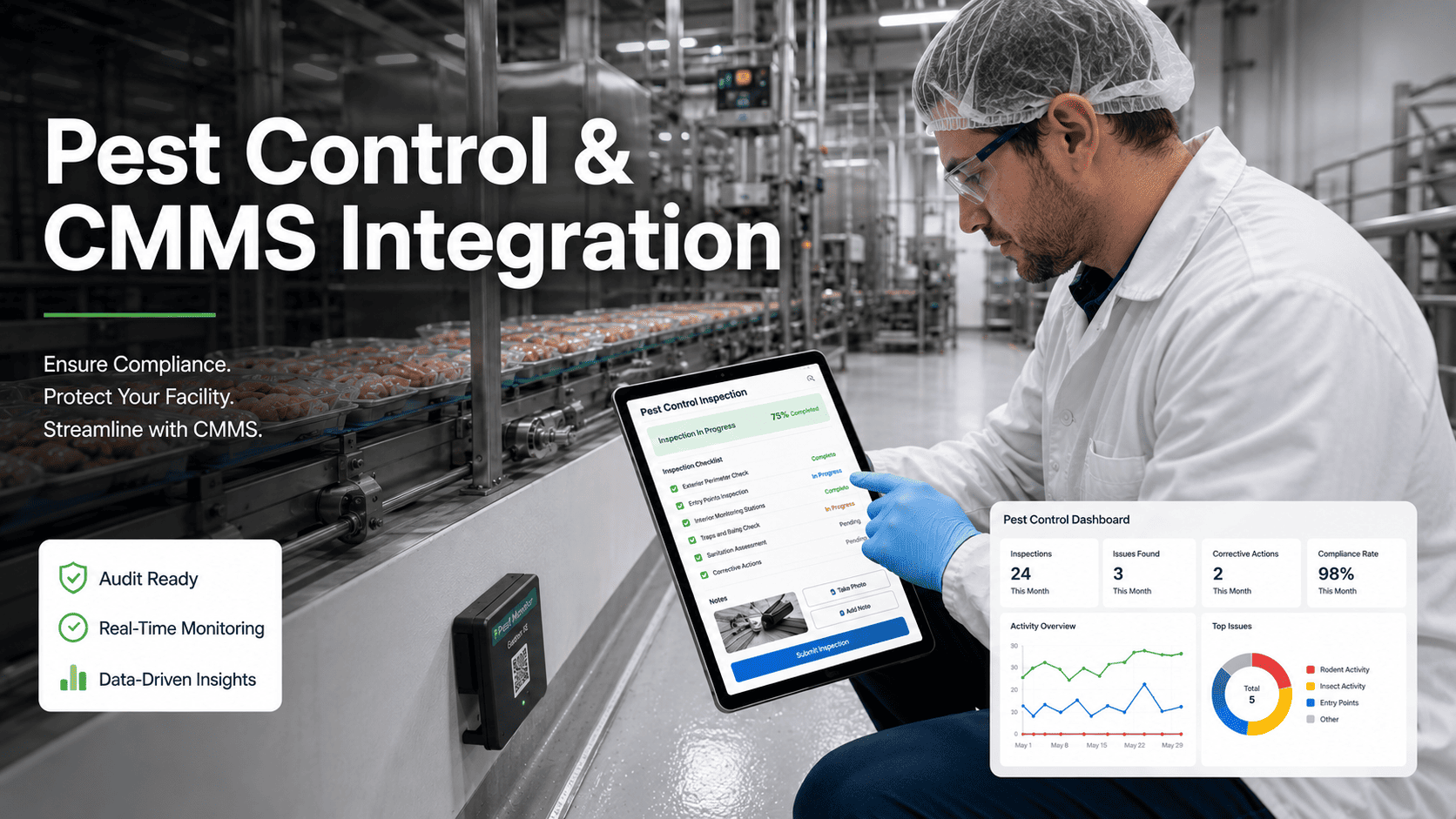
Automate Your Pest Control Inspection and DocumentationSchedule device inspections, log corrective actions, and generate audit-ready pest management records across every zone in your food facility.
Integrated Pest Management is required under FSMA and all major GFSI food safety schemes
#1
Pest activity is the leading cause of FDA warning letters in food manufacturing facilities
6mm
Any exterior gap larger than 6mm is sufficient for rodent entry and an immediate corrective action trigger
SQF
BRC and SQF require verified pest device inspection records as primary audit evidence
CriticalRegulatory requirement — no deviation permittedHighComplete within inspection interval — no deferralOngoingMonitor continuously across all production shifts
Checklist 1 — Exterior Perimeter and Building Envelope Inspection
Walk the full exterior perimeter and document all gaps, cracks, and structural openings
Inspect the complete exterior wall surface, foundation line, and utility penetrations for any opening larger than 6mm; rodents can compress their skeletal structure to enter gaps as small as a quarter-inch, making even minor structural defects an active pest entry risk that must be documented and closed before the next scheduled PCO visit. Start Free Trial to automate perimeter inspection records.
CriticalWeeklySanitation Supervisor
Inspect all exterior door seals, dock levelers, and door sweeps for wear and integrity
Check that all exterior personnel doors, emergency exits, and loading dock doors have intact door sweeps and seals with no visible light gaps when closed; dock leveler pit areas are primary rodent harborage zones and must be inspected for nesting material, droppings, and seal failure at every inspection interval.
CriticalWeeklyMaintenance Tech
Inspect roof penetrations, vent screens, exhaust outlets, and HVAC intake points for exclusion integrity
Verify that all roof-level utility penetrations, exhaust fan housings, and fresh air intakes are fitted with intact wire mesh screens or exclusion plates; birds, rodents, and insects access food facility interiors through unscreened roof penetrations and compromised HVAC intakes, creating an entry pathway that bypasses all ground-level exclusion measures.
CriticalMonthlyMaintenance Tech
Assess exterior grounds for vegetation overgrowth, debris accumulation, and standing water within 3 meters of the building
Inspect the exterior grounds buffer zone for tall grass, stored pallets, discarded equipment, and pooled water that create harborage and foraging opportunities for rodents and insects; a clear, gravel-lined perimeter extending a minimum of one meter from the building foundation is the standard IPM requirement for reducing rodent harborage adjacent to the structure. Book a Demo to see how grounds inspection findings are tracked and closed.
HighWeeklySanitation Supervisor
Checklist 2 — Rodent Bait Station Inspection and Documentation
Verify all exterior rodent bait stations are present, numbered, secured, and positioned per the station map
Confirm that every exterior bait station on the facility pest device map is physically present, tamper-resistant, and anchored in its designated position; a missing or displaced bait station creates an unmonitored gap in the exclusion perimeter and must be treated as an active finding requiring immediate corrective placement and documentation.
CriticalPer PCO scheduleQA Technician
Inspect bait block consumption levels and record activity grade for each station on the inspection log
Open each bait station, measure bait block consumption against the previous service level, and assign an activity grade of none, low, moderate, or high; a sudden increase in consumption at a specific station indicates a new rodent pressure point near that location and triggers an immediate perimeter investigation and exclusion response within 24 hours. Sign Up Free to log bait station activity grades digitally with automatic trend alerts.
CriticalPer PCO schedulePCO / QA Technician
Check bait station interiors for rodent droppings, gnaw marks, hair, or nesting material
Inspect the interior of each bait station for physical evidence of rodent activity beyond bait consumption, including fresh droppings, fur deposits, and nesting debris; physical evidence inside a bait station confirms an active rodent population in that zone and requires escalation to a corrective action work order with a defined closure deadline.
HighPer PCO schedulePCO / QA Technician
Confirm all rodenticide bait stations inside the facility boundary use non-toxic monitoring blocks only
Verify that any bait stations placed inside the facility perimeter are loaded exclusively with non-toxic tracking blocks and not rodenticide bait; the use of toxic rodenticide inside a food manufacturing facility without a licensed PCO authorization and documented risk assessment is a regulatory violation and a direct product contamination risk under FDA food safety requirements.
CriticalEach inspectionQA Manager
Checklist 3 — Insect Light Trap Inspection and Maintenance
Verify all insect light traps are operational, correctly positioned, and not visible from exterior entry points
Confirm that every ILT on the device map is powered on, bulbs are functional, and units are positioned away from exterior doors and windows where UV light visibility would attract insects from outside into the facility; an ILT positioned near an exterior opening functions in reverse, drawing insects toward the entry point rather than capturing them inside the controlled zone.
CriticalWeeklySanitation Supervisor
Remove, count, and identify insects captured on glue boards and record species and counts per trap
Extract glue boards from each ILT, count total insects, identify to order or species where possible, and log catches per trap location on the pest activity trend record; an unexpected increase in flying insect catch at a specific ILT location indicates a new ingress point or internal harborage site that must be investigated within the current inspection cycle. Book a Demo to see automated ILT catch trend reporting in action.
CriticalWeeklyPCO / QA Technician
Replace ILT bulbs at the manufacturer-specified interval regardless of visible luminescence
Schedule ILT bulb replacement on the manufacturer-defined cycle, typically every 12 months, even when bulbs appear visually active; UV bulb output degrades well before visible light failure, and a bulb past its effective life provides significantly reduced insect attraction capacity while appearing functional during routine visual inspection.
HighAnnual / Per scheduleMaintenance Tech
Clean ILT housing interiors and exteriors to prevent insect debris accumulation near food processing zones
Wipe down ILT housing interiors and surrounding surfaces to remove insect fragment buildup; accumulated insect debris inside and around ILT units in food production zones constitutes a physical and biological contamination risk and must be removed on a defined cleaning schedule independent of the glue board replacement cycle.
HighPer scheduleSanitation Tech
Checklist 4 — Interior Pest Activity Inspection by Zone
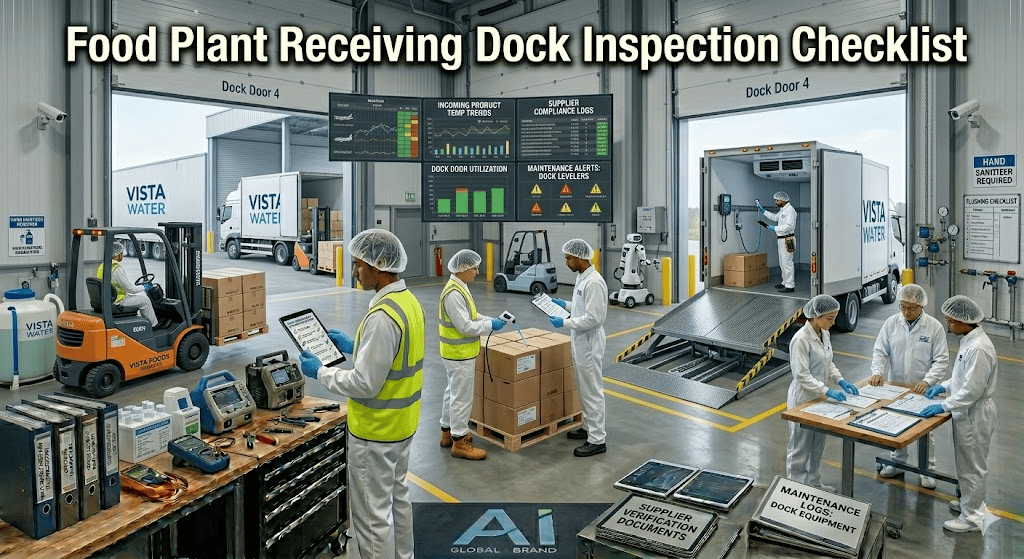
Inspect receiving docks, pallet staging areas, and incoming ingredient storage zones for rodent activity signs
Examine all receiving and raw material storage areas for rodent droppings, gnaw marks on packaging, burrow entrances, and grease smear marks on walls and floor junctions; receiving zones are the primary interior pest introduction point in food manufacturing facilities because incoming shipments can harbor live pests, eggs, and nesting material inside pallet cavities and corrugated packaging.
CriticalDaily (Pre-op)Sanitation Supervisor
Inspect all floor-wall junctions, equipment bases, and utility chases for rodent runway evidence
Use a flashlight to examine floor-wall junctions along all production zone perimeters, under fixed equipment bases, and around pipe chases for fresh droppings, grease rub marks, and urine staining; rodents travel in established runways and leave consistent evidence trails that allow accurate identification of active travel paths and nesting zones within the facility. Start Free Trial to log zone inspection findings with photo evidence and corrective action tracking.
CriticalWeeklyQA Technician
Inspect ingredient and finished product storage areas for stored product pest activity including moths and beetles
Check all dry ingredient bins, bag storage areas, and finished product warehouses for webbing, frass, live insects, and damaged packaging indicative of stored product pest infestation; stored product pests including Indianmeal moths and flour beetles can establish large populations within sealed ingredient bags before any external activity is visible during routine inspection.
CriticalWeeklyQA Technician
Inspect break rooms, locker areas, and food waste collection points for cockroach activity and harborage conditions
Examine behind appliances, under furniture, and inside cabinet voids in employee break areas for cockroach egg cases, shed skins, and live insects; employee rest areas adjacent to production zones are a documented cockroach introduction pathway in food facilities because food residue, warmth, and concealed harborage are consistently present in these spaces.
HighWeeklySanitation Supervisor
Checklist 5 — Drain, Floor, and Internal Moisture Control Inspection
Inspect all floor drains for flow rate, drain cover integrity, and absence of organic debris buildup
Remove and inspect all floor drain covers to confirm free flow, intact covers without cracks, and no organic slime or food debris accumulation in the drain channel; floor drains with organic buildup are primary harborage and breeding sites for drain flies and small flies that develop in the wet organic layer lining the drain interior.
CriticalDaily (Pre-op)Sanitation Tech
Check for standing water accumulation under equipment, in drain sumps, and along floor low points
Inspect all low-gradient floor areas, equipment bases, and drain sumps for water accumulation that was not cleared from the previous sanitation cycle; standing water in food manufacturing environments provides the moisture condition required for pest breeding, Listeria harborage, and organic biofilm development that sustains fly populations through repeated production cycles. Book a Demo to see how moisture findings are tracked and linked to corrective drain maintenance tasks.
CriticalDaily (Pre-op)Sanitation Supervisor
Inspect condensate drip pans on refrigeration units and HVAC systems for water overflow and organic residue
Check that all refrigeration evaporator drip pans and HVAC condensate collection trays are draining correctly and contain no stagnant water or visible slime growth; overflowing condensate pans create floor-level moisture plumes that extend pest harborage conditions across broad floor areas and feed drain fly breeding populations in adjacent drains.
HighWeeklyMaintenance Tech
Checklist 6 — PCO Service Verification and Corrective Action Documentation
Confirm PCO service reports are received, reviewed, and filed within 24 hours of each service visit
Verify that the licensed pest control operator has submitted a completed service report for each visit covering all devices inspected, findings recorded, products applied, and corrective actions recommended; a PCO service report that is received but not reviewed by QA management within the shift following service is an audit documentation gap that cannot be retroactively corrected during an unannounced regulatory inspection.
CriticalEach service visitQA Manager
Verify corrective actions identified in PCO reports have been assigned, scheduled, and closed within the defined deadline
Review all open corrective action items from PCO reports and confirm that each item has a responsible owner, a target completion date, and documented closure evidence; an open PCO corrective action that is unassigned or past its due date at the time of an FDA inspection or GFSI audit is treated as an active pest management system failure regardless of the original severity rating. Sign Up Free to manage PCO corrective actions with automated deadline alerts and closure tracking.
CriticalWeeklyQA Manager
Confirm PCO applicator license, insurance certificates, and approved product list are current and on file
Verify that the pest control operator's state applicator license, liability insurance, and the facility-approved pesticide product list are all current and stored in the pest management program documentation file; an expired PCO license or an unlisted product applied during a service visit creates a compliance violation that is independently auditable and cannot be corrected after the fact.
HighAnnual / Upon renewalQA Manager
Review pest activity trend data across all zones and generate monthly summary for management review
Compile catch data from all ILTs and bait stations, inspection findings from all interior zone walk-throughs, and corrective action closure rates into a monthly pest activity trend report reviewed by QA and operations management; trend analysis is the only mechanism that identifies gradual pressure increases before they reach the threshold of a major pest event during a production or audit cycle.
HighMonthlyQA Manager
Pest Control Program Investment vs. Compliance Risk Cost Analysis
A fully documented and verified pest management program is among the lowest-cost food safety investments relative to the regulatory, financial, and reputational exposure of an active pest finding during an FDA inspection or GFSI audit. Book a Demo to see the full pest management documentation workflow in action.
Inspection Area
Annual Program Cost
Risk / Savings Avoided
Payback
Exterior Exclusion and Perimeter Program
$800 per facility
$120,000+ avoided from facility closure due to rodent infestation finding
Under 3 days
Bait Station Monitoring and Documentation
$600 per facility
$85,000 avoided regulatory action from undocumented rodent activity
Under 1 week
Insect Light Trap Program with Trend Analysis
$500 per facility
$60,000 avoided product contamination from undetected flying insect population
Under 1 week
Drain and Moisture Control Inspection
$400 per facility
$75,000 avoided from drain fly infestation and associated environmental pathogen finding
Under 1 week
PCO Documentation and Corrective Action Tracking
$350 per facility
$50,000 avoided audit remediation cost from undocumented PCO corrective actions
Under 1 week
CMMS-Automated Pest Management Documentation
$1,200 per facility
$95,000 reduction in audit preparation and regulatory response costs annually
Under 2 weeks
A fully implemented pest control inspection and documentation program delivers 15–25× ROI within the first compliance event it prevents. Sign Up Free and automate your pest management records today.
Stop Managing Pest Control Records ManuallyAutomate every device inspection, corrective action log, PCO service record, and pest trend report — across every zone and every shift in your food facility.
What pest control inspections are required in a food manufacturing facility under FSMA?
Under FDA FSMA Preventive Controls (21 CFR Part 117), food facilities must maintain a documented pest management program as part of sanitation controls. Required elements include written procedures, verified device inspection records, pesticide application logs with applicator credentials, and corrective action documentation with closure evidence. All records must be retained for a minimum of two years and made available during unannounced regulatory inspections and third-party GFSI audits. Sign Up Free to manage all FSMA pest documentation in one audit-ready platform.
How often should bait stations and insect light traps be inspected in a food plant?
GFSI schemes including SQF and BRC require interior device inspections at least monthly, with exterior bait station checks every two to four weeks depending on pest pressure history. High-risk zones such as receiving docks and drain areas require higher frequency monitoring on a defined schedule. All catch data and inspection findings must be recorded with date, device number, findings, and the responsible inspector's ID. Book a Demo to see how device inspection schedules are automated and tracked across every station in your facility.
What documentation is required for pest control during a BRC or SQF audit?
BRC and SQF audits require the facility pest device map, PCO service reports for the full audit review period, corrective action records with closure evidence, the PCO applicator license and approved product list, pesticide application logs, and catch trend reports over time. SQF additionally requires evidence of management review of the pest program at defined intervals as part of the food safety management system review process. Start Free Trial to generate a complete audit-ready pest documentation package with a single click before your next scheduled audit.
What corrective actions are required when a pest finding is identified during an inspection?
When a pest finding is confirmed, the facility must immediately isolate any potentially affected product, close the entry point or harborage condition, increase monitoring frequency in the affected zone, and schedule an emergency PCO service visit if live activity is present. All corrective steps must be documented with a responsible owner and completion timestamp reviewed by the QA manager. Recurring findings for the same zone require a formal root cause investigation and a documented update to the pest management program. Book a Demo to see corrective action workflows that auto-assign tasks and track closure deadlines end to end.
What is the difference between pest exclusion and pest control in food manufacturing?
Pest exclusion covers the physical and structural measures that prevent pests from entering the facility, including door seals, mesh screens on penetrations, and perimeter gravel barriers. Pest control covers monitoring and treatment activities used to detect and reduce pest populations inside the facility, including bait stations, ILTs, glue boards, and licensed pesticide applications. Both are required components of a compliant IPM program — exclusion is the primary preventive control and monitoring data continuously improves exclusion effectiveness over time. Sign Up Free to build and document a complete exclusion and monitoring program in one place.