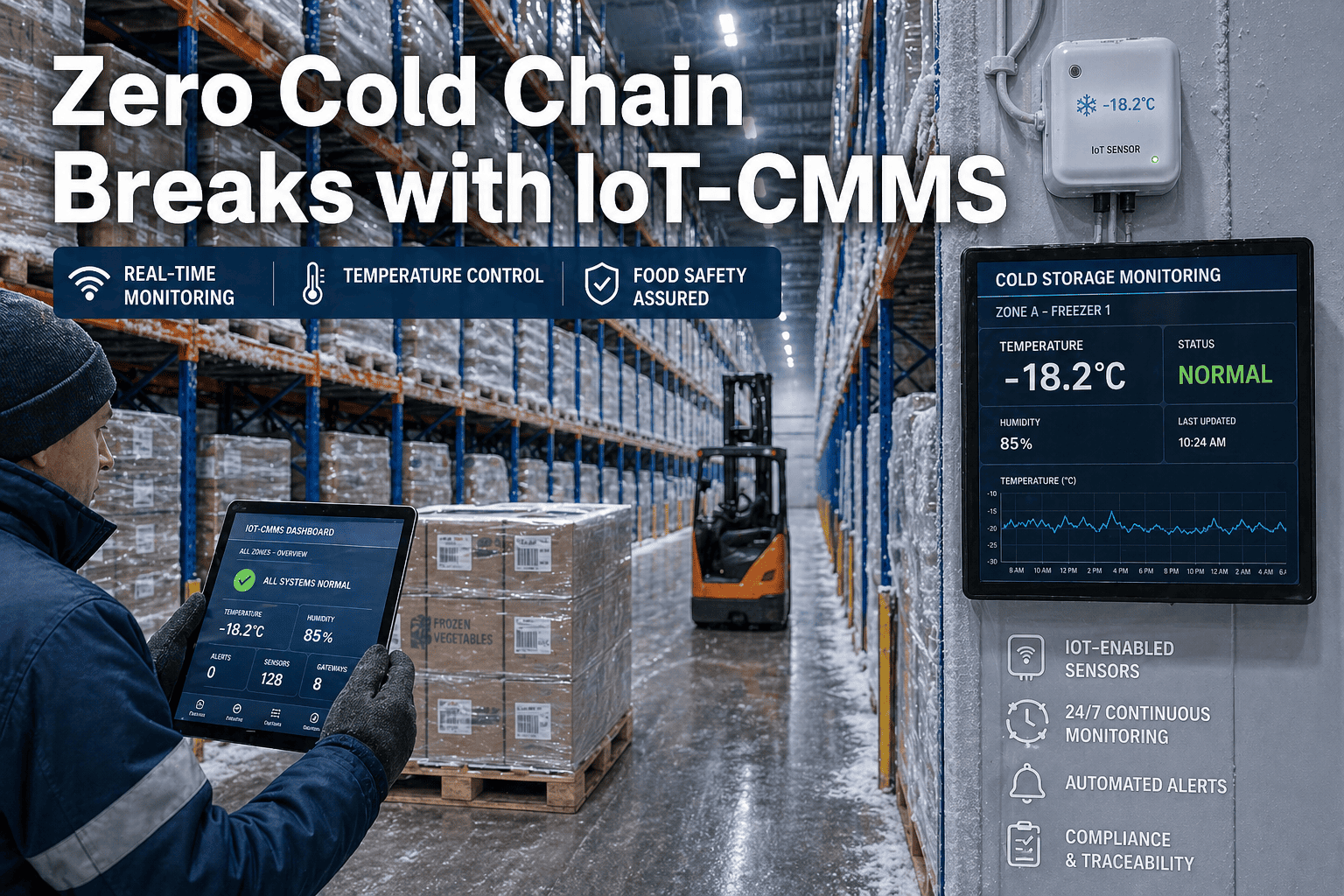
A multistate seafood distributor discovered temperature excursions affecting 47 pallets of premium product—not during
delivery, but three days later when aggregating data from disconnected monitoring systems across six facilities. The
delayed detection cost $284,000 in destroyed inventory and customer credits, plus the revelation that similar
excursions had likely occurred throughout the previous quarter without triggering investigation. The cold
chain monitoring challenges food distribution networks face aren't about technology availability—every
facility has sensors. The problem is fragmented systems creating visibility gaps where food safety risks hide until
they become losses.
Cold chain monitoring in food distribution involves coordinating temperature control across dozens of assets,
multiple facilities, and constant product movement. Each handoff point—from production to warehouse, warehouse to
truck, truck to customer facility—creates opportunity for breaks in monitoring continuity. Traditional approaches
using standalone data loggers, manual checks, and facility-specific systems work within single locations but fail
when distribution networks require end-to-end visibility. Effective cold chain management demands integrated
monitoring that follows product through the entire distribution journey, not just isolated snapshots at individual
facilities.
Sign up for
Oxmaint to implement unified cold chain monitoring across distribution networks, or book a demo to see how IoT monitoring creates continuous visibility from
production to delivery.
IoT Monitoring / Cold Chain
Cold Chain Monitoring Challenges in Food Distribution
Overcome visibility gaps, fragmented systems, and compliance complexity to
protect product quality across distribution networks.
Of Temperature Excursions Occur During Transfers
Reduction in Spoilage with Real-Time Monitoring
Faster Response to Temperature Alerts
18 hr
average
Detection Delay with Manual Monitoring
The Visibility Gap Problem
Food distribution networks operate with dozens of temperature-controlled assets—warehouses, coolers, freezers,
trucks, loading docks—each generating temperature data in isolation. Individual facilities may have
sophisticated monitoring within their four walls, but that data rarely connects to upstream or downstream
operations. The result is monitoring gaps at every handoff point where products move between environments.
These gaps create dangerous blind spots. A pallet spends 45 minutes on a loading dock during trailer swap,
experiencing rising temperatures that never get recorded. A truck's refrigeration unit cycles off during
delivery stops, but no one monitors those events against product requirements. Cross-dock operations move
product through ambient temperature facilities between refrigerated assets, with no visibility into dwell time.
Each gap represents food safety risk that becomes apparent only when product arrives spoiled or customers report
issues.
$2.4M
average annual cost of cold chain failures for mid-size food distributors according to
industry research. The majority of these losses trace to monitoring gaps during transfers rather than
storage failures, yet most facilities invest heavily in warehouse monitoring while leaving handoff points
unmonitored.
Critical Cold Chain Monitoring Challenges
Distribution networks face six fundamental challenges that traditional monitoring approaches struggle to address
effectively across complex operations.
Products move through multiple temperature-controlled environments, but monitoring systems don't
follow. Data gaps occur during loading, transport, and unloading operations.
VISIBILITY GAPS:
Loading dock dwell time between warehouse and truck
Transport conditions during delivery routes
Cross-dock operations in ambient facilities
CONSEQUENCES:
Temperature abuse goes undetected for hours or days
Root cause analysis impossible without complete data
Compliance documentation incomplete at handoff points
Each facility, fleet, and product line uses different monitoring technology, creating data silos that
prevent unified visibility across the distribution network.
INTEGRATION BARRIERS:
Warehouse systems incompatible with transport monitoring
Manual data aggregation across multiple platforms
Different alert thresholds at each facility
CONSEQUENCES:
Delayed identification of multi-facility issues
Inconsistent response to similar temperature events
Inability to track product journey end-to-end
Generic alert systems generate excessive notifications for minor deviations, training teams to ignore
alerts until critical issues get lost in the noise.
ALERT PROBLEMS:
Undifferentiated alerts for critical and minor events
No context on affected product or urgency level
Alerts sent to wrong personnel or distribution lists
CONSEQUENCES:
Critical temperature excursions missed among false positives
Response times stretch from minutes to hours
Teams disable alerts rather than address root causes
Regulatory requirements demand complete temperature records, but manual documentation processes
create compliance gaps and consume significant labor resources.
DOCUMENTATION CHALLENGES:
Manual temperature logging prone to errors and gaps
Paper records difficult to aggregate for analysis
Handwritten data lacks timestamp verification
CONSEQUENCES:
Audit findings due to incomplete records
Labor hours spent on manual documentation
Cannot demonstrate continuous monitoring to regulators
Distributed sensor networks require systematic calibration programs to maintain measurement accuracy,
but tracking calibration across hundreds of devices proves challenging.
CALIBRATION ISSUES:
Sensor drift over time affecting measurement accuracy
Inconsistent calibration schedules across facilities
No central tracking of calibration status
CONSEQUENCES:
False temperature readings leading to wrong decisions
Compliance violations from out-of-calibration sensors
Product holds due to questionable temperature data
Point-in-time temperature readings fail to reveal patterns, trends, or degradation developing across
the network, preventing proactive intervention.
ANALYTICS GAPS:
No trending to identify equipment performance degradation
Cannot correlate temperature with product quality issues
Seasonal patterns and risk periods unidentified
CONSEQUENCES:
Equipment failures occur without warning signs detected
Preventive opportunities missed from trend analysis
Quality degradation patterns remain invisible
Close Monitoring Gaps. Unify Visibility. Protect Product Quality.
Oxmaint provides IoT monitoring infrastructure and analytics to create continuous cold chain visibility
across distribution networks.
Comprehensive Cold Chain Monitoring Framework
Building effective cold chain monitoring requires systematic implementation of integrated technology,
standardized processes, and coordinated response protocols across all distribution facilities.
01
Network-Wide Sensor Deployment
Install IoT temperature sensors at every critical point in the
distribution network—warehouses, coolers, freezers, loading docks, trucks, and cross-dock
facilities. Deploy wireless sensors that transmit data continuously to central monitoring platforms,
eliminating manual data collection and creating real-time visibility across all assets regardless of
location.
02
Unified Monitoring Platform Integration
Consolidate data from all monitoring devices into single platform
providing end-to-end visibility. Integration eliminates data silos by connecting warehouse systems,
transport monitoring, and facility networks. Unified dashboards show complete product journey from
production to delivery, identifying exactly where temperature excursions occur in complex
distribution chains.
03
Intelligent Alert Configuration
Implement tiered alert systems that differentiate critical temperature
excursions from minor deviations. Configure alerts based on product type, temperature severity,
duration, and location. Route notifications to appropriate personnel with context about affected
inventory and required response actions. Smart alerting reduces fatigue while ensuring critical
issues receive immediate attention.
04
Automated Documentation and Compliance
Configure systems to automatically generate timestamped temperature
records meeting regulatory requirements. Digital documentation provides audit trails showing
continuous monitoring without manual data entry. Automated reporting creates compliance-ready
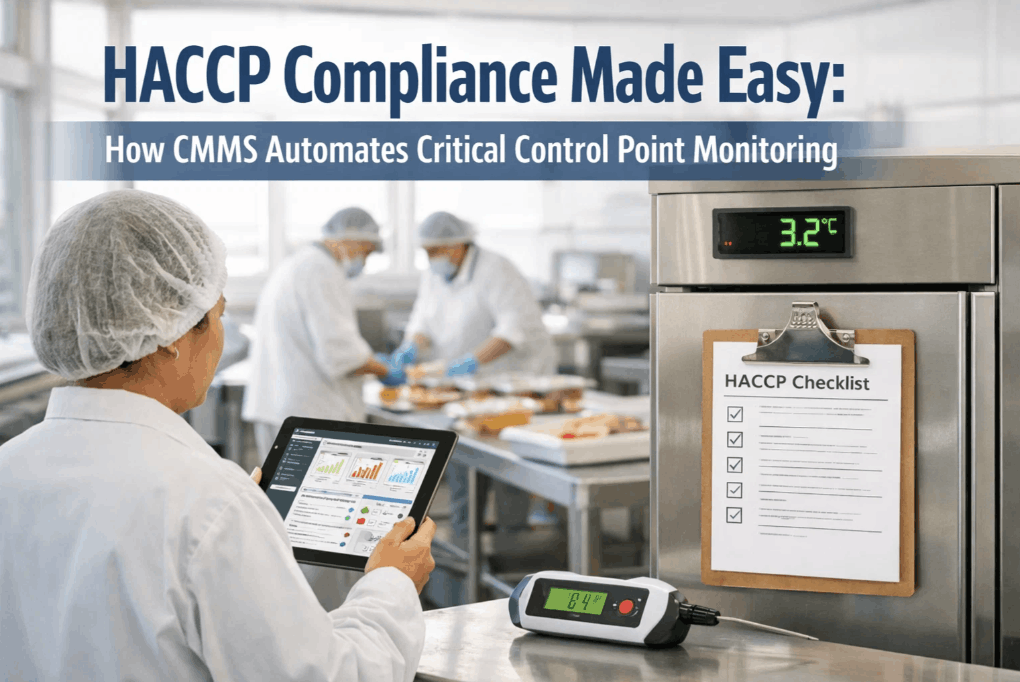
summaries for FSMA, HACCP, and customer requirements while freeing labor from manual temperature
logging tasks.
05
Calibration Management Program
Establish systematic calibration schedules tracked centrally across
entire sensor network. Digital systems flag sensors approaching calibration deadlines, automatically
creating maintenance tasks. Track calibration history for every device, maintaining traceability
required for compliance. Regular calibration prevents measurement drift that creates false
temperature readings and wrong operational decisions.
06
Analytics and Continuous Improvement
Leverage temperature data for trend analysis identifying equipment
degradation, seasonal patterns, and process improvement opportunities. Correlate temperature
excursions with product quality issues to quantify impact. Track performance metrics showing cold
chain reliability improvements over time. Data-driven insights transform monitoring from reactive
alerting to proactive risk management.
Common Cold Chain Failure Scenarios
Understanding typical failure patterns helps distribution networks prioritize monitoring investments and develop
appropriate response protocols.
WARNING SIGNS:
Extended dwell time on dock during trailer changes
Pallets staged in ambient areas before loading
Dock door left open between loading operations
Multiple product types mixed requiring selective loading
FAILURE IMPACT:
Product temperatures rise during unmonitored dock time, frozen items
begin thawing creating refreezing quality issues, delayed loading allows core temperature increases
that accelerate spoilage, no documentation of dock exposure time for compliance.
WARNING SIGNS:
Trailer refrigeration unit cycling frequently
Temperature recovery slower after door openings
Temperature differential between front and rear of trailer
Refrigerant charge trending downward on unit diagnostics
FAILURE IMPACT:
Complete refrigeration loss during transit ruins entire load,
product arrives at improper temperature requiring rejection, spoilage occurs before delivery
completion, customers receive compromised product creating liability exposure.
WARNING SIGNS:
Product movement through ambient temperature facilities
No monitoring between inbound and outbound trailers
Extended staging time during sortation operations
Manual handling without temperature verification
FAILURE IMPACT:
Temperature abuse occurs in unmonitored facility, no documentation
of cross-dock exposure creating compliance gap, product quality degradation begins before final
delivery, cannot identify which shipments were affected without monitoring data.
WARNING SIGNS:
Manual monitoring during unmanned periods
Alert systems not monitored after-hours
Equipment failures occurring during low-staff periods
No on-call response protocol for temperature alerts
FAILURE IMPACT:
Temperature excursions develop undetected for days, entire weekend
inventory potentially compromised, investigation delayed until staff returns Monday, cannot
determine exact failure timing without continuous monitoring.
WARNING SIGNS:
Similar temperature issues across multiple locations
Seasonal patterns affecting entire network
Equipment age creating coordinated degradation risk
Inadequate capacity during peak demand periods
FAILURE IMPACT:
Systemic problems remain invisible without unified monitoring,
cannot identify whether issues are local or network-wide, preventive opportunities missed from
pattern analysis, capital planning uninformed by performance data.
WARNING SIGNS:
Sensors showing readings inconsistent with adjacent devices
Calibration schedules not tracked systematically
Sensors operating beyond recommended service intervals
No verification testing of measurement accuracy
FAILURE IMPACT:
Inaccurate temperature readings create false sense of control,
actual product temperatures diverge from monitored values, compliance violations from unreliable
measurement data, product quality issues occur despite monitoring showing acceptable conditions.
IoT Monitoring Implementation Roadmap
Deploying effective cold chain monitoring across distribution networks requires phased implementation that builds
capability while maintaining operational continuity.
Network Assessment and Planning
Week 1-3
Map complete distribution network including all temperature-controlled
assets
Identify monitoring gaps at handoff points and transfer operations
Inventory existing monitoring technology and integration capabilities
Define temperature specifications by product category and storage type
Document current alert protocols and response procedures
Pilot Facility Deployment
Week 4-8
Deploy IoT sensors at pilot facility covering all critical monitoring
points
Configure central monitoring platform and alert routing
Train facility staff on monitoring system operation and response protocols
Validate data accuracy through comparison with existing systems
Refine alert thresholds based on operational experience
Network-Wide Rollout
Week 9-16
Deploy sensors across all distribution facilities using proven
configuration
Install transport monitoring for refrigerated fleet
Integrate monitoring at loading docks and cross-dock operations
Connect all sensor data to unified monitoring platform
Conduct network-wide training on monitoring protocols
Process Integration and Automation
Week 17-22
Integrate monitoring data with inventory management systems
Automate compliance documentation and reporting
Configure advanced analytics and trending capabilities
Implement calibration tracking and maintenance scheduling
Establish performance metrics and KPI dashboards
Optimization and Continuous Improvement
Week 23-26
Analyze temperature data to identify improvement opportunities
Optimize alert configurations based on false positive rates
Establish quarterly monitoring system performance reviews
Document ROI and quality improvements for stakeholder reporting
Develop predictive maintenance protocols from trending data
Implement End-to-End Cold Chain Visibility
Oxmaint provides the IoT infrastructure and analytics platform to monitor temperature across your entire
distribution network.
Integration Capabilities
Cold chain monitoring connects with broader facility systems to create coordinated operations management and
data-driven decision making.
WMS
Warehouse Management Systems
Link temperature monitoring to inventory locations, creating product-level traceability that connects
temperature history to specific lots and shipments.
Temperature data attached to inventory records
Automatic product holds on temperature excursions
FIFO optimization based on temperature exposure history
TMS
Transportation Management
Integrate transport monitoring with route planning and fleet management, correlating temperature
performance with drivers, routes, and equipment.
Trailer performance tracking by asset and route
Driver behavior correlation with temperature stability
Maintenance triggers from transport temperature data
QMS
Quality Management Systems
Feed cold chain data into quality platforms for product release decisions, complaint investigations, and
corrective action tracking.
Temperature verification in lot release protocols
Automated CAPA triggers on excursions
Complaint investigation with temperature traceability
ERP
Enterprise Resource Planning
Connect monitoring data to ERP systems for financial impact tracking, vendor performance metrics, and
operational reporting across the organization.
Spoilage cost tracking by facility and product line
Vendor temperature compliance scorecards
Executive dashboards with cold chain KPIs
Frequently Asked Questions
What's the difference between cold chain monitoring in warehouses versus
distribution networks?
Warehouse monitoring focuses on static storage environments with consistent
conditions. Distribution network monitoring must track product through multiple handoffs, transport
operations, and varying environments. The challenge is maintaining monitoring continuity as product moves
between facilities, trucks, and cross-dock operations.
Sign up for Oxmaint to
implement end-to-end monitoring across complex distribution networks.
How do we determine appropriate temperature alert thresholds?
Alert thresholds should be based on regulatory requirements, product
specifications, and historical temperature patterns. Frozen products typically alert at 5°F, refrigerated at
41-45°F depending on product type. Configure multiple alert levels—warning for minor deviations, critical
for regulatory thresholds—to differentiate response urgency. Analyze false positive rates quarterly and
adjust thresholds to balance sensitivity against alert fatigue.
What documentation do FSMA regulations require for cold chain control?
FSMA requires records demonstrating temperature control throughout the
distribution chain. This includes monitoring frequency documentation, temperature specifications by product,
alert response procedures, and timestamped temperature records. Digital monitoring systems provide automated
documentation meeting these requirements while eliminating manual logging errors and gaps.
How do we monitor temperature during transport without cellular coverage?
Transport monitoring uses data loggers that record temperature continuously and
upload data when cellular connection is available. Some systems use satellite communication for real-time
monitoring even in remote areas. For routes with extended coverage gaps, loggers should alert based on local
thresholds and sync complete temperature history at each connected location.
What's the typical ROI timeline for comprehensive cold chain monitoring systems?
Most distribution networks see positive ROI within 3-6 months through spoilage
reduction and labor savings. A single prevented temperature excursion affecting $280K in inventory pays for
significant monitoring infrastructure. When labor savings from automated documentation and compliance
improvements are included, payback typically occurs in first year with sustained benefits continuing
indefinitely.
Transform Cold Chain Monitoring From Fragmented to Unified
Oxmaint provides the IoT monitoring infrastructure, unified platform, and analytics capabilities to create
complete visibility across your distribution network—from production to final delivery.