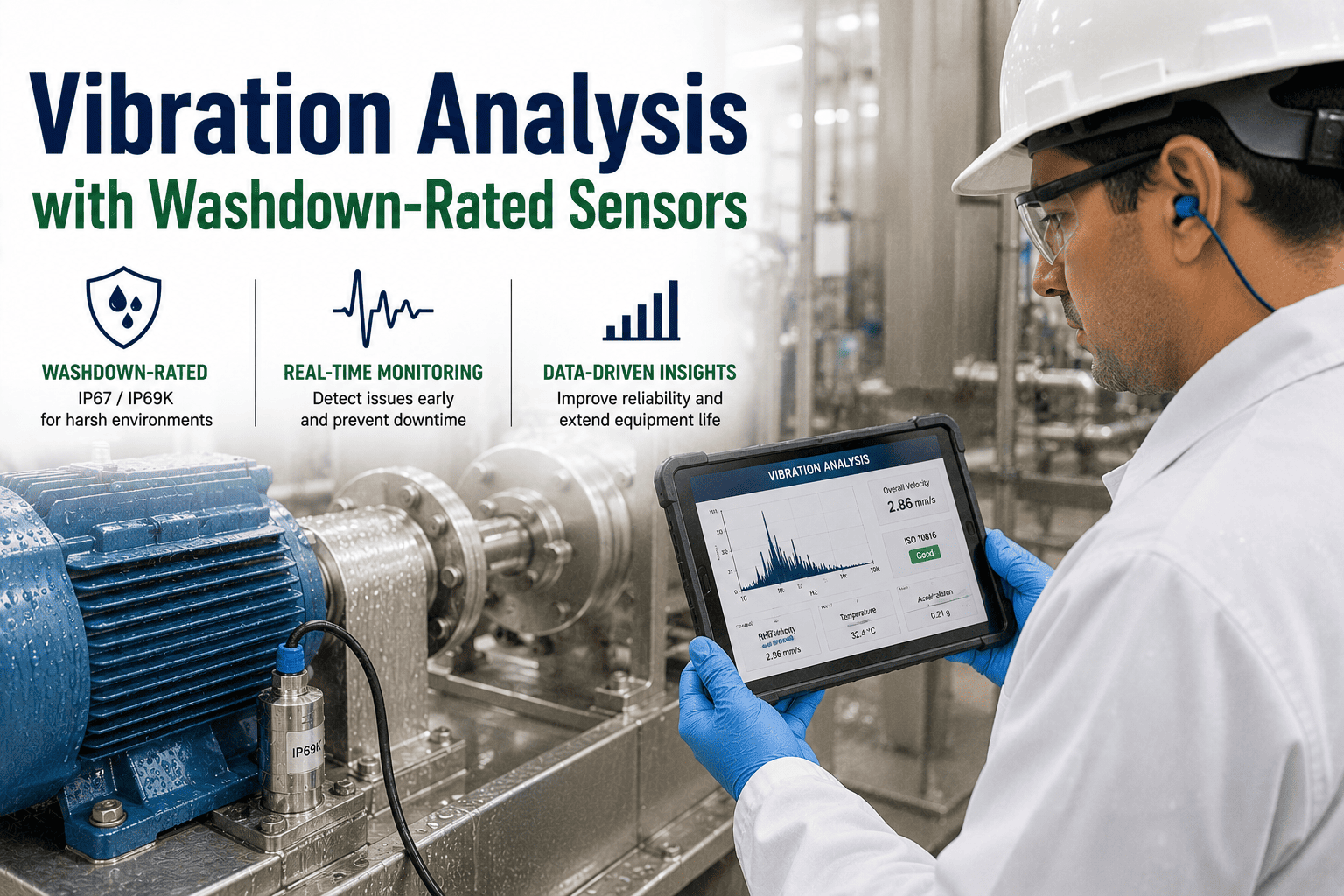
A standard vibration sensor mounted in a sanitation zone lasts about as long as it takes for the first hot caustic wash-down to find its way past the housing. Then the plant is back to listening for bearing noise by ear, on a rotating fleet that never stops running. Sign up to turn washdown-rated vibration data into scheduled work orders before a bearing actually lets go.
What This Guide Covers
Vibration analysis on food plant rotating equipment means choosing sensors that survive daily washdown, mounting them where they actually catch bearing and motor faults, setting alarm thresholds that mean something, and feeding that data straight into the CMMS as scheduled work — not a dashboard nobody checks until something fails.
Why Standard Sensors Don't Survive A Sanitation Zone
| Washdown Condition |
What A Standard Sensor Faces |
| High-pressure hose spray |
Water forced past seals and connectors rated for splash, not direct pressure |
| Hot caustic and acid cleaning chemicals |
Housing materials and cable jackets corroding or degrading well before the sensor's expected life |
| Repeated thermal cycling |
Hot wash followed by cold rinse stresses seals and connections that weren't designed for the swing |
| Daily, sometimes multiple, washdown cycles |
A sensor rated for occasional exposure is being asked to survive an exposure schedule it was never built for |
Choosing And Mounting The Right Sensor
1
Match The IP Rating To The Actual Washdown Level
A direct high-pressure hose zone needs a higher ingress protection rating than an area that only sees ambient splash
2
Choose Sanitary-Compatible Materials
Stainless housings and chemical-resistant cabling hold up against the caustics and acids used in daily sanitation, where standard coatings won't
3
Mount As Close To The Bearing Load Zone As Possible
A sensor mounted on the housing near the load zone picks up early fault signatures that a poorly placed sensor simply misses
4
Route And Protect Cabling Along The Whole Run
A perfectly rated sensor still fails if its cable run sits in standing water or gets flexed at every washdown
Vibration Data That Turns Into Real Work Orders
OxMaint takes washdown-rated sensor readings and generates a work order the moment a trend crosses threshold — no separate dashboard to remember to check. Sign up for a free trial to connect your sensors, or book a demo to see the alarm-to-work-order flow.
Setting Alarm Thresholds That Actually Mean Something
Baseline Before Alarming
Capture normal running vibration on healthy equipment first, so thresholds reflect this asset, not a generic default
Two-Tier Alerting
A warning level flags a developing trend; an alarm level triggers an actual work order
Trend Over Snapshot
A single high reading matters less than a steady climb across several washdown cycles
Route To The Right Work Order
An alarm on a Tier 1 CCP-supporting motor should route differently than one on general production equipment
Sensor Data Only Matters If Someone Acts On It
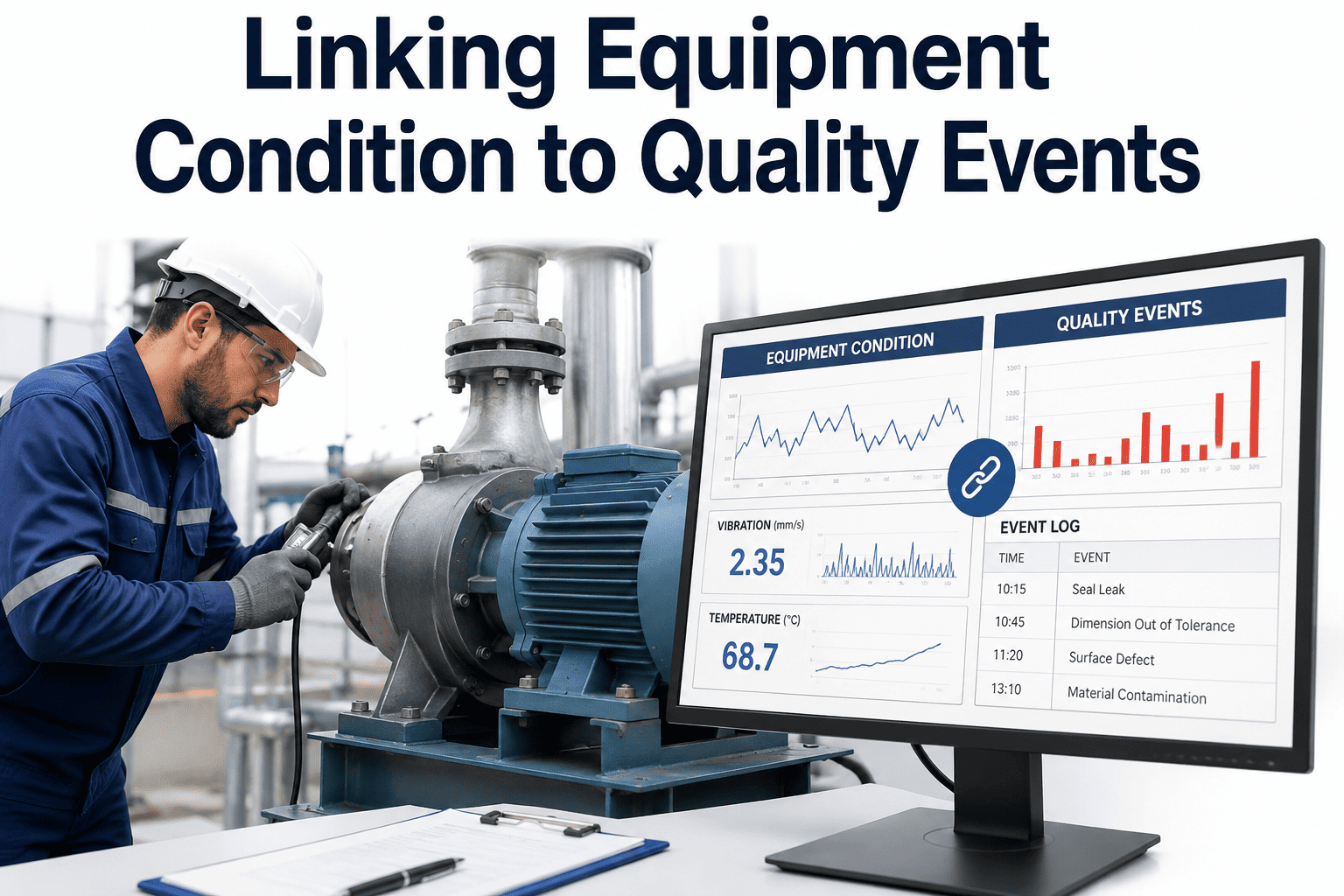
A washdown-rated sensor solves the survival problem, but the real payoff is in what happens after a threshold is crossed. Vibration trends that sit in a monitoring platform disconnected from maintenance work orders end up ignored the same way a paper log does — the value comes from closing the loop between the reading and the repair.
Frequently Asked Questions
Q
What ingress protection rating do washdown zones typically need?
Areas exposed to direct high-pressure spray generally call for a higher-rated enclosure than splash-only zones — the right rating depends on hose pressure, distance, and how often the area is washed, so it's worth confirming against your specific sanitation procedure.
Q
Which assets should get vibration sensors first?
Start with high-criticality rotating equipment — motors and pumps on CCP-supporting lines or assets with a history of bearing failures — rather than instrumenting the whole fleet at once.
Q
Can vibration data replace manual bearing inspections entirely?
It reduces reliance on them but rarely replaces every manual check. Vibration monitoring is strongest at catching developing bearing and imbalance faults early, while visual inspection still catches things like lubricant leaks or physical damage.
Catch The Bearing Fault Before The Washdown Does
OxMaint connects washdown-rated vibration sensors to real alarm thresholds and scheduled work orders, so rotating equipment gets fixed before it fails. Sign up for a free trial to get your fleet monitored, or book a demo to see the full setup.