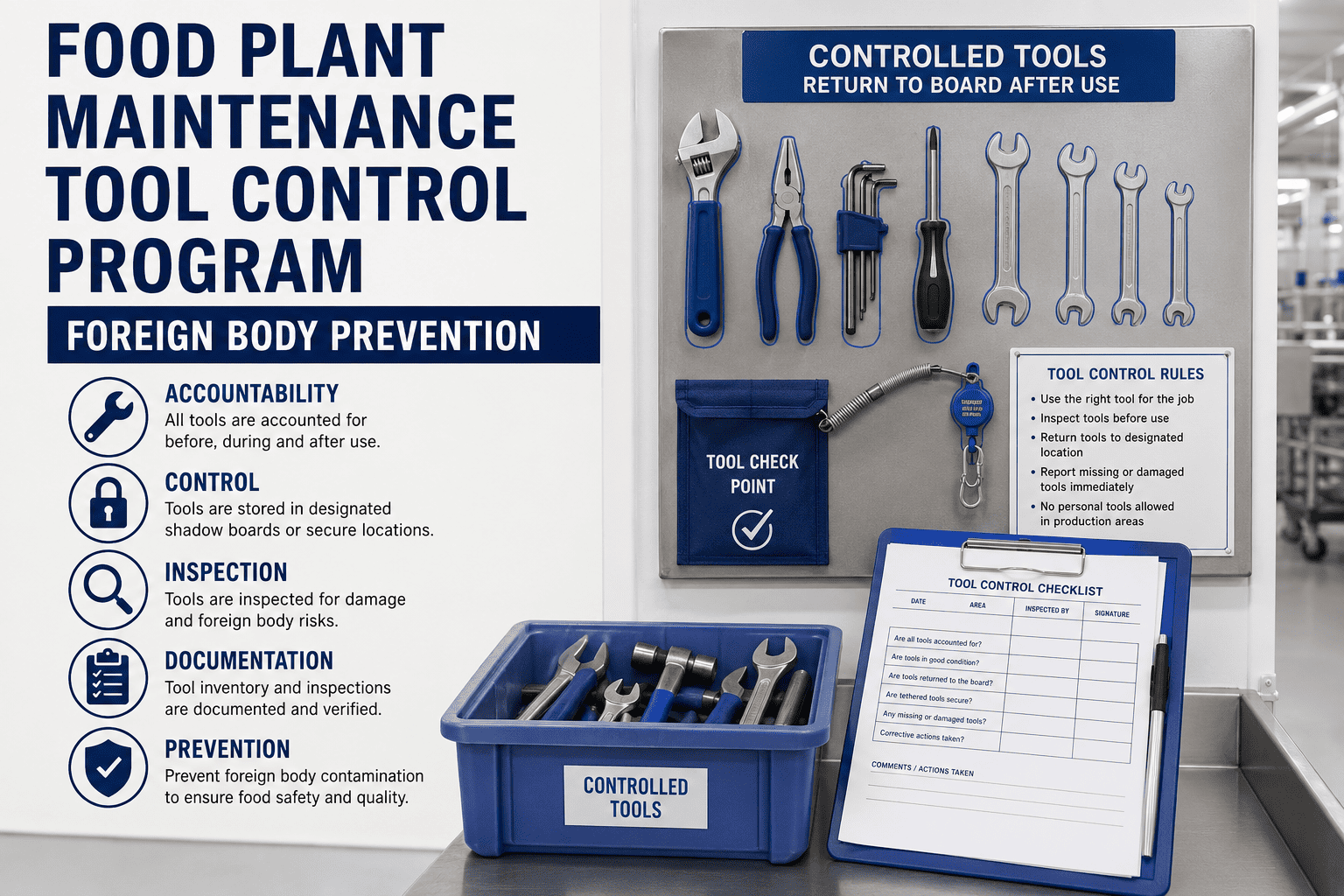
A single fragment of metal, glass, hard plastic, or wood in a food product can trigger a recall, a customer complaint, or an injury. Foreign material rarely comes from one cause, so no single machine or check can control it alone. An effective program layers prevention, detection, and response, and relies on equipment that is kept in good condition. This guide explains each layer, the maintenance habits that reduce risk, and how to document them with Oxmaint maintenance software.
Foreign Material Control Program for Food Plants: Prevent, Detect, Respond
Build three layers of defence against physical contamination, from source control to detection and a clear response plan.
Where Foreign Material Comes From
Start by mapping sources. Each category needs different controls.
Common Foreign Materials and Typical Controls
| Material | Likely Sources | Primary Controls |
|---|---|---|
| Metal | Worn equipment, fasteners, blades, wire mesh | Preventive maintenance, magnets, metal detection, tool control |
| Glass and brittle plastic | Lights, gauges, sight glasses, containers | Brittle item register, shielded lighting, breakage procedure |
| Hard plastic and rubber | Gaskets, belts, scrapers, packaging | Component inspection, colour-coded tools, X-ray or vision |
| Wood | Pallets, crates, tools | Pallet control, exclusion in production zones |
| Stone and bone | Raw materials | Supplier controls, sieves, sorters, X-ray |
| Personal items | Employees and visitors | Personal item policy, pocket checks, gowning rules |
Layer One: Prevention
Prevention is the cheapest and most reliable layer, because it stops the problem before product is involved.
Supplier and Incoming Controls
- Supplier approval that covers foreign material risks
- Incoming inspection and sampling for high-risk materials
- Clear rejection criteria and complaint feedback to suppliers
In-Plant Controls
- Brittle material and glass register with regular checks
- Tool control, shadow boards, and sign-out records
- Personal item policy and visitor rules
- Pallet and packaging control in production areas
Maintenance as a Prevention Control
- Inspect and replace wear parts before they break and fall into product
- Check fasteners, guards, and covers on a schedule
- Control work done above or near open product
- Count tools out and in, and clear the area before restart
Layer Two: Detection Technologies Compared
Detection catches what prevention missed. Choose technology to match the product and contaminant.
| Technology | Best At Finding | Limitations to Consider |
|---|---|---|
| Magnets and sieves | Ferrous metal and oversized particles | Needs cleaning and inspection to stay effective |
| Metal detectors | Ferrous, non-ferrous, and stainless metal | Product effect and packaging can reduce sensitivity |
| X-ray inspection | Metal, glass, stone, dense plastic, and bone | Low-density contaminants may be harder to find |
| Vision systems | Visible items on surface or belt | Cannot see inside opaque product |
| Manual inspection | Visible, unexpected items | Affected by fatigue and line speed |
Keep Detection Equipment Tested and Documented
Oxmaint schedules function tests, records results, and opens corrective work orders when a detector or inspection device fails.
Verifying That Detection Works
Layer Three: Response When Something Is Found
Records Worth Keeping
- Detector verification results and failures
- Tool control and post-maintenance checks
- Brittle item inspections and breakage reports
- Investigation notes, hold decisions, and corrective actions
Before and After: Foreign Material Control in Practice
Informal Program
- Tools counted by habit, not recorded
- Detectors tested when someone remembers
- Wear parts replaced after they fail
- Findings logged with no root cause
Managed Program
- Tool control and area clearance recorded
- Detector tests scheduled with pass or fail
- Wear parts replaced on inspection triggers
- Findings linked to work orders and PM updates
How Oxmaint Supports Foreign Material Control
Measuring Program Performance
Frequently Asked Questions
Is a metal detector enough?
How often should detectors be tested?
What is tool control?
Why does maintenance matter for contamination?
What should happen after a detector failure?
Starting With a Foreign Material Hazard Analysis
A program built on guesswork tends to over-control some risks and miss others. A structured assessment sets priorities.
Zoning the Plant by Contamination Risk
Different areas deserve different rules. Zoning makes controls easier to explain and enforce.
High-Risk Zones
- Areas where product is open and no later detection step exists
- Strict rules on personal items, tools, and glass
- Enhanced inspection and maintenance control
Lower-Risk Zones
- Packed product areas and storage
- Standard hygiene and housekeeping rules
- Periodic checks of lights, doors, and structures
Managing Glass and Brittle Plastics
Glass and hard plastics are hazardous because fragments can be sharp and are sometimes missed by detectors.
What to Include in a Register
- Location and description of each glass or brittle plastic item
- Whether it is needed, and whether a safer alternative exists
- Protective measures such as shatterproof covers
- Inspection frequency and the person responsible
Breakage Procedure
- Stop production and isolate the area immediately
- Identify and hold potentially affected product and packaging
- Clean up using dedicated equipment and inspect surroundings carefully
- Record the incident, decision, and release approval by quality
- Replace the item with a safer option where possible
Setting Up and Testing Metal Detection and X-Ray
Detection equipment must be installed, set, and tested for the actual product, not for a generic one.
- Set sensitivity for each product, since product effect changes performance
- Define standard test pieces and where they are placed in the product stream
- Test at start-up, at set intervals, after changeover, and after any repair
- Check reject devices, alarms, and fail-safe responses as part of each test
- Record all results and act on any failure by holding product since the last good test
Typical Reasons for Detector Problems
- Dirty or damaged conveyor belts and sensors
- Loose cables, vibration, and electrical interference
- Changes to product temperature, moisture, or packaging
- Reject mechanism faults, such as air supply problems or jams
Controlling Maintenance Work Near Open Product
Maintenance can be both the greatest source of foreign material and the greatest means of reducing it.
Records That Prove Control
- Work orders stating what was done and which parts were fitted
- Tool control sign-out and return records
- Post-maintenance clearance checklists with signatures
- Replacement of temporary fixes with permanent repairs
Equipment-Specific Foreign Material Risks
| Equipment | Typical Risk | Maintenance Check |
|---|---|---|
| Mixers and blenders | Worn paddles, loose fasteners, seal fragments | Inspect paddles, shafts, and seals on schedule |
| Slicers and cutters | Blade chips and worn guards | Blade condition checks and replacement triggers |
| Conveyors | Belt fraying, torn fasteners, damaged scrapers | Belt and scraper inspection routes |
| Sieves and screens | Broken wires or mesh | Integrity checks before and after use |
| Fillers and packaging | Cap, film, and nozzle fragments | Wear part replacement and clearance after jams |
Training, Contractors, and Visitors
- Train all staff on why foreign material matters and how to report hazards immediately
- Give contractors a clear induction on tool control, clean-up, and area rules
- Escort visitors and apply the same personal item rules
- Reward staff who report near misses, such as a loose bolt or a cracked guard
- Refresh training after incidents and when procedures change
Supplier and Incoming Material Controls in Practice
Many foreign materials arrive with ingredients. Controlling them at the dock is more effective than trying to find them later.
Supplier Level
- Require suppliers to have their own foreign material programs
- Share complaint data and require corrective action
- Specify packaging and pallet condition requirements
Receiving Level
- Inspect packaging integrity and pallets on arrival
- Remove bulk materials from wooden or damaged packaging in a controlled area
- Use sieves, magnets, or sorters at first open-product step
Inspecting and Replacing Wear Parts Before They Fail
Many foreign material events begin as ordinary wear. Preventive replacement removes the risk before it enters product.
| Wear Item | Warning Signs | Suggested Control |
|---|---|---|
| Conveyor belts | Fraying, cracks, exposed fasteners | Scheduled visual inspection and replacement criteria |
| Scrapers and wipers | Chipping or thinning | Inspect each shift and replace at limits |
| Gaskets and seals | Cracking, hardening, missing pieces | Planned replacement intervals |
| Screens and mesh | Broken wires, holes | Integrity check at start and end of use |
| Fasteners and clips | Loose, missing, or corroded | Routine torque and presence checks |
- Record the condition found at each inspection so wear rates become visible
- Keep spares for critical wear parts so replacement is not delayed
- Account for removed fragments when a part is found damaged
Investigating a Foreign Material Complaint or Internal Find
Housekeeping and Facility Controls
- Inspect ceilings, pipes, and overhead structures for flaking paint, insulation, and rust
- Control pest proofing materials and make sure repairs do not leave debris
- Maintain doors, windows, and light fittings so they do not shed fragments
- Keep unnecessary items, such as spare parts and cardboard, out of production areas
- Schedule structural repairs for periods when product is not exposed
Using a CMMS for Facility Foreign Material Risks
- Create inspection routes for overhead structures and lighting
- Raise work orders when damage is found and track them to closure
- Use history to prioritise repair or replacement of repeated problem areas
Personal Items and Hygiene Rules That Prevent Contamination
- Ban jewellery, except a plain wedding band where policy allows, and control watches and phones
- Use blue or metal-detectable plasters and keep a record of those issued
- Provide pocketless or secured garments in high-risk zones
- Control pens, notepads, and clipboards with designated, detectable alternatives
- Check hairnets, beard covers, and gloves for damage before entering
Making the Rules Stick
- Explain the reason behind each rule so staff understand its purpose
- Carry out regular GMP walks and record the results
- Treat repeated breaches as a system problem and raise corrective actions
Build a Foreign Material Program You Can Prove
Connect prevention tasks, detection tests, and corrective actions in one maintenance system that stands up to audits and customers.