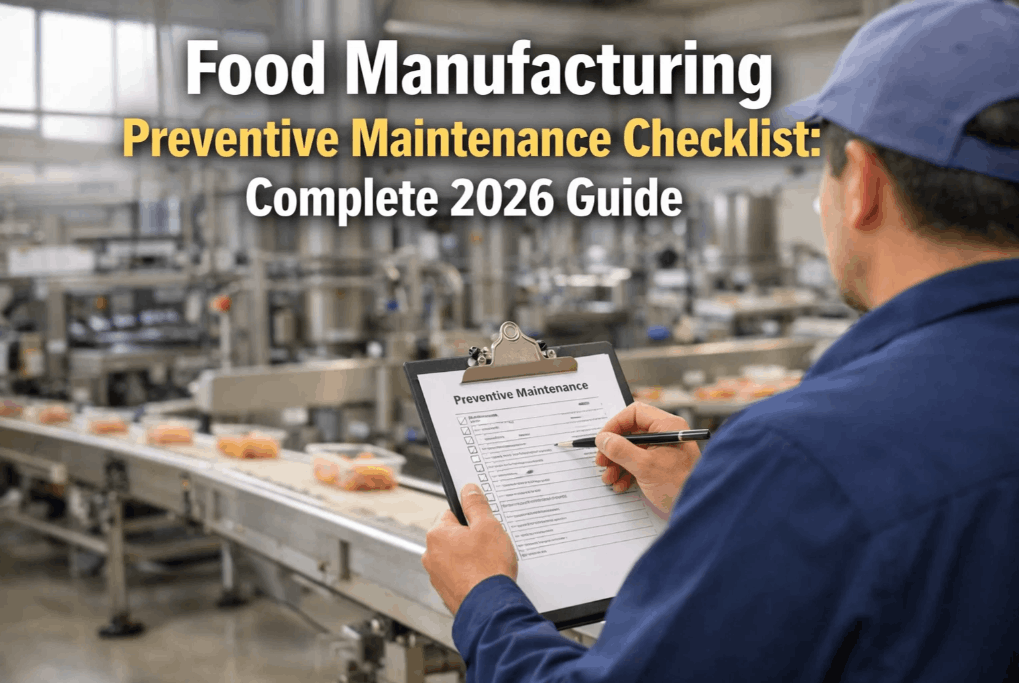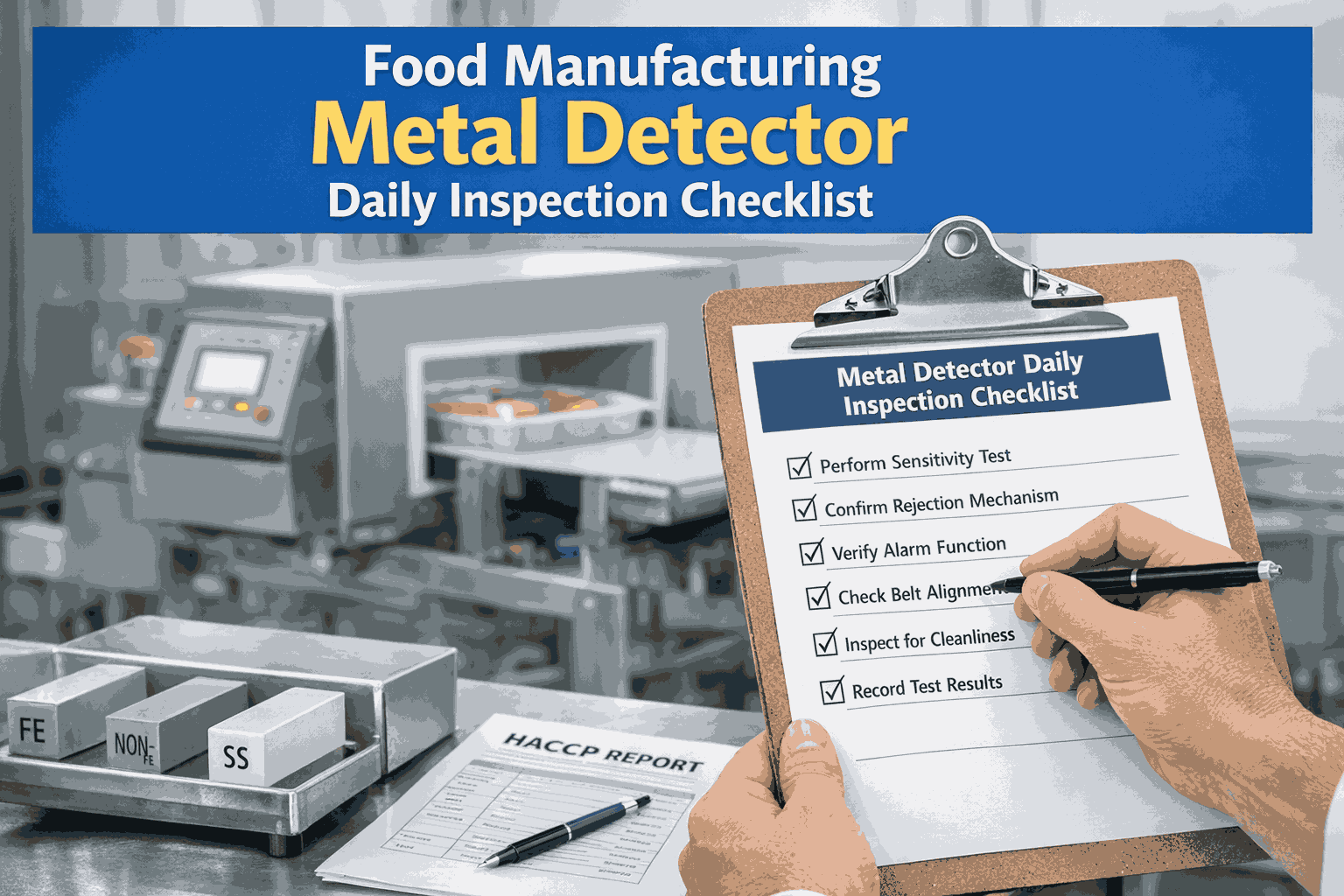
A GMP inspection is only useful if it finds the same problems an auditor or regulator would, and if someone fixes them afterwards. A good checklist walks inspectors through hygiene, building, equipment and handling practices in a fixed order, records what they see and turns each finding into an action. This page is a ready-to-use GMP inspection checklist for food production areas, with Yes, No and N/A boxes, severity grading and a path from finding to repair. It also shows where a maintenance management platform keeps those actions from stalling.
GMP Inspection Checklist for Food Production Areas
Inspect hygiene, building, equipment and handling practices against good manufacturing practice, and document every finding through to closure.
- Floors and drains clean and free from standing water
- Equipment guards intact, no temporary repairs
- Staff following hand wash and hair covering rules
Fill in before you start the walk
Mark one box per item: Yes means satisfactory, No means a finding, N/A means not applicable. Every No needs a remark and a work order number.
What a GMP inspection should cover
In the United States, current good manufacturing practice for human food is set out in 21 CFR Part 117, Subpart B. The areas below follow its structure. Other countries and schemes use similar themes.
| Inspection area | Main focus | Related 21 CFR 117 topic |
|---|---|---|
| Personnel and hygiene | Health, cleanliness, clothing, hand washing, training | Personnel (117.10) and training (117.4) |
| Plant and grounds | Exterior, layout, floors, walls, lighting, ventilation, pest control | Plant and grounds (117.20) |
| Sanitary operations | Cleaning, sanitizing, pest control, storage of chemicals | Sanitary operations (117.35) |
| Sanitary facilities and controls | Water, plumbing, sewage, toilets, hand wash stations, waste | Sanitary facilities (117.37) |
| Equipment and utensils | Design, condition, cleanability, calibration, maintenance | Equipment (117.40) |
| Processes and controls | Receiving, processing, allergen control, storage, packing | Processes and controls (117.80) |
This is a practical summary, not legal advice. Check your own regulator, customer and certification scheme for the exact requirements that apply to your site.
Walk the plant in the same order every time
A fixed route stops inspectors from skipping areas they find uncomfortable. It also lets you compare results from week to week.
Personnel and hygiene
Most contamination routes begin with people. Check behaviour as well as facilities.
| No. | Check item | Yes | No | N/A | Remarks and action |
|---|---|---|---|---|---|
| A1 | Staff wear clean, suitable outer clothing, hair covering and footwear for the area | ||||
| A2 | Beard covers are worn where required, and no loose items are carried in pockets above the waist | ||||
| A3 | Jewellery, watches and artificial nails are not worn in production areas | ||||
| A4 | Hand washing is done at the correct times, using soap, water and single-use drying | ||||
| A5 | Staff with symptoms of illness or open wounds are reported and kept away from food contact | ||||
| A6 | Gloves are used correctly, changed when torn or soiled, and not worn outside the area | ||||
| A7 | Eating, drinking and smoking are confined to designated areas | ||||
| A8 | Visitors and contractors have signed in, received hygiene instructions and wear suitable clothing | ||||
| A9 | Training records match the tasks staff are performing today |
Building, fabric and surroundings
Damaged surfaces and gaps hide dirt and pests. This zone is where maintenance and food safety most often overlap.
| No. | Check item | Yes | No | N/A | Remarks and action |
|---|---|---|---|---|---|
| B1 | Floors are sound, sealed and drain correctly, with no cracks, pooling water or broken tiles | ||||
| B2 | Walls and ceilings are smooth, clean and free from peeling paint, flaking or condensation | ||||
| B3 | Doors and windows close properly, and seals are intact to keep pests and dust out | ||||
| B4 | Light fittings above open product are shielded or shatter-resistant, with no missing covers | ||||
| B5 | Ventilation and air handling produce no condensation drip and move air from clean to less clean areas | ||||
| B6 | Overhead pipes, cables and structures are clean and free from leaks or dust build-up | ||||
| B7 | Pest control devices are in place, numbered, serviced and free from signs of activity | ||||
| B8 | Exterior areas are tidy, with waste containers closed and no standing water near entrances | ||||
| B9 | Storage rooms are organised, off the floor and away from walls to allow cleaning and inspection |
Turn every inspection finding into a tracked repair
Raise work orders directly from inspection results and follow them to closure.
Equipment and utensils
Equipment condition is where inspection findings turn into maintenance work. Inspect cleanability as well as function.
| No. | Check item | Yes | No | N/A | Remarks and action |
|---|---|---|---|---|---|
| C1 | Food contact surfaces are smooth, corrosion-free and free from cracks, chips or pitting | ||||
| C2 | Guards, covers and fasteners are complete, with no missing screws, bolts or loose parts | ||||
| C3 | No temporary repairs such as tape, string or cable ties are holding equipment together | ||||
| C4 | Seals, gaskets and belts are intact and not shedding fragments into product | ||||
| C5 | Lubricants used near food are food-grade, labelled and applied without excess or drips | ||||
| C6 | Equipment can be dismantled and cleaned as the procedure requires, with no inaccessible areas | ||||
| C7 | Utensils and tools are clean, in good condition and stored in their designated place | ||||
| C8 | Thermometers, scales and other measuring devices are within their calibration date | ||||
| C9 | Maintenance work in progress is controlled, with tools counted and debris removed after the job |
Handling, processing and storage
Check that product is protected from receipt to dispatch, and that controls match the written procedures.
| No. | Check item | Yes | No | N/A | Remarks and action |
|---|---|---|---|---|---|
| D1 | Raw materials are inspected on receipt, with damaged or suspect deliveries held or rejected | ||||
| D2 | Materials are stored by status, with clear segregation of allergens, rework and rejected items | ||||
| D3 | Stock rotation is followed and lot numbers are recorded for traceability | ||||
| D4 | Temperature controlled areas are within limits and monitoring records are up to date | ||||
| D5 | Foreign material controls, such as sieves, magnets, detectors and screens, are working and checked | ||||
| D6 | Allergen controls are followed, including scheduling, labelling and cleaning between runs | ||||
| D7 | Chemicals are stored away from food, clearly labelled and used according to instructions | ||||
| D8 | Packaging materials are protected from dust and pests, and stored by product code | ||||
| D9 | Finished goods are labelled correctly, stored suitably and loaded on clean vehicles |
Sanitary facilities, water and waste
Facilities must be adequate, working and clean. A broken hand wash station defeats the hygiene rules.
| No. | Check item | Yes | No | N/A | Remarks and action |
|---|---|---|---|---|---|
| E1 | Hand wash stations are accessible, supplied with soap, water, drying and, where used, sanitiser | ||||
| E2 | Hot and cold water are available at suitable temperatures and pressure | ||||
| E3 | Toilets are clean, well supplied and do not open directly into production areas | ||||
| E4 | Drains flow freely, are covered and are cleaned on schedule without splashing product areas | ||||
| E5 | Hoses are stored off the floor, and water connections are protected against backflow | ||||
| E6 | Waste is removed regularly, with bins covered, labelled and emptied at suitable intervals | ||||
| E7 | Changing rooms and lockers are tidy and free from food and rubbish | ||||
| E8 | Compressed air, steam and other utilities that touch product are clean and checked |
A ten-minute start-of-shift check
The full checklist suits a weekly walk. Supervisors need a shorter version they can finish before production starts.
| No. | Check item | Yes | No | N/A | Remarks and action |
|---|---|---|---|---|---|
| Q1 | Line clearance signed and previous product, packaging and labels removed | ||||
| Q2 | Hand wash stations stocked and working, with warm water available | ||||
| Q3 | Floors and drains clear, with no standing water or product residue | ||||
| Q4 | Equipment guards fitted and no loose parts, tools or temporary repairs visible | ||||
| Q5 | Cleaning sign-off complete for the line and any allergen changeover verified | ||||
| Q6 | Metal detector, sieve or other foreign material control tested and recorded | ||||
| Q7 | Staff dressed correctly for the zone and no jewellery or personal items in production | ||||
| Q8 | Thermometers and scales checked, with temperature records started |
Keep a register of glass, hard plastic and other brittle items
Broken glass and shattered plastic are among the most serious foreign material risks. A simple register makes inspection quick and breakages easy to trace.
List every item
Record each light cover, gauge face, window and hard plastic item in production and storage areas.
Inspect on a schedule
Check condition regularly and mark each item as intact or damaged, with the date and inspector.
Respond to breakage
Stop work, contain the area, hold product, clean up and record the investigation and decision.
What to check beyond the production floor
Pests usually enter through the building envelope. Inspect the places they use, not only the places you see them.
- Door sweeps, dock seals and roller door edges for gaps wide enough for rodents or insects
- Wall and roof penetrations, such as pipe and cable entries, for missing or damaged proofing
- Exterior lighting that attracts insects close to doors and loading areas
- Vegetation, pallets and equipment stored against walls that give pests cover
- Bait stations and traps for damage, missing units and trend of activity
- Drains, floor gaps and wall-floor junctions in wet areas where insects can breed
- Pest control service reports, with recommended actions assigned and closed
Habits that make inspections more reliable
Even a strong checklist produces weak results if inspectors rush, skip areas or write vague notes.
| Common weakness | Effect | Better practice |
|---|---|---|
| Ticking from memory | Missed defects and false confidence | Inspect the item in front of you and record on the spot |
| Vague comments | Findings cannot be located or fixed | Record location, asset and a photo for each finding |
| Same inspector every time | Blind spots develop | Rotate inspectors and include maintenance and production staff |
| Skipping hard-to-reach areas | Hidden problems grow | Include overheads, behind equipment and roof-level checks |
| No follow-up | Repeat findings, loss of credibility | Link every finding to an owner, due date and verification |
Classify each finding so the right action happens fast
Without grading, every finding looks equal and the serious ones wait behind the trivial ones. Use three levels and set response times.
Critical
Immediate risk of contamination or unsafe product. Stop the activity, hold product and act at once.
Major
A significant failure of a control or condition. Correct within a short, defined timeframe.
Minor
A small departure with low risk. Schedule correction and watch for repeats.
Set the exact response times in your procedure. For example, critical findings may require same-shift action while minor items follow the normal maintenance schedule.
Five steps from observation to verified fix
The weak point in most inspection programs is not the checklist but what happens after it.
Record
Describe the finding, location and grade, with a photo.
Assign
Create a work order with an owner and due date.
Contain
Protect product while the fix is pending, where risk requires it.
Fix
Repair or clean, and record parts, time and cause.
Verify
Re-inspect and close only when the condition is confirmed.
Match inspection frequency to how fast conditions change
Some conditions change every hour and others every year. Use layers of inspection rather than one long audit.
| Frequency | Typical content | Done by |
|---|---|---|
| Start of shift | Hygiene, line readiness, cleanliness, handwash supplies | Operators and supervisors |
| Daily | Floors, drains, equipment condition, storage, waste | Supervisors and quality |
| Weekly | Full-zone walk with this checklist, pest devices, temporary repairs | Quality with maintenance |
| Monthly | Building fabric, ventilation, utilities, calibration status, trend review | Cross-functional team |
| Annually | Full GMP audit, program review, procedure updates | Internal or external auditor |
GMP findings that usually trace back to maintenance
Many repeat GMP findings are repair backlogs in disguise. Link them to assets and watch the pattern.
| Finding | Likely maintenance cause | Preventive response |
|---|---|---|
| Cracked floor or broken drain cover | Wear and delayed repair | Scheduled building fabric inspection and repair planning |
| Condensation dripping onto product | Insulation damage, ventilation or refrigeration faults | Preventive checks on air handling and chilled lines |
| Missing fasteners or guards | Incomplete reassembly after repairs | Post-repair checklist with tool and part count |
| Oil leaks and grease drips | Worn seals and over-lubrication | Lubrication routes and seal replacement schedules |
| Light covers missing or cracked | No routine inspection of fittings | Scheduled lighting inspection and spare covers in stock |
| Pest activity near gaps | Door seals and wall gaps not repaired | Seal and proofing inspection with defined repair time |
What an audit-ready GMP inspection record contains
Auditors judge programs by their records. Complete, consistent and traceable evidence matters more than volume.
- Date, time, area and name of the inspector
- Checklist items marked as satisfactory, unsatisfactory or not applicable, with comments
- Photos or descriptions for each unsatisfactory finding
- Grade, owner, due date and linked work order for every action
- Verification result and closure date
- Trend summaries showing repeat findings by area and equipment
Run the checklist and the repairs in one system
Oxmaint does not set your GMP requirements. It helps teams carry out inspections and track the maintenance work that comes from them.
Summarise the inspection and close it out
| Summary line | Count or result |
|---|---|
| Total items checked | |
| Satisfactory (Yes) | |
| Findings (No) | |
| Not applicable (N/A) | |
| Critical and major findings raised as work orders | |
| Compliance score: Yes divided by (Yes plus No), as a percentage |
GMP inspection checklist questions
How often should GMP inspections be done?
Use layers: per shift, daily, weekly full-zone walks, monthly reviews and an annual audit.
Who should carry out the inspection?
Quality leads weekly walks, with maintenance and production joining. Independent reviewers add objectivity.
What counts as a critical GMP finding?
Anything creating immediate contamination or safety risk. Define the criteria and response in your procedure.
How do I stop findings from repeating?
Link each to an asset and a work order, then trend repeats. Track them in Oxmaint to see patterns.
Can Oxmaint run my GMP inspection checklist?
Yes, as scheduled mobile checklists. Book a demo to see how teams set it up.
Make every GMP finding a closed and documented action
Schedule inspections, assign repairs and keep evidence ready for the next audit.