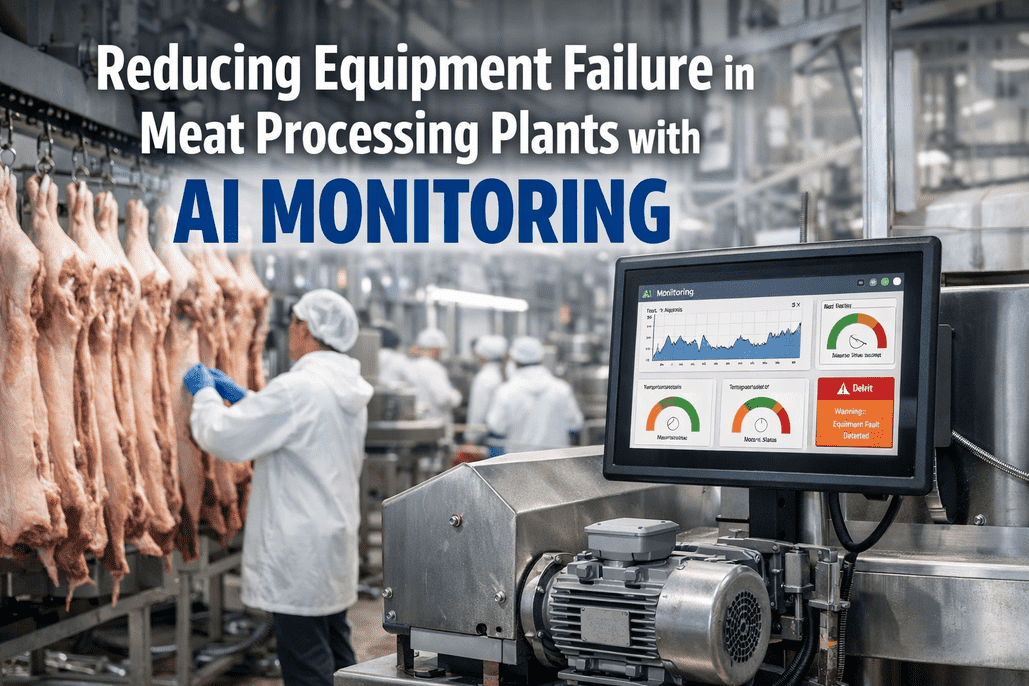
A frozen food manufacturer was losing $45,000 monthly to unplanned conveyor failures—bearings seized without warning, motors burned out during peak production, and gearboxes failed catastrophically requiring week-long rebuilds. Their maintenance team was skilled but reactive, always responding to emergencies rather than preventing them. After implementing by Signing Up to AI-powered predictive maintenance, vibration patterns revealed bearing degradation 6-8 weeks before failure, temperature trends identified motor stress early, and the same team now prevents 85% of breakdowns they previously couldn't see coming.
Predictive maintenance transforms equipment care from scheduled guesswork to data-driven precision. Instead of replacing parts on fixed intervals (too early = waste, too late = failure), AI analyzes sensor data to predict exactly when components will fail—enabling repairs during planned downtime rather than emergency shutdowns. For food processing facilities where unplanned stops mean spoiled product, missed shipments, and food safety risks, predictive maintenance delivers compelling ROI. Book a demo to see how Oxmaint's AI Predictive Maintenance works with your equipment.
AI & Automation / Predictive Maintenance
Predictive Maintenance for Food Processing Equipment
AI-driven equipment monitoring that predicts failures before they happen, reducing downtime and protecting production.
85%Reduction in Unplanned Downtime
6-8 WksAdvance Failure Warning
25-30%Maintenance Cost Savings
3-6 MoTypical ROI Timeline
How AI Predictive Maintenance Works
Predictive maintenance combines sensor data, machine learning algorithms, and maintenance workflows to identify equipment problems weeks before failure occurs.
01
Data Collection
Sensors continuously monitor vibration, temperature, current, pressure, and other parameters from critical equipment.
02
Pattern Analysis
AI algorithms compare current data against baseline patterns and known failure signatures to detect anomalies.
03
Failure Prediction
Machine learning models estimate remaining useful life and predict failure occurance to reduce downtime.
04
Proactive Action
Maintenance teams receive alerts with recommended actions, enabling planned repairs before breakdown.
See AI Predictions for Your Equipment
Oxmaint's AI Predictive Maintenance integrates with your existing sensors to deliver failure predictions and maintenance recommendations.
Reactive vs. Predictive Maintenance
The shift from reactive to predictive maintenance fundamentally changes how food facilities manage equipment reliability. Start your predictive journey with Oxmaint.
ApproachFix when broken
DowntimeUnplanned, during production
PartsEmergency orders, premium pricing
LaborOvertime, rushed repairs
Product impactSpoilage, missed shipments
VS
ApproachFix before failure
DowntimePlanned, scheduled windows
PartsPlanned orders, standard pricing
LaborRegular hours, prepared repairs
Product impactProtected, schedules maintained
Key Equipment for Predictive Monitoring
These food processing equipment types deliver the highest ROI from predictive maintenance due to failure consequences and monitoring feasibility.
CMP
Compressors & Refrigeration
Refrigeration failures threaten product safety. Monitor vibration, discharge temperature, and current draw to predict bearing and valve issues.
Sensors: Vibration, temperature, current
CNV
Conveyors & Material Handling
Conveyor failures stop entire production lines. Track motor temperature, belt tension, and bearing vibration to catch problems early.
Sensors: Vibration, temperature, speed
PMP
Pumps & Fluid Systems
CIP pumps, transfer pumps, and hydraulic systems are critical. Monitor pressure, flow rate, and vibration for seal and impeller wear.
Sensors: Vibration, pressure, flow
MTR
Motors & Drives
Electric motors power nearly everything. Current signature analysis and temperature monitoring detect winding degradation and bearing wear.
Sensors: Current, temperature, vibration
GBX
Gearboxes & Reducers
Gearbox failures are expensive and time-consuming. Oil analysis and vibration monitoring catch gear wear and bearing degradation.
Sensors: Vibration, oil quality, temperature
BLR
Boilers & Steam Systems
Steam is essential for cooking and sanitation. Monitor combustion efficiency, water chemistry trends, and safety valve operation.
Sensors: Temperature, pressure, water quality
AI Prediction Capabilities
Modern AI systems detect these failure patterns weeks before equipment breakdown. Schedule a demo to see these predictions in action.
Detection: 4-8 weeks advance
Method: Vibration frequency analysis identifies inner race, outer race, and rolling element defects
Detection: 2-6 weeks advance
Method: Current signature analysis detects insulation breakdown and winding shorts
Detection: 1-4 weeks advance
Method: Pressure and temperature trend analysis identifies progressive leakage
Detection: 2-4 weeks advance
Method: Speed variation and vibration patterns indicate stretch and wear
Start Predicting Equipment Failures
Oxmaint connects to your existing sensors and begins delivering failure predictions within weeks of deployment.
Implementation Roadmap
Predictive maintenance implementation follows a phased approach that delivers early wins while building toward comprehensive coverage.
Month 1-2
Assessment & Pilot Selection
Identify critical equipment, assess existing sensors, select 3-5 pilot assets with high failure impact and monitoring feasibility.
Month 2-3
Sensor Deployment & Integration
Install additional sensors if needed, connect to AI platform, establish data collection and baseline patterns.
Month 3-4
Model Training & Validation
AI learns normal patterns, begins anomaly detection, validates predictions against known equipment conditions.
Month 4-6
Operational Deployment
Enable automated alerts, integrate with work order system, train maintenance teams on response procedures.
Month 6+
Expansion & Optimization
Extend coverage to additional equipment, refine prediction models based on outcomes, optimize maintenance schedules.
ROI Drivers for Food Processing
Predictive maintenance ROI in food facilities comes from multiple sources beyond avoided repairs.
Reduced Downtime
Planned repairs take 50-80% less time than emergency fixes and don't interrupt production runs.
Lower Repair Costs
Catching problems early prevents secondary damage—a $500 bearing replacement vs. $15,000 motor rebuild.
Protected Product
Avoiding refrigeration failures prevents product spoilage that can cost tens of thousands per incident.
Optimized Labor
Maintenance teams work planned schedules instead of emergency overtime, improving efficiency and morale.
Frequently Asked Questions
What sensors do we need for predictive maintenance?
Most food facilities start with vibration sensors on rotating equipment (motors, pumps, fans) and temperature monitoring on critical systems. Many plants already have sensors that aren't being fully utilized.
Book a consultation to assess your current sensor infrastructure.
How accurate are AI failure predictions?
Modern AI systems achieve 85-95% accuracy for common failure modes like bearing degradation after sufficient training data. Accuracy improves over time as models learn from your specific equipment and operating conditions.
How long until we see ROI from predictive maintenance?
Most food facilities see positive ROI within 3-6 months, often from a single avoided catastrophic failure. The first prevented emergency typically pays for the entire system.
Start your free trial to begin building your ROI case.
Does predictive maintenance replace preventive maintenance?
Predictive maintenance complements rather than replaces preventive maintenance. Time-based PMs remain appropriate for some tasks (lubrication, filter changes), while condition-based predictions optimize component replacements and major overhauls.
Predict Equipment Failures Before They Happen
Join food manufacturers using Oxmaint's AI to transform maintenance from reactive firefighting to proactive prediction.