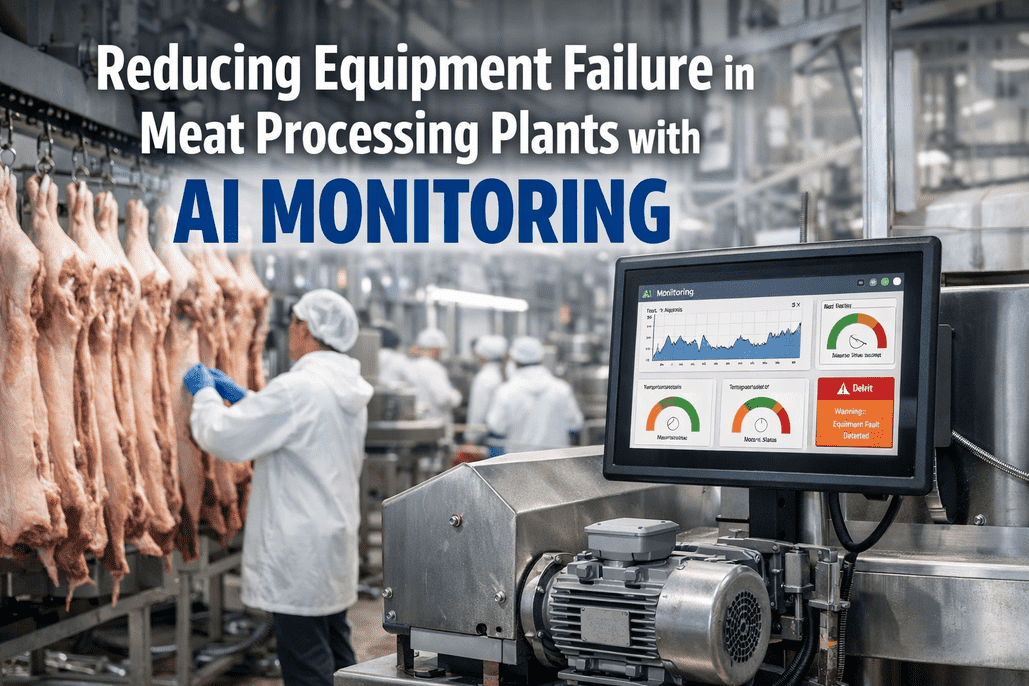
A bakery producing 200,000 loaves daily watched their spiral mixer seize during peak production—the bearing had been failing for weeks, but without monitoring, nobody knew until smoke poured from the motor housing. The emergency repair took 18 hours, scrapped 47,000 loaves mid-production, and delayed shipments to three major grocery chains. Six months later, after implementing predictive maintenance by Signing Up to Oxmaint, vibration sensors caught a similar bearing degradation pattern 6 weeks early. The replacement happened during a scheduled sanitation window—zero lost production, zero spoiled product.
Predictive maintenance represents a fundamental shift in how food manufacturers protect production reliability. Rather than waiting for equipment to fail or replacing parts on fixed schedules regardless of condition, predictive systems monitor actual equipment health and forecast when failures will occur. The benefits extend far beyond avoided breakdowns—encompassing food safety, product quality, energy efficiency, and maintenance team effectiveness. Book a demo to see how Oxmaint's AI Predictive Maintenance delivers these benefits for food processing equipment.
Predictive Maintenance Benefits for Food Processing
How condition-based monitoring transforms equipment reliability, production uptime, and operational efficiency in food manufacturing.
The Seven Core Benefits of Predictive Maintenance
Food manufacturers implementing predictive maintenance consistently report improvements across these operational areas. Each benefit reinforces the others, creating compounding value over time.
Dramatically Reduced Unplanned Downtime
Unplanned equipment failures are the most expensive maintenance events in food processing. Beyond repair costs, they trigger product spoilage, missed shipments, overtime labor, and expedited parts procurement. Predictive maintenance identifies developing problems weeks before failure, enabling repairs during planned windows when production impact is minimal.
Lower Overall Maintenance Costs
Fixing problems early costs dramatically less than emergency repairs. A $200 bearing replacement becomes a $15,000 motor rebuild when left to fail. Predictive maintenance also reduces unnecessary preventive maintenance—parts are replaced based on actual condition rather than arbitrary schedules, eliminating waste from premature replacements.
Extended Equipment Lifespan
Equipment that runs to failure experiences stress that shortens its overall life. Catching problems early prevents the cascading damage that occurs when one component failure damages others. Well-maintained equipment consistently outlasts reactive-maintained equipment by 20-40%, deferring capital replacement costs.
Start Capturing These Benefits
Oxmaint's AI Predictive Maintenance helps food manufacturers reduce downtime, cut costs, and extend equipment life.
Enhanced Food Safety Protection
Equipment failures create food safety risks—refrigeration failures spoil product, processing equipment malfunctions can cause contamination, and unexpected shutdowns may leave product in unsafe temperature zones. Predictive maintenance protects food safety by ensuring critical equipment operates reliably. See how Oxmaint protects food safety by Signing Up.
Improved Product Quality Consistency
Degrading equipment produces inconsistent results before it fails completely. Mixers with worn bearings don't mix uniformly. Pumps with seal wear deliver inconsistent flow rates. Ovens with failing heating elements have temperature variations. Predictive maintenance ensures equipment performs to specification, maintaining product quality standards.
Reduced Energy Consumption
Degrading equipment typically consumes more energy before it fails. Motors with bearing problems draw higher current. Compressors with refrigerant leaks run longer cycles. Heat exchangers with fouling require more energy to maintain temperature. Predictive maintenance identifies these efficiency losses, enabling corrections that reduce energy costs.
Optimized Maintenance Team Effectiveness
Reactive maintenance keeps technicians in firefighting mode—responding to emergencies rather than improving reliability. Predictive maintenance shifts work to planned activities where technicians can prepare properly, have parts ready, and work during convenient windows. Team effectiveness and job satisfaction both improve significantly.
Maintenance Strategy Comparison
Understanding how predictive maintenance compares to other strategies helps clarify its unique value proposition. Schedule a consultation to discuss the right approach for your facility.
Move Beyond Reactive Maintenance
Oxmaint helps food manufacturers transition from costly reactive maintenance to efficient, predictive operations.
Benefits by Equipment Type
Different equipment types deliver different predictive maintenance benefits based on failure modes, consequences, and monitoring feasibility.
Implementation Considerations
Capturing predictive maintenance benefits requires thoughtful implementation. Consider these factors when planning your program. Sign Up to start with Oxmaint's guided implementation.
Frequently Asked Questions
Capture Predictive Maintenance Benefits
Join food manufacturers using Oxmaint to reduce downtime, lower costs, and protect production with AI-powered predictive maintenance.