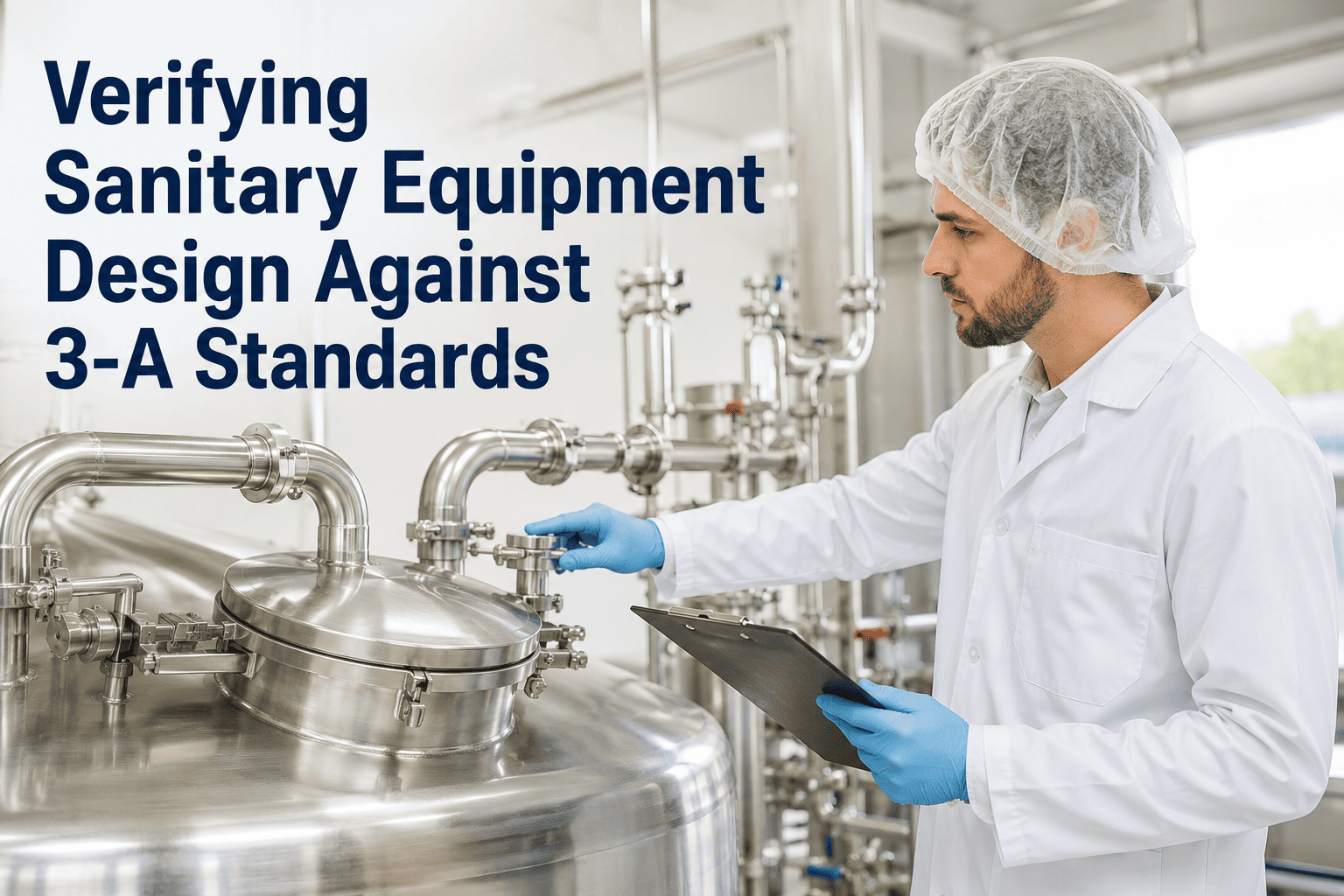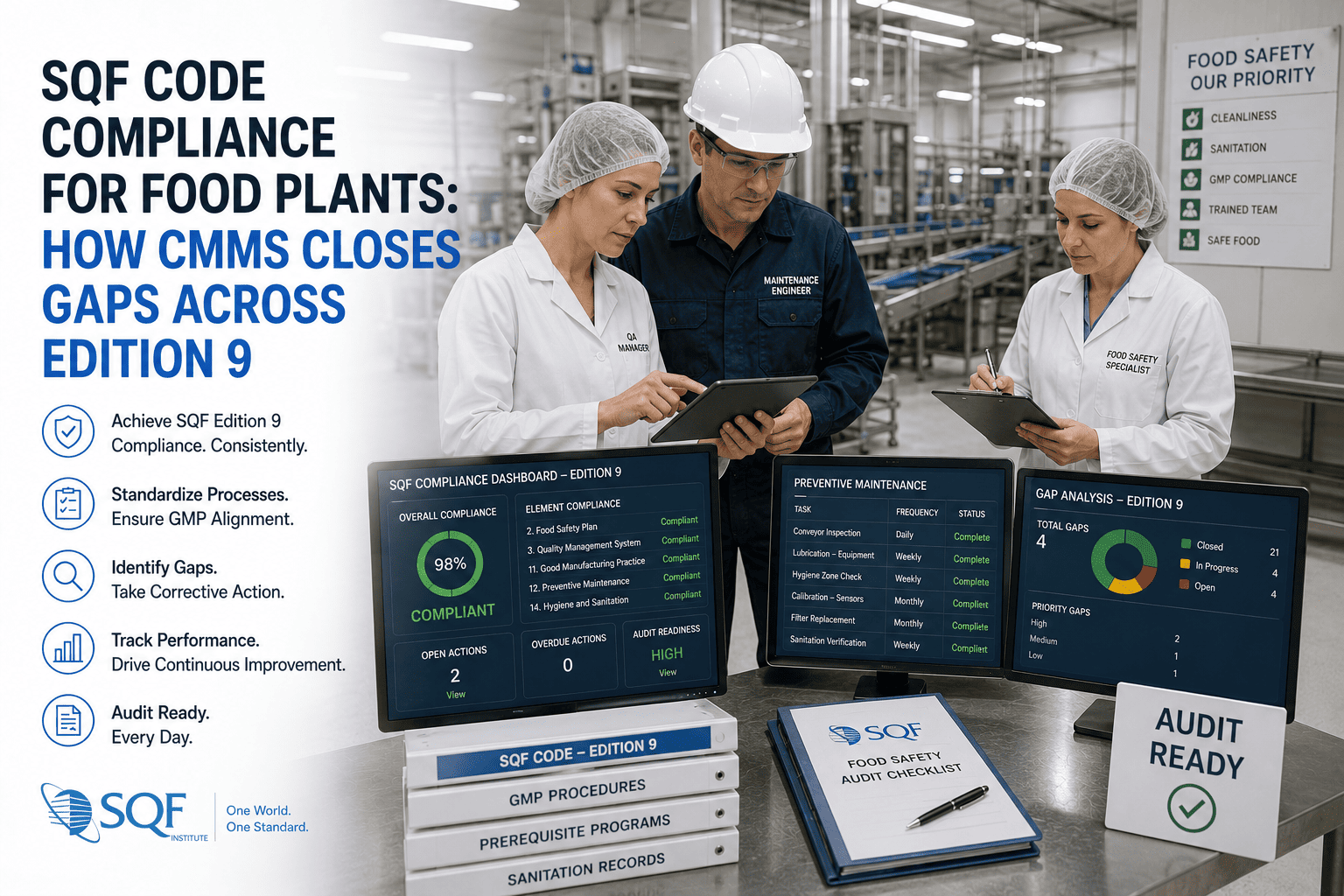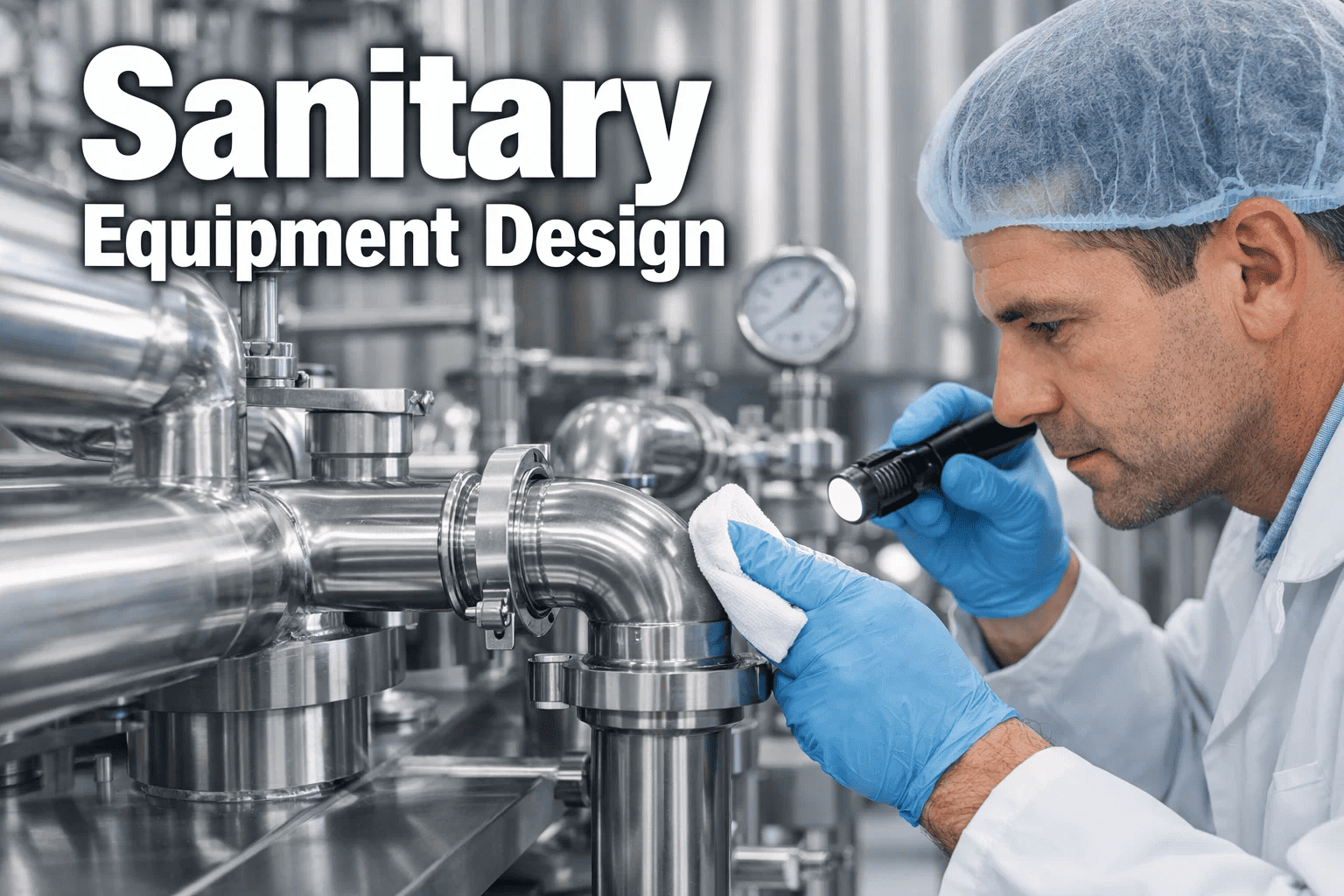
A food contact surface that looks clean to the naked eye can still harbour 10,000 CFU per square centimetre in micro-crevices invisible without magnification. The difference between equipment that can be cleaned and equipment that is truly sanitary is not effort — it is design. 3-A Sanitary Standards specify a maximum surface roughness of 0.8 micrometres Ra, continuous welds ground flush, self-draining geometries, and materials that withstand thousands of CIP cycles without pitting or corrosion. Yet 44% of food safety audit findings trace back to equipment design deficiencies, not operator error. Sanitary design is a maintenance problem because poorly designed equipment takes longer to clean, costs more to maintain, and creates harbourage points that no CIP programme can reach. Book a demo to see how OxMaint tracks sanitary equipment condition, CIP effectiveness, and 3-A compliance per asset. Start a free trial and configure your first sanitary equipment inspection checklist today.
Sanitary Equipment Design Principles for Food Plants
3-A Sanitary Standards compliance, hygienic material selection, surface finish requirements, CIP-compatible design verification, and CMMS-managed sanitary equipment inspections for food safety.
What Is Sanitary Equipment Design?
Sanitary equipment design is the engineering discipline of creating food processing equipment that can be effectively cleaned, inspected, and maintained to prevent microbial contamination. It goes beyond using stainless steel — requiring specific surface finishes, weld techniques, drainage geometries, material grades, and accessibility provisions that eliminate every potential harbourage point for bacteria, allergens, and biofilm. Equipment that fails these principles will never be truly clean regardless of CIP cycle intensity or manual scrubbing effort. Want to audit your equipment against these standards? Start a free trial and book a demo to see OxMaint's sanitary design inspection framework.
The Six Principles of Hygienic Equipment Design
3-A Sanitary Standards, EHEDG guidelines, and FDA equipment requirements converge on six fundamental principles that determine whether equipment is truly sanitary or merely appears clean.
Audit Every Asset Against 3-A Sanitary Standards. Document Every Finding.
OxMaint provides structured sanitary design inspection checklists per equipment type — surface finish verification, weld quality assessment, drainage testing, and material certification tracking with digital documentation.
Material Selection for Food Contact Surfaces
Not all stainless steel is equal, and not all food contact materials are metals. Each component must be selected based on the chemical environment it will face — including product acidity, CIP solution concentration, operating temperature, and mechanical stress. The wrong material choice leads to pitting, corrosion, and microbial harbourage that grows worse with every cleaning cycle. Ensure your material specs are documented correctly — start a free trial and book a demo to see material certification tracking in OxMaint.
Sanitary Design vs. Poor Design: The Maintenance Impact
The cost of non-sanitary equipment design is not just a food safety risk — it directly increases maintenance labour, cleaning chemical consumption, downtime, and audit failure rates.
How OxMaint Manages Sanitary Equipment Compliance
OxMaint transforms sanitary design compliance from periodic audit events into continuous, documented management — with inspection checklists, condition tracking, and material certification management built into every equipment record. See this applied to your plant — start a free trial and book a demo to explore sanitary equipment management in OxMaint.
Frequently Asked Questions
What is 3-A Sanitary Standards certification and is it mandatory for food equipment?
3-A Sanitary Standards are voluntary industry standards developed jointly by dairy and food processing representatives, equipment fabricators, and regulatory agencies. While not legally mandatory, they are widely recognised by FDA, USDA, and major food safety certification bodies (SQF, BRC, FSSC 22000) as the benchmark for hygienic equipment design. Equipment bearing the 3-A Symbol has been third-party verified by a Certified Conformance Evaluator. OxMaint tracks 3-A certification status per asset. Book a demo to see compliance tracking.
How often should food contact surfaces be inspected for sanitary design compliance?
Best practice calls for daily visual inspection during pre-operational checks, weekly detailed inspection of gaskets and seals, monthly surface finish assessment on high-wear areas, and quarterly comprehensive sanitary design audits covering welds, drainage, and material condition. OxMaint automates all frequencies and generates structured checklists that ensure no design element is missed. Start a free trial to set up sanitary inspection schedules.
Why is 316L stainless steel preferred over 304 for food contact surfaces?
316L contains 2-3% molybdenum which provides significantly better resistance to pitting corrosion from chloride-containing CIP chemicals, acidic food products, and salt solutions. 304 stainless is adequate for structural and non-contact applications but will develop pitting in environments exposed to chlorinated cleaning agents — creating microbial harbourage points that compromise food safety. Book a demo to see material tracking in OxMaint.
Can OxMaint track CIP cycle effectiveness alongside sanitary design inspections?
Yes. OxMaint logs CIP cycle parameters — flow rate, temperature, chemical concentration, contact time — per run and per equipment asset. When combined with sanitary design inspection data, the system identifies correlations between equipment condition and CIP effectiveness — such as degraded surface finish increasing required chemical concentration or extended cycle times. Start a free trial to configure CIP tracking.
Clean Equipment Is Designed, Not Just Washed. OxMaint Proves the Design Works.
Sanitary design inspections, surface finish verification, CIP effectiveness tracking, material certification management, and gasket replacement scheduling — one CMMS platform for complete hygienic equipment compliance.