
AI Predictive Maintenance for Municipal Pump Stations

By James Smith on June 13, 2026

ai-predictive-maintenance-municipal-pump-stations

Every municipal water utility knows the dread of a 2 AM pump station alarm — overflow risk, emergency crew callouts, and angry resident calls about sewage backups. Pump failures rarely happen without warning signs; bearing wear, seal degradation, and motor overheating all leave detectable traces weeks before a breakdown. OxMaint's AI-driven predictive maintenance platform reads those signals from your existing SCADA, sensor, and inspection data to flag failing pumps before they fail. Book a free demo to see how it works on your station network.

Article  ·  AI & Predictive Maintenance for Public Works

Stop Pump Failures Before They Cause Overflows

70%
Of pump failures show measurable warning signs 2-6 weeks early
45%
Reduction in emergency callouts with predictive scheduling
3.2x
ROI from avoided overflow fines and emergency repairs
The Problem

Why Reactive Maintenance Fails Pump Stations

Most municipal pump stations run on a calendar-based PM schedule — inspect every 30 or 90 days regardless of actual asset condition. This means healthy pumps get serviced too often, wasting crew hours, while pumps under unusual stress run unchecked until they trip an alarm. By the time a station registers a high wet-well level alert, the pump may already be seized, and the only option left is an emergency dispatch — often during a storm event when every crew is stretched thin.

Reactive Approach
Fixed-interval inspections regardless of pump condition
Failure discovered via overflow alarm or odor complaint
Emergency crew dispatch at premium overtime cost
Regulatory reporting after the overflow has occurred
AI-Predictive Approach
Condition-based alerts from vibration, current, and runtime data
Early-stage bearing wear flagged 2-6 weeks before failure
Scheduled repair during normal working hours
Proactive documentation supports compliance audits
Detection Signals

Five Data Signals That Predict Pump Failure

01
Motor Current Draw

A rising amp draw trend often indicates impeller clogging, bearing drag, or seal binding — typically visible 3-4 weeks before a trip.

02
Run-Time Ratio

An increasing run-time-to-flow ratio signals reduced pump efficiency, often from wear ring erosion or impeller damage.

03
Vibration Amplitude

Sudden vibration spikes correlate strongly with bearing failure and shaft misalignment — among the most reliable early indicators.

04
Cycle Frequency

Abnormally frequent on/off cycling stresses motor windings and points toward float switch or check valve issues.

05
Wet Well Level Trends

Slow, gradual level creep — distinct from sudden spikes — often reveals a pump that's no longer keeping pace with inflow.

See Your Pump Station Risk Score in Minutes
OxMaint connects to your existing SCADA and telemetry feeds to generate a station-by-station risk score — no new hardware required.
Implementation

How OxMaint Turns Signals Into Work Orders

A
Connect Data Sources
SCADA, telemetry, and manual inspection logs feed into one asset health profile per pump.
B
AI Risk Scoring
Each pump receives a continuously updated risk score based on deviation from its own historical baseline.
C
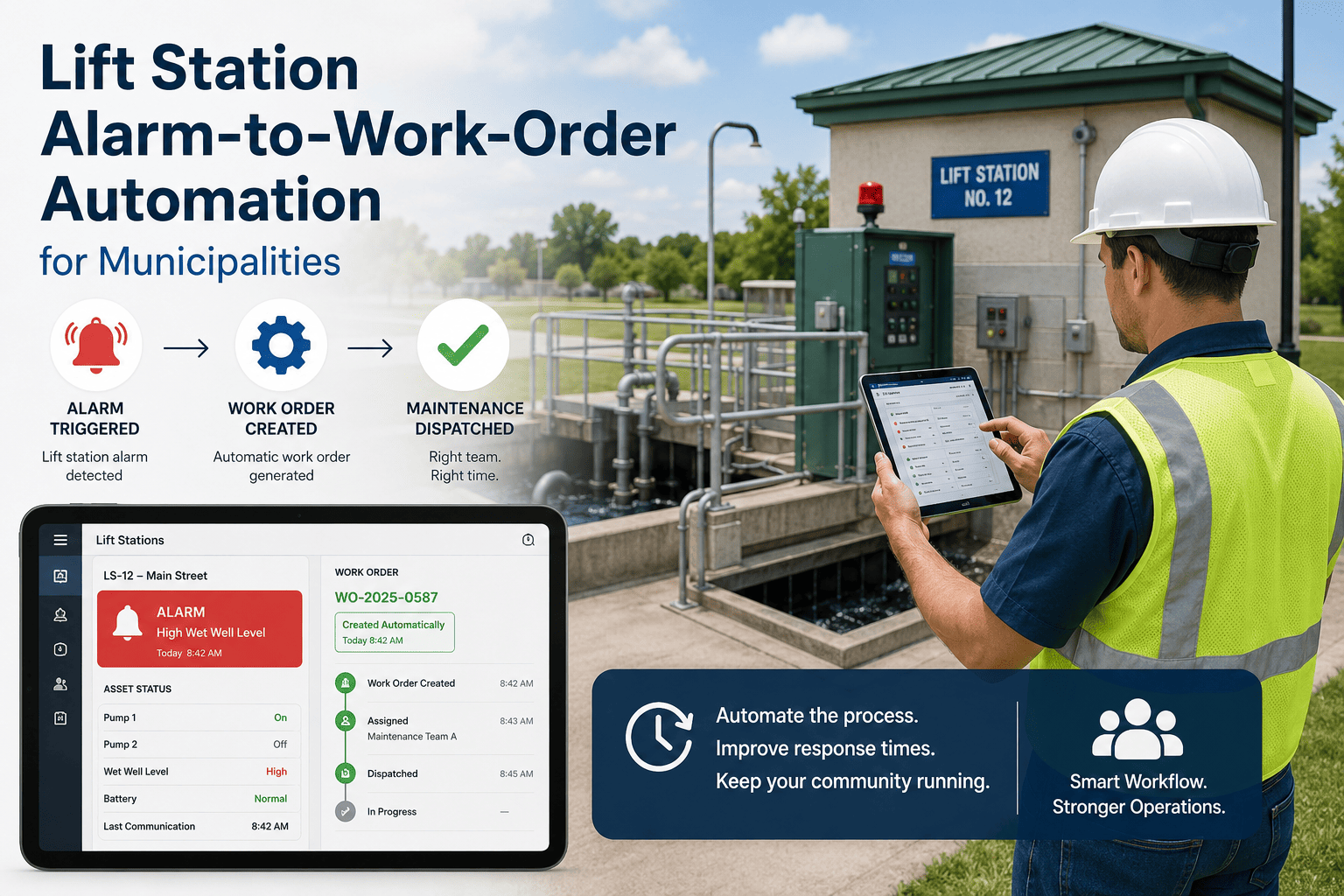
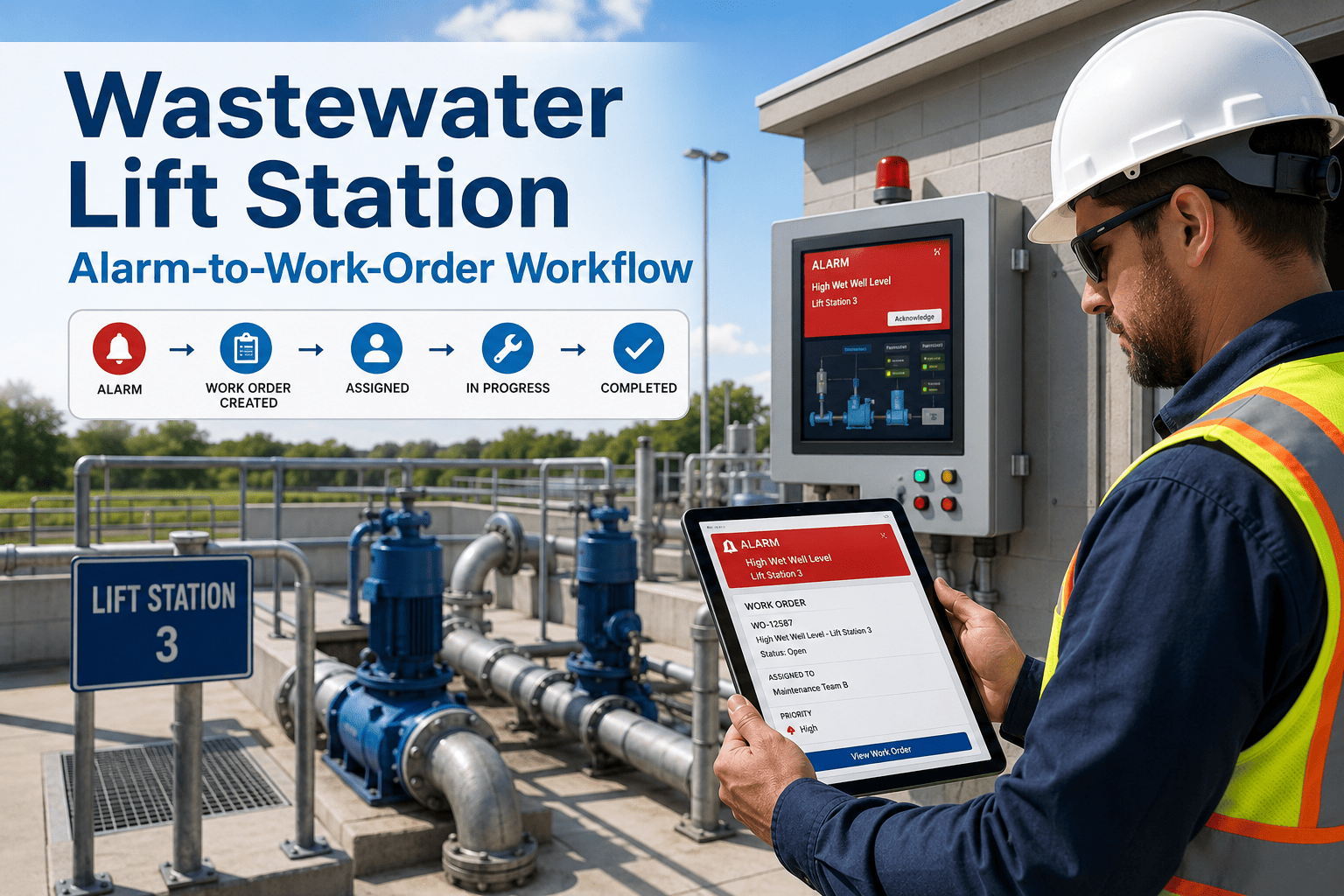
Automated Work Orders
When risk crosses a threshold, a prioritized work order is generated and routed to the right crew automatically.
D
Outcome Tracking
Repair outcomes feed back into the model, sharpening predictions for that asset over time.
Cost Impact

Cost Comparison: Reactive vs Predictive Repair

Failure Mode Reactive Repair Cost Predictive Repair Cost Typical Savings
Bearing Failure $8,000 - $15,000 $1,200 - $2,500 Up to 80%
Seal Failure + Motor Burnout $12,000 - $25,000 $2,000 - $4,000 Up to 85%
Impeller Damage $6,000 - $10,000 $1,500 - $3,000 Up to 75%
Overflow Event (fines + cleanup) $25,000 - $100,000+ Avoided entirely Up to 100%
Expert Review

What Industry Experts Say

Condition-based maintenance programs for lift stations consistently demonstrate that early detection of motor current and vibration anomalies reduces unplanned downtime by 40-50% within the first year of deployment, according to water sector reliability studies published by the Water Environment Federation.

— Water Environment Federation, Asset Management Practice Reports

Utilities that shift from time-based to condition-based pump maintenance typically see a 30% reduction in total maintenance labor hours while simultaneously improving uptime, based on benchmarking data from EPA's asset management guidance for water utilities.

— EPA Office of Water, Asset Management Best Practices
FAQs

Frequently Asked Questions

Does OxMaint require new sensors on our pumps?
No. OxMaint connects to your existing SCADA system, telemetry units, and historian data via standard protocols. Most utilities go live using data they already collect. Start free to see a compatibility check for your existing systems.
How early can OxMaint detect a failing pump?
Depending on the failure mode, OxMaint typically flags bearing and seal issues 2-6 weeks before a trip, and motor current anomalies within days of onset. The model improves accuracy as it learns each pump's normal operating baseline.
Can OxMaint help with overflow reporting and compliance?
Yes. Every alert, work order, and repair action is logged automatically, creating an audit trail that supports NPDES and state regulatory reporting. This documentation also helps demonstrate proactive maintenance during compliance reviews. Book a demo to see sample compliance reports.
How long does setup take for a multi-station network?
Initial connection typically takes 1-2 weeks per data source, with baseline model training running for 30-60 days before alerts reach full accuracy. Larger networks are onboarded in phases, starting with the highest-risk stations first.
Predictive Maintenance AI
Protect Your Pump Stations From the Next Emergency Call

OxMaint turns your existing SCADA data into early warnings, automated work orders, and audit-ready records — so your crews fix problems on schedule, not after an overflow.
Share This Story, Choose Your Platform!