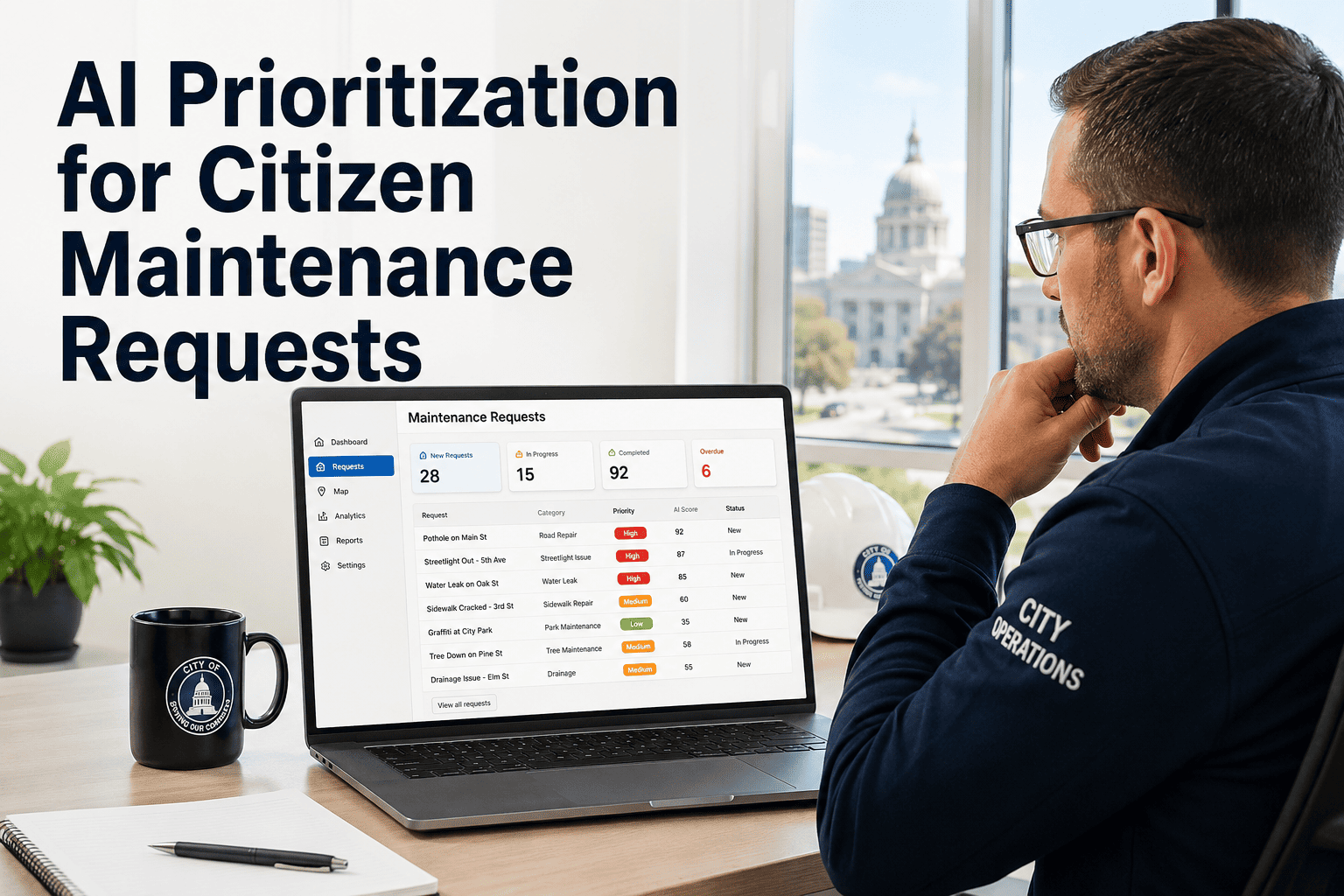
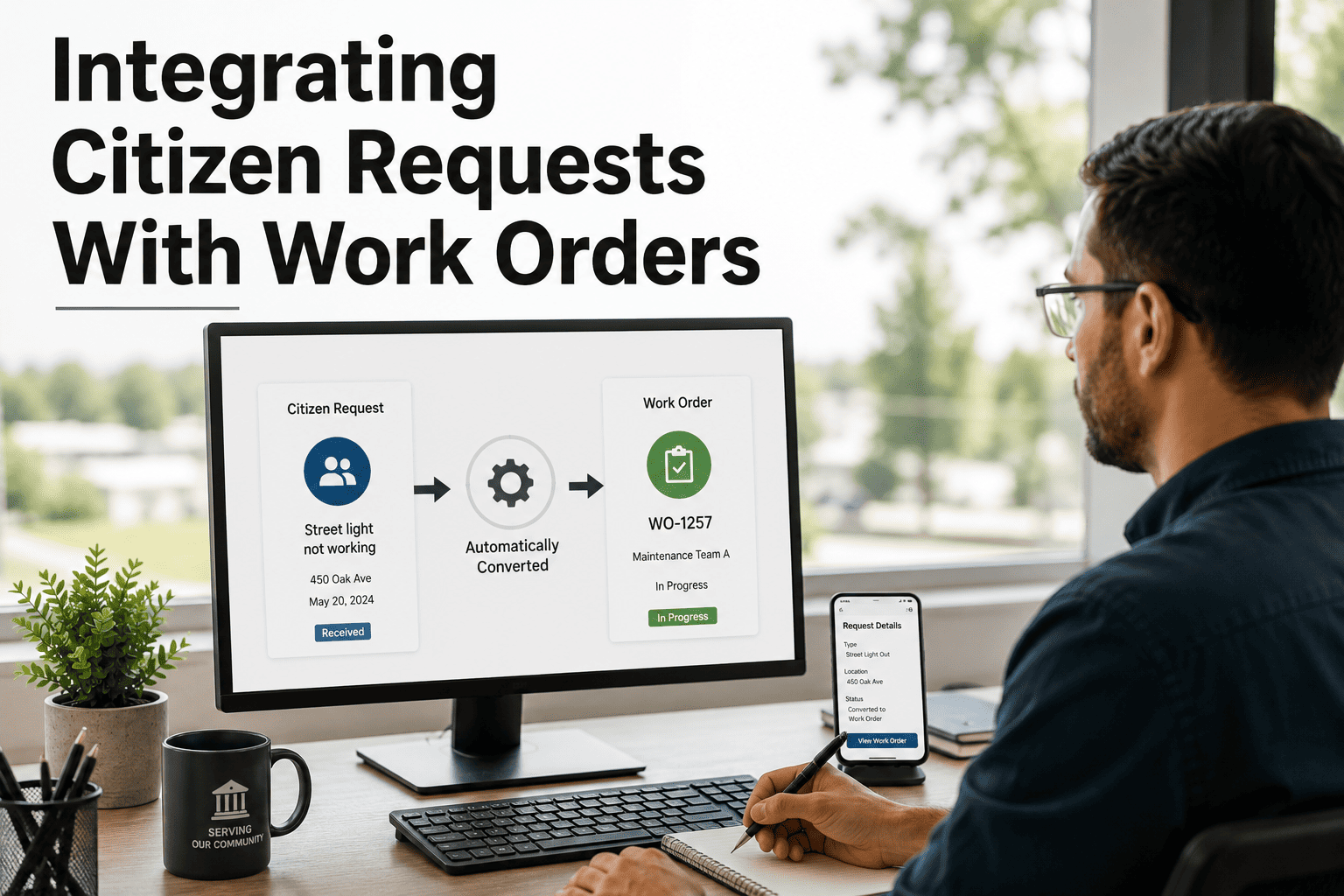
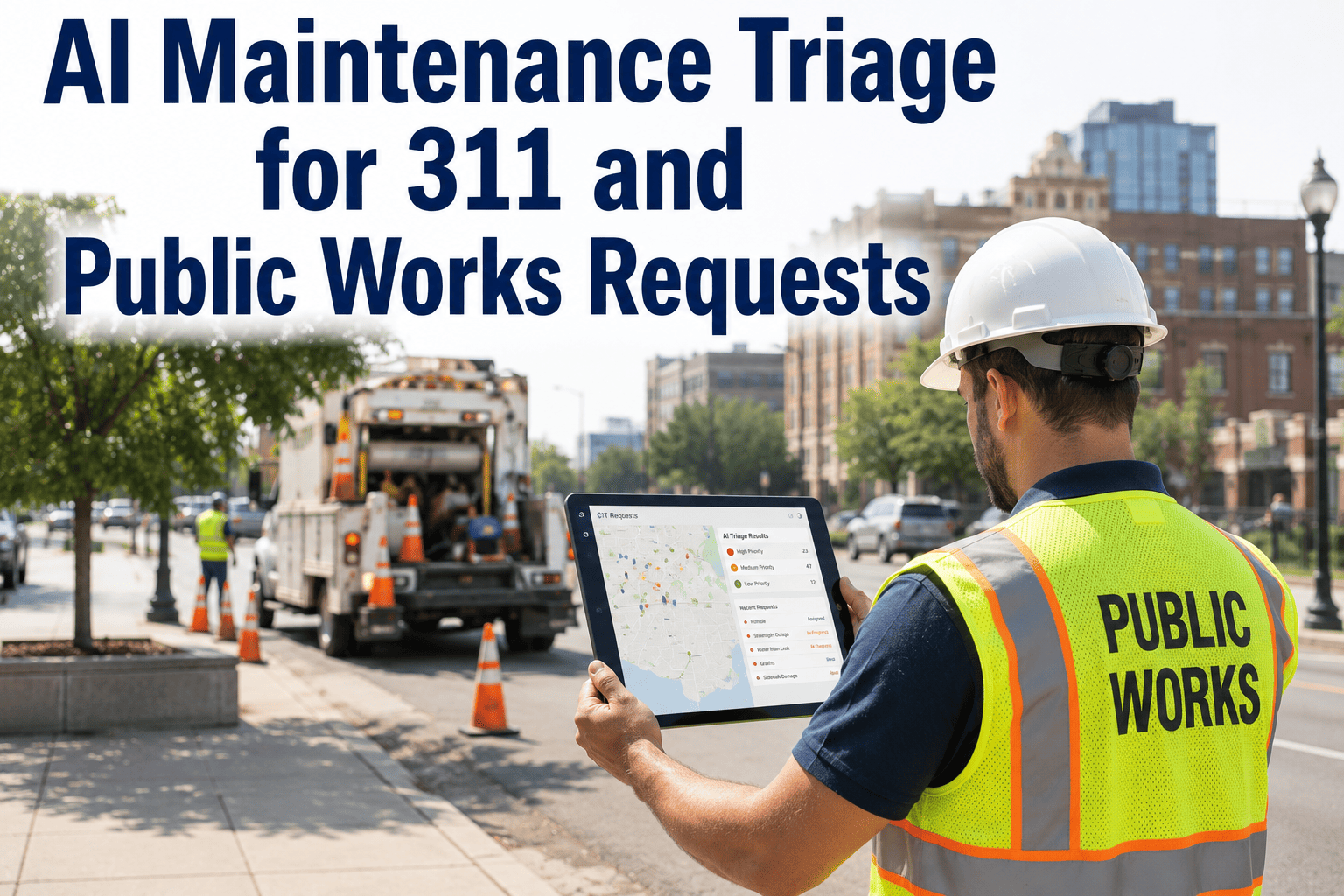
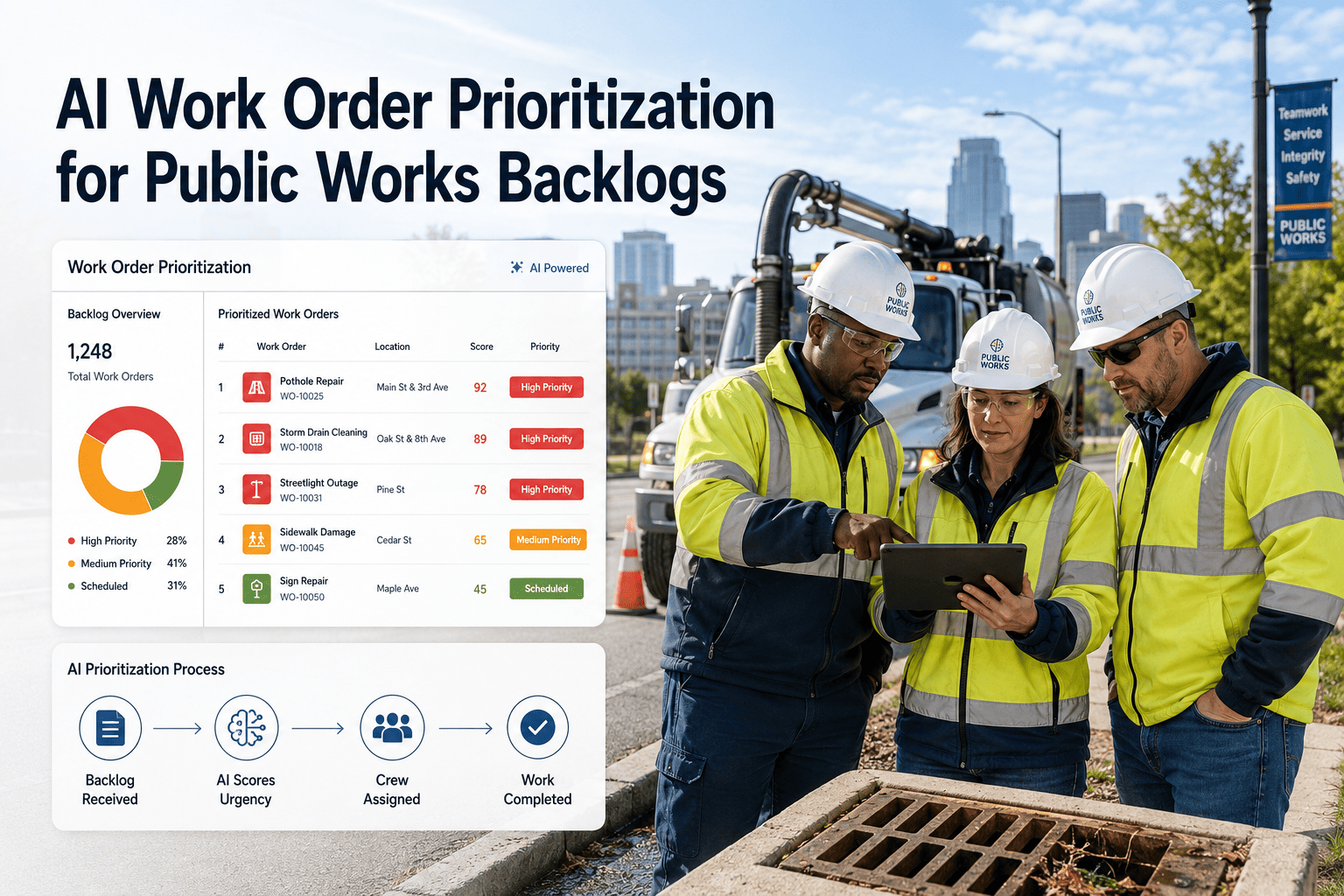
A broken streetlight near a school crosswalk and a faded "no parking" sign on a quiet street might arrive in the same hour through your citizen request system — but they don't carry the same urgency. Treating every complaint as first-come-first-served means the streetlight could wait days while crews handle whatever came in first. OxMaint's AI prioritization ranks citizen requests by real risk, not arrival order. Book a free demo to see your current request queue re-ranked.
Article · AI & Automation
Not All Complaints Are Equal — Your Queue Shouldn't Treat Them That Way
High Priority
Water leak flooding a roadway
Streetlight out near school crossing
Downed tree blocking a lane
Medium Priority
Pothole on a residential street
Graffiti on public property
Overgrown vegetation on sidewalk
Lower Priority
Faded street sign, low traffic area
Minor landscaping request
Cosmetic facility issue
How Ranking Works
Four Factors Behind Every Priority Score
OxMaint doesn't just look at when a request came in. Each new complaint is scored against a consistent set of factors so that a single high-risk report can immediately outrank dozens of lower-risk items already in the queue, without anyone manually re-sorting the list.
R
Risk Level
Safety hazards and active damage rank above cosmetic or low-impact issues.
L
Location Sensitivity
Proximity to schools, hospitals, and high-traffic areas raises priority.
S
SLA Deadline
Requests approaching their response deadline move up automatically.
C
Crew Availability
Requests are matched to crews with the right skills and open capacity nearby.
See Your Open Requests Ranked by Real Risk
Connect your 311 or citizen request platform and view a prioritized queue in minutes.
Response Time Impact
What Prioritization Changes for Residents
| Request Type |
Avg. Response (First-Come) |
Avg. Response (Prioritized) |
| Active road hazard |
2-4 days |
Same day |
| Streetlight outage (high-traffic) |
5-7 days |
1-2 days |
| Pothole (low-traffic street) |
3-5 days |
3-7 days |
| Cosmetic facility issue |
1-2 weeks |
2-3 weeks |
Notice that lower-priority items take slightly longer on average under a prioritized system — that's intentional. Crew time that was previously spent on a first-come basis is redirected toward higher-risk issues, improving outcomes where it matters most without adding staff.
SLA Management
Automatic SLA Escalation
1
Request logged with an SLA target based on its category and location.
2
As the SLA deadline nears, the request's priority score increases automatically.
3
If the SLA is breached, a supervisor is notified and the request is reassigned if needed.
Expert Review
What Industry Experts Say
Risk-based triage of citizen service requests allows agencies to maintain or improve response times for the highest-impact issues even as overall request volumes grow, without proportional increases in staffing.
— ICMA, 311 and Service Request Management Reports
Transparent prioritization criteria, when communicated to residents, has been associated with improved satisfaction scores even when individual response times for lower-priority requests increase slightly.
— Government Technology, Citizen Experience Research
FAQs
Frequently Asked Questions
Can residents see why their request was prioritized a certain way?
Agencies can choose to share general priority status, such as "high priority" or "scheduled," with residents through their existing notification channels.
Start free to configure resident-facing status updates.
How are location sensitivity zones defined?
Zones such as school areas, hospital frontages, and high-traffic corridors are configured based on your agency's GIS data and can be adjusted as needed.
What happens to lower-priority requests — do they get ignored?
No. They remain in the queue and are completed as capacity allows, with SLA escalation ensuring none sit indefinitely.
Book a demo to see how lower-priority items are managed.
Does this integrate with our existing 311 system?
Yes. OxMaint integrates with common citizen request platforms to pull in new requests and push back status updates without residents needing to use a separate system.
AI & Automation
Make Sure the Most Urgent Request Always Comes First
OxMaint ranks citizen requests by risk, location, and SLA in real time, so your crews always know what to tackle next.