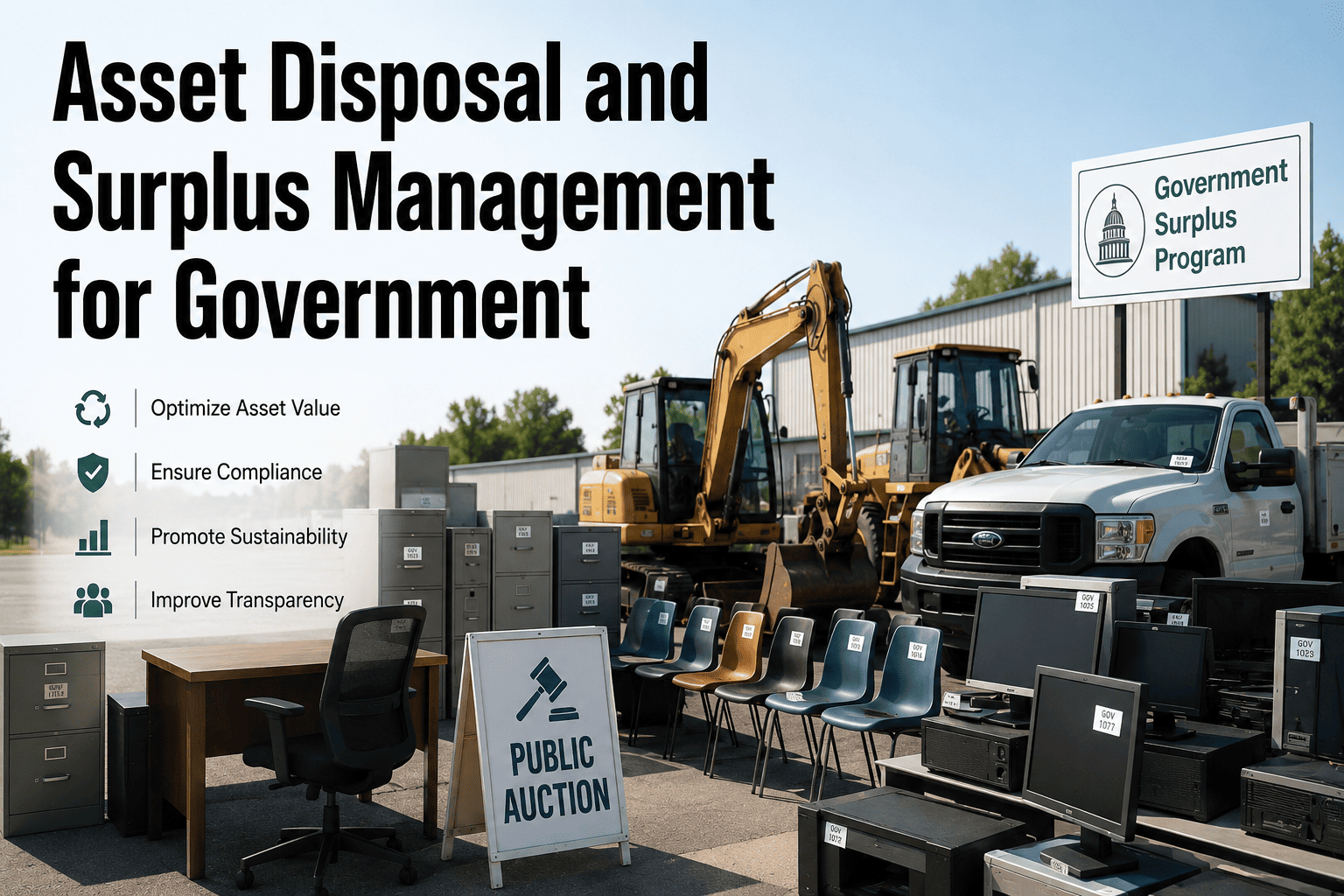
Asset disposal and surplus management for government involves the structured retirement, transfer, sale, or recycling of public property—ranging from municipal fleet vehicles and heavy public works equipment to IT hardware and facility infrastructure. Getting this process wrong triggers costly audit findings, compliance violations, and lost taxpayer value, which is why federal, state, and municipal agencies are turning to CMMS-driven disposal programs to maintain strict accountability. By integrating surplus management into your maintenance software, you can automate depreciation tracking, document chain-of-custody, and recover maximum resale value through platforms like GovDeals. See how OxMaint streamlines this lifecycle by signing up for a Start Free Trial today.
Public Asset Lifecycle
Is your municipality leaving recoverable value in retired assets?
Government asset disposal and surplus management requires strict chain-of-custody documentation and compliance with public disposal requirements. Without a centralized system, agencies lose track of decommissioned equipment and face audit failures.
Disposal Methodology
How to manage public asset disposal and surplus effectively
Municipal asset disposal follows a strict lifecycle from deployment to decommission. Agencies that fail to document this lifecycle face an average of 14% unrecovered asset value during annual audits. Here is the structured methodology required for surplus disposal in government.
Identify and Declare Surplus
Flag assets that have reached end-of-life, failed a safety inspection, or exceed repair thresholds (typically when repair costs exceed 70% of replacement value).
Compliance and Approval Routing
Route the disposal request through department heads and finance for sign-off. Strict documentation prevents unauthorized property disposal and ensures adherence to ISO 55000 standards.
Determine Disposal Method
Assess whether the asset should be transferred to another agency, sold via auction platforms like GovDeals, scrapped for parts, or securely destroyed.
Execute and Reconcile Records
Complete the transaction, remove the asset from the active fixed-asset register, and archive the chain-of-custody record for audit defense.
Disposal Streams
Surplus disposal channels for government property
Government surplus management isn't just about selling old equipment. It requires choosing the right disposal stream to recover taxpayer value while meeting public sector regulations.
Inter-Agency Transfer
Surplus property from one government agency is transferred to another. This is the most cost-effective disposal method, often requiring only a nominal fee or free transfer to keep assets in public use.
Public Auction (GovDeals)
Using platforms like GovDeals to auction municipal surplus online. This widens the buyer pool for used fleet vehicles, heavy machinery, and IT equipment, yielding 15-40% higher recovery than local scrap sales.
Spare Parts Cannibalization
Stripping decommissioned public works assets for functional spare parts. Integrating these parts into your CMMS spare-parts inventory reduces new purchase orders by up to 12% annually.
Scrap and Recycling
Selling raw materials (steel, copper, aluminum) to recycling facilities. Essential for assets with no functional resale value but still requires documented chain-of-custody for environmental compliance.
Scenario Analysis
The cost of poor asset disposal in the public sector
A municipal public works department managing 180 heavy assets (trucks, graders, loaders) typically spends $42,000 annually on reactive maintenance for equipment that should have been decommissioned. Without a CMMS tracking lifecycle costs, they lose thousands in unrecovered salvage value.
- Assets sit idle in yards for 6+ months before disposal is initiated.
- Average salvage recovery drops by 30% due to deterioration and theft.
- Auditors flag missing chain-of-custody documents, risking federal funding.
- Functional spare parts are scrapped instead of being added to inventory.
- System auto-flags assets for disposal when maintenance costs exceed thresholds.
- Surplus inventory is listed on GovDeals 45 days faster, maximizing resale value.
- Digital chain-of-custody records eliminate audit findings and compliance gaps.
- Usable parts are auto-assigned to the CMMS spare-parts inventory.
How OxMaint Helps
CMMS-driven government asset disposal software
OxMaint integrates asset disposal directly into your daily maintenance operations. By tracking the full equipment lifecycle, our platform ensures public sector teams recover maximum value while maintaining total compliance.
Automated Disposal Triggers
OxMaint flags assets for retirement automatically when lifetime repair costs exceed replacement value or when predictive analytics indicate end-of-life, cutting unnecessary maintenance spend by 25%.
Audit-Ready Documentation
Maintain an unbroken digital chain-of-custody for every disposed asset. Complete work order history and sign-offs are archived permanently, ensuring zero audit findings during public sector reviews.
Surplus Parts Reconciliation
When assets are dismantled, OxMaint automatically logs functional spare parts back into your spare-parts inventory, reducing municipal procurement costs by up to 12% annually.
Lifecycle Cost Analytics
Track total cost of ownership (TCO) from acquisition to disposal. Use real-time dashboards to determine the exact optimal month to retire public works assets before they become financial liabilities.
Take Control of Your Asset Lifecycle
Stop losing taxpayer value to idle and decaying surplus
See how OxMaint helps municipal and government teams automate asset disposal, pass audits flawlessly, and recover thousands in salvage value.
Frequently Asked Questions
Government asset disposal and surplus management FAQs
What is asset disposal in the government and public sector?
Asset disposal in government is the formal process of decommissioning, selling, transferring, or recycling public property that is no longer needed or has reached end-of-life. It requires strict documentation to ensure compliance with federal, state, and municipal surplus property regulations, recovering value for taxpayers while preventing unauthorized disposal.
How does municipal asset disposal recover value for taxpayers?
Municipalities recover value by selling surplus equipment through public auction platforms like GovDeals, transferring functional assets to other departments, or harvesting spare parts for active fleet maintenance. Using a CMMS to time the disposal correctly prevents asset deterioration, maximizing the salvage recovery rate by up to 40%.
What are the compliance requirements for public asset disposal?
Public sector asset disposal requires an unbroken chain-of-custody, documented approval routing, and adherence to environmental and data-destruction standards. Agencies must prove that assets were disposed of at fair market value and that funds were properly reconciled. You can see how OxMaint automates this compliance documentation by booking a demo at Calendly.
How does a CMMS help with government surplus management?
A CMMS tracks the total cost of ownership and maintenance history of public assets, automatically triggering disposal workflows when repair costs exceed replacement value. It archives all maintenance and disposal records digitally, ensuring audit readiness and streamlining the transition of assets to auction or inter-agency transfer.
What is the difference between surplus property and scrap in the public sector?
Surplus property refers to assets that are still functional but no longer needed by the current agency, making them ideal for transfer or public auction. Scrap refers to assets that are non-functional and have value only in their raw materials, requiring recycling or destruction. Both require documented disposal, but surplus yields significantly higher financial recovery.
Modernize Your Maintenance
Ready to optimize your public asset disposal program?
Join the government and municipal teams using OxMaint to track equipment lifecycle, automate surplus workflows, and pass audits without stress.
Free 14-day trial · No credit card required