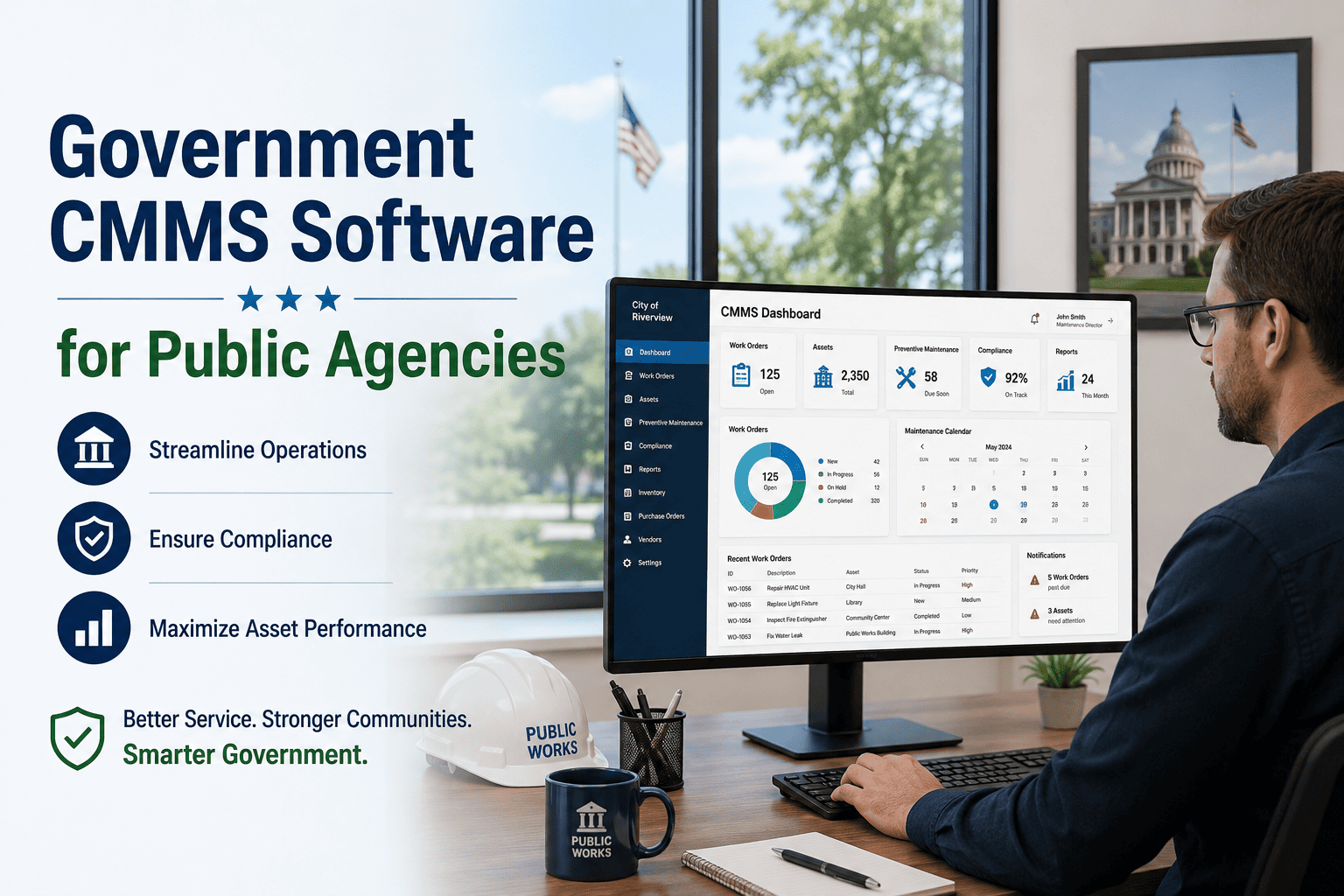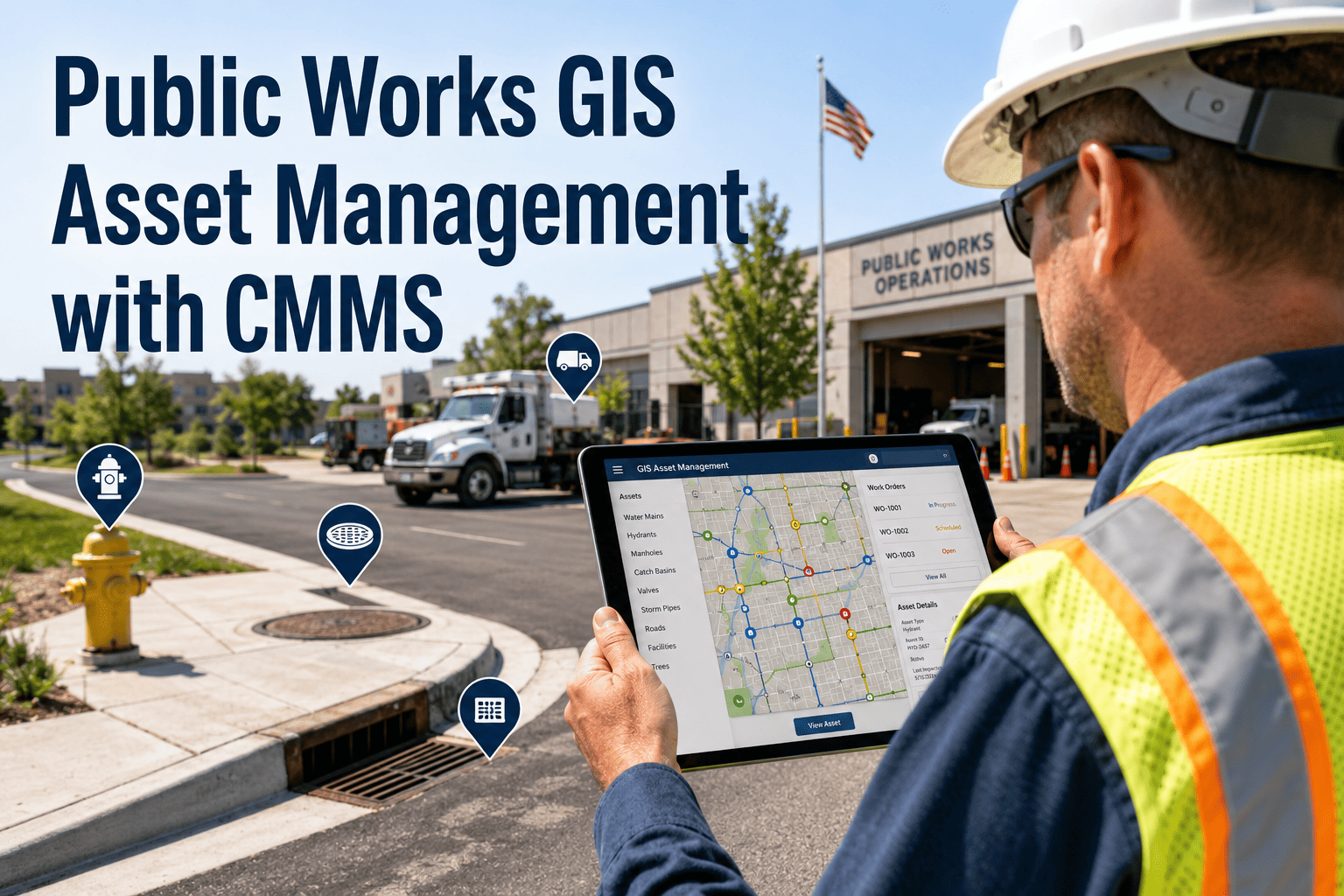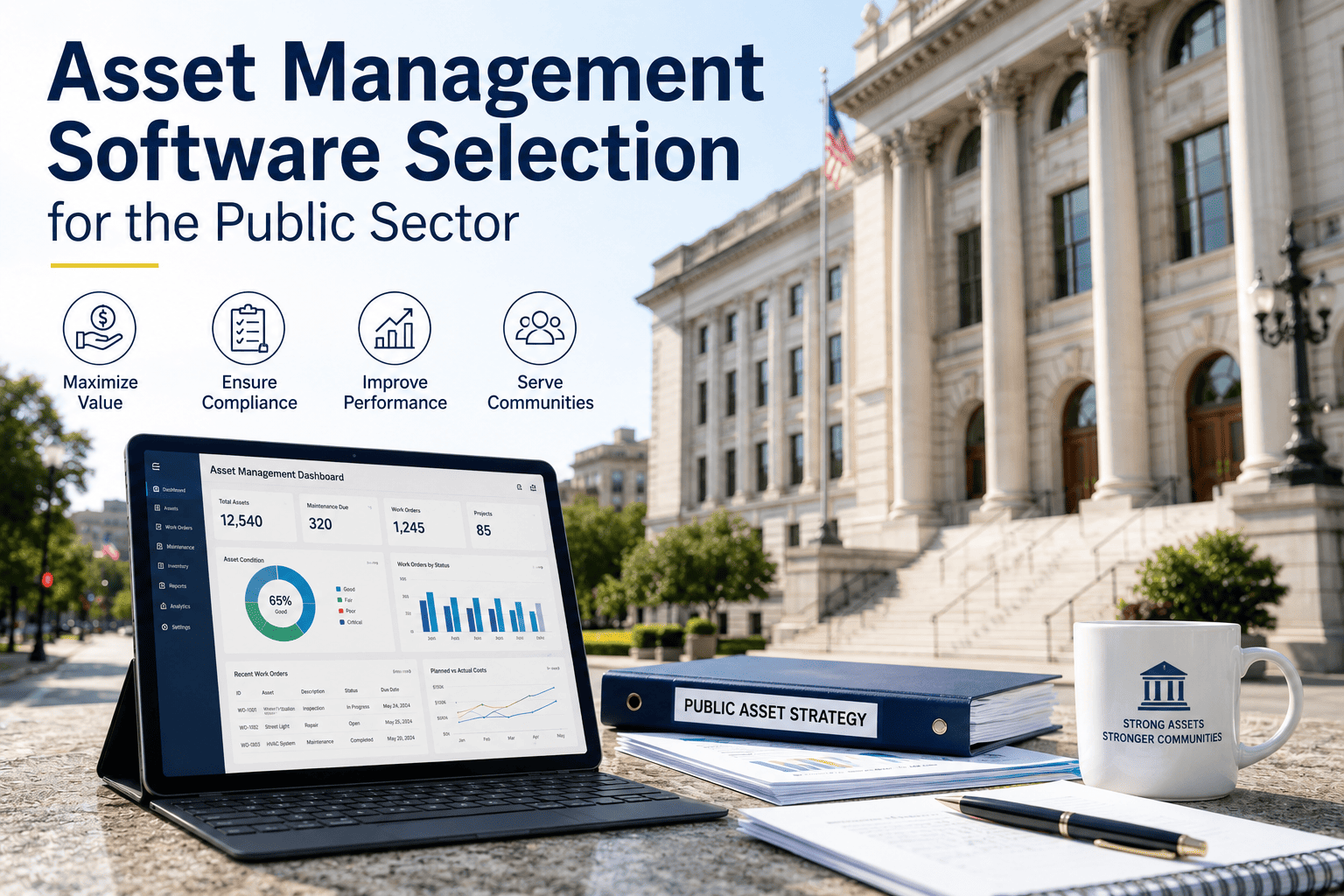
Public agencies manage billions in infrastructure assets — roads, bridges, water systems, and facilities — yet most rely on spreadsheets never built for multi-department coordination. The cost of wrong software selection goes beyond a failed procurement: it means years of silos, audit findings, and workarounds that defeat the purpose of having a platform at all. Most agencies fail during selection, not implementation, using criteria designed for private-sector operations instead of government requirements. The right evaluation framework changes that outcome. See how Oxmaint fits public sector operations — start a free trial or book a demo to evaluate against your agency needs.
Asset Management Software Selection for the Public Sector
The wrong platform locks agencies into spreadsheets in disguise. Learn the evaluation framework that public works directors, county engineers, and facility managers use to select software that fits multi-department government operations.
Why Public Agencies Choose the Wrong Asset Management Software
The selection process — not the software itself — is where most government agencies create their biggest operational problem. These five failure points repeat across counties, municipalities, and state departments year after year.
Private-sector CMMS platforms are built around machine downtime and production loss. Public infrastructure assets — roads, bridges, water mains — operate on condition-based degradation, not production schedules. Agencies using manufacturing-focused criteria end up with software that cannot model infrastructure lifecycles.
Public works, facilities, and fleet divisions each manage different asset types with different service triggers and compliance obligations. Software selected for one department rarely accommodates the others without expensive custom configuration that defeats the purpose of a unified platform.
Government procurement often defaults to lowest-price-compliant selection. A $15-per-seat platform requiring 40 hours of monthly workarounds costs more than a $40-per-seat platform that automates those workflows. Total cost of ownership must include staff time, not just license fees.
Vendor demonstrations use polished demo databases that do not reflect government asset complexity. Agencies skipping a structured pilot — loading their own data, running their own work orders, generating their own reports — discover gaps only after contract signature.
Vendors quote 4-6 week implementations. Reality for government agencies with legacy data, union workforce training, and IT security reviews often stretches to 6-12 months. Agencies not defining milestones with acceptance criteria face open-ended deployments.
Selection Is a Procurement Decision — But It Should Be an Operational One
The most successful public sector selections start with requirements documented by daily users — not procurement specialists comparing feature checklists. Oxmaint is built for multi-department government asset management with implementation timelines that match agency realities.
5 Criteria That Separate Government-Ready Platforms from the Rest
Use this framework during vendor evaluation. Each criterion addresses a specific operational requirement that generic CMMS platforms cannot meet without significant customization.
The platform must support hierarchical asset structures — a water treatment plant contains pumps, which contain motors, which contain bearings. Each level needs its own service schedule, cost tracking, and condition scoring. Flat asset lists force separate systems per department.
Government agencies answer to auditors, oversight boards, and regulators. The platform must generate compliance reports in the format your oversight body requires — not a generic document that staff reformats manually every quarter.
A facilities request requiring fleet vehicle dispatch or a public works task needing electrical involvement cannot live in a single-department workflow. The platform must route work orders across departments with appropriate approval chains.
Capital budget requests require justification. A platform linking maintenance history, condition scores, and deficiency trends to replacement costs gives agencies defensible CapEx requests instead of age-based guesses that councils reject.
Government agencies cannot assign three IT staff to a 6-month implementation. The right platform must be configurable by operations staff — asset registers, PM schedules, and report templates — without writing code or hiring consultants.
Software Selection Checklist — What to Require vs. What to Reject
| Evaluation Area | What to Require | Red Flag — Reject If |
|---|---|---|
| Asset Structure | Parent-child hierarchy with unlimited depth | Flat asset list with no relational linking |
| Department Support | Multiple departments on one platform with access control | Separate instances or workspaces per department |
| Compliance Reports | Custom report builder with scheduled delivery | Fixed report templates that cannot be modified |
| Work Orders | Cross-department routing with approval workflows | Single-department assignment only |
| Capital Planning | Condition-based replacement forecasting | Age-based replacement suggestions only |
| Mobile Access | Full work order completion on mobile devices | Mobile limited to view-only or status updates |
| Implementation | Under 60 days with operations staff configuration | Requires IT team or implementation consultant |
| Data Import | CSV bulk import with field mapping | Manual data entry or vendor-only data migration |
Spreadsheet Operations vs. Structured Asset Management Platform
What Public Agencies Measure After Selecting the Right Platform
Automated report generation replaces manual data compilation from spreadsheets, freeing staff for operational work.
Every asset from fleet vehicles to water infrastructure visible in one platform with condition scores and history.
Asset register, PM schedules, cross-department workflows, and compliance reporting operational within 45 days.
Digital work orders with mobile access and automated scheduling eliminate bottlenecks that delay paper-based processes.
Frequently Asked Questions
What makes asset management software different for public sector versus private companies?
How should we handle multi-department asset classification during software selection?
What compliance requirements should the software support out of the box?
How long should a public sector asset management implementation take?
Can we pilot the software with our own data before full procurement?
Your Agency's Asset Management Platform Decision Starts Now
Every month without a structured platform is another month of spreadsheet workarounds, audit risk, and departmental silos that compound annually. Oxmaint delivers multi-department asset management, compliance reporting, and capital planning in 45 days — no IT project, no consultant dependency.