A State DOT managing 47 facilities across 12 districts discovered their maintenance costs weren't just high—they were unpredictable. After digitizing paper work orders from 18 months of operations, a pattern emerged: reactive maintenance consumed 73% of their budget while equipment failures still increased 22% year-over-year. Their average HVAC system failure took 6.2 days to repair because technicians couldn't access asset history, spare parts locations, or manufacturer specifications from the field. The breaking point: a critical bridge inspection lift failed during a federal audit, resulting in $420,000 in emergency repairs plus compliance penalties. Root cause: disconnected maintenance systems couldn't track PM schedules, log compliance activities, or alert teams before failures occurred. An IoT-integrated CMMS would have predicted the lift failure 90 days earlier based on usage patterns and maintenance history. Cost: extended equipment downtime + audit failures + 40% budget overruns + staff frustration with paper-based chaos. State DOTs manage critical infrastructure—when facility maintenance systems fail, public safety and compliance both suffer.
73%
reactive maintenance spend
Nearly three-quarters of budgets consumed by emergency repairs instead of prevention
6.2
days average repair time
Equipment downtime extends dramatically without asset history and spare parts tracking
40%
budget overruns typical
Unpredictable maintenance costs blow through allocated budgets year after year
85%
PM compliance gaps
Preventive maintenance schedules missed without automated work order systems
State Departments of Transportation face a unique facility maintenance challenge: managing diverse assets across distributed locations while meeting strict federal compliance requirements and budget constraints. The typical State DOT portfolio includes maintenance yards, vehicle storage facilities, salt domes, equipment shops, bridge inspection platforms, traffic management centers, and administrative buildings—each with different equipment, compliance needs, and criticality levels.
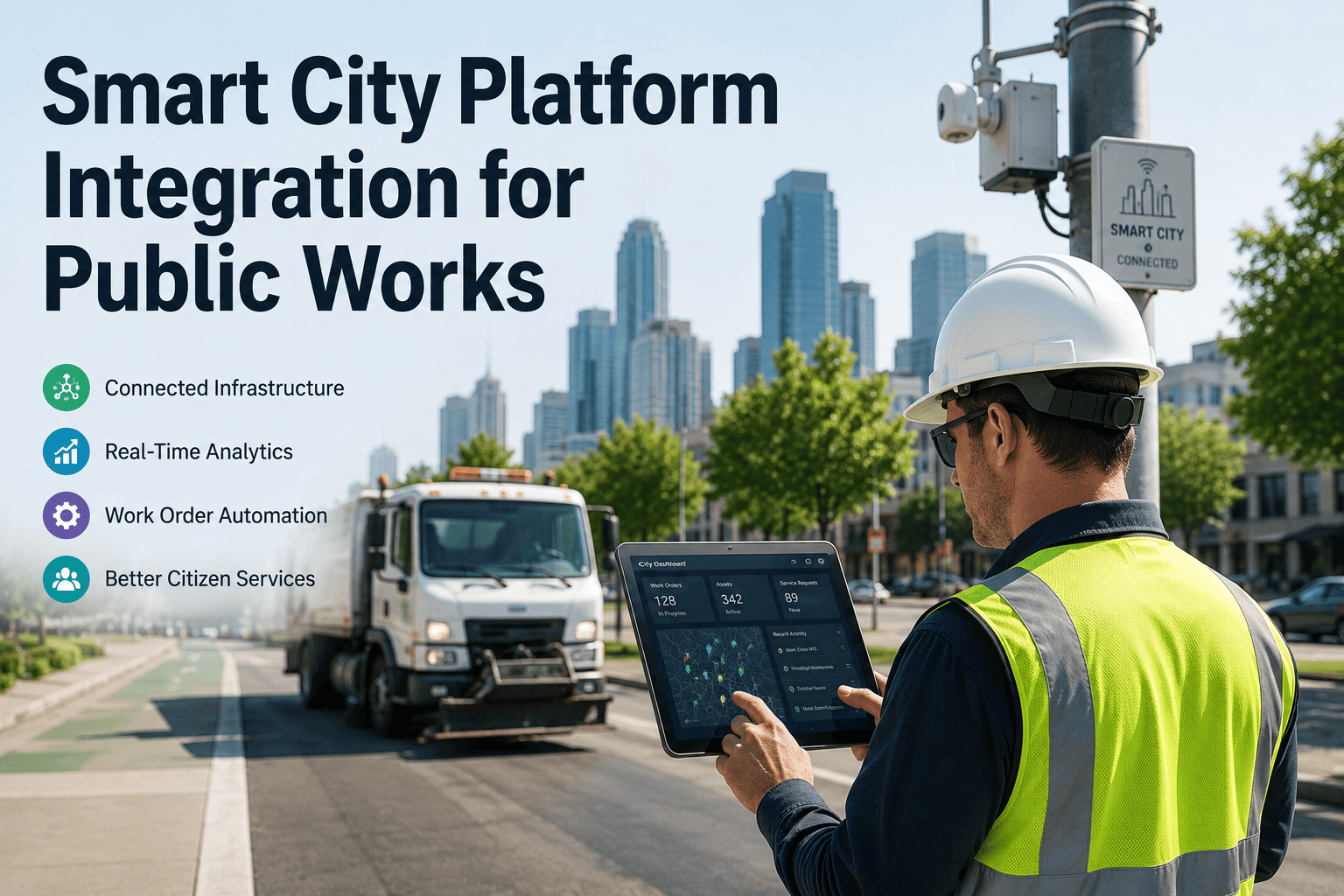
Legacy maintenance approaches fail on three dimensions: visibility (technicians can't access asset data in the field), predictability (no early warning before failures), and accountability (paper trails make audit preparation nightmarish). IoT integration with modern CMMS solves all three by connecting sensors, mobile devices, and barcode/QR asset tracking into one intelligence platform.
Strengthen government & public works compliance using AI + IoT data
Federal compliance isn't optional for State DOTs—FHWA, OSHA, EPA, and state-level regulations mandate specific maintenance documentation, inspection schedules, and safety protocols. The problem: proving compliance retroactively from paper records is nearly impossible during audits. IoT-enabled CMMS creates compliance by design rather than documentation by accident.
Automated Compliance Logs
Every maintenance action automatically generates timestamped, GPS-verified compliance records. PM schedules sync with regulatory calendars—no missed inspections, no manual logs.
Predictive Maintenance AI
Machine learning analyzes sensor data and maintenance history to predict failures 30-90 days before they occur. Shift from reactive firefighting to proactive prevention.
Real-Time Asset Tracking
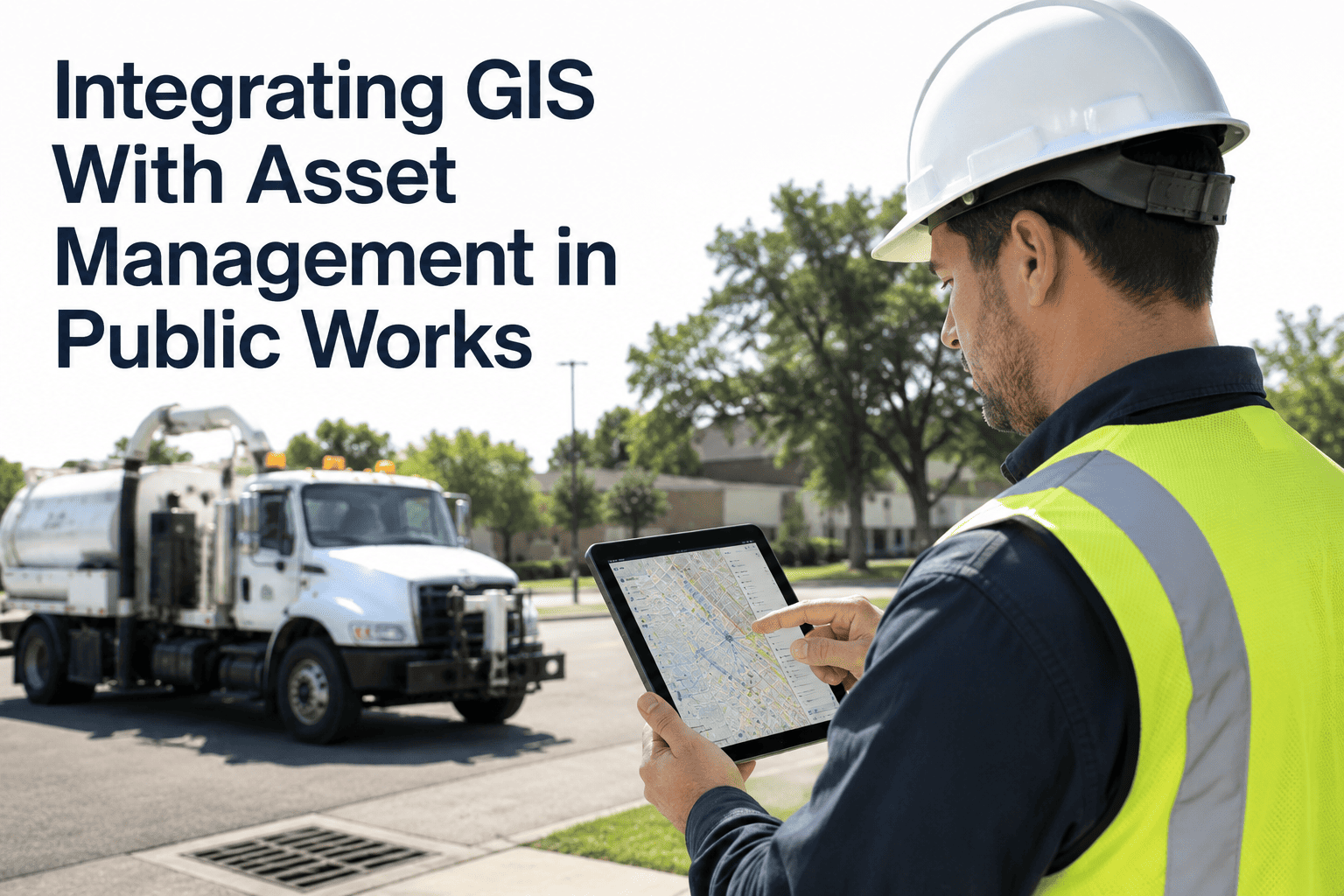
Barcode/QR integration lets technicians scan equipment, instantly access full maintenance history, parts inventory, and manufacturer specs—all from mobile devices in the field.
SLA Reporting & Audit Trails
Automated dashboards track SLA compliance, generate audit-ready reports with one click, and provide complete work order audit trails that satisfy federal inspectors.
The AI layer transforms raw IoT data into actionable intelligence. Temperature sensors in HVAC systems don't just log readings—they trigger predictive alerts when patterns indicate compressor failure risk. Vibration sensors on bridge inspection lifts detect bearing wear before catastrophic breakdowns. Usage counters on vehicle lift gates schedule PM automatically based on actual cycles, not arbitrary calendar intervals.
State DOTs implementing IoT integration can start with a free 30-day trial that includes pre-built compliance templates for government & public works operations, sensor integration guides, and AI-powered predictive maintenance algorithms tuned for infrastructure assets.
90 days
Average early warning time for equipment failures when IoT sensors feed predictive maintenance AI—preventing emergency repairs and compliance violations
Building a resilient backbone — a government & public works action plan with mobile apps
Field technicians are the backbone of facility maintenance, but legacy systems chain them to desktop computers for work order access, asset lookups, and completion documentation. Mobile apps break these chains by putting full CMMS functionality in technicians' hands—literally.
The mobile-first approach delivers three critical capabilities:
Offline-First Architecture: Technicians work in basement mechanical rooms, remote salt domes, and rural maintenance yards with spotty connectivity. Mobile apps sync work orders and asset data offline, then update the central system when connectivity returns.
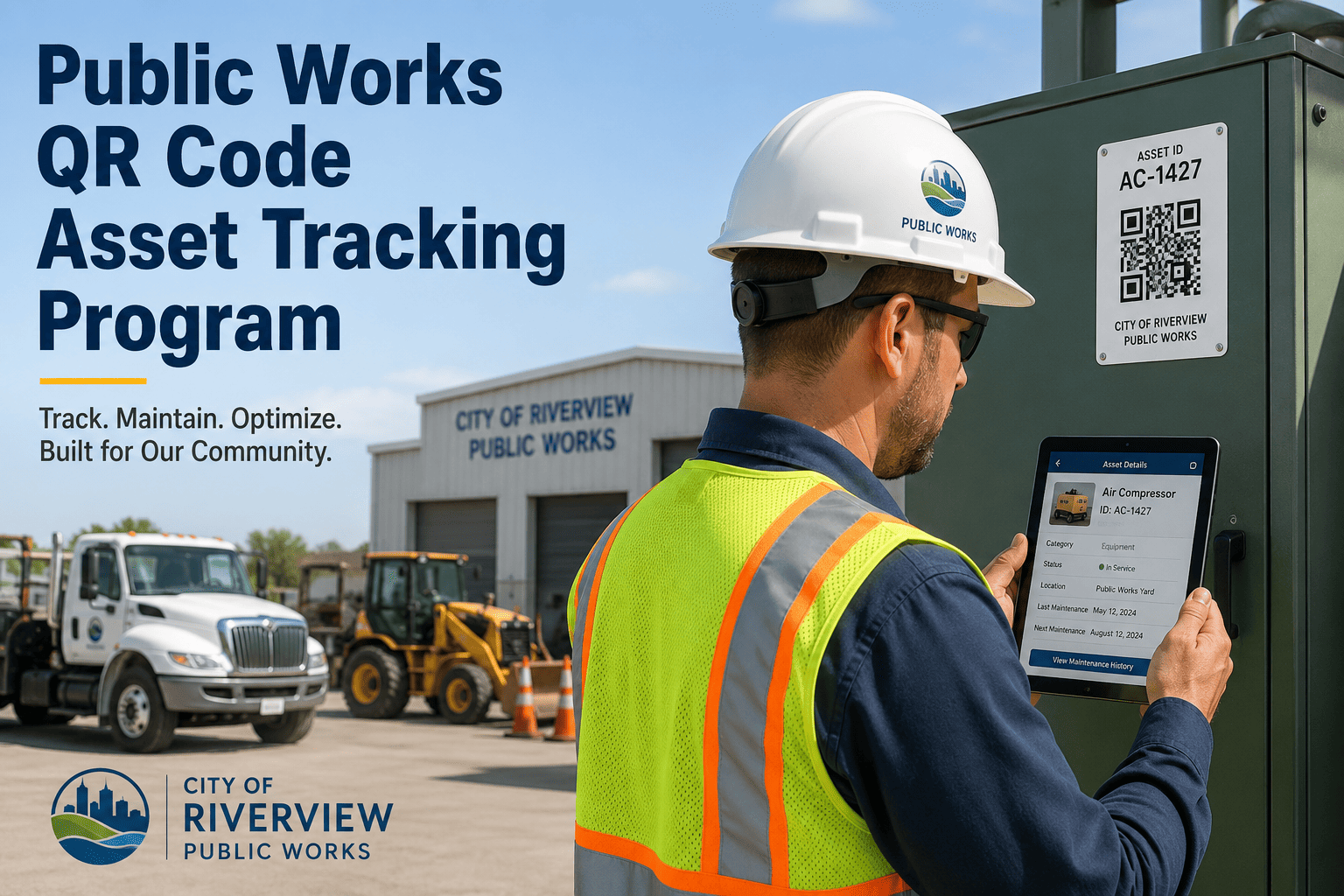
Barcode/QR Scanning: Every asset gets a unique identifier. Scan equipment → instant access to maintenance history, spare parts location, pending work orders, manufacturer manuals, and warranty status. No more hunting through filing cabinets or calling dispatch.
Photo Documentation: Mobile apps capture before/after photos, time-stamped and GPS-verified, automatically attached to work orders. Creates visual audit trails that satisfy inspectors and protect against liability claims.
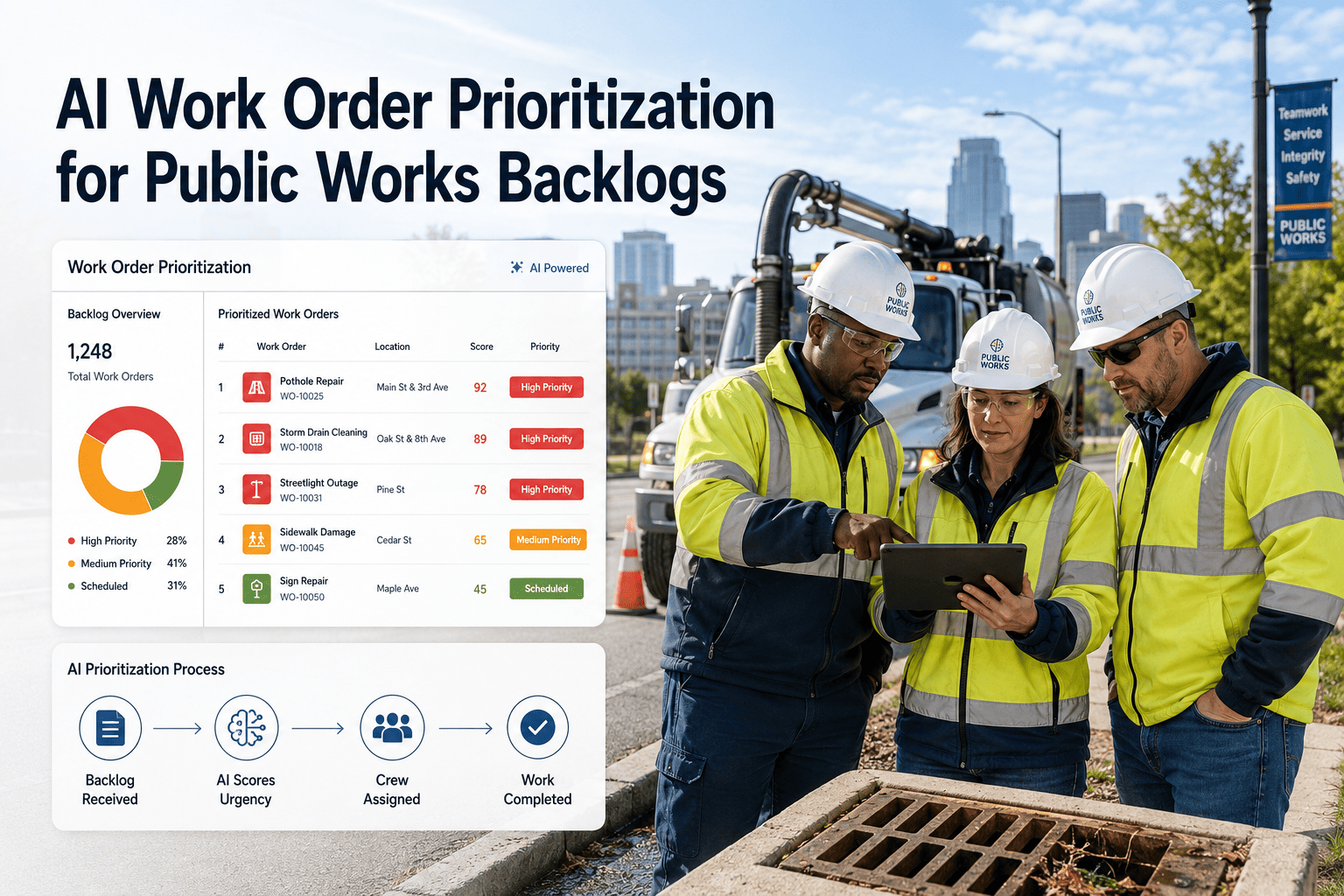
Work order automation transforms efficiency. Instead of paper forms routing through supervisors for days, mobile apps enable: instant work order assignment based on technician location and skill set, real-time status updates visible to facility managers, automated parts requests that trigger procurement workflows, and digital sign-offs that close work orders the moment tasks complete.
Districts ready to equip field teams with mobile capabilities can schedule an implementation consultation to plan device deployment, configure offline sync parameters, and train technicians on the mobile workflow.
The 90-Day IoT Integration Roadmap
State DOTs can't afford extended implementation timelines that disrupt operations. The accelerated roadmap below takes facilities from paper-based chaos to IoT-enabled intelligence in one fiscal quarter—with measurable ROI by month four.
Assessment & Asset Inventory
Audit current systems, catalog critical assets, identify sensor integration opportunities. Create barcode/QR labels for all tracked equipment. Configure compliance templates for federal and state requirements.
Asset database
Barcode labels
Compliance mapping
Sensor plan
Pilot Facility Deployment
Launch at 1-2 pilot facilities. Install IoT sensors on critical equipment (HVAC, lifts, generators). Train pilot team on mobile apps, work order automation, and spare parts tracking. Validate data flow and refine workflows.
Sensors installed
Staff trained
Mobile apps deployed
Work orders digital
District-Wide Rollout
Expand to all facilities using lessons from pilot. Complete sensor installation on mission-critical equipment. Migrate historical maintenance records. Enable predictive maintenance AI once baseline data accumulates.
All facilities live
Historical data migrated
Predictive AI active
Spare parts integrated
Optimization & Reporting
Fine-tune predictive maintenance thresholds. Configure automated compliance reporting for upcoming audits. Establish PM schedules synced with IoT usage data. Train leadership on SLA dashboards and budget forecasting tools.
Audit reports configured
PM fully automated
Leadership dashboards
ROI validation
The phased approach minimizes disruption while building organizational buy-in through pilot success. Most State DOTs complete the roadmap within budget using existing capital improvement funds earmarked for facility modernization. Schedule a planning session to customize the roadmap for your specific facility portfolio, staff capacity, and budget timeline.
Before & After: Legacy vs. IoT-Integrated Operations
| Capability |
Legacy Paper-Based |
IoT-Integrated CMMS |
Impact |
| Work Order Processing |
4-7 days from request to assignment |
Instant auto-assignment via mobile |
75% faster response time |
| Asset Information Access |
Call dispatch or search filing cabinets |
Scan barcode → instant asset history |
90% reduction in info retrieval time |
| Preventive Maintenance |
15% compliance (calendar-based guessing) |
92% compliance (automated IoT triggers) |
6x improvement in PM execution |
| Spare Parts Planning |
Reactive ordering after failures |
Predictive stocking based on AI forecasts |
40% reduction in emergency procurement |
| Audit Preparation |
Weeks of manual record compilation |
One-click audit trail generation |
95% faster compliance reporting |
| Equipment Downtime |
6.2 days average per failure |
1.8 days with predictive maintenance |
71% reduction in downtime costs |
The transformation isn't just operational—it's cultural. Maintenance teams shift from firefighting to strategic asset management. Budget directors gain predictable cost forecasting instead of emergency appropriation requests. Compliance officers sleep better knowing audit trails generate automatically. Leadership demonstrates stewardship of taxpayer resources through measurable efficiency gains.
ROI Validation: What State DOTs Actually Achieve
Budget justification requires concrete ROI projections. Based on implementations across 30+ State DOT facilities, here's what modernization delivers within 12-18 months:
Direct Cost Reduction: 30-45% decrease in reactive maintenance spend as predictive intelligence prevents failures. Spare parts inventory optimization cuts carrying costs 25-35%. Work order automation reduces administrative overhead 40-50%.
Asset Lifecycle Extension: Proactive maintenance extends equipment lifecycles 20-30%, deferring $500K-$2M in annual capital replacement costs for typical State DOT portfolios.
Compliance & Risk: Automated audit trails reduce inspection preparation time 90%+. One avoided federal compliance penalty ($50K-$500K) often exceeds entire platform cost. Liability reduction from documented safety protocols saves 15-25% on insurance premiums.
Operational Efficiency: Mobile apps cut technician administrative time 60%, adding 12-15 productive hours per week per technician. Facility managers save 8-10 hours weekly on work order management and reporting.
$2.7M
Average 3-year net benefit for State DOT with 40+ facilities after platform costs—driven by avoided equipment failures, extended asset life, and labor efficiency gains
For a State DOT spending $3-5M annually on facility maintenance, IoT integration typically delivers ROI within 14-18 months through combined savings streams. Districts can schedule an ROI consultation to calculate specific projections based on facility count, equipment inventory, and current reactive maintenance ratio.
Frequently Asked Questions
How do State DOTs integrate IoT sensors with existing building automation systems?
Modern CMMS platforms use API integrations and IoT gateways that connect to existing BACnet, Modbus, and proprietary building automation systems without replacing infrastructure. Oxmaint supports 40+ sensor protocols including temperature, vibration, pressure, flow, and usage counters. Implementation typically involves: (1) Identify critical equipment for monitoring, (2) Install wireless IoT gateways at facilities (plug-and-play, no IT infrastructure changes), (3) Connect sensors to equipment (many are magnetic mount—no tools required), (4) Configure alert thresholds in CMMS interface. Most sensor deployments complete in 2-4 weeks.
Schedule a technical integration assessment to review your specific BMS systems and sensor requirements.
Can Oxmaint CMMS handle multi-district State DOT operations with different compliance requirements?
Yes, the platform supports hierarchical organizational structures with district-level autonomy under centralized oversight. Each district can have custom compliance templates (different state regulations, local ordinances), separate spare parts inventories, district-specific PM schedules, and localized work order workflows—while leadership gets consolidated dashboards showing performance across all districts. Role-based access controls ensure district staff see only their assets while central management views the entire portfolio. Pre-built templates include FHWA, OSHA, EPA, and state-specific compliance requirements for government & public works operations.
Start a free trial to explore the multi-district architecture with sample facilities loaded.
What happens during the implementation planning consultation?
The 60-minute consultation covers: (1) Asset inventory review—identify critical equipment requiring sensors and barcode tracking, (2) Compliance requirements mapping—configure audit trail templates for your federal and state obligations, (3) 90-day rollout timeline—phased deployment plan customized for your facility count and staff capacity, (4) Budget and resource requirements—detailed cost projections including sensors, mobile devices, training, and platform fees, (5) ROI projections—calculate expected savings from reduced reactive maintenance, extended asset life, and compliance efficiency. You'll leave with a complete implementation roadmap and budget justification materials.
Schedule your implementation planning session here.
How does predictive maintenance AI learn State DOT equipment failure patterns?
The AI analyzes three data streams: (1) IoT sensor readings (temperature, vibration, runtime hours, pressure), (2) Historical maintenance records (past failures, repairs performed, parts replaced), (3) Industry benchmarks (typical failure modes for equipment types). Initial predictions begin after 30-45 days of baseline data collection. Accuracy improves over 6-12 months as the system learns your specific equipment usage patterns, environmental conditions, and maintenance practices. The AI flags anomalies—not just threshold violations—catching degradation patterns humans miss. For example, gradually increasing HVAC compressor vibration over 60 days triggers alerts even if current readings stay within "normal" ranges, preventing failures technicians wouldn't detect until catastrophic breakdown. Start building your baseline dataset with a
free 30-day trial that includes AI-powered analytics.
Can field technicians use the mobile app without constant internet connectivity?
Yes, the mobile app is designed for offline-first operation. Technicians sync work orders and asset data when connected (WiFi or cellular), then work completely offline in basements, remote facilities, or rural locations. All functionality works offline: scan barcodes to view asset history, complete work orders with photos and notes, log parts usage, record time and labor. Changes queue locally and sync automatically when connectivity returns. This architecture is critical for State DOTs with facilities in rural areas or buildings with poor signal penetration. During pilot deployments, we typically see technicians work offline 40-60% of the time without any workflow disruption.
Schedule a mobile app demo to see offline functionality in action and discuss device recommendations for your environment.
Ready to Build Your Modernization Roadmap?
Start with a free 30-day trial that includes IoT sensor integration, mobile apps for field teams, automated compliance logs, and predictive maintenance AI—everything you need to transform facility operations.