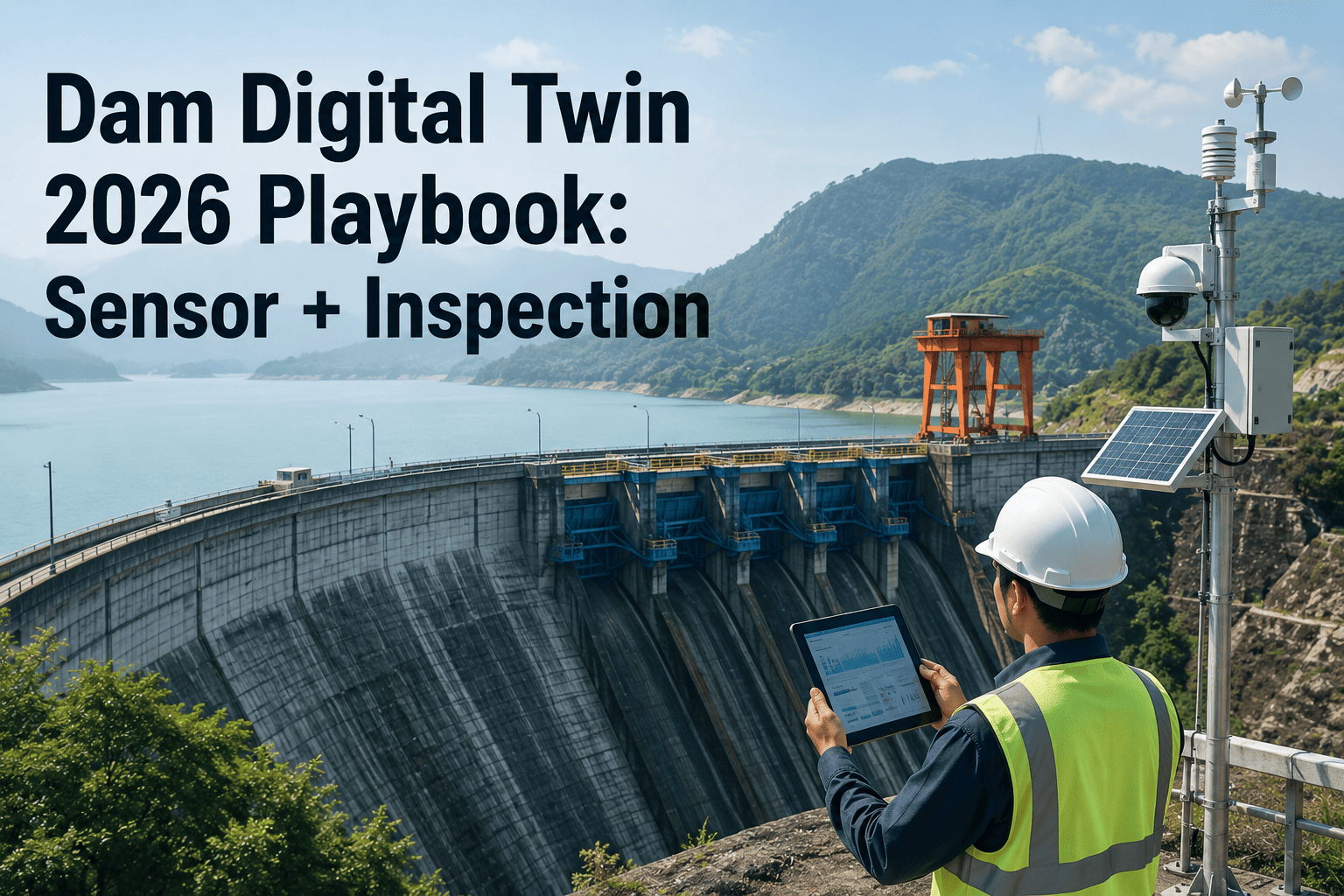
Following a period of intense rainfall, a regional water authority initiated a manual inspection of a critical 50-year-old earthen dam. Because the spillway was inaccessible by foot and the downstream face was heavily vegetated, the inspection crew could only visually assess the crest and the easily reachable slopes. Two weeks later, a deep-seated structural void—undetectable from the surface—collapsed, leading to a massive, uncontrolled release of water that washed out a downstream highway and caused $14 million in damages. The post-incident analysis revealed that progressive internal erosion had been occurring for months. Traditional manual inspections, limited by line-of-sight and physical access, completely missed the subtle topographical shifts and thermal anomalies that preceded the failure. This is the reality when managing monumental infrastructure with clipboards and binoculars. Dams, spillways, and reservoirs require continuous, high-resolution monitoring that only modern Drone and IoT integration can provide. Talk to our team about building an autonomous inspection workflow that protects critical water infrastructure and prevents catastrophic failure.
Infrastructure Intelligence — 2026 Edition
Drone Inspections for Dams: Walls, Spillways, Gates & Reservoirs (IoT + AI)
Deploy AI-powered drone workflows and real-time IoT/LoRaWAN monitoring to detect structural defects, track spillway degradation, and predict failures before they occur. Oxmaint CMMS unifies aerial data and sensor ingestion to automate your infrastructure maintenance.
Concrete Dams
Spalling & Crack Detection
Earthen Embankments
Seepage & Topo Shifts
Spillways & Gates
Corrosion & Blockage
Reservoirs
Volume & Siltation Mapping
91,000+Dams in the U.S. National Inventory
Sub-mmCrack detection resolution via Drone AI
24/7Continuous IoT/LoRaWAN monitoring
10xFaster assessment vs manual inspection
The Stakes of Infrastructure Failure
Dams are arguably the highest-stakes infrastructure managed by civil authorities. A failure doesn't just mean a temporary loss of service; it means catastrophic flooding, devastating environmental damage, and potential loss of life. Yet, many of these structures are operating well beyond their designed lifespan. Traditional visual inspections are inherently flawed: they are infrequent, highly subjective, and unable to safely access steep spillways or dense embankments. Drones equipped with high-resolution payloads, combined with embedded IoT sensors, change the paradigm from subjective observation to quantitative, predictive analysis. Book a Demo.
Critical Dam Failure Modes & Detection
Concrete Spalling & Cracking
AI Vision
Progressive structural degradation of the dam face due to freeze-thaw cycles and alkali-silica reaction. AI detects micro-cracks before they compromise structural integrity.
Impact: Structural weakness — Potential breach
Internal Seepage (Piping)
Thermal/IoT
Water finding paths through earthen embankments, slowly eroding the core. Detected via thermal drone mapping (temperature differentials) and embedded piezometers.
Impact: Embankment collapse — Catastrophic flooding
Spillway Deformation
LiDAR
Slight shifts in spillway alignment or foundation settling. High-density LiDAR generates millimeter-accurate 3D point clouds to track movement over time.
Impact: Uncontrolled release — Downstream devastation
Gate Mechanism Failure
IoT/Visual
Corrosion, debris blockage, or actuator failure on radial or sluice gates. Drones inspect inaccessible hinges; IoT sensors monitor motor torque during operation.
Impact: Inability to manage flow — Overtopping risk
Reservoir Siltation
Sonar/Bathymetry
Sediment buildup reducing the effective storage capacity of the reservoir. Aquatic drone rovers map underwater topography to calculate actual volume.
Impact: Reduced capacity — Supply shortage
The Integrated Inspection Architecture
Modern dam safety relies on a dual-pronged approach: periodic, highly detailed Drone & AI Inspections, and continuous IoT / LoRaWAN Monitoring. Together, they create a comprehensive digital twin of the infrastructure, managed centrally within the CMMS.
Drone & IoT Monitoring Capabilities
Drone Inspection Workflows & AI Vision
Application: Structural Assessment & Visual Mapping
✓ Route Planning & Mission Logs: Automated, repeatable flight paths using RTK GPS ensure exact before-and-after comparisons over years of inspections.
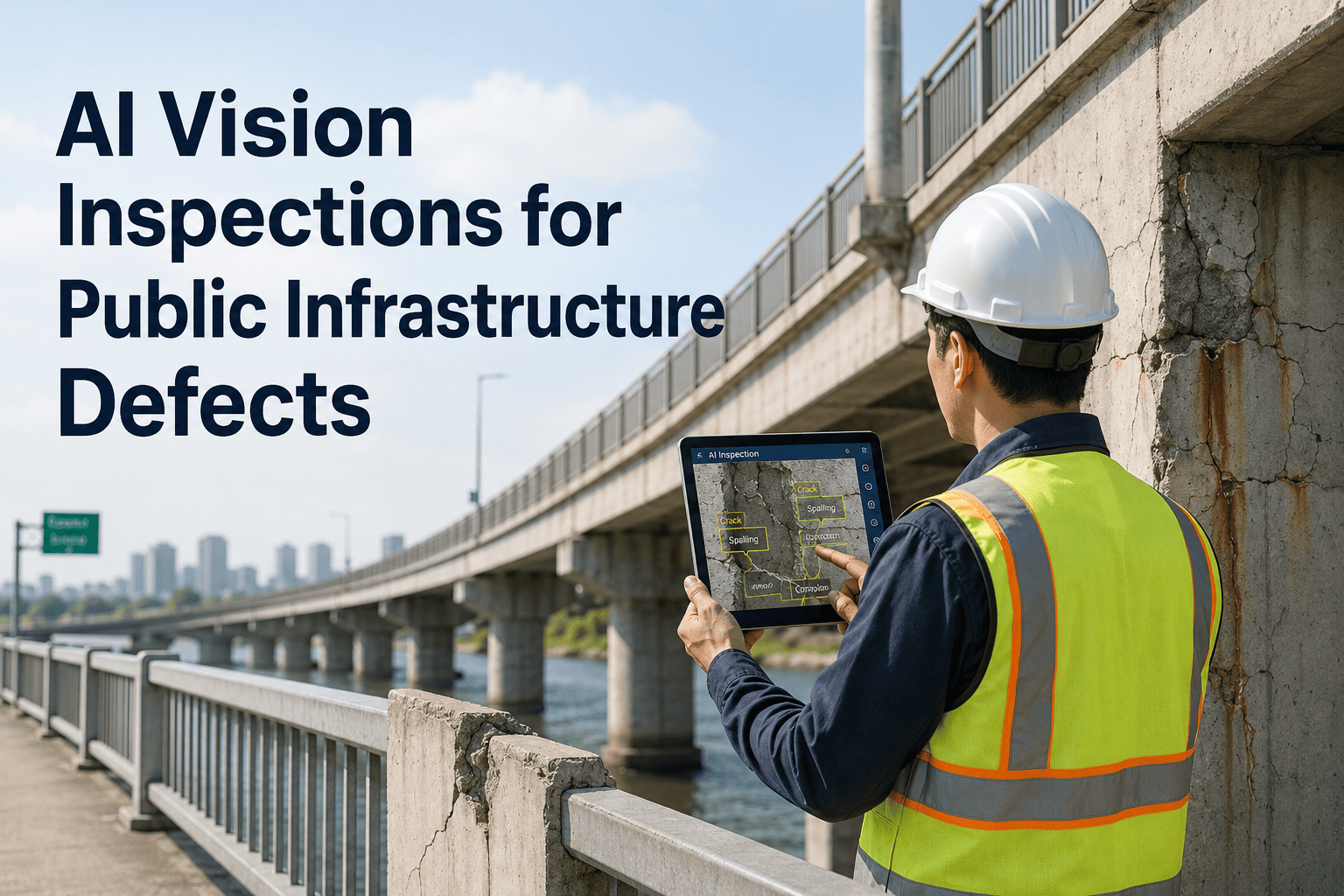
✓ AI Vision Defect Detection: Machine learning algorithms automatically analyze thousands of high-res images to identify, measure, and classify concrete cracks, spalling, and vegetative encroachment.
✓ Multi-Payload Integration: Swapping between high-zoom visual cameras, thermal imagers for moisture detection, and LiDAR for 3D topographical modeling.
Eliminates the need for inspectors to rappel down sheer concrete faces or navigate slippery spillways. Data is ingested directly into Oxmaint for severity scoring.
Continuous Sensor Ingestion & Alerts
Application: 24/7 Monitoring of Internal Health
✓ IoT Sensor Ingestion: Collecting continuous data from embedded piezometers (pore water pressure), inclinometers (tilt), and extensometers (displacement).
✓ LoRaWAN Connectivity: Utilizing low-power, long-range wireless networks to transmit sensor data from remote dam locations without relying on cellular networks.
✓ Condition Thresholds & Alerts: Setting dynamic baselines in the CMMS. If pore pressure spikes unexpectedly, an immediate alert is routed to engineering teams.
✓ Real-Time Anomaly Detection: AI analyzing the continuous data stream to identify subtle, long-term trends that indicate progressive internal erosion or settling.
While drones inspect the surface, IoT sensors monitor the internal "heartbeat" of the structure. Together, they eliminate blind spots.
Automate Your Infrastructure Intelligence
Oxmaint CMMS centralizes your drone mission logs, AI defect reports, and real-time IoT sensor data. Set automated thresholds that trigger priority work orders the moment a crack expands or internal pressure rises.
CMMS Integration: From Data to Action
A hard drive full of drone photos and a dashboard of sensor graphs are useless if they don't drive maintenance action. The true power of this technology is realized when it is fully integrated into a Computerized Maintenance Management System (CMMS). Book a Demo.
How Oxmaint Drives Dam Maintenance
Automated Work Orders
The Process:
AI detects a 5mm crack expansion from drone footage.
Oxmaint automatically generates an inspection work order.
The WO includes exact GPS coordinates and the AI-annotated image.
Engineers are dispatched to verify and repair, not search.
Predictive Maintenance
The Process:
IoT sensors detect a gradual increase in spillway gate motor torque.
Oxmaint trends this anomaly against historical data.
The system predicts impending motor failure within 30 days.
A PM task is scheduled to lubricate or replace the actuator *before* it fails.
Regulatory Compliance
The Process:
FERC or state agencies require documented safety inspections.
Oxmaint logs all drone flight paths, AI reports, and sensor data.
One-click compliance reporting generates an unassailable audit trail.
Demonstrates proactive, data-driven asset management to regulators.
Readiness Lifecycle Management
Implementing an integrated Drone and IoT inspection program is a strategic shift. It requires moving from a schedule-based mindset to a condition-based reality.
Deploying the Inspection Architecture
Key milestones for infrastructure managers
01
Digital Baseline Creation
Conduct initial comprehensive drone surveys (Photogrammetry/LiDAR) to create an exact 3D digital twin of the dam and spillway. Install and calibrate IoT sensors (piezometers, tiltmeters) and connect to LoRaWAN network.
Foundation
02
Threshold Configuration
Define critical operating parameters within the CMMS. Set AI vision parameters for acceptable crack widths and configure IoT alerts for pore pressure limits and structural deflection tolerances.
Setup
03
Automated Monitoring & Mission Routing
Execute scheduled, repeatable drone flight paths. Continuous ingestion of IoT data. AI actively analyzes visual and sensor data, looking for deviations from the established digital baseline.
Execution
04
Anomaly Detection & Triage
AI flags a thermal anomaly indicating potential seepage. CMMS automatically routes the alert to the chief structural engineer, attaching relevant sensor data and historical imagery for immediate triage.
Response
05
Condition-Based Rehabilitation
Data-driven decision making leads to targeted repairs (e.g., localized grouting) rather than massive, reactive overhauls. Asset lifespan is extended, and catastrophic failure risk is minimized.
Optimization
Move from Reactive to Predictive
Stop waiting for visible leaks or failing gates. Oxmaint gives you the tools to analyze drone data and IoT streams in real-time, allowing you to schedule maintenance based on the actual condition of your infrastructure.
Expert Perspective: The Future of Dam Safety
"
For decades, we managed dams by walking the crest and looking for wet spots. It was inherently reactive. The integration of high-resolution drone photogrammetry with embedded IoT sensors fundamentally changes the equation. We are no longer guessing what is happening inside the embankment; the data tells us. But the real game-changer is connecting that data to a CMMS. When an AI algorithm detects a new spall on the spillway and automatically generates a work order for the repair crew with exact coordinates—that is when you have achieved true predictive infrastructure management. It removes the human bottleneck and ensures safety isn't compromised by administrative delay.
— Chief Dam Safety Engineer, Regional Water Authority
100%
Coverage of previously inaccessible areas
0
Rope-access safety incidents
Sub-cm
Accuracy of 3D digital twins
Real-Time
Alerts on internal structural shifts
Investing in Drone + AI inspections and IoT monitoring is no longer optional for modern infrastructure management; it is a critical necessity. By centralizing this intelligence within Oxmaint, you ensure that every anomaly is tracked, every inspection is logged, and your dams remain safe, compliant, and operational for generations to come. Start your free trial today.
Protect Your Critical Infrastructure
Oxmaint provides the digital backbone for modern dam safety—ingesting drone AI reports and IoT sensor data to automate maintenance workflows, track degradation, and ensure regulatory compliance. Build your predictive safety net today.
Frequently Asked Questions
How does AI defect detection work on drone imagery of dams?
Machine learning algorithms are trained on thousands of images of concrete and earthen structures. When new drone imagery is uploaded, the AI automatically scans the surface, identifying anomalies like cracks, spalling, efflorescence, or unusual vegetation growth. It categorizes the defect type, measures its dimensions, and assigns a severity score. This data is then pushed to the CMMS to create actionable repair tasks, removing the need for an engineer to manually review hours of video.
Why use LoRaWAN for IoT sensor monitoring on dams?
Dams are often located in remote areas with poor or non-existent cellular coverage. LoRaWAN (Long Range Wide Area Network) is a low-power protocol that allows battery-operated sensors (like piezometers or tiltmeters) to transmit data over long distances (up to 10 miles line-of-sight) to a central gateway. This makes it highly reliable and cost-effective for continuous infrastructure monitoring without the need for extensive wiring or cellular plans.
Can drones be used to inspect the underwater portions of a dam?
While aerial drones inspect the dry faces, spillways, and crests, specialized aquatic drones (ROVs - Remotely Operated Vehicles) and Autonomous Surface Vehicles (ASVs) are used for underwater inspections. These units utilize high-definition sonar and bathymetry to map the submerged dam face, inspect intake grates for blockages, and measure reservoir siltation levels, providing a complete picture of the asset both above and below the waterline.
How does Oxmaint CMMS handle the massive amount of data generated?
Oxmaint doesn't store the raw terabytes of video footage; rather, it integrates via API with the drone and sensor data platforms. Oxmaint ingests the *actionable intelligence*—the AI-flagged defect locations, the severity scores, and the sensor alerts that breach defined thresholds. This ensures the CMMS remains fast and focused on work execution, while still providing direct links back to the original high-resolution data when engineering review is necessary.
What is the advantage of automated route planning for drone inspections?
Automated route planning utilizes RTK (Real-Time Kinematic) GPS to ensure the drone flies the exact same path, at the exact same distance and angle, during every inspection cycle. This repeatability is crucial for change detection. By perfectly overlaying imagery from 2024 onto imagery from 2026, the AI can precisely measure if a specific crack has widened by 2 millimeters, providing highly accurate degradation trending that manual flight cannot achieve.