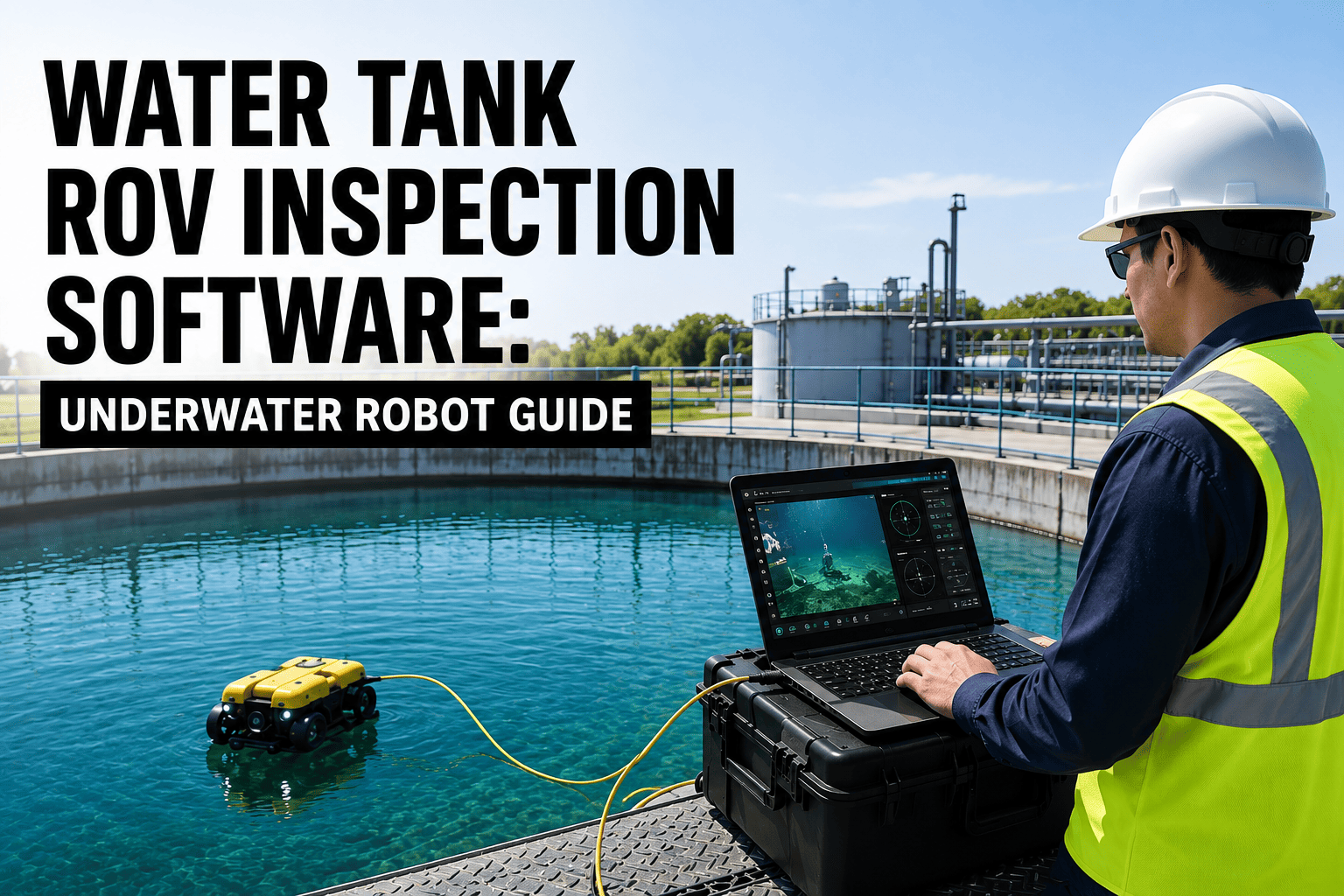
A minor crack in a concrete dam wall goes unnoticed during a routine manual inspection because the inspector couldn't safely access the steep spillway. Six months later, following heavy rains, that minor crack propagates, causing a localized structural failure that triggers emergency water releases and threatens downstream communities. The repair operation requires massive multi-agency coordination, takes weeks to complete, and costs millions in emergency funds. Meanwhile, the public works department faces intense scrutiny for failing to identify the risk. This is dam maintenance operating on legacy systems—reactive, hazardous, and relying on incomplete data. Talk to our team about deploying autonomous robot inspections for dams infrastructure to find, monitor, and document structural defects with zero risk to human crews.
Intelligent Infrastructure — 2026 Edition
Autonomous Robot Inspections for Dams Infrastructure (IoT + AI)
Drones, submersibles, and AI analytics—autonomous robot patrols deliver safer, more comprehensive dam maintenance with real-time anomaly detection and work order automation for public works.
Autonomous Patrols
Drone & submersible robotics inspections
IoT Monitoring
LoRaWAN condition thresholds and alerts
AI Analytics
Real time anomaly detection via digital twin
CMMS Integration
Work order automation & asset management
0Confined space or rope access entries
24/7IoT monitoring via asset health dashboard
3xFaster detection with AI analytics
100%Digital twin documentation
The Limitations of Manual Dam Inspections
Public infrastructure demands rigorous oversight, but manual dams maintenance is inherently flawed. Inspectors face extreme hazards—rappelling down spillways, entering confined penstocks, or diving into murky reservoirs. Because these operations are dangerous and expensive, they are conducted infrequently. This results in significant blind spots regarding asset health. When data relies on visual estimates and handwritten notes, predictive maintenance is impossible. The result: critical deterioration goes unnoticed until it becomes an emergency. Book a Demo.
Common Public Works Inspection Failures
Hazardous Access
High
Manual inspections require rope access or confined space entry, placing government infrastructure workers in extreme danger.
Risk: Severe injury or fatality
Data Silos
80%
Inspection photos and reports sit in disconnected folders, making it impossible to track crack propagation over time.
Risk: Inability to predict failures
Infrequent Checks
1-5 Yrs
Due to high costs and logistics, comprehensive structural surveys are only conducted every few years, leaving massive vulnerability gaps.
Risk: Undetected rapid deterioration
Subpar Subsea Vision
Low
Human divers struggle with visibility and currents, often missing critical scour or scouring near the dam's foundation.
Risk: Hidden foundation compromise
Reactive Maintenance
Costly
Without continuous IoT sensor ingestion, public agencies only react after a failure event, leading to expensive emergency repairs.
Risk: Budget exhaustion & public safety
How Autonomous Robot Inspections Work
Autonomous robot inspections for dams infrastructure represent a complete rethinking of asset management. By combining drone inspection, ROVs (Remotely Operated Vehicles), and IoT monitoring, public works departments can safely and continuously monitor structural integrity. Understanding the integrated workflow reveals why robotics inspections are essential for modern predictive maintenance.
Integrated Inspection & Monitoring Process
Autonomous Robot Patrols
Drone Inspection & ROVs
✓ Aerial drones map the spillway, crest, and abutments using photogrammetry.
✓ Submersible ROVs inspect the submerged upstream face and penstock intakes.
✓ Operations utilize safety geofencing and alerts to prevent collisions.
Remote operations and teleoperation allow specialized engineers to guide inspections from a central office.
IoT / LoRaWAN Monitoring
IoT Sensor Ingestion
✓ Piezometers, tiltmeters, and strain gauges transmit data via LoRaWAN networks.
✓ Continuous monitoring of seepage rates, internal water pressure, and structural movement.
✓ System establishes condition thresholds and alerts for immediate notification.
Continuous IoT monitoring bridges the gap between robotic inspection patrols, ensuring 24/7 oversight.
AI Analytics & Digital Twin
Real Time Anomaly Detection
✓ AI processes visual data to automatically detect and measure cracks and spalling.
✓ Sensor and visual data are fused into a 3D digital twin of the dam.
✓ Predictive algorithms forecast degradation rates based on historical patterns.
AI analytics transform terabytes of raw inspection data into actionable insights on the asset health dashboard.
CMMS Integration
Work Order Automation
✓ Detected anomalies automatically trigger work orders in the Oxmaint CMMS.
✓ Work orders include specific locations, AI severity ratings, and reference imagery.
✓ Centralized asset management streamlines budget planning for public infrastructure.
Seamless CMMS integration ensures that critical data immediately initiates required maintenance actions.
Unify Robotics, IoT, and Maintenance
Oxmaint AI integrates drone inspection data, IoT monitoring streams, and AI analytics directly into your CMMS. Automate work orders from anomaly detection to ensure your government infrastructure remains safe and operational.
Transforming Asset Management: IoT + AI
The true power of autonomous robot inspections for dams infrastructure lies in the synthesis of multiple data streams. When drone imagery, ROV sonar, and continuous IoT sensor ingestion are combined within an AI-powered digital twin, public agencies transition from reactive repairs to true predictive maintenance. Book a Demo.
Key Technologies in Dam Oversight
Robotics Inspections
Capabilities:
Autonomous robot patrols via drone
Underwater ROV concrete scanning
Remote operations and teleoperation
Safety geofencing and alerts
CMMS Impact:
High-res visual records attached to assets
Eliminates risky manual survey tasks
Replaces dangerous access methods with precision data gathering.
IoT / LoRaWAN Monitoring
Capabilities:
Continuous structural telemetry
Seepage and piezometric pressure data
Condition thresholds and alerts
IoT sensor ingestion
CMMS Impact:
Triggers automated emergency work orders
Provides baseline data for trend analysis
Ensures 24/7 oversight between robotic patrol intervals.
AI & Digital Twin
Capabilities:
Real time anomaly detection
Automated crack propagation tracking
3D asset health dashboard
Predictive maintenance forecasting
CMMS Impact:
Work order automation based on severity
Data-driven capital allocation
Transforms raw data into predictive, actionable maintenance directives.
Deployment Lifecycle: Securing Public Infrastructure
Implementing an autonomous oversight program for dams requires a structured approach. Public works departments must establish baselines, integrate sensors, and tune AI models to ensure accurate anomaly detection and seamless CMMS integration.
Infrastructure Deployment Lifecycle
From manual checks to an AI-driven asset health dashboard
01
Digital Twin Baseline
Conduct an initial comprehensive drone inspection and ROV survey to map the dam. Create the foundational 3D digital twin to serve as the baseline for all future comparisons.
Planning
02
IoT Network Installation
Deploy structural sensors across the dam and establish the LoRaWAN network for reliable IoT sensor ingestion, defining initial condition thresholds and alerts.
Active
03
Autonomous Patrol Integration
Implement scheduled autonomous robot patrols. Configure safety geofencing and alerts for flight paths. Establish remote operations and teleoperation protocols for specialized oversight.
Ongoing
04
AI Analytics Tuning
Train the AI models on the incoming visual and sensor data. Refine real time anomaly detection algorithms to minimize false positives regarding concrete spalling or seepage.
Growth
05
Predictive CMMS Operations
Fully enable CMMS integration. Achieve work order automation where the asset health dashboard directly issues repair tasks based on predictive maintenance insights, optimizing government infrastructure budgets.
Advanced
Real-Time Asset Health Dashboard
Visualize the condition of your dams maintenance program in real-time. Oxmaint aggregates IoT monitoring data and robot inspection results to provide public works directors with a single source of truth for asset management.
Expert Perspective: The Future of Public Works
"
Managing aging dams is a constant battle against time and limited budgets. We used to rely on physical inspections every few years, hoping we wouldn't miss a critical defect. By transitioning to autonomous robot inspections for dams infrastructure (IoT + AI), we fundamentally changed our risk profile. Autonomous robot patrols now capture sub-millimeter visual data, while our IoT / LoRaWAN monitoring provides continuous structural feedback. When the AI analytics detected a micro-fracture widening near the spillway, the CMMS integration automatically generated a work order before it became a public safety crisis. We've eliminated rope access risks and achieved true predictive maintenance. This is the new standard for government infrastructure.
— Chief Engineer, State Department of Water Resources
100%
Elimination of high-risk manual access
4x
Increase in inspection frequency
Real-Time
Condition thresholds and alerts
Automated
Work order automation via CMMS
Public works agencies that deploy autonomous robot inspections for dams infrastructure (IoT + AI) are not just upgrading tools—they are ensuring the safety of their communities through proactive asset management. The technology provides unparalleled real time anomaly detection and operational efficiency. Start your free trial today.
Secure Your Infrastructure with Oxmaint
Oxmaint delivers the ultimate platform for modern dams maintenance—unifying robot inspection data, IoT monitoring, and work order automation into a comprehensive asset health dashboard for public infrastructure.
Frequently Asked Questions
What are the benefits of autonomous robot patrols for dams maintenance?
Autonomous robot patrols, utilizing aerial drones and submersible ROVs, safely access hard-to-reach areas like spillways and submerged penstocks. They eliminate the need for dangerous rope access or diving operations, provide high-resolution, repeatable data for accurate comparison over time, and can be conducted frequently to ensure tight oversight of public infrastructure.
How does IoT / LoRaWAN monitoring enhance structural safety?
IoT / LoRaWAN monitoring provides continuous telemetry from sensors embedded in the dam, such as piezometers and tiltmeters. This IoT sensor ingestion operates 24/7, tracking internal pressure and movement. If readings exceed predefined condition thresholds and alerts, the system immediately notifies engineers, bridging the gap between scheduled robotics inspections.
What role does AI play in real time anomaly detection?
AI analytics process the massive volumes of visual data collected during a drone inspection or ROV survey. The AI automatically identifies and measures defects like concrete spalling, cracking, or vegetation growth. This enables real time anomaly detection by comparing current images against the historical digital twin, highlighting degradation long before a human inspector might notice it.
How does CMMS integration automate public works operations?
When the AI or IoT sensors detect an anomaly, the system leverages CMMS integration to achieve work order automation. It instantly generates a maintenance task within the Oxmaint platform, attaching the precise location, severity rating, and photographic evidence. This streamlines asset management and ensures rapid response to critical government infrastructure issues.
What are safety geofencing and alerts during robot operations?
During remote operations and teleoperation, safety geofencing and alerts create virtual boundaries around sensitive or restricted areas of the dam (e.g., active high-voltage lines or restricted airspace). If an autonomous drone approaches these boundaries, the system automatically halts progression and alerts the operator, ensuring safe and compliant inspection flights.