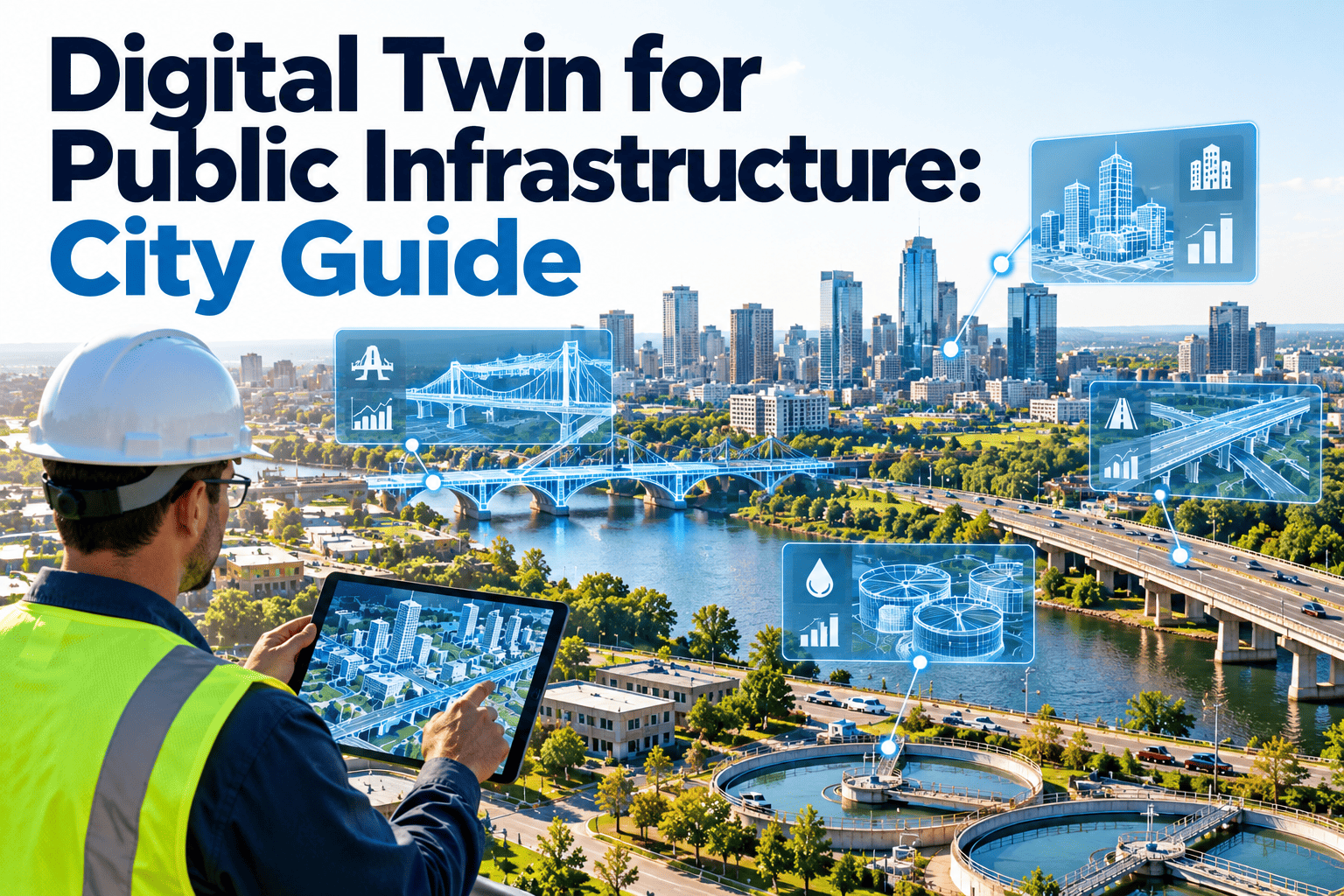
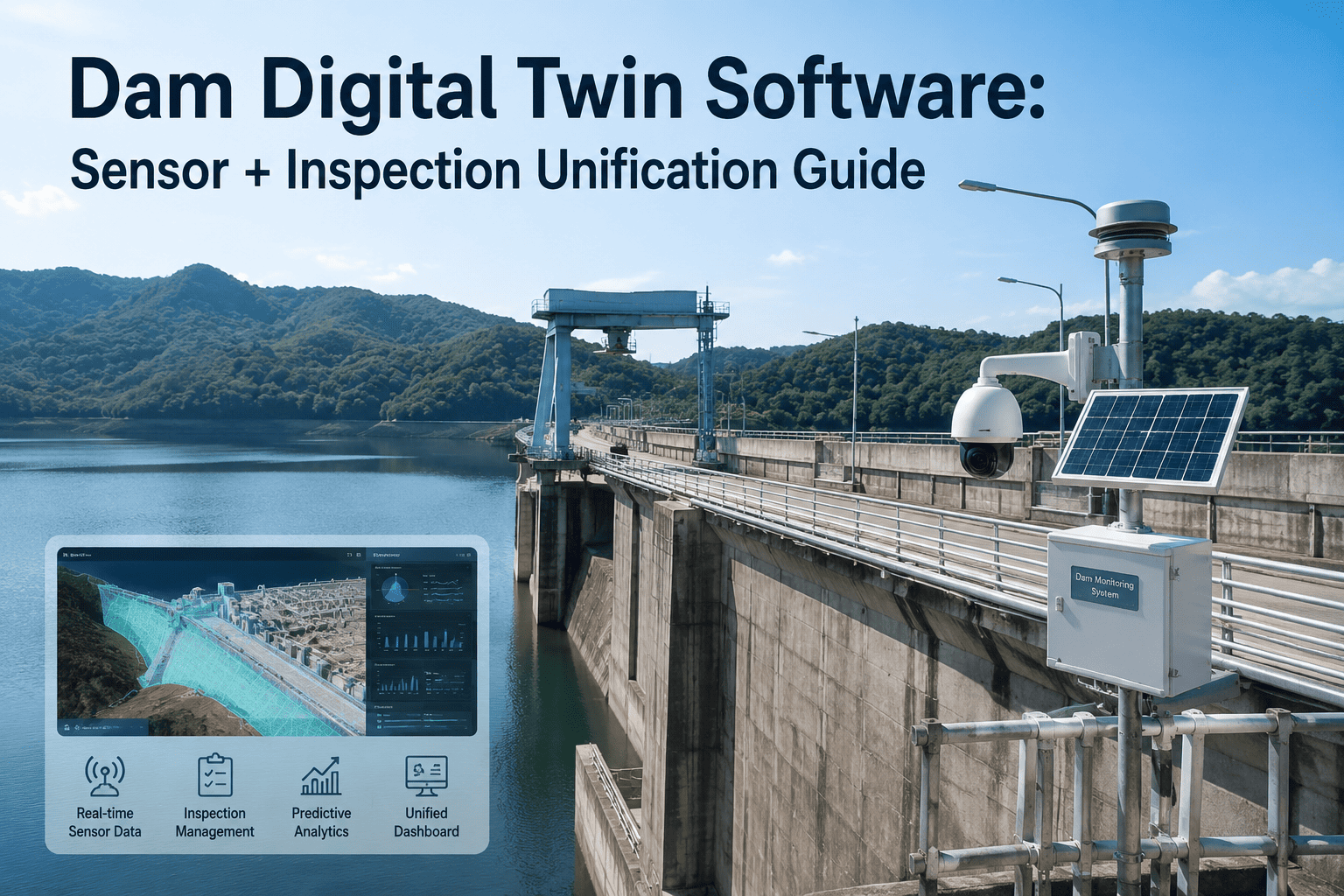
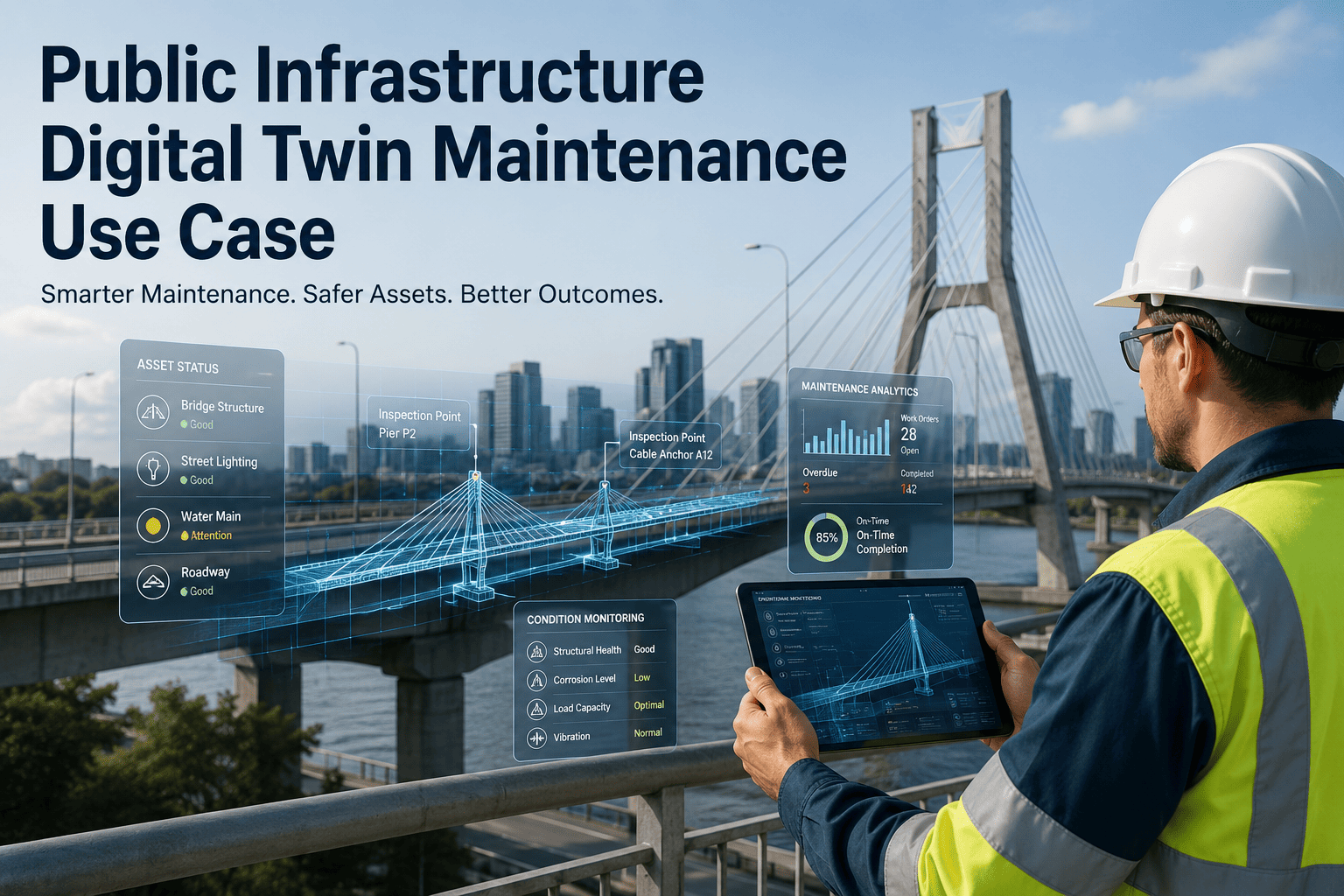
A dam exists in three simultaneous realities: the physical structure holding back millions of cubic meters of water; the engineering model predicting how it should behave; and the current actual condition after decades of loading, weathering, seepage, and repair. The dangerous gap in most dam safety programs sits between these three realities — where the design model no longer reflects as-built conditions, maintenance records are scattered across filing cabinets, and no one has a single integrated view of how the structure is actually performing. A digital twin collapses this gap. It is a continuously updated, multi-physics computational model of the actual dam — fed by real-time sensor data, maintenance history, inspection findings, and hydrological inputs — allowing dam engineers and government program directors to understand what the structure is doing now, how it will respond under the next flood event, and where the highest-priority investment should go to extend safe operational life. Schedule a free digital twin architecture consultation with our dam infrastructure specialists.
Quick Answer
A dam digital twin is not a 3D visualisation or sensor dashboard. It is a continuously updated, multi-physics computational model of a specific physical dam — integrating real-time sensor data, maintenance records, inspection findings, and engineering models into a single queryable system that answers questions about present condition, future performance under flood loading, and risk-informed investment prioritisation across a dam portfolio.
Digital Twin Architecture — Five Integrated Layers
Each layer depends on the integrity of the layer below it. Skipping a layer produces a simulation, not a twin. Book a demo to see all five layers configured for your dam portfolio.
Layer 5
Decision Intelligence and Simulation
What-if scenarios, failure consequence modelling, maintenance optimisation, regulatory reporting
Layer 4
AI Analytics and Pattern Recognition
Anomaly detection, predictive degradation modelling, multi-sensor correlation, EAP alert integration
Layer 3
Data Integration and Asset Model
CMMS records, inspection findings, maintenance history, as-built documentation, geospatial registration
Layer 2
Real-Time Telemetry and Edge Processing
IoT sensor network, RTU data aggregation, cellular and satellite telemetry, edge validation and quality control
Layer 1
Physical Instrumentation Network
Piezometers, settlement monuments, seepage weirs, accelerometers, reservoir gauges, weather stations
A Dam Digital Twin Is Not a Dashboard. It Is the Dam — Virtually.
Oxmaint builds from your existing CMMS asset registry and sensor infrastructure. No separate modelling platform, no data export, no parallel system to maintain.
Layer 1 — Physical Instrumentation Network
The digital twin is only as accurate as the physical measurements that feed it. Instrumentation design for a digital twin differs from a conventional monitoring programme in one critical respect: sensors must be placed where they are most informative for the specific physics models the twin will use to represent structural behaviour — not just where they are convenient to install. Book a demo to assess your current instrumentation against digital twin data requirements.
Vibrating wire piezometers — pore pressure at foundation contacts and embankment zones
Borehole extensometers — vertical movement at multiple depths through embankment
Inclinometers — lateral deformation profile through embankment and foundation
Settlement plates — surface and subsurface vertical movement tracking
Digital Twin Application
Feeds seepage and pore pressure model — twin compares measured piezometric surface against FEM-computed steady-state seepage to detect deviation from expected phreatic line behaviour.
Automated total stations — crest monuments to sub-millimetre precision at 15-minute intervals
GNSS permanent stations — absolute displacement in 3D coordinates
Joint meters and crack gauges — concrete structure joint opening and closing
Tiltmeters — rotation of concrete monoliths and abutment walls
Digital Twin Application
Feeds structural performance model — twin compares observed deformation pattern against the load-deformation relationship predicted by the structural finite element model to detect anomalous responses.
V-notch weirs with pressure transducers — seepage flow volume at collection points
Turbidimeters — suspended sediment in seepage as internal erosion indicator
Pressure transducers — reservoir level, primary and redundant
Temperature strings — seepage pathway thermal signature in embankment
Digital Twin Application
Feeds internal erosion risk model — twin maintains a statistical regression of expected seepage versus reservoir stage and flags deviations indicating new seepage pathways or drainage system changes.
Weather station — precipitation, temperature, wind, solar radiation
Rain gauge network — watershed-distributed rainfall for inflow modelling
Strong-motion accelerometers — earthquake response recording
Stream gauges — upstream inflow and downstream discharge measurement
Digital Twin Application
Provides load inputs to all structural and hydraulic models — temperature drives thermal stress calculations in concrete structures; precipitation drives hydrological routing and reservoir level forecasting.
Layer 2 — Telemetry Architecture and Edge Computing
Architecture decisions at the telemetry layer determine system resilience during exactly the conditions when data is most critical: flood events, seismic events, and storm conditions that may simultaneously stress the dam and degrade communications infrastructure. Book a demo to design a telemetry architecture matched to your specific site conditions and communication constraints.
Field Sensors
100+ instruments across dam, foundation, and abutments. Vibrating wire, 4-20mA, RS-485, Modbus protocols.
5 to 15 minute data intervals
Edge RTU / Logger
Local storage buffer, engineering unit conversion, first-pass quality check, alert pre-processing.
Local storage: 6+ months
Redundant Communications
Primary: 4G/LTE cellular with SIM failover. Backup: satellite (Iridium/VSAT). Emergency: HF radio data modem for critical alarms.
Dual-path parallel transmission
Cloud Ingestion
Government-certified cloud infrastructure (FedRAMP / GovCloud where required) — redundant availability zones, encrypted at rest and in transit.
99.9% availability SLA
Digital Twin Platform
Data store, model engine, AI analytics, alert management, CMMS integration, reporting and compliance outputs.
Real-time processing
Architecture Review for Your Specific Dam Portfolio
Every dam portfolio has different site conditions, communication constraints, regulatory requirements, and infrastructure ages. Oxmaint designs telemetry and digital twin configurations matched to your specific sites — not generic reference architectures. Book a demo to start the architecture review.
Layer 3 — The Asset Model: Where Physics Meets History
The distinguishing feature of a digital twin versus a monitoring dashboard is the engineering model that contextualises sensor readings within the structural and hydraulic behaviour of the specific dam. This layer integrates as-built geometry, material properties, design conditions, maintenance history, and inspection findings into a computational representation that interprets sensor data in terms of structural performance — not just data values. Book a demo to see the asset model layer configured for an embankment or concrete dam.
Geometric Model
As-Built Survey Integration
LiDAR point cloud or photogrammetric survey of current dam geometry referenced to absolute coordinates and tied to instrument locations. Updated after major maintenance events or post-earthquake surveys.
3D Structural Mesh
Finite element mesh representing dam geometry, foundation zones, and abutment contacts. Mesh density calibrated to match sensor resolution — finer where instrumentation density is highest.
Geological Mapping Registration
Foundation geology, fault locations, discontinuity mapping, and borehole logs registered to the geometric model — correlating sensor readings with specific geological features from site investigations.
Engineering Model
Seepage and Pore Pressure Model
Finite element seepage model calibrated to historical piezometer data. Generates predicted piezometric heads at each instrument location for current reservoir stage — the baseline against which observed readings are compared.
Structural Performance Model
Load-deformation relationship model for the specific dam geometry and foundation conditions. Predicts expected settlement, horizontal displacement, and joint movement as a function of reservoir loading, seasonal temperature, and foundation consolidation.
Hydrological and Hydraulic Routing Model
Rainfall-runoff model for the upstream catchment connected to hydraulic routing through the reservoir. Enables flood forecasting — real-time precipitation data generates reservoir level forecasts 6 to 24 hours ahead to support proactive operational and emergency planning.
Maintenance and Condition History
CMMS Work Order Integration
All maintenance activities — grouting, drain rehabilitation, concrete repair, instrumentation replacement — linked to the geometric model at the specific dam location where work was performed. Correlates maintenance events with subsequent sensor behaviour changes.
Inspection Finding Spatial Registry
Crack mapping, seepage observations, surface erosion, and concrete deterioration assessments georeferenced to the dam geometric model. Progressive condition maps show where deterioration is concentrating and at what rate.
Material Property Evolution Tracking
Laboratory results, in-situ test data, and back-calculated material properties from monitoring data kept as a time-stamped record showing how embankment and concrete properties have evolved from design values as the structure ages.
Layer 4 — AI Analytics Engine
A fully instrumented dam generates 10,000 to 50,000 data readings per day across all sensor channels. No engineering team can review this volume in real time. The AI layer applies multiple analytical techniques simultaneously — each designed to detect a different class of structural concern — and surfaces only the findings that require engineering attention. Book a demo to see the AI analytics engine calibrated on your dam's historical sensor record.
Machine Learning
Predictive Baseline Modelling
Supervised learning models trained on historical sensor data learn the expected relationship between each instrument and its driving variables — reservoir level, temperature, season, precipitation. Alerts on deviation from expectation rather than absolute thresholds.
Detects
Gradual pore pressure increases
Seasonal behaviour shifts
Post-event behavioural changes
Statistical Process Control
Multivariate Anomaly Detection
CUSUM charts detect systematic trends representing gradual degradation. Shewhart charts detect sudden shifts from discrete events. Applied simultaneously across all sensor channels with family-wise error rate control to manage false alarm rates.
Detects
Step changes from discrete events
Systematic drift over time
Rate acceleration signals
Neural Network
Multi-Sensor Pattern Recognition
Recurrent neural networks trained on historical multi-sensor sequences learn to recognise the temporal patterns of correlated sensor responses that characterise specific failure mode precursors — the combination of piezometer, settlement, and seepage signals that historically preceded seepage pathway development.
Detects
Failure mode precursor patterns
Cross-instrument correlations
Temporal sequence anomalies
Physics-Informed
Model-Data Fusion
Physics-informed neural networks embed the governing equations of seepage flow and structural mechanics as constraints — ensuring AI predictions remain physically consistent when extrapolating to loading conditions outside the historical training range, critical for extreme flood events not yet experienced.
Detects
Unprecedented loading response
Physical model deviation
Extrapolation beyond history
Forecasting
Predictive Degradation Modelling
Time-series forecasting projects current degradation trends forward to estimate when parameters will approach threshold conditions requiring intervention. Generates remaining safe operational life estimates for embankment settlement, seepage trend growth, and concrete crack propagation to inform capital investment prioritisation.
Predicts
Remaining operational life
Intervention timing optimisation
Threshold exceedance forecast
NLP and Computer Vision
Inspection Intelligence
Natural language processing extracts structured condition data from inspection reports — categorising findings, extracting measurements, and linking observations to georeferenced dam locations. Computer vision detects crack propagation, surface deterioration, and seepage staining changes between successive inspection cycles.
Analyses
Inspection report data extraction
Visual condition change detection
Maintenance record intelligence
AI That Learns Your Specific Dam — Not a Generic Dam.
Oxmaint's AI analytics are trained and calibrated on each specific dam's historical sensor record, geotechnical model, and inspection history — so anomaly detection reflects the actual behaviour patterns of your structure, not average behaviour from a dataset of structurally different dams. Book a demo to see the calibration process for your dam type.
Layer 5 — Decision Intelligence
The highest-value capability of a mature digital twin is not real-time monitoring — it is the decision support that becomes possible when a fully calibrated structural model is continuously synchronised with current conditions. This layer transforms the twin from a safety monitoring tool into an infrastructure management platform informing capital planning, regulatory engagement, and emergency operations. Book a demo to see decision intelligence configured for your dam safety programme.
Flood Event Simulation
Pre-Event Structural Response Prediction
When a significant storm is forecast, the twin runs the inflow hydrograph through the hydrological model to predict reservoir level trajectory, then runs predicted levels through the structural performance model to predict piezometric response, settlement changes, and seepage behaviour the dam will experience during the event — 6 to 24 hours before loading occurs.
What-If Analysis
Operational Decision Consequence Modelling
Before any significant operational change — raising the maximum operating pool, modifying outlet works operation, initiating major foundation drainage rehabilitation — the twin simulates the structural response using the calibrated engineering model, quantifying risk and defining safe operating envelopes before implementation.
Capital Planning
Risk-Informed Maintenance Investment Prioritisation
The twin maintains a continuous risk register for each dam in the portfolio — updated automatically as sensor data reveals changing conditions and degradation trends evolve. This ranks maintenance and rehabilitation investment opportunities by risk reduction per dollar of expenditure, giving programme directors an evidence-based framework across portfolios of dozens or hundreds of dams.
Regulatory Compliance
Automated Regulatory Documentation Generation
FERC Part 12 inspection support, FEMA programme annual reporting, state dam safety agency submissions, and Board of Consultants review preparation all require the same underlying data. The twin generates this documentation automatically from its continuously maintained records — transforming a weeks-long preparation exercise into on-demand report generation.
Failure Mode Analysis
Failure Consequence and Breach Parameter Modelling
For Emergency Action Plan preparation and dam safety risk assessments, the twin provides current-condition structural parameters for breach analysis — not the original design geometry that may no longer reflect as-built conditions after decades of settlement, repair, and modification. Breach hydrographs generated from current-condition geometry produce more accurate downstream inundation mapping.
Implementation Roadmap — Building a Dam Digital Twin in Four Phases
The most effective dam digital twin implementations are built incrementally, with each phase delivering operational value while establishing the foundation for the next capability level. This phased approach allows government dam safety programmes to demonstrate value to oversight bodies at regular intervals and calibrate architecture decisions based on early operational experience. Book a demo to receive a phase-by-phase deployment plan for your dam portfolio.
01
Month 1 to 4
Foundation
Instrumentation, Telemetry, and Data Foundation
Instrument audit and gap assessment against digital twin data requirements. New sensor installation or rehabilitation of deficient instruments. RTU and telemetry installation with all instruments transmitting to cloud. As-built geometric model from LiDAR survey. Historical data migration to digital twin platform.
Value delivered — Continuous data availability with no more manual readings. Basic threshold alerting operational. Regulatory data submission automated.
02
Month 4 to 9
Analytics
AI Baseline Models and Anomaly Detection
AI baseline models trained on historical data for each instrument. Anomaly detection operational with calibrated alert thresholds. CMMS integration linking maintenance and inspection records to the spatial model. EAP notification chains integrated with the alert system. First regulatory dashboard and compliance reports operational.
Value delivered — AI anomaly detection live. False alarm rate calibrated. First AI-generated alerts reviewed and validated by engineering team.
03
Month 9 to 18
Engineering Model
Pivotal Milestone
True Digital Twin — Physics Meets Real-Time Data
FEM seepage model calibrated to historical piezometer data. Structural performance model integrated and validated. Hydrological model connected with reservoir level forecasting operational. Physics-informed AI models deployed using calibrated engineering baseline. Post-event automated structural performance reports generated.
Value delivered — True digital twin operational. Sensor readings interpreted in engineering context. Pre-event flood response prediction available to dam safety team.
04
Month 18+
Intelligence
Full Decision Intelligence and Portfolio Management
Predictive degradation models with remaining life forecasting per component. What-if simulation capability for operational and engineering decisions. Portfolio-level risk register with comparative risk ranking across the dam portfolio. Capital investment optimisation ranked by risk reduction per investment dollar. Automated regulatory documentation generation for FERC, FEMA, and state agencies.
Value delivered — Full decision intelligence platform. Dam safety programme demonstrates measurable risk reduction and evidence-based investment prioritisation to oversight bodies.
Phase 1 Can Be Operational Within 90 Days.
Oxmaint provides the CMMS foundation, IoT integration layer, AI analytics engine, and engineering model integration capability that government dam safety programmes need to build a digital twin that delivers operational value from the first phase — not after years of custom development.
Frequently Asked Questions
QHow is a digital twin different from a SCADA or CMMS system for dam management?
SCADA shows real-time data values. A CMMS manages maintenance records. A digital twin integrates both — plus the engineering models of structural behaviour — so that sensor readings are interpreted in terms of what they mean for structural safety, not just what the numbers are. When a piezometer rises 0.8 metres, a SCADA system shows the value; the digital twin computes whether that rise is within the expected range for the current reservoir level or represents a deviation from the calibrated seepage model requiring engineering review.
Book a demo to see the difference in practice.
QHow much historical data is needed before AI models can be trained effectively?
A minimum of two to three years of historical sensor data is recommended to capture seasonal cycles and reservoir fluctuation patterns. Five or more years improves AI model accuracy significantly by capturing multiple hydrological cycles and post-event recovery behaviour. Where historical data is limited, Oxmaint's physics-informed models supplement statistical training with structural mechanics constraints to maintain prediction accuracy.
Book a demo to assess your data readiness.
QWhat regulatory frameworks does the dam digital twin support?
Oxmaint's dam digital twin supports FERC Part 12 inspection documentation, FEMA National Dam Safety Programme annual reporting, state dam safety agency compliance submissions, and Board of Consultants review preparation. The audit trail and performance documentation modules are designed around the specific evidence requirements of each framework — not generic document management.
Book a demo to see the regulatory documentation module for your applicable framework.
QCan the digital twin be deployed for an existing dam with legacy instrumentation?
Yes. Phase 1 begins with an instrument audit that assesses existing sensors against digital twin data requirements and identifies gaps. Legacy instruments that are functioning and well-located are integrated directly. Deficient, failed, or poorly located instruments are replaced or supplemented as part of Phase 1. Oxmaint has integrated instrumentation systems dating to the 1980s alongside modern IoT sensors on the same dam.
Book a demo to assess your existing instrumentation portfolio.
QHow does the digital twin integrate with our existing dam safety programme workflows?
Oxmaint integrates with existing CMMS platforms, inspection management systems, and document management systems through standard APIs — not replacing your programme's existing tools but adding the analytical layer on top. Engineers continue using familiar inspection and maintenance workflows; the twin aggregates the outputs and interprets them in the context of the structural model.
Book a demo to map integration pathways for your existing programme systems.
Continue Reading
Start Building Your Dam Digital Twin Today
Oxmaint provides the CMMS foundation, IoT integration layer, AI analytics engine, and engineering model integration that government dam safety programmes need — built incrementally, with Phase 1 operational within 90 days.
Digital Twin Integration
AI Analytics Engine
Telemetry Architecture
Regulatory Documentation
FERC and FEMA Compliance
Portfolio Risk Management