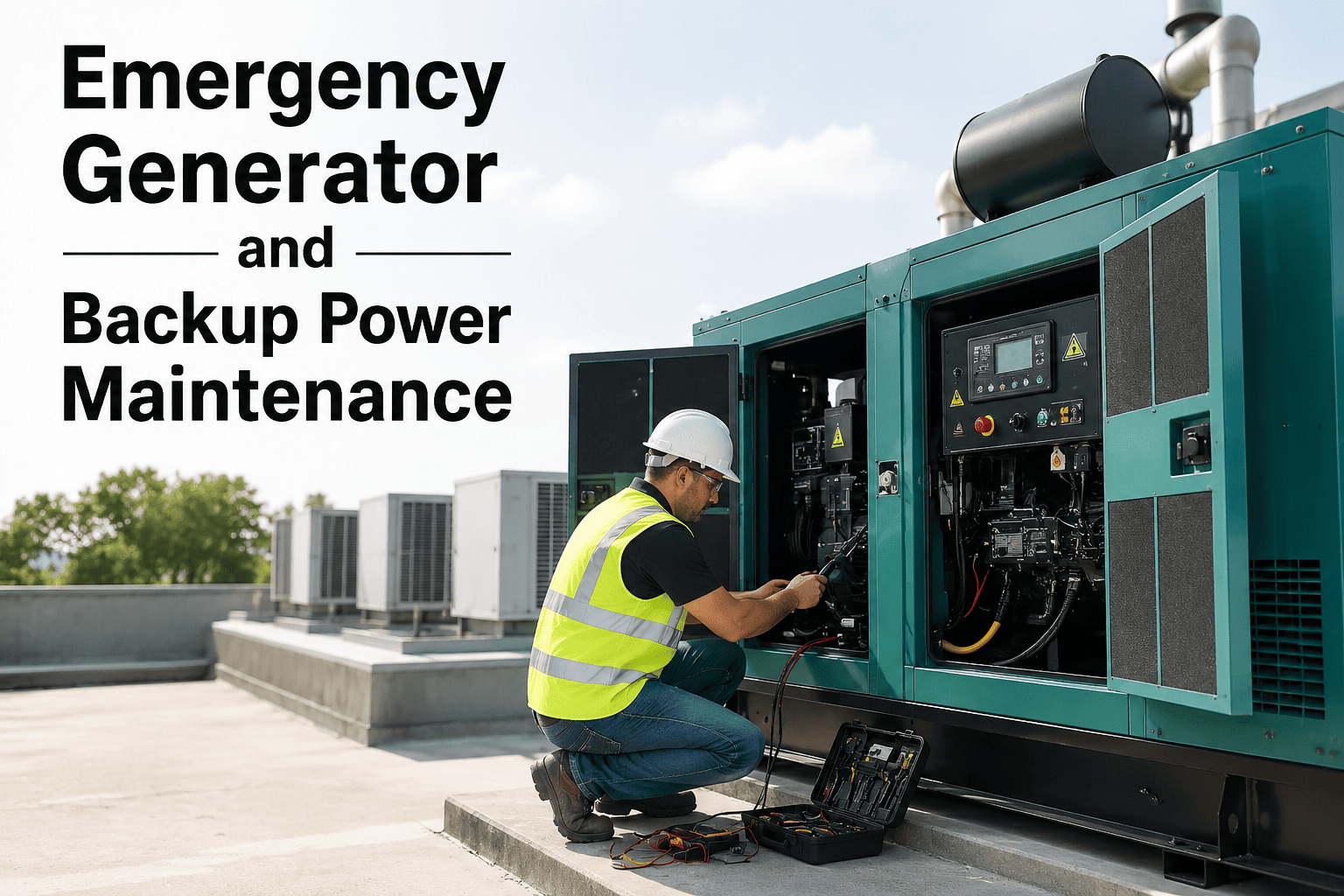
Emergency generator maintenance for public facilities is the difference between life-safety infrastructure that performs when the grid fails and a multi-million-dollar liability that silently degrades in a mechanical room. NFPA 110 sets the legal minimum—monthly inspections, annual load tests, and triennial load-bank verification—but the standard only works if every task is actually executed, documented, and auditable. Backup power maintenance for government and municipal buildings fails most often because of fragmented spreadsheets, missed fuel-polishing cycles, and untracked corrective work. OxMaint eliminates that gap with an AI-powered CMMS that automates the entire emergency power maintenance program, so your standby generators are audit-ready and operationally reliable. You can Start Free Trial today or book a walkthrough to see it mapped to your facility.
If your standby generator fails during the next grid outage, when do you find out?
Over 50% of emergency generator failures in public facilities stem from maintenance oversights—missed fuel checks, dead batteries, and untested transfer switches. Discovering unready backup power during an active emergency is a life-safety failure. OxMaint ensures your emergency generator program is tested, tracked, and audit-proof every 30 days.
Why public facility generator maintenance fails when you need it most
Municipal and government facilities manage dozens of standby generators across water treatment plants, emergency dispatch centers, hospitals, and public safety buildings. The sheer operational complexity—combined with shrinking maintenance budgets—makes missed PM cycles inevitable. When emergency backup power fails in a public facility, the cost isn't just financial; it is measured in public trust and human safety.
Consider a mid-sized municipal public works department operating 12 backup generators across police and fire stations, a municipal courthouse, and a regional water utility. Relying on a shared spreadsheet and paper logs, they miss a single quarterly fuel-polishing cycle on a 500 kW standby unit. Six months later, a severe ice storm knocks out grid power for 41 hours. The generator runs for 8 hours before microbial contamination in the diesel fuel clogs the filters—shutting down the 911 dispatch center and the municipal water pump station simultaneously. The resulting infrastructure failure, emergency diesel delivery costs, and public safety exposure exceed $320,000. A CMMS-driven emergency generator program would have flagged the missed fuel maintenance automatically.
NFPA 110 testing requirements for standby generator maintenance
Public facilities and government buildings classified as Type 10, Level 1 systems under NFPA 110 must follow a rigid testing hierarchy. Missing any of these intervals creates an immediate compliance deficiency and a life-safety risk. Here is the mandatory testing cadence for emergency power maintenance.
Level 1 Inspection
- Check engine oil, coolant, and fuel levels
- Inspect battery voltage and electrolyte levels
- Verify exhaust system and intake air filters
- Ensure area is clear of debris and combustibles
No-Load Operational Test
- Run generator for 30 minutes minimum
- Verify automatic transfer switch (ATS) operation
- Check for fluid leaks and abnormal vibrations
- Log operating parameters (temp, pressure, RPM)
Full-Load Capacity Test
- Conduct load bank test at nameplate capacity
- Change oil, oil filter, fuel filter, and air filter
- Inspect and clean alternator and windings
- Calibrate and test all safety trip circuits
4-Hour Load Bank Test
- Sustained 4-hour load test at 30% / 50% / 75% / 100%
- Required if generator misses monthly load tests
- Burns off carbon buildup (wet stacking) in diesel engines
- Fully documents thermal performance curves
Tracking these intervals manually across 20+ municipal generators is where most public works generator maintenance programs break down. A single missed ATS transfer test can void your Level 1 compliance status and expose the municipality to liability during an audit or an actual grid failure.
The four silent killers of municipal backup power reliability
Even when teams are executing tests on schedule, specific subsystems degrade invisibly between inspections. A robust public emergency generator program must aggressively track these four failure vectors—often the root cause of catastrophic failure during extended outages.
Battery Degradation
Lead-acid starter batteries fail unpredictably after 3-5 years. Without automated battery-replacement scheduling based on install date and voltage trends, 30% of emergency generator no-starts are traced directly to dead or sulfated batteries.
Fuel Quality Decay
Diesel fuel degrades in 6-12 months. Microbial growth ("algae") and water accumulation clog filters under heavy load. Standby generator maintenance for public facilities must include strict 90-day fuel sampling and annual polishing cycles.
Wet Stacking
Running generators only at no-load during monthly tests causes unburned fuel to accumulate in the exhaust—destroying cylinder liners and turbochargers. Triennial load-bank testing burns this off and verifies true engine capacity.
ATS Failure
The Automatic Transfer Switch is the most overlooked component. Dirty contacts, weak springs, and failed control logic prevent the switch from closing—meaning your perfectly maintained generator never receives the signal to start.
How OxMaint digitizes your emergency generator program
OxMaint transforms reactive, spreadsheet-driven maintenance into a predictive, fully auditable CMMS. For maintenance and reliability teams managing public facility infrastructure, this means zero missed compliance deadlines and a defensible audit trail during life-safety inspections.
Automated NFPA 110 Scheduling
Auto-generate weekly, monthly, annual, and triennial work orders based on each generator's specific Type and Level classification. OxMaint eliminates calendar drift and auto-escalates overdue tasks to facility managers—guaranteeing 100% compliance readiness.
Predictive Asset Health Tracking
Track engine hours, load-bank test data, and vibration trends across your entire fleet. OxMaint's AI engine flags anomalies—like a 5% drop in alternator output or rising coolant temps—weeks before they cause a no-start event during a grid failure.
Spare Parts & Fuel Inventory
Maintain min/max par levels for critical spares—oil filters, air filters, batteries, and alternator brushes. Trigger automatic purchase orders when stock dips. Track fuel delivery schedules, tank levels, and polishing cycles in one unified dashboard.
Mobile-First Work Orders
Technicians receive digital work orders with QR-coded generator history, mandatory checklist fields, and photo uploads directly on their mobile devices. No more lost paper logs or illegible inspection notes in municipal public works basements.
Stop relying on spreadsheets for life-safety infrastructure
See how OxMaint maps your emergency generator fleet into a fully automated, NFPA 110-compliant maintenance program in under 30 minutes.
The ROI of CMMS-driven emergency power maintenance
Moving from a reactive, paper-based system to an AI-powered CMMS delivers measurable returns for government and municipal maintenance teams. Below is a realistic breakdown of the financial impact for a mid-sized public facility managing 15 standby generators.
| Metric | Manual / Spreadsheet System | OxMaint CMMS Program |
|---|---|---|
| Annual Emergency Repair Costs | $48,000 (reactive parts & labor) | $14,500 (predictive interventions) |
| Compliance Audit Prep Time | 120 hours per audit cycle | 4 hours (instant reporting) |
| Generator Downtime During Outages | 14 hours/year (failures + delays) | < 1 hour/year (verified reliability) |
| Missed PM Intervals | 8-12 instances annually | 0 (automated escalation) |
| Estimated Annual Savings | — | $55,000+ in avoided costs |
Emergency generator maintenance for public facilities
How often should public facility generators be tested under NFPA 110?
NFPA 110 requires Level 1 emergency power systems to undergo a brief no-load operational test monthly (typically 30 minutes) and a more comprehensive annual load test. Additionally, a triennial 4-hour load-bank test is mandatory to verify true capacity and burn off carbon deposits. Facilities that miss monthly tests must perform the triennial test annually until compliance is restored. You can automate this entire schedule by booking a demo with OxMaint to see how the software enforces these intervals automatically.
What is wet stacking and why is it a problem for standby generators?
Wet stacking occurs when a diesel engine runs at low or no loads, causing unburned fuel and carbon to accumulate in the exhaust system. This buildup degrades cylinder liners, ruins turbocharger seals, and severely reduces the generator's actual output capacity. Monthly no-load tests contribute to wet stacking, which is why NFPA 110 mandates periodic load-bank testing at 100% capacity to clear the engine and verify performance.
How long can diesel fuel sit in a municipal backup generator tank?
Diesel fuel in standby generator tanks begins to degrade significantly after 6 to 12 months. Water condensation and microbial growth ("diesel bug") form sludge that clogs filters exactly when the engine is under heavy load during an emergency. Public emergency generator programs must include quarterly fuel sampling, annual fuel polishing, and biocide treatments to maintain fuel integrity. OxMaint tracks fuel age and automatically triggers polishing work orders.
Can a CMMS help with government emergency generator compliance audits?
Yes, a CMMS like OxMaint is the single most effective tool for passing life-safety audits. It maintains a tamper-proof, time-stamped record of every inspection, test, repair, and parts replacement. Instead of sorting through filing cabinets of paper logs, facility managers can generate a complete NFPA 110 compliance report for any generator in seconds, proving that all weekly, monthly, annual, and triennial requirements were met. You can Start Free Trial to upload your assets and test it immediately.
What are the most common reasons emergency generators fail to start?
The three most common causes of no-start events are dead or degraded starter batteries (accounting for over 50% of failures), clogged fuel filters from degraded diesel, and failed Automatic Transfer Switch (ATS) control logic. Public works generator maintenance programs often miss these because batteries and ATS components are passively monitored. OxMaint uses predictive analytics to monitor battery age and voltage trends, automatically flagging replacements before failure occurs.
Make your backup power actually work when the grid goes down
Join the maintenance and reliability teams using OxMaint to eliminate downtime, automate compliance, and protect critical public infrastructure.
Free 14-day trial · No credit card