Across the United States, public sector facilities carry a deferred maintenance backlog exceeding $400 billion in city halls, fire stations, libraries, and community centers alone — and every year that repairs are postponed, the cost compounds at 7% annually. Emergency repairs to government buildings run 3 to 5 times the cost of planned interventions, draining taxpayer-funded operating budgets that were never sized for reactive crisis spending. If your agency is still managing preventive maintenance schedules through spreadsheets and paper work orders, the financial exposure is not an operations issue — it is a capital accountability issue. Schedule a demo to see how Oxmaint is purpose-built for public sector facility operations.
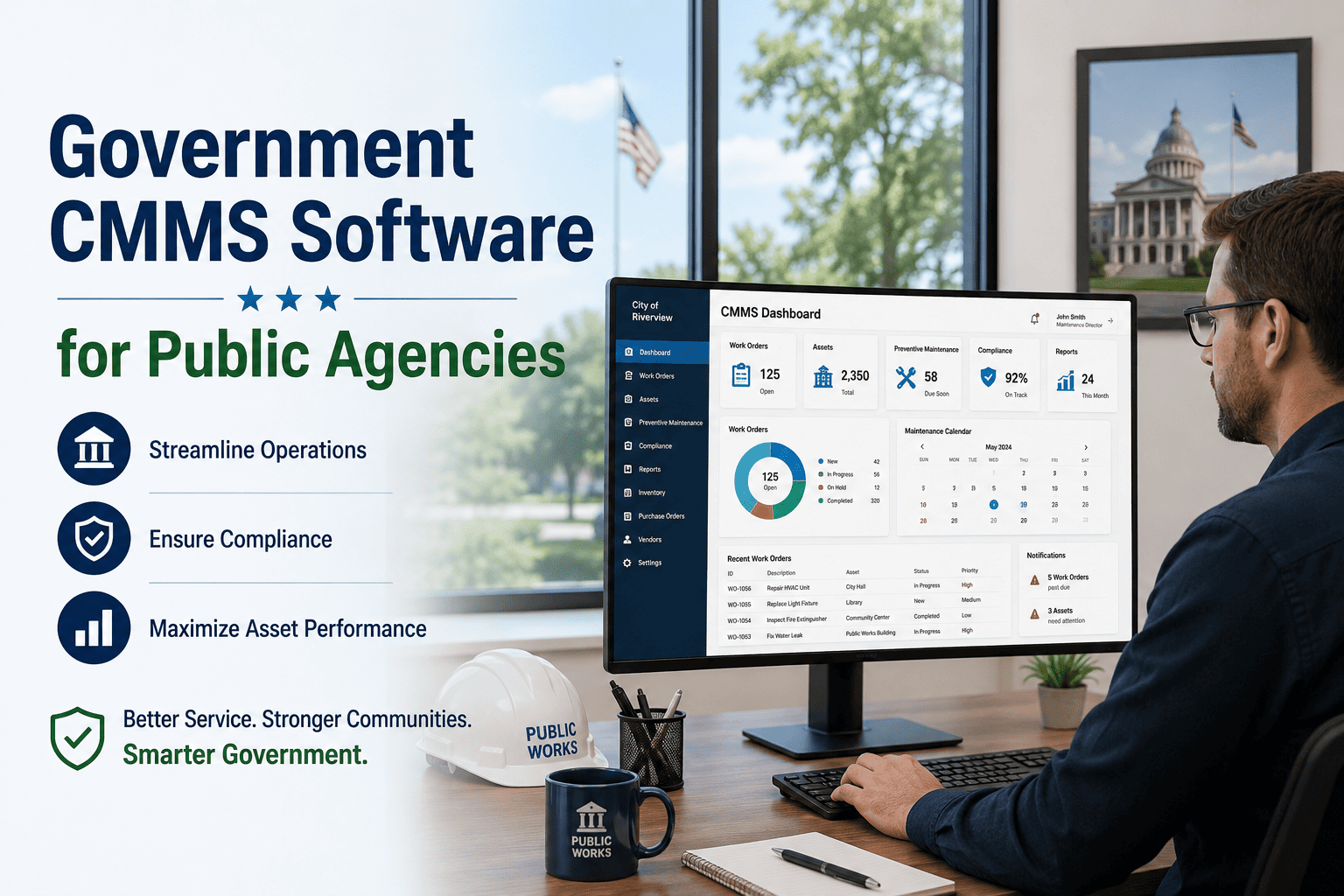
Public facility directors managing aging building portfolios with deferred backlogs, missed inspection deadlines, and reactive repair cycles need a single platform — not another spreadsheet. Oxmaint delivers unified preventive maintenance scheduling, asset condition tracking, capital planning dashboards, and federal compliance documentation across every department, site, and building system your agency operates.
Government facility maintenance management software is a CMMS platform purpose-built for public sector agencies to schedule preventive maintenance, track asset condition using Facility Condition Index (FCI) scoring, manage work orders across multi-department building portfolios, and produce audit-ready compliance documentation for OSHA, HUD REAC, and EPA inspections. Unlike generic maintenance tools, a government-specific CMMS handles fixed annual budget cycles, capital improvement plan (CIP) forecasting, union workforce protocols, and public records requirements.
What Is Government Facility Maintenance Management Software?
Government facility maintenance software is engineered around the specific operational, financial, and compliance constraints that define public sector asset management. The four core dimensions below define what separates a true government CMMS from generic alternatives — and why the distinction matters for your capital budget, inspection pass rates, and taxpayers.
Connect Every Public Building on One Maintenance Platform
Oxmaint unifies work orders, PM schedules, FCI asset tracking, and federal compliance documentation across your entire government building portfolio — no paper registers, no disconnected spreadsheets, no siloed department data.
Critical Pain Points in Government Facility Maintenance
These are not operational inconveniences — they are budget risks, compliance liabilities, and public accountability failures that a facilities director carries directly to elected officials. Every gap below is measurable, auditable, and preventable.
US municipal building departments spend 38% of maintenance budgets on reactive repairs at a 3 to 5x cost premium. A $200,000 PM budget gap produces up to $1M in emergency spend annually. See how Oxmaint breaks this cycle.
City councils reject CIP requests lacking condition-based evidence. Without current FCI scores and RUL data, budget submissions are cut — and deferred maintenance compounds 7% before the next cycle.
A single failed HUD REAC inspection triggers mandatory remediation and funding holds costing more than three years of proactive CMMS licensing — all from missing timestamped maintenance records.
A city managing 40 buildings across public works, parks, police, and fire typically runs four to six separate systems. No director can answer "What is our city-wide FCI?" without a week of manual consolidation. Oxmaint delivers it in one dashboard.
How Oxmaint Solves Government Facility Maintenance Gaps
Oxmaint is built around the operational reality of public agencies: fixed annual budgets, CIP submission cycles, union workforce protocols, multi-department coordination, and public records requirements. The four capabilities below address the gaps that matter most to a government facilities director.
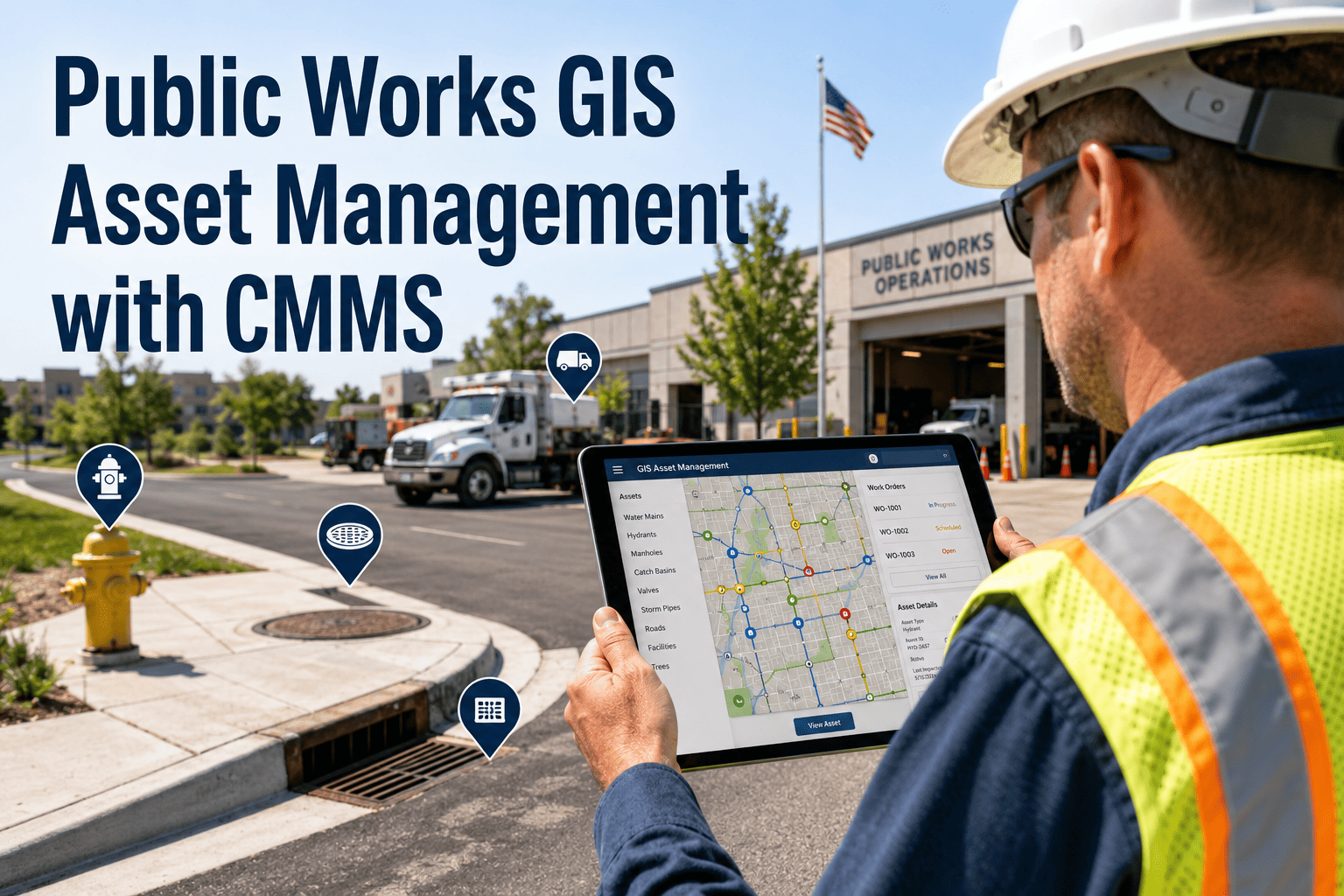
Tracks every building system — HVAC, elevators, roofing, electrical panels, fire suppression, generators — with condition scores, maintenance history, and automated FCI at asset, building, and portfolio level. The RUL engine generates data-backed CIP projections ready for council review. Book a demo to see the FCI registry for your portfolio.
Generates work orders automatically for HVAC PM, elevator inspections, generator load tests, and fire suppression reviews based on OSHA, NFPA, and building code intervals. PM compliance rates reach 90%+ within two quarters of deployment.
Every completed work order on a compliance-relevant system produces a timestamped, GPS-verified record with photo evidence. HUD REAC, OSHA, EPA, and ADA audit packages export in one click — no manual register search, no missing records. See how Oxmaint prepares your agency for any federal audit.
Aggregates FCI scores, PM compliance rates, open work orders, and capital forecasts across every department on one screen with role-based access per team. Rolling 5 to 10 year CIP projections are formatted for council budget submission directly from the platform.
Government Facility Maintenance Compliance Coverage by Region
Oxmaint's compliance documentation module is configured for the specific regulatory frameworks governing public sector facility maintenance in each target market — with the United States leading as the primary deployment market.
| Region | Regulatory Frameworks | Oxmaint Platform Coverage |
|---|---|---|
| USA / Canada | OSHA 29 CFR, HUD REAC, EPA Clean Water Act, ADA compliance, NFPA fire codes, GSA standards, BIL grant reporting, FedRAMP security | REAC scheduling and documentation, OSHA work order records, ADA tracking, NFPA PM templates, BIL grant exports, multi-department FCI registry |
| Australia | Safe Work Australia, state WorkSafe regulations, ISO 55000, National Construction Code, Safeguard Mechanism carbon reporting | ISO 55000 FCI registry, WorkSafe inspection scheduling, carbon reporting exports, multi-council portfolio dashboards |
| United Kingdom | Building Safety Act 2022, CDM Regulations, ISO 55000, PAS 55, RICS asset valuation, net zero carbon reporting | Building Safety Act workflows, CDM-compliant records, ISO 55000 asset hierarchy, RICS replacement cost tracking |
| UAE / Saudi Arabia | SASO standards, Civil Defence codes, Saudi Vision 2030 smart city mandates, UAE Industrial Strategy 2030, Estidama framework | SASO-aligned PM templates, greenfield asset registry, Arabic-language mobile access, smart city IoT integration |
| Germany | DIN EN standards, BetrSichV machinery safety, DGUV accident prevention, EU ETS carbon compliance, CSRD reporting | BetrSichV inspection scheduling, DGUV work order documentation, EU ETS carbon tracking, CSRD data exports |
| Singapore / Southeast Asia | Singapore Green Plan 2030, ISO 55000, Building Control Act, ASEAN smart city frameworks, Malaysia CIDB standards | ISO 55000 asset hierarchy, Green Plan carbon metrics, BCA inspection templates, multi-language work orders |
Oxmaint Automates Compliance Documentation Across Every Public Building System
Every PM completion and work order on a compliance-relevant building system generates a timestamped, technician-attributed digital record. HUD REAC, OSHA, EPA, and ADA documentation produced automatically — not compiled manually before each audit cycle. Book a demo to see Oxmaint's compliance module for your agency.
Oxmaint Platform Features for Government Facility Management
Each capability below is configured for managing taxpayer-funded public buildings across multi-department government agencies with fixed budgets, federal compliance obligations, and public accountability requirements.
Create, assign, track, and close work orders across all departments from one platform. Each captures technician identity, GPS check-in, and photo evidence required for REAC and public records. Agencies cut emergency work order ratios from 38% to under 18% within 12 months.
Pre-built PM templates for HVAC, elevators, fire suppression, generators, electrical panels, and roofing — calibrated to OSHA and NFPA intervals. PM completion rates reach 90%+ on Oxmaint deployments, directly reducing emergency repair frequency.
Calculates Facility Condition Index scores at asset, building, and portfolio level using actual maintenance costs. FCI updates automatically as work orders close — no annual manual assessments that are already outdated before the CIP cycle ends.
Rolling 5 to 10 year capital projections from actual asset condition data — formatted for council budget submission. Eliminates estimate-based CIP requests that get cut because they lack documented condition evidence.
Technicians complete work orders, scan QR-labeled assets, and record GPS check-in from mobile devices with full offline mode. 74% of government facility work orders are closed on mobile — reducing transcription errors by over 60%.
Routes public facility maintenance requests to the correct department work queue with automated status notifications. Response time drops from 4.7 days to under 24 hours — reducing escalations to elected officials.
Government Facility Maintenance KPI Scorecard
Six performance metrics that define whether a public sector facilities operation is protecting taxpayer assets or compounding deferred maintenance risk. Hover each card for full context. Benchmarks reflect US municipal averages without CMMS deployment.
Performance Outcomes: Government Facilities on Oxmaint
These improvements reflect benchmark comparisons between reactive-maintenance government building portfolios and Oxmaint-deployed agencies running structured preventive maintenance programs.
CMMS Investment vs Return: Government Facility Portfolio
| Solution Area | Annual Taxpayer Savings or Return | Without CMMS Baseline Cost |
|---|---|---|
| Preventive maintenance program | $1 in planned maintenance prevents $4 to $6 in emergency repairs across the building portfolio | 38% of budget consumed by reactive emergency work at 3 to 5 times the cost of planned interventions |
| HVAC PM scheduling compliance | 43% reduction in unplanned HVAC failures — the single largest driver of emergency building maintenance spend | HVAC failures account for 43% of all unplanned building maintenance events without PM enforcement |
| FCI-backed capital budget justification | CIP requests backed by FCI data reach 88% forecast accuracy versus 47% for estimate-based submissions | Estimate-based CIP requests are routinely cut, compounding deferred maintenance 7% annually |
| Federal compliance documentation | 84% reduction in audit preparation time and elimination of REAC failure risk and associated grant holds | Manual register compilation for REAC and OSHA averages 3 to 6 weeks per audit cycle |
| Citizen service request portal | 79% faster citizen request closure reduces escalations to elected officials and improves satisfaction scores | Average 4.7-day response time without automated routing, triggering council-level escalations |
Frequently Asked Questions: Government Facility Maintenance Software
Continue Reading: Government Facility and Public Works Maintenance
Stop Compounding Deferred Maintenance on Taxpayer-Funded Buildings
Government agencies on Oxmaint reduce emergency reactive work orders by 68%, reach 90%+ PM compliance, and produce audit-ready REAC and OSHA documentation from a single platform — live in 14 days with no heavy implementation project.