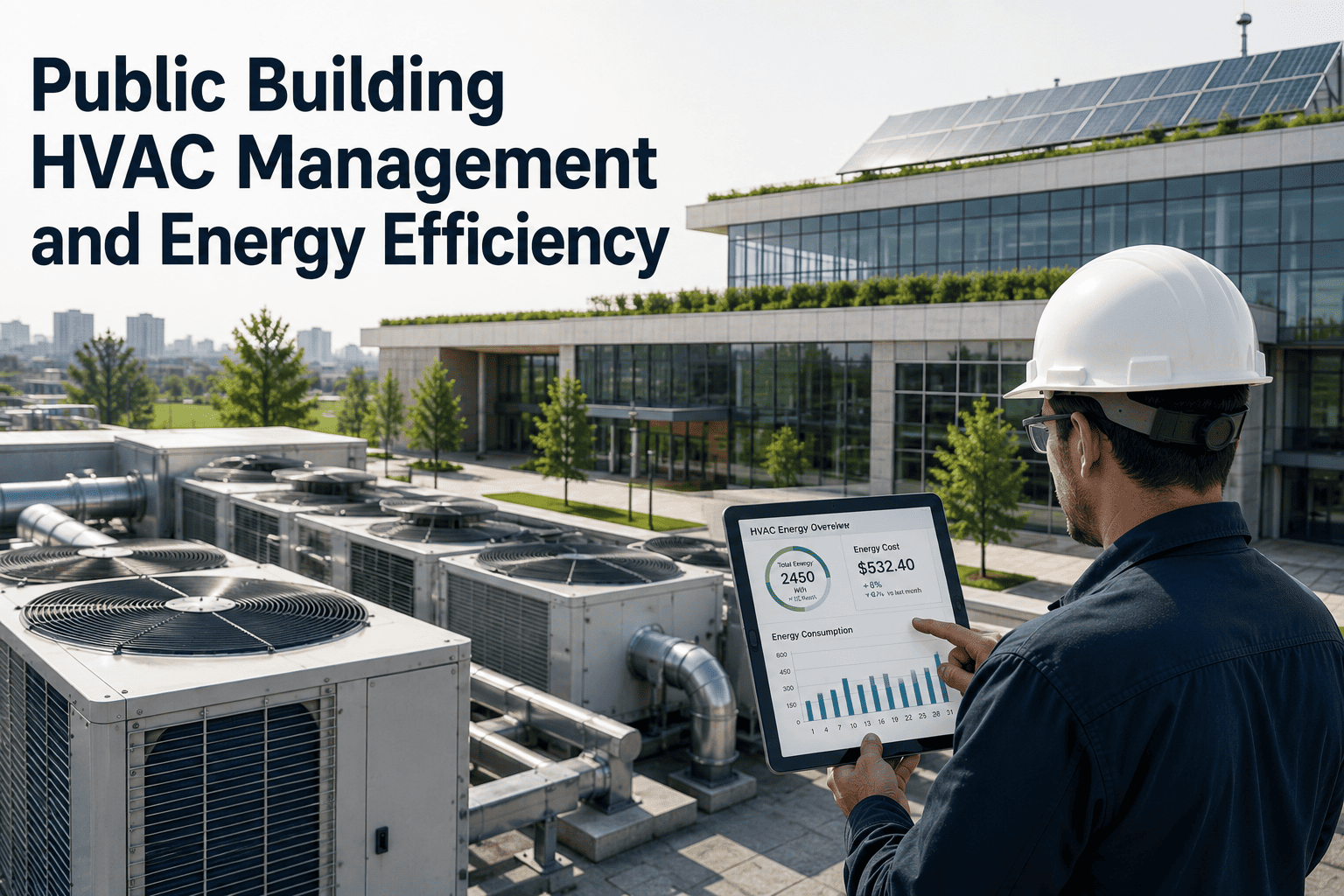
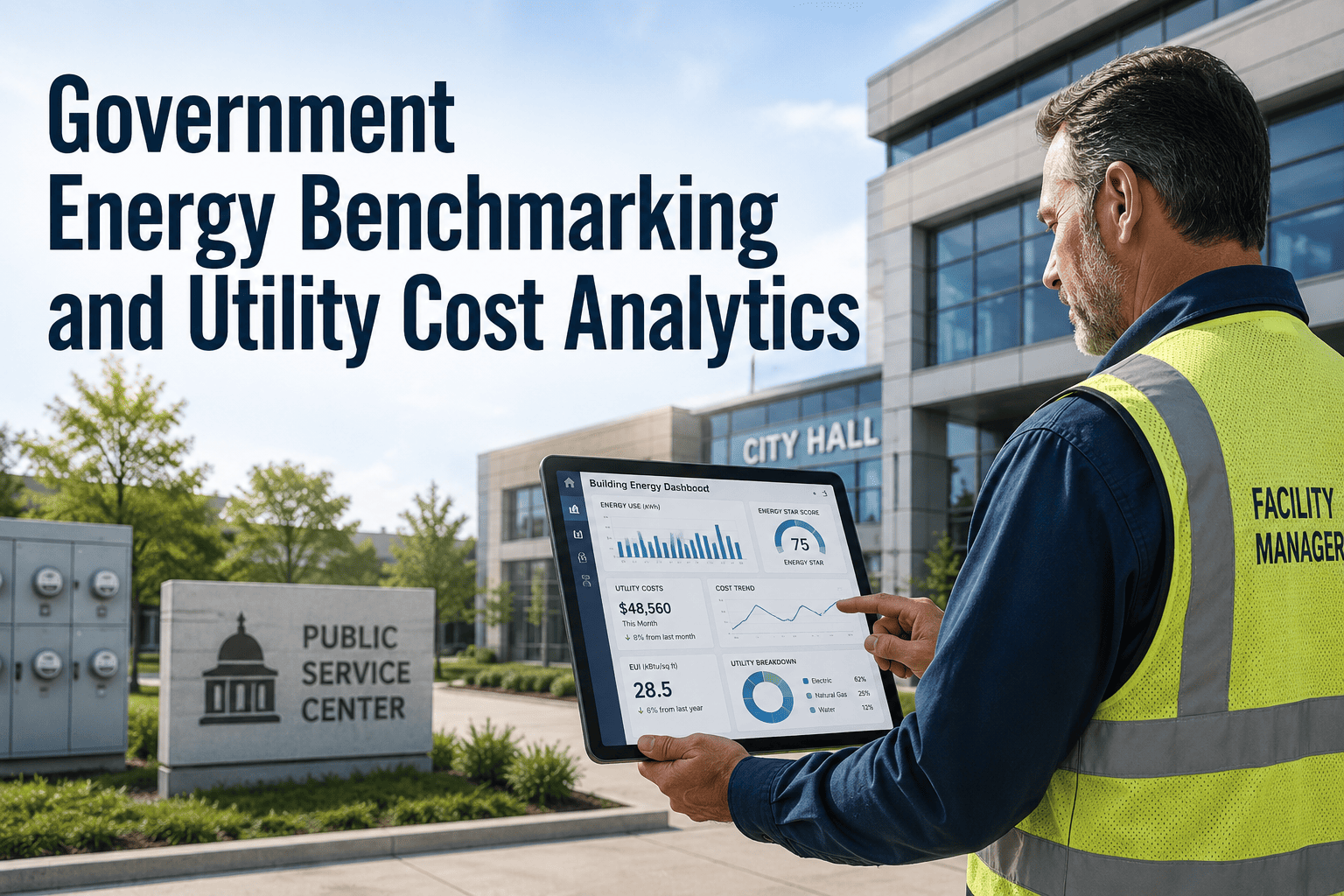
The moment the city facility manager reviewed the fiscal year utility report for the municipal complex, the reality hit hard. Despite budget cuts in other departments, energy costs had risen by 14%—not due torate hikes, but due to consumption. Lights burning in empty conference rooms, HVAC systems battling open windows, and aging boilers cycling inefficiently. This scenario, common in government buildings across the nation, represents the "invisible leak" in public budgets: energy inefficiency that drains taxpayer funds that could otherwise support community services.
With government buildings in the U.S. consuming nearly 20% of all commercial energy in the U.S. and often operating with equipment 15-20 years past its prime, the cost of doing nothing is unsustainable. The difference between a budget-draining facility and a model of fiscal responsibility lies not just in new technology, but in systematic energy management. Strategic government energy management represents the operational shift from simply paying bills to actively managing how every kilowatt is consumed. Discover how digital energy management reduces municipal costs.
Understanding Critical Energy Assets
Effective energy management begins with categorizing the systems that consume the most power. A courthouse's lighting system has a different load profile than a water treatment plant's pumps, and applying a one-size-fits-all reduction strategy leads to operational failures.
Facility directors must segment their energy portfolio to align conservation measures, retrofits, and maintenance with the specific demands of each asset class. Failing to do so results in "saving pennies" on LED bulbs while "losing dollars" on inefficient HVAC chillers.
Primary Energy Drivers
- HVAC Chillers & Boilers
- Air Handling Units (AHU)
- Water Pumps & Motors
- Data Centers
Occupancy Dependent
- Interior Lighting
- Plug Loads (Computers)
- Water Heaters
- Kitchen Equipment
Thermal Integrity
- Windows & Doors
- Roof Insulation
- Weatherstripping
- Air Curtains
Outdoor Systems
- Parking Lot Lights
- Street Lighting
- Security Systems
- Irrigation Pumps
The Complete Energy Efficiency Workflow Checklist
Building an energy-efficient government facility requires systematic attention to preventive maintenance, operational scheduling, equipment upgrades, and behavior change. This checklist covers the critical elements energy managers must address to ensure fiscal responsibility and environmental stewardship. Schedule a walkthrough of digital energy workflow implementation.
HVAC Optimization
Automate reminders to change filters based on pressure drop or runtime to maintain airflow efficiency.
Schedule seasonal cleaning of condenser and evaporator coils to ensure maximum heat transfer.
Verify and calibrate thermostats and sensors annually to ensure accurate temperature control.
Inspect dampers and actuators to ensure free cooling is utilized when outdoor conditions permit.
Perform annual combustion analysis to optimize fuel-to-air ratios for peak boiler efficiency.
Lighting & Electrical
Track progress of converting legacy fluorescent and HID fixtures to high-efficiency LEDs.
Regularly test motion sensors in conference rooms and restrooms to ensure lights turn off when vacant.
Adjust astronomical clocks or check photocells to prevent day-burning of parking lot lights.
Monitor power factor and inspect capacitor banks to avoid utility penalty charges.
Verify Variable Frequency Drives on motors are modulating speeds correctly based on demand.
Building Envelope
Inspect weatherstripping and caulking annually to prevent infiltration of unconditioned air.
Use thermal imaging to identify missing or damaged insulation in walls, roofs, and pipes.
Check for wet insulation or membrane damage that compromises thermal resistance (R-value).
Ensure cabinet heaters in entryways are set correctly and not fighting the main HVAC system.
Verify operation of blinds or shades to reduce solar heat gain during summer months.
Water Conservation
Monitor water meters during unoccupied hours to detect hidden leaks in domestic or irrigation lines.
Plan replacement of older toilets and faucets with EPA WaterSense labeled low-flow models.
Inspect sprinkler heads for alignment and broken nozzles; adjust timers for seasonal rainfall.
Optimize blowdown cycles and chemical treatment to reduce water waste in cooling towers.
Insulate hot water recirculation lines and verify pump scheduling to minimize heat loss.
Data & Compliance
Update ENERGY STAR Portfolio Manager data monthly to track performance against peer facilities.
Review utility invoices for rate errors, demand spikes, and unusual consumption patterns.
Generate required reports for local/state energy disclosure ordinances (e.g., LL97, AB 802).
Document energy projects to qualify for utility rebates and federal infrastructure grants.
Communicate energy goals and successes to building occupants to encourage conservation behavior.
Integrated Energy Management Architecture
Modern government energy management relies on a connected ecosystem where data flows seamlessly between meters, building automation systems (BAS), maintenance crews, and financial planners. When a chiller's efficiency drops, it triggers a chain reaction: alert generation, work order creation, maintenance execution, and performance verification. This integration eliminates the silos where energy waste hides.
The integration between Building Management Systems (BMS) and CMMS enables "smart" maintenance. Instead of waiting for a monthly bill to reveal a problem, the system detects a drift in chiller performance and automatically generates a work order for the technician, saving thousands in wasted energy. Explore smart building integration capabilities.
Key Performance Indicators for Energy Efficiency
You cannot manage what you do not measure. Effective energy operations require tracking KPIs that reveal the true performance of the facility and the effectiveness of conservation efforts. These metrics should be visible on real-time dashboards for energy managers and compiled into annual reports for oversight committees.
Total energy consumed divided by floor area. The gold standard for comparing building efficiency against peers.
Total utility cost divided by building area. Essential for budgeting and identifying expensive facilities.
Percentage of energy-critical preventive maintenance tasks (filter changes, tuning) completed on schedule.
The highest amount of power used at one time. Reducing peaks lowers demand charges on utility bills.
Total greenhouse gas emissions associated with energy use. Critical for meeting climate action goals.
Return on investment for energy projects (LEDs, HVAC upgrades). Proves value of capital expenditures.
Regulatory Compliance and Funding
Government agencies operate under increasing pressure to meet efficiency mandates and climate goals. From federal executive orders to local building performance standards, digital record-keeping is the primary tool for compliance and unlocking funding. Request an energy compliance assessment.
Industry Perspective on Government Energy Modernization
Government agencies are the largest property owners and energy consumers in many jurisdictions. Leading by example isn't just policy—it's fiscal prudence. Successful energy managers treat energy not as a fixed cost, but as a manageable asset. By connecting the dots between a technician changing a filter and the resulting drop in kilowatt-hours, agencies create a culture of efficiency.
The integration of CMMS with energy data is transformative. It allows facility teams to see the financial impact of maintenance in real-time. Instead of general 'energy awareness,' crews receive specific, actionable tasks—'Check AHU-3 damper linkage'—that directly save money.
Furthermore, robust data is the key to unlocking capital. When you can prove that a lighting retrofit paid for itself in 18 months, securing funding for a larger boiler replacement becomes much easier. Data turns maintenance from a cost center into a savings generator.
Conclusion: Stewardship Through Efficiency
Government energy management is about more than changing lightbulbs. It is about stewardship—preserving public funds, protecting the environment, and ensuring that government facilities serve their communities effectively. With budgets tightening and environmental urgencies rising, the efficiency gains from digital transformation are essential for modern agencies.
Effective energy operations require a holistic approach: proactive preventive maintenance to ensure system efficiency, rigorous data collection to identify waste, and streamlined workflows to empower staff to act. The tools to achieve this—integrated CMMS, IoT, and analytics—are now accessible to agencies of all sizes.
By moving from passive consumption to active management, government directors can deliver better facilities, significant cost savings, and demonstrated environmental leadership. The result is a government that functions responsibly, and an operation that stands up to the scrutiny of any audit.
The future of government energy is connected, data-driven, and efficient. Agencies that embrace these principles today will set the standard for public service tomorrow. Begin building your efficient operations today.
Frequently Asked Questions
How does a CMMS save energy?
A CMMS saves energy primarily by ensuring equipment operates at peak efficiency through scheduled preventive maintenance. Clean filters, calibrated sensors, and tuned boilers consume significantly less energy than neglected systems. Additionally, by tracking asset history, a CMMS helps identify "energy hogs" that should be prioritized for replacement, and it can integrate with building systems to flag operational anomalies (like equipment running 24/7) for immediate correction.
Can the system handle ENERGY STAR reporting?
Yes. Oxmaint and similar modern platforms can store utility data and building characteristics required for ENERGY STAR Portfolio Manager. While direct integration varies, the system organizes all necessary data points—energy usage, floor area, occupancy—making monthly or annual reporting to Portfolio Manager streamlined and accurate, which is essential for many local compliance mandates.
Is it worth retrofitting older government buildings?
Absolutely. Older buildings often offer the highest ROI for energy projects because their baseline inefficiency is so high. Simple retrofits like LED lighting, smart thermostats, and VFDs on motors can often reduce energy use by 20-30% with paybacks under 3 years. A CMMS helps justify these projects by providing the baseline maintenance data needed to calculate accurate ROI.
How can we get staff buy-in for energy initiatives?
Connect energy tasks to making their jobs easier. For example, explain that a new building automation system reduces emergency hot/cold calls, or that LED retrofits eliminate the daily chore of changing ballasts. Use the CMMS to show them the positive impact of their work—like a graph showing dropped energy usage after a round of PMs. Recognition and showing the "why" are key.
What is "Recommissioning" and how often should we do it?
Recommissioning (or Retro-Commissioning) is the process of testing and tuning existing building systems to ensure they operate as originally intended. Over time, sensors drift, dampers get stuck, and schedules get overridden. It is recommended to perform recommissioning every 3-5 years. It typically identifies low-cost/no-cost operational improvements that can save 10-15% on energy bills immediately.