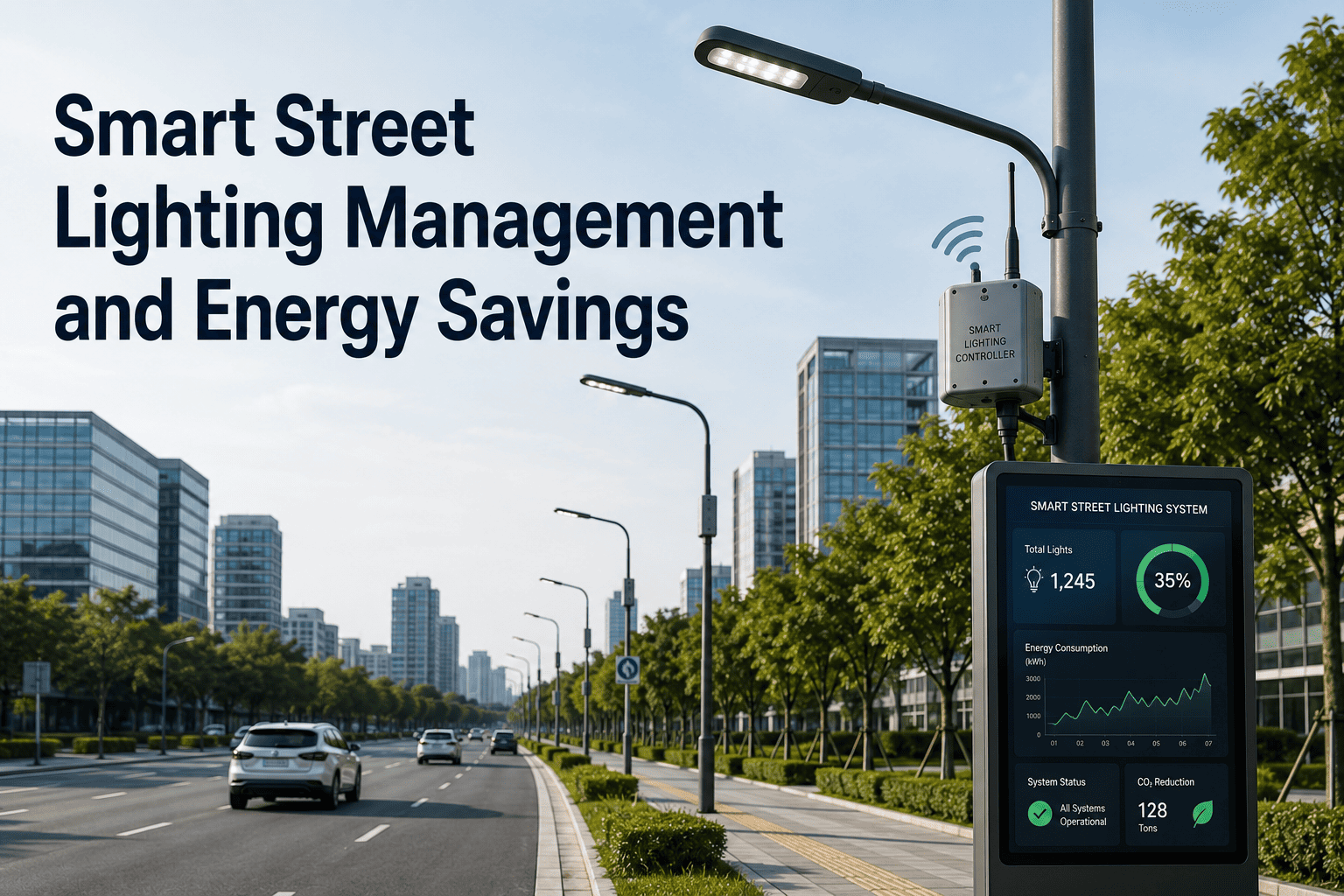
When the city manager requests a quarterly infrastructure report, the street lighting supervisor scrambles through spreadsheets, handwritten logs, and disconnected systems—taking 12+ hours to compile incomplete data. When council members question why certain neighborhoods have 40% more outages than others, no one can produce the geographic analysis. When budget season arrives, the department cannot demonstrate ROI on recent LED upgrades, resulting in $180,000 in deferred capital improvements.
Street lighting teams manage thousands of fixtures across municipal territories, maintaining public safety while balancing energy costs, repair expenses, and capital planning. Without centralized reporting and analytics workflows, critical decisions are made with incomplete information, and teams cannot demonstrate their value to stakeholders.
Modern street lighting operations require automated reporting, real-time dashboards, and predictive analytics that transform raw maintenance data into actionable intelligence. Digital CMMS platforms for municipal lighting turn scattered data into strategic insights.
Cut Report Generation Time by 85% While Gaining Complete Visibility into Lighting Operations
Street lighting teams lose $120K-$350K annually from inefficient reporting, missed trends, and reactive decision-making. Automated analytics dashboards + predictive insights enable 40% faster response times and 25% budget optimization.
Why Street Lighting Reporting Fails
Critical Analytics for Street Lighting Operations
Effective street lighting management requires comprehensive reporting across operations, finances, safety, and strategic planning—with data accessible in real-time for stakeholders at every level.
Operational Performance Dashboards
Live visibility into work order status, technician productivity, response times, and completion rates enables supervisors to identify bottlenecks and optimize daily operations.
Asset Health & Failure Analysis
Historical failure data analyzed by fixture type, age, manufacturer, and location identifies patterns enabling proactive replacement before failures occur.
Financial & Budget Reporting
Complete cost visibility across labor, materials, energy, and contractor spend with budget variance tracking and forecasting for informed capital planning.
Compliance & Safety Documentation
Complete audit trails with timestamped work orders, inspection records, safety compliance tracking, and warranty documentation instantly accessible.
Automated Analytics & Reporting Platform
Modern street lighting analytics requires automated data collection, real-time dashboards, and AI-powered insights that transform maintenance records into strategic intelligence.
Automated Data Capture
Every work order, inspection, repair, and maintenance activity automatically captured with timestamps, GPS coordinates, photos, and technician notes—eliminating manual data entry and ensuring complete records.
Real-Time Operational Dashboards
Live KPI displays show work order status, technician locations, backlog trends, and response times. Supervisors see exactly what's happening across the entire lighting network at any moment.
Predictive Analytics Engine
AI algorithms analyze historical failure patterns, identifying fixtures likely to fail within 30-90 days. Geographic clustering reveals infrastructure issues requiring systemic solutions rather than individual repairs.
Automated Report Generation
Scheduled reports delivered automatically to stakeholders—weekly operations summaries, monthly council reports, quarterly budget reviews. One-click custom reports for ad-hoc requests.
Executive Intelligence Portal
Strategic dashboards for leadership showing network health scores, budget projections, capital planning scenarios, and benchmark comparisons against industry standards and peer municipalities.
Book a Custom Demo
See how automated reporting eliminates 85% of manual report generation while providing real-time visibility into your entire street lighting network.
What Automated Analytics Enables
One-Click Council Reports
Generate comprehensive monthly or quarterly reports for council meetings with a single click. Pre-formatted with charts, maps, and KPIs stakeholders need—no manual compilation required.
Geographic Heat Mapping
Visualize outage patterns, failure concentrations, and service response across territories. Identify underserved areas, infrastructure weak points, and optimize patrol routes.
Budget Forecast Modeling
Project maintenance costs, replacement needs, and energy savings based on historical trends and planned initiatives. Support capital requests with data-driven justifications.
90-Day Analytics Transformation
Data Foundation & Setup
- Deploy CMMS with street lighting asset templates
- Import fixture inventory (location, type, age, wattage)
- Migrate historical work orders and repair records
- Configure data capture workflows on mobile devices
- Establish baseline KPI definitions and targets
Dashboard & Report Deployment
- Configure real-time operational dashboards
- Build custom report templates for stakeholders
- Set up automated report scheduling and distribution
- Train supervisors on dashboard navigation and analysis
- Establish data quality monitoring procedures
Advanced Analytics & Optimization
- Activate predictive failure algorithms
- Deploy geographic heat mapping and trend analysis
- Configure executive intelligence portal
- Generate first quarterly strategic report
- Document ROI: time savings, cost avoidance, efficiency gains
Transform Your Street Lighting Analytics
Join municipal lighting teams achieving 85% report time reduction while gaining complete operational visibility through automated dashboards, predictive analytics, and one-click stakeholder reporting.
Frequently Asked Questions
Weekly Operations Reports (for supervisors): Work order completion rates, technician productivity, response times, backlog status, and upcoming scheduled work. Enables day-to-day operational adjustments and resource allocation.
Monthly Performance Reports (for management): KPI trends, outage statistics, cost summaries, citizen complaint tracking, and progress against annual goals. Provides visibility into departmental performance.
Quarterly Strategic Reports (for council/leadership): Network health assessment, budget variance analysis, capital project updates, energy savings tracking, and benchmark comparisons. Supports budget requests and strategic planning.
Ad-Hoc Analysis Reports: Geographic outage analysis, failure pattern investigation, vendor performance comparison, warranty claim documentation. Addresses specific questions as they arise.
Failure prediction: AI analyzes historical data identifying fixtures likely to fail within 30-90 days based on age, type, failure history, and environmental factors. Teams replace proactively during scheduled routes rather than emergency callouts.
Pattern recognition: System identifies geographic clusters of failures indicating underlying infrastructure issues (power supply problems, environmental factors) requiring systemic solutions rather than individual fixture repairs.
Seasonal forecasting: Historical trends predict maintenance demand by season, enabling appropriate staffing and parts inventory. Summer storm damage, winter freeze/thaw cycles, and other patterns become predictable.
Impact: Teams shifting from 60% reactive to 70%+ proactive work reduce costs 30-40% while improving network reliability and citizen satisfaction.
Report generation time savings: 85% reduction—from 15-25 hours to 2-3 hours per report cycle. Annual savings of $35K-$75K in staff time redeployed to productive work.
Proactive maintenance savings: 30-40% reduction in emergency repair costs ($25K-$70K annually) by identifying failures before they occur and scheduling repairs efficiently.
Energy optimization: Analytics identifying inefficient fixtures and optimizing operating schedules saves 10-20% on energy costs ($15K-$50K annually for mid-size municipalities).
Capital planning improvements: Data-driven budget requests succeed 40% more often, preventing $150K-$400K in deferred maintenance from funding gaps.
Total ROI: $225K-$595K annual benefit vs. $25K-$50K CMMS investment = 450-1,190% ROI with 6-10 week payback.
Outage pattern visualization: Heat maps reveal failure concentrations by neighborhood, revealing infrastructure weak points, environmental factors (salt spray near coast, tree interference), or power quality issues requiring investigation.
Service equity analysis: Visualize response times and maintenance frequency by district ensuring equitable service delivery across all neighborhoods—critical for public accountability.
Route optimization: Geographic clustering of maintenance needs enables efficient patrol routes. Technicians address multiple issues per trip rather than crisscrossing territory for individual calls.
Capital planning support: Visual evidence of infrastructure needs in specific areas strengthens budget requests. Council members understand "Zone 7 has 3x the failure rate and needs $400K infrastructure upgrade" when they see the heat map.
Asset data (foundation): Fixture location (GPS coordinates), type, wattage, manufacturer, installation date, pole ID, circuit assignment. Enables analysis by any attribute.
Work order data (operations): Issue type, discovery method (patrol, citizen report, smart sensor), response time, repair time, parts used, technician, resolution. Drives operational KPIs.
Financial data (cost tracking): Labor hours, material costs, contractor invoices, energy consumption. Enables cost-per-fixture and budget variance analysis.
Inspection data (compliance): Scheduled inspection completion, findings, condition ratings, safety observations, photos. Supports audit compliance and proactive maintenance.
Integration data (context): Utility outage records, weather events, traffic accidents, citizen complaints. Correlates external factors with maintenance patterns.
Digital CMMS captures this automatically through mobile workflows—technicians simply complete work orders on tablets, and analytics engine processes the data.