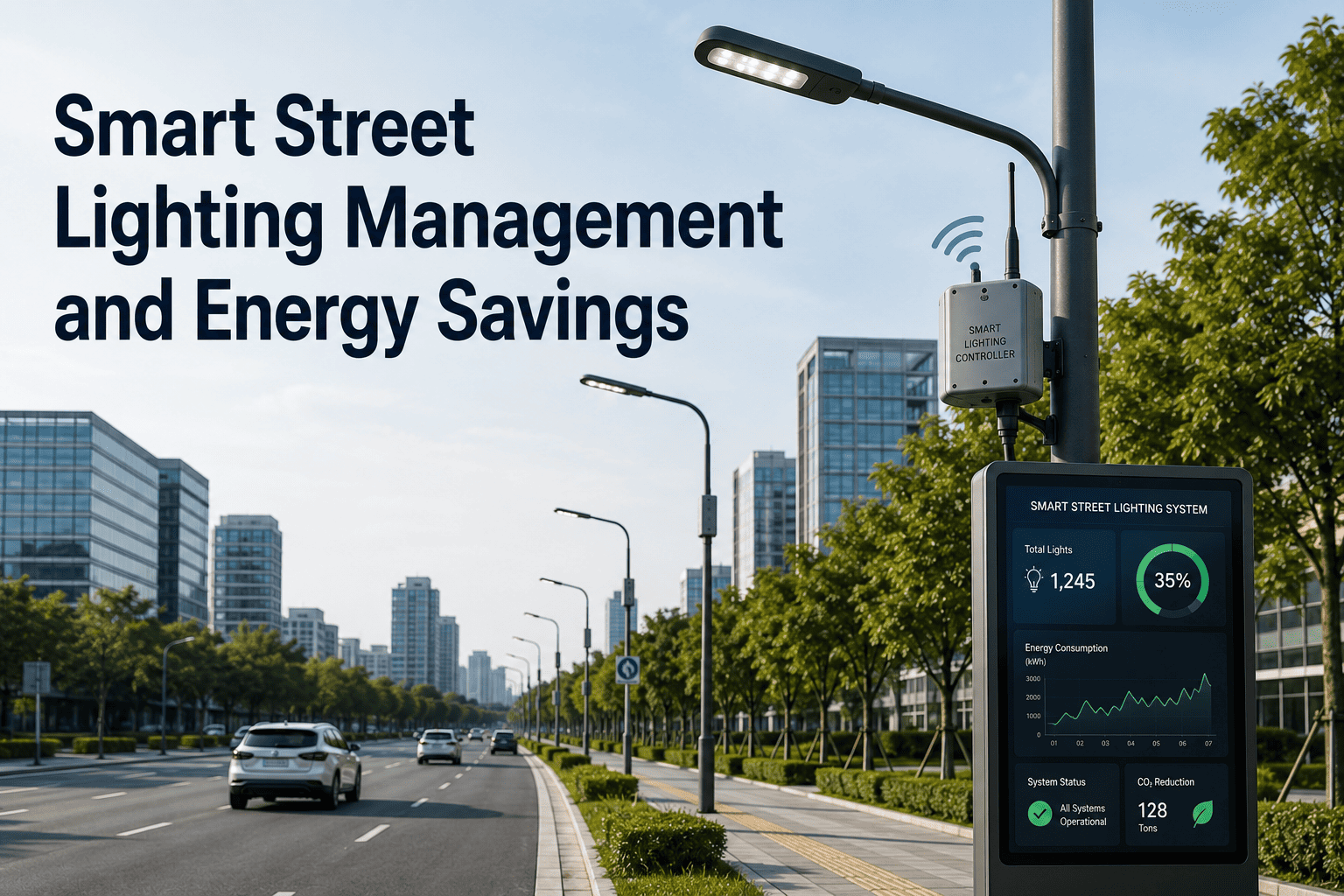
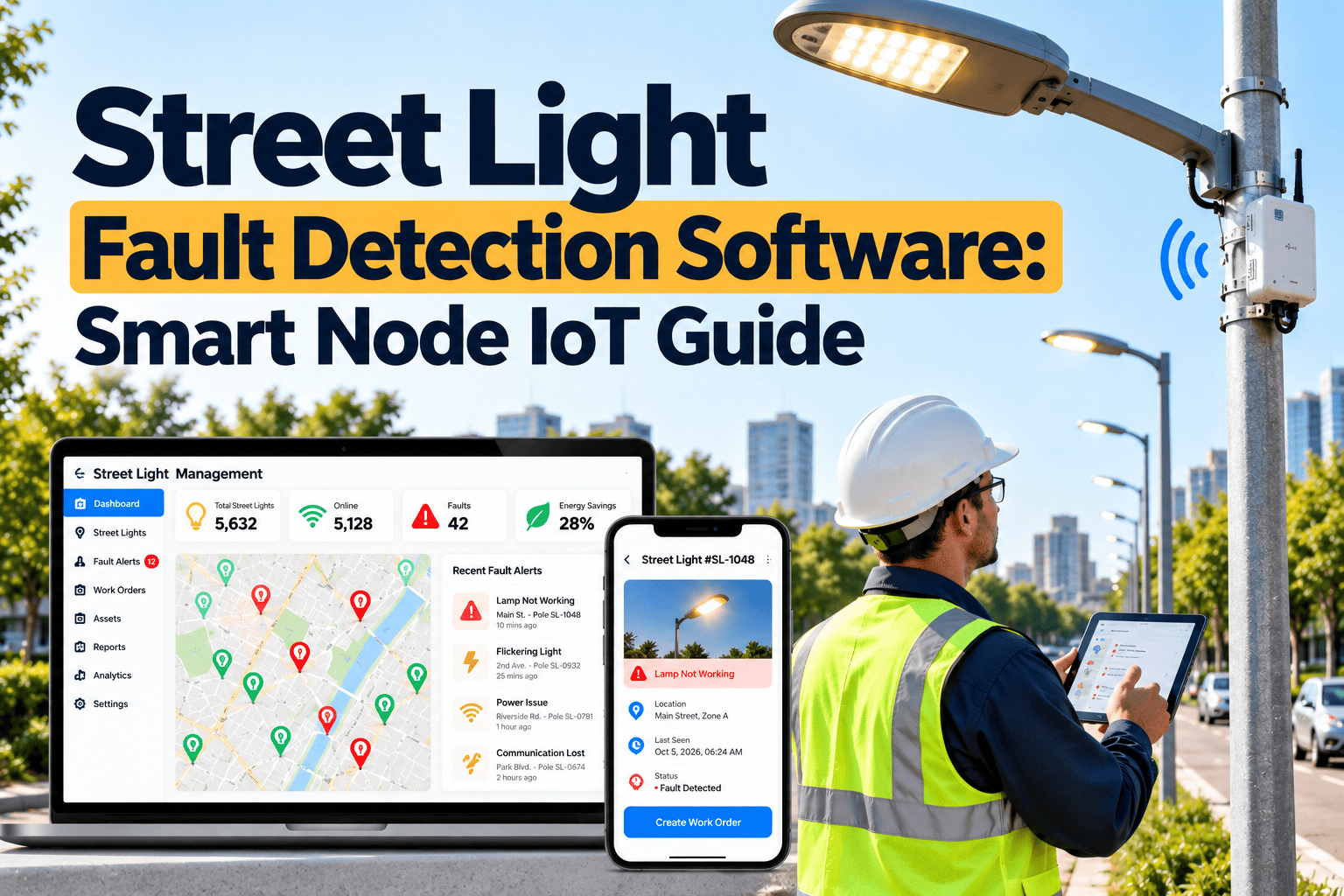
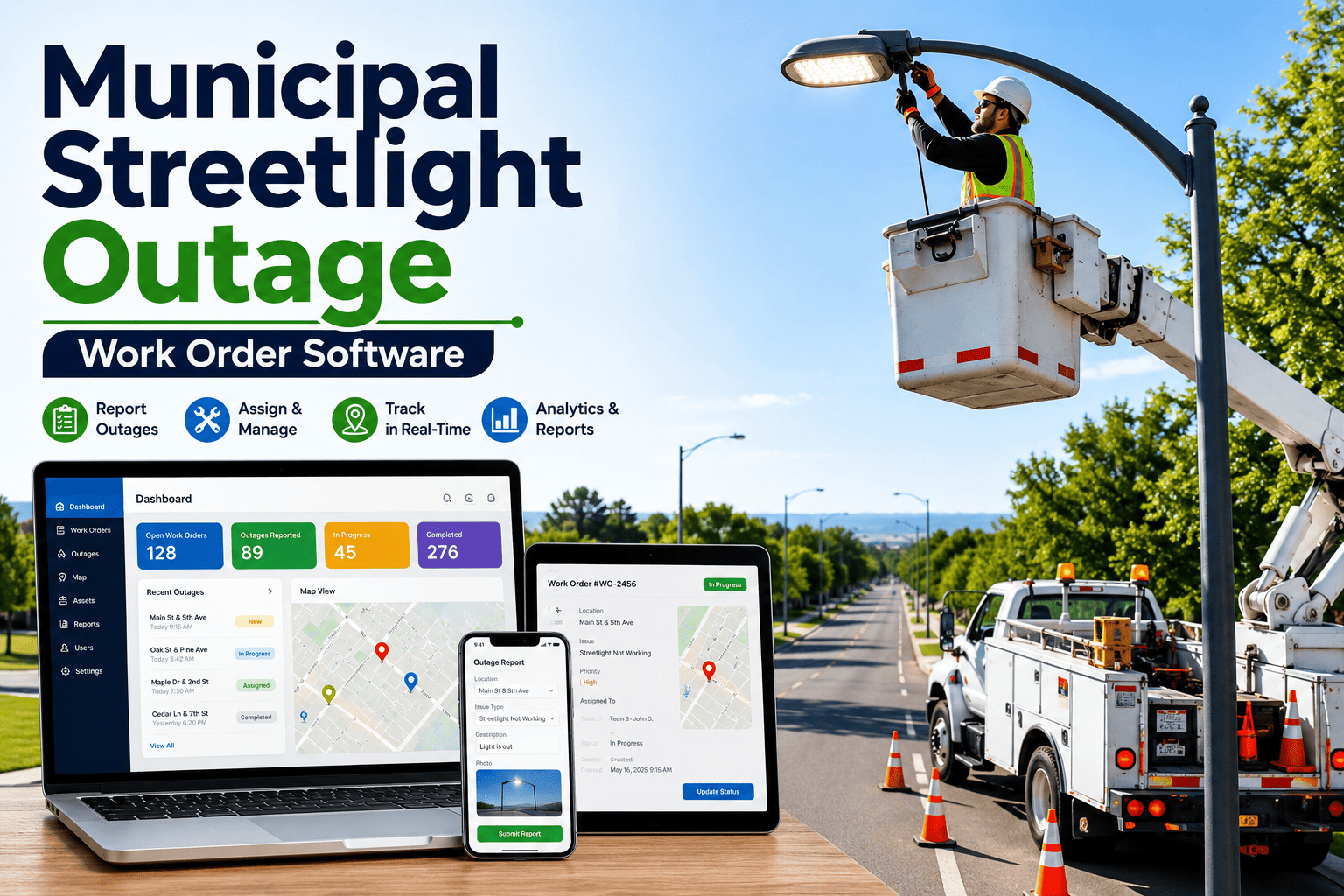
Street lighting is one of the largest controllable expenses on a municipal balance sheet, often consuming 20 to 40 percent of a city's total electricity budget every year. Most networks still run on fixed schedules with outdated high-pressure sodium fixtures, burning full power over empty streets at 3 AM while residents are left to report outages before crews ever find out. Smart street lighting management changes that equation by combining LED conversion, adaptive dimming, and a connected asset management system that tracks every pole, fixture, and fault in real time. Cities that have made the shift report 50 to 70 percent lower energy use along with far fewer truck rolls for reactive repairs. Book a free demo to see how OxMaint helps municipalities plan and manage this transition end to end.
Municipal Infrastructure · Energy & Sustainability · Smart Street Lighting
Smart Street Lighting Management That Cuts Energy Spend and Manual Patrols
LED conversion, adaptive dimming, and a connected CMMS working together to turn your street lighting network from a fixed cost into a managed, measurable asset.
Street Lighting, By the Numbers
50-70%
average energy reduction after LED and smart control conversion
20-40%
of total municipal electricity spend goes to street lighting
+4 yrs
of extra fixture life gained from optimized adaptive dimming
14%
average drop in area crime linked to better-lit streets
The Core Problem
Why Legacy Street Lighting Keeps Draining the Budget
Without Smart Management
Fixtures run at full brightness dusk to dawn, regardless of traffic or weather
Outages found only when a resident calls in or a crew happens to drive past
Crews patrol routes at night just to locate faulty poles
Energy and repair spend tracked in spreadsheets, disconnected from asset history
With OxMaint Smart Management
Adaptive dimming schedules brightness by time, traffic, and daylight sensors
Faults are detected automatically and logged the moment a fixture fails
GIS pole location routes crews directly to the exact fixture, first visit
Every pole, cost, and repair lives in one CMMS with live energy reporting
How It Works
From Aging Network to Managed Asset in Four Steps
01
Audit & Map Assets
Every pole, fixture, and circuit is surveyed and mapped with GPS coordinates so the network exists as data, not paper records.
02
Convert to LED + Controls
Fixtures are upgraded to high-efficacy LEDs fitted with smart controllers for remote dimming and monitoring.
03
Centralize in OxMaint
Assets, work orders, warranties, and maintenance history are unified in a single CMMS built for public works teams.
04
Monitor, Dim & Report
Dashboards track energy use, faults, and costs continuously, giving finance and council-ready reporting on demand.
See Your Network's Savings Potential Before You Commit
OxMaint's team can model expected energy and maintenance savings for your street lighting inventory using your current pole count and fixture types.
Feature Set
What a Smart Street Lighting Management Platform Should Do
Adaptive Dimming Schedules
Set brightness by time of night, season, or live daylight sensor data, cutting draw on quiet streets without leaving anyone in the dark.
Automated Fault Detection
Controllers report outages, flicker, and power anomalies the moment they happen, ending the reliance on resident complaints.
GIS Asset Mapping
Every pole is pinned on a live map with fixture type, install date, and warranty status, so crews arrive prepared.
Energy & Carbon Reporting
Automated dashboards translate kilowatt-hours saved into budget and emissions figures for council and grant reporting.
| Metric |
Traditional Street Lighting |
Smart Managed Lighting |
| Fixture technology |
High-pressure sodium, fixed output |
High-efficacy LED with dimming controls |
| Outage detection |
Resident reports, night patrols |
Automated alert within minutes of failure |
| Energy usage pattern |
Full brightness dusk to dawn |
Adaptive dimming based on demand |
| Average energy savings |
Baseline |
50-70% reduction typical |
| Asset records |
Spreadsheets, paper logs |
Centralized CMMS with GIS mapping |
Street lighting used to be treated as a fixed utility cost that nobody questioned. Once a city can see energy use by pole, by circuit, by night, that assumption disappears. The municipalities getting the biggest returns are not the ones with the newest fixtures, they are the ones that paired the LED upgrade with a management system that keeps proving the savings month after month.
Director of Public Works Technology, Municipal Infrastructure Advisory
14 Years Municipal Energy Programs · Led Citywide LED Conversion for a Mid-Size Metro
Frequently Asked Questions
How much can smart street lighting management actually save a city?
Most municipalities see 50 to 70 percent lower street lighting energy costs after combining LED conversion with adaptive dimming controls. Actual savings depend on current fixture wattage, pole count, and how aggressively dimming schedules are set.
Do we have to convert the entire network at once?
Does this reduce maintenance costs, or only energy costs?
Both. Automated fault alerts and GIS pole location cut the time crews spend locating and diagnosing outages, while optimized dimming can add years to fixture life, lowering replacement frequency across the network.
Can this integrate with our existing CMMS or asset system?
What reporting does the platform provide for budget requests?
Dashboards track energy use, cost savings, fault rates, and carbon reduction by district or circuit, giving finance teams and council members ready-made figures for approvals and grant applications.
OxMaint · Smart Street Lighting · Municipal Energy Programs
Turn Your Street Lighting Network Into a Managed, Measurable Asset
OxMaint brings LED conversion, adaptive dimming, and a connected CMMS together so your team spends less on energy and repairs, and more time serving residents.