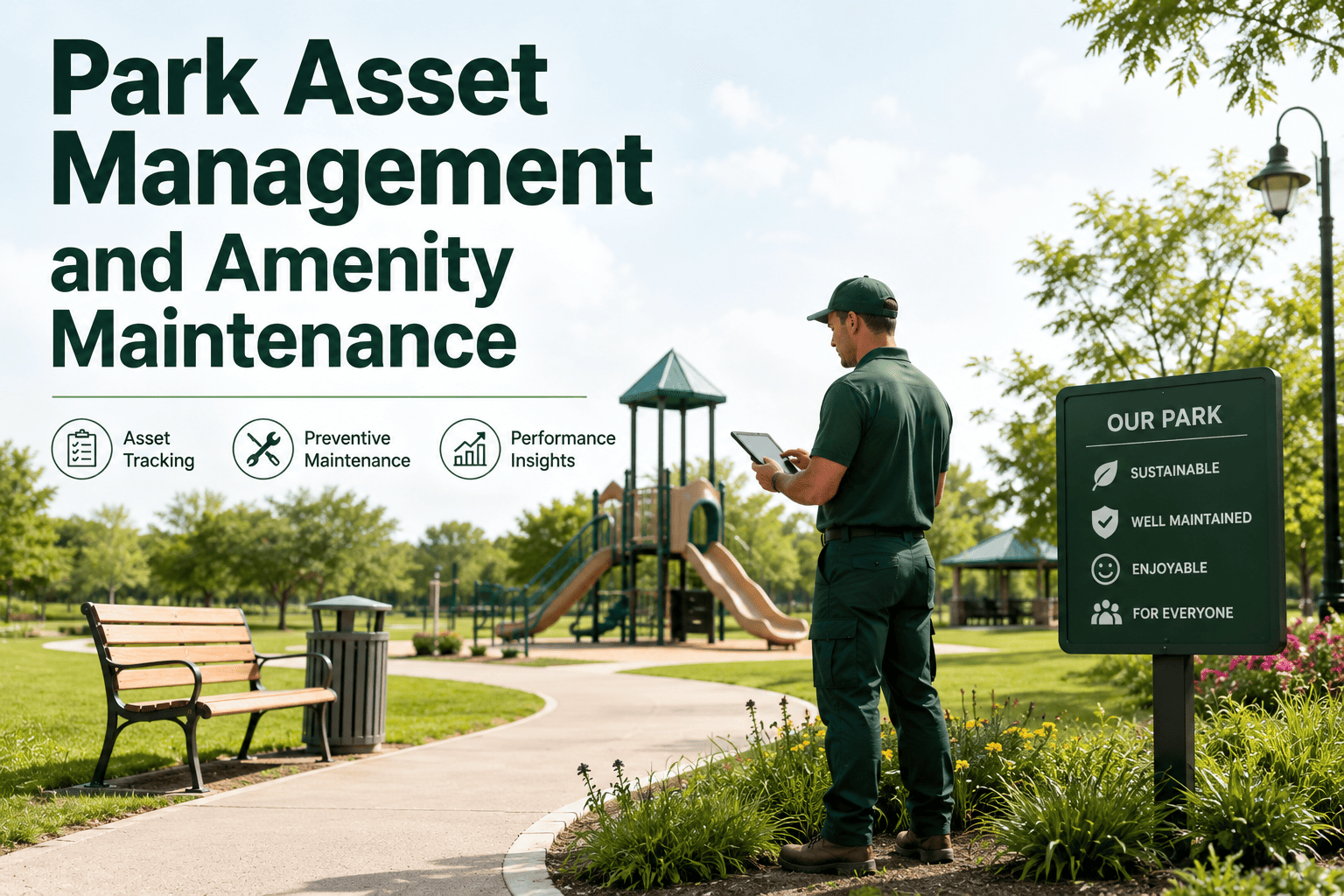
A cracked bolt on a playground swing, a drainage failure on a soccer field, a trail bridge plank that has been soft for months — parks departments do not lose track of these because staff do not care, they lose track because a park system spread across dozens of sites is nearly impossible to hold in a binder of paper checklists. Every amenity ages on its own timeline, every site gets visited on a different rotation, and the one detail that actually matters — whether that specific swing chain has been checked since spring — is the hardest thing to find the moment a resident calls asking about it. Parks and recreation departments across the country are moving from reactive, complaint-driven repairs toward a documented inventory where every playground, field, trail, and restroom has a condition score, an inspection history, and a named owner. That shift starts with knowing exactly what sits on the ground today, not what was on the master plan a decade ago. See how a complete park asset inventory comes together with a free trial.
Every Playground, Field, Trail and Restroom — Tracked Like the Asset It Is
Oxmaint gives Parks and Recreation Directors one living inventory of every amenity in the system, with inspection schedules, condition history, and automatic work orders the moment a hazard is found.
The Amenities Quietly Ageing Across Your Park System
From Field Inspection to Closed Work Order
| Amenity Checked | What The Inspector Finds | Automated Action | Record Created |
|---|---|---|---|
| Playground equipment | Exposed footing or broken S-hook | Work order created, element flagged closed | Photo, GPS, inspector ID, timestamp |
| Sports field | Drainage failure or turf hazard | Work order routed to grounds crew | Condition score updated on asset |
| Trail or boardwalk | Soft decking or handrail failure | Segment flagged closed until cleared | Trail map status updated live |
| Restroom facility | Plumbing or lock malfunction | Work order to facilities team, same day | Repair confirmation on reopening |
| Irrigation or lighting | Sprinkler head or fixture outage | Added to next scheduled maintenance route | Logged for seasonal trend review |
Reactive Repairs vs. a Documented Inspection Program
Parks departments rarely lose an asset on purpose — they lose it between an inspector's clipboard and whoever was supposed to open a work order that week. Once every playground, field, and trail segment sits in one inventory with its own condition history, the department stops discovering problems from angry phone calls and starts finding them on a schedule. That single change is usually what turns a liability exposure into a maintenance plan a director can defend in a budget meeting.
Stop Finding Out About Damaged Amenities From Residents
Configure inspection schedules for playgrounds, fields, trails, and restrooms, and let every finding turn into a tracked work order automatically.
Park Asset Management — Questions From Recreation Directors
Your Park System Deserves an Inventory, Not a Guessing Game
Give every playground, field, trail, and restroom a documented home, and let hazards turn into work orders before a resident has to call about them.