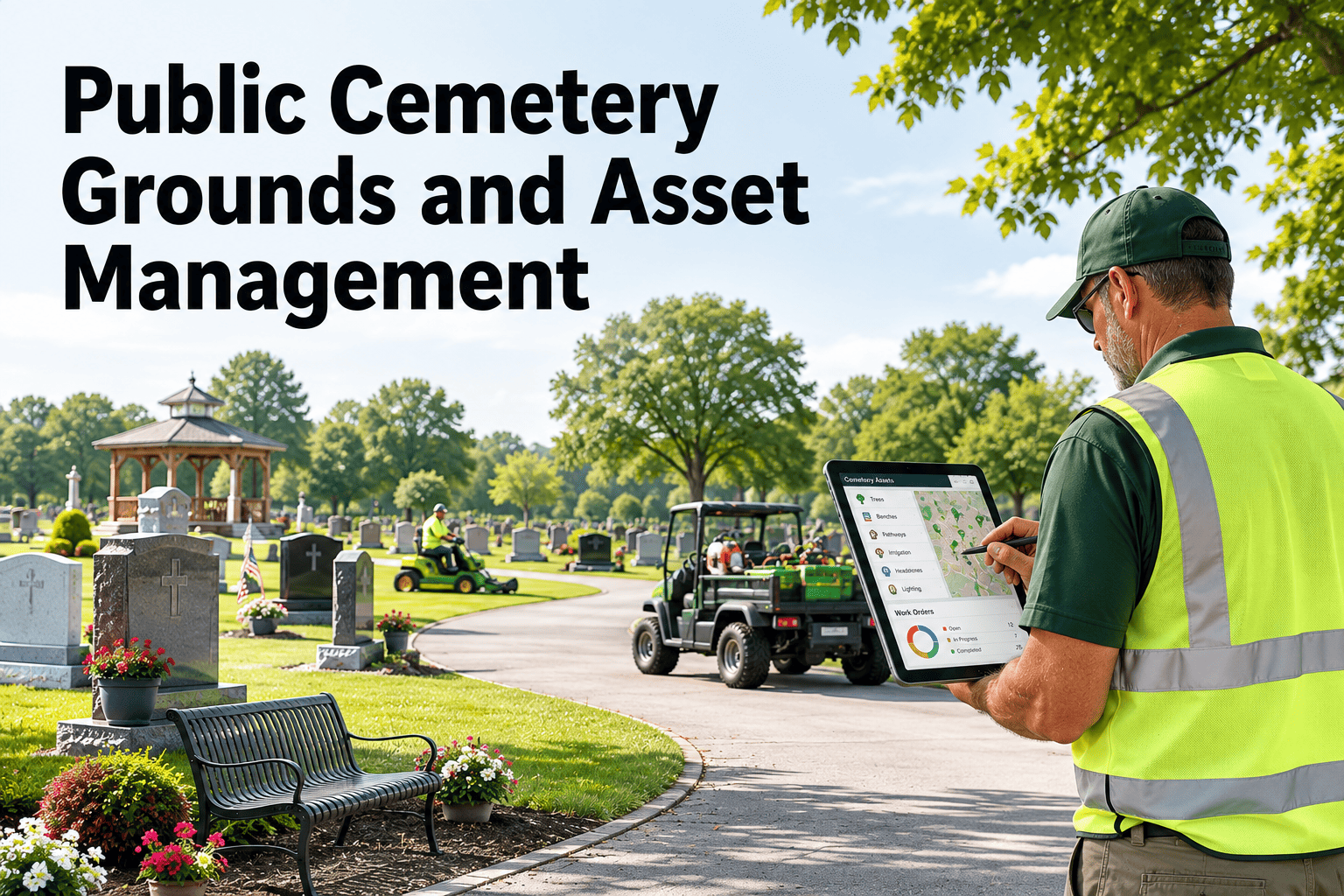
Public art maintenance, monument maintenance, and historic asset maintenance are specialized disciplines that merge facility management with conservation-critical care requirements. Municipalities, preservation societies, and public works departments collectively steward tens of thousands of cultural assets exposed to weather, pollution, and vandalism—assets that are irreplaceable and expensive to restore if preventive care is deferred. A structured public art maintenance program built on a modern CMMS like OxMaint helps teams schedule condition assessments, track conservation treatments, and document material specifications before deterioration cascades into costly structural failure. Ready to modernize your heritage asset maintenance? Start Free Trial and digitize your civic monument maintenance workflow today.
Public Art & Heritage Asset Maintenance
Are your monuments and public art assets one storm away from irreversible damage?
Spreadsheets and paper logs fail when civic monuments weather decades of exposure. OxMaint digitizes historic preservation maintenance so you can predict deterioration, schedule conservation interventions, and protect community heritage with audit-ready records.
The Cost of Deferred Care
Why municipalities lose millions on reactive monument maintenance
The average bronze monument costs $8,000–$25,000 to restore after decades of corrosion, but a scheduled wax-and-inspect cycle costs just $400–$900 annually. The math is simple—yet 60% of municipal public art programs still operate without a dedicated maintenance management system.
Condition Assessment Checklist
Public art and monument maintenance inspection checklist
A conservation-informed inspection program splits responsibilities across tiers so conservators focus on material science while facility crews handle access, lighting, and safety. Use this tiered checklist to structure your public art conservation workflow.
Tier 1 — Routine Facility Crew Checks (Quarterly)
- Inspect mounting bolts, welds, and anchor points for visible movement
- Clear biological growth (moss, lichen) from base and drainage channels
- Test integrated lighting and replace burned-out fixtures
- Photograph overall condition from four cardinal angles
- Log graffiti, sticker residue, or mechanical damage with GPS coordinates
Tier 2 — Conservation Professional Assessment (Annual)
- Measure surface coating thickness and re-wax bronze elements as needed
- Assess stone porosity, spalling, and sulfate crust formation
- Evaluate joint mortar condition on historic masonry structures
- Document previous treatment history and material specifications
- Recommend medium-term restoration priorities with cost estimates
Tier 3 — Structural & Materials Engineering (Every 3–5 Years)
- Non-destructive testing of internal armature and load-bearing elements
- Environmental monitoring data review (pollution, chloride, moisture)
- Stability analysis for monuments in seismic or high-wind zones
- Cathodic protection assessment for iron and steel historic assets
- Update conservation management plan with revised lifecycle projections
Annual Maintenance Timeline
How to schedule historic asset maintenance across the seasons
Conservation treatments are season-dependent. Applying protective coatings before freeze-thaw cycles or scheduling desalination during low-humidity months extends intervention effectiveness. Here is a proven 12-month rhythm for municipal public art maintenance programs.
Move portable sculptures to storage. Apply winter wraps to fragile stone. Review previous year's condition reports and prioritize spring interventions in OxMaint.
Conduct post-winter damage surveys. Document frost-induced spalling and joint separation. Schedule Tier 2 conservation assessments before summer humidity peaks.
Execute re-waxing, repointing, and coating applications during optimal temperature windows. Deploy OxMaint work orders with material specs and safety data sheets attached.
Schedule Tier 3 engineering inspections. Non-destructive testing on armatures. Update asset condition scores and predictive degradation models in the CMMS.
Apply anti-graffiti coatings. Drain and winterize fountain sculptures. Finalize annual conservation reports for municipal council and grant documentation.
CMMS Impact for Heritage Assets
How OxMaint powers your public art management program
OxMaint transforms scattered spreadsheets and paper condition reports into a centralized, AI-driven asset register built for conservation-critical care. Every sculpture, monument, and historic structure gets a digital twin with full treatment history, material specifications, and predictive degradation alerts.
Digital Asset Registry with Conservation Metadata
Upload material specs, artist intent documents, historical designation records, and past treatment logs for every asset. Search by material type, installation date, or conservation priority. Teams report 40% faster retrieval of critical conservation history during emergency interventions.
Predictive Degradation Alerts
AI models analyze environmental exposure data, material types, and historical deterioration patterns to flag assets at risk before visible damage appears. Teams shift from reactive emergency calls to scheduled interventions—cutting unplanned restoration costs 30–50%.
Work Orders with Full Audit Trails
Generate conservation work orders pre-loaded with material safety data, artist specifications, and before-and-after photo requirements. Every action is timestamped and geo-tagged—producing grant-ready documentation and council reporting that eliminates 20+ hours of manual paperwork monthly.
Spare Parts & Conservation Supply Inventory
Track specialized conservation materials—patination chemicals, compatible mortars, protective coatings—with low-stock alerts and expiry monitoring. Eliminate project delays caused by unavailable supplies and reduce emergency procurement premiums by up to 35%.
Worked Example
A 120-asset municipal public art portfolio: before and after OxMaint
Consider a mid-sized city managing 120 public art installations and historic monuments with an annual maintenance budget of $85,000. Their status quo—spreadsheets, shared drives, and emailed photos—produced predictable failures and undocumented treatments.
| Metric | Before OxMaint (Spreadsheet + Paper) | After OxMaint (CMMS-Driven) |
|---|---|---|
| Emergency restorations per year | 14 incidents | 4 incidents (71% reduction) |
| Annual restoration spend | $72,000 reactive | $38,000 planned (47% savings) |
| Condition report turnaround | 6–8 weeks after inspection | Same-day digital reports |
| Assets with complete treatment history | 38% of portfolio | 100% of portfolio |
| Grant documentation prep time | 40+ hours per grant cycle | Under 4 hours (auto-generated) |
| Preventive schedule compliance | ~45% of tasks on schedule | 94% of tasks on schedule |
In the first 12 months on OxMaint, this city avoided two major bronze restorations ($31,000 each) because predictive alerts flagged coating degradation six weeks before visible corrosion set in. The CMMS paid for itself within the first quarter—then delivered compounding savings every year after as the asset register matured and degradation models grew more accurate.
Decision Framework
CMMS vs. spreadsheet for monument conservation municipal programs
Many municipal public art programs hesitate to adopt dedicated maintenance software, believing spreadsheets are sufficient for small collections. The reality is that conservation work demands material-level traceability, photo documentation, and multi-stakeholder coordination that spreadsheets structurally cannot provide.
- No material-level history — treatment details buried in free-text cells
- Photos stored in personal drives, lost when staff turnover
- No predictive capability — every failure is a surprise
- Grant reporting requires manual data reassembly each cycle
- No mobile field access during site inspections
- Version control chaos across departments and contractors
- Structured asset registry with material specs, artist docs, and full treatment lineage
- Geo-tagged photo documentation attached to every work order,ly archived
- AI-driven degradation predictions based on material type and environmental exposure
- One-click grant and council reports auto-generated from work order history
- Mobile app for offline field inspections with photo capture and voice notes
- Role-based access for conservators, facility crews, contractors, and administrators
See OxMaint on your public art and monument portfolio
Book a 30-minute demo and we will load your top 10 assets into a live workspace—so you can see predictive alerts, work orders, and grant-ready reporting on day one.
Frequently Asked Questions
Public art and monument maintenance questions, answered
How often should public art and monuments be inspected?
Routine visual inspections by facility crews should occur quarterly, with full conservation professional assessments annually and structural engineering reviews every 3–5 years. High-exposure coastal or industrial environments may require monthly visual checks. OxMaint lets you automate these intervals so no inspection slips through the cracks—Book a Demo to see the scheduling engine in action.
What is the difference between public art maintenance and public art conservation?
Maintenance covers routine, preventive tasks—cleaning, coating reapplication, lighting checks, and biological growth removal—that slow deterioration. Conservation involves specialized, material-specific interventions by trained professionals to stabilize, repair, or restore damaged elements. A strong program integrates both: maintenance crews handle Tier 1 tasks while conservators execute Tier 2 and 3 treatments, all coordinated through a shared CMMS.
How much does a public art maintenance program cost annually?
A well-structured preventive program typically costs 1–3% of the asset's original commission value per year. For a $100,000 sculpture, that means $1,000–$3,000 annually in routine care. Without preventive maintenance, emergency restoration can cost 10x that amount. Most municipalities find that CMMS-driven programs pay for themselves within the first year by avoiding just one major reactive restoration.
Can a CMMS handle the unique needs of historic preservation maintenance?
Yes—OxMaint supports custom asset metadata fields for material specifications, historical designation status, artist intent documents, and conservation treatment protocols. Unlike generic facility management software, it accommodates the non-standard care requirements of heritage assets, from compatible mortar tracking to patination chemical inventory management and cathodic protection monitoring.
How do you document public art condition reports for grant compliance?
Grant-funded public art typically requires before-and-after photos, treatment narratives, material specifications, and cost breakdowns. OxMaint auto-generates these reports from completed work orders—pulling timestamps, geo-location, photos, materials used, and labor hours into a formatted document. What used to take 40+ hours per grant cycle can be produced in under four hours with audit-ready accuracy.
Protect your community's heritage before the next storm season
Join municipalities using OxMaint to cut emergency restoration costs by 50% and build a permanent, searchable record of every public art and monument asset they steward.
Free 14-day trial · No credit card