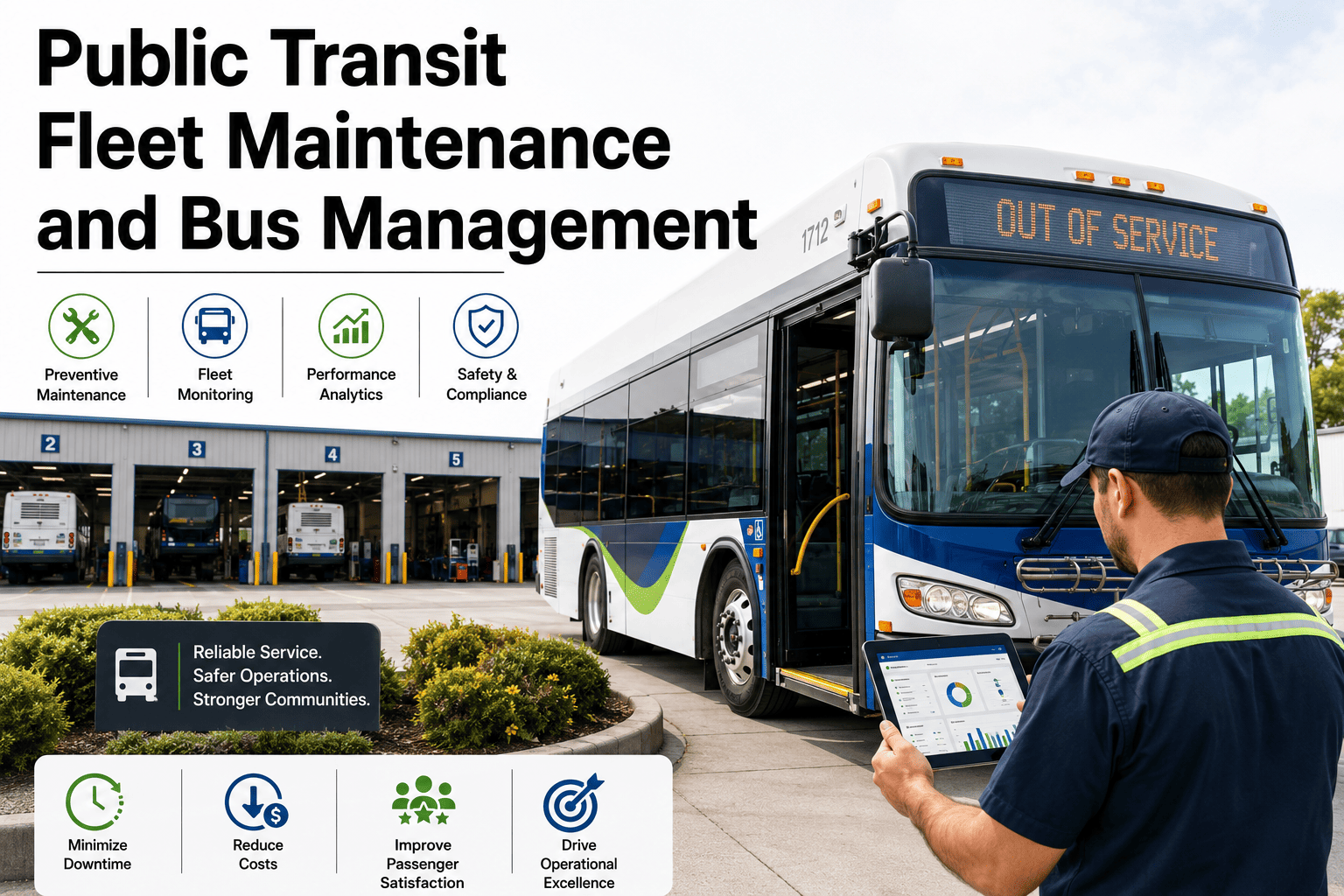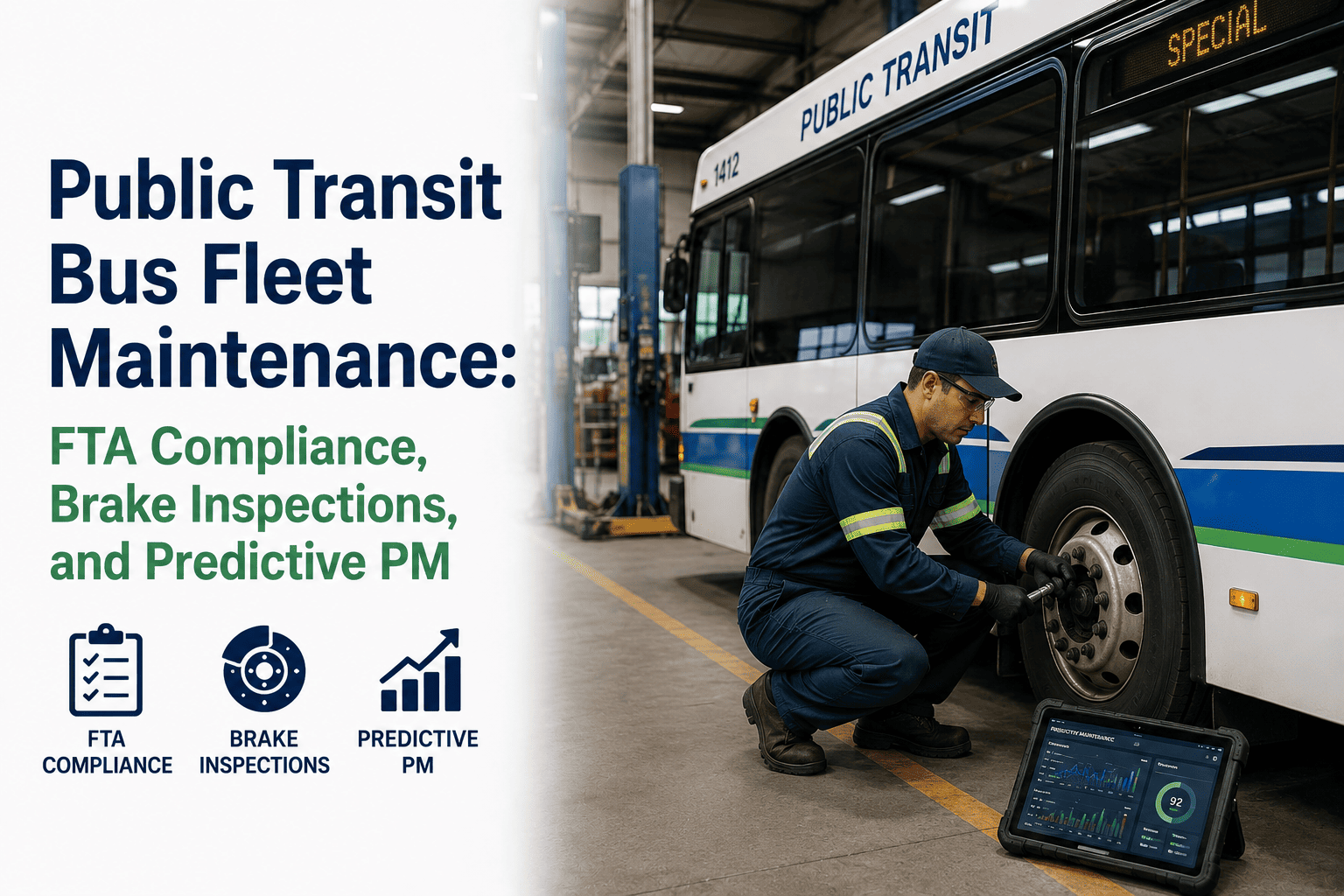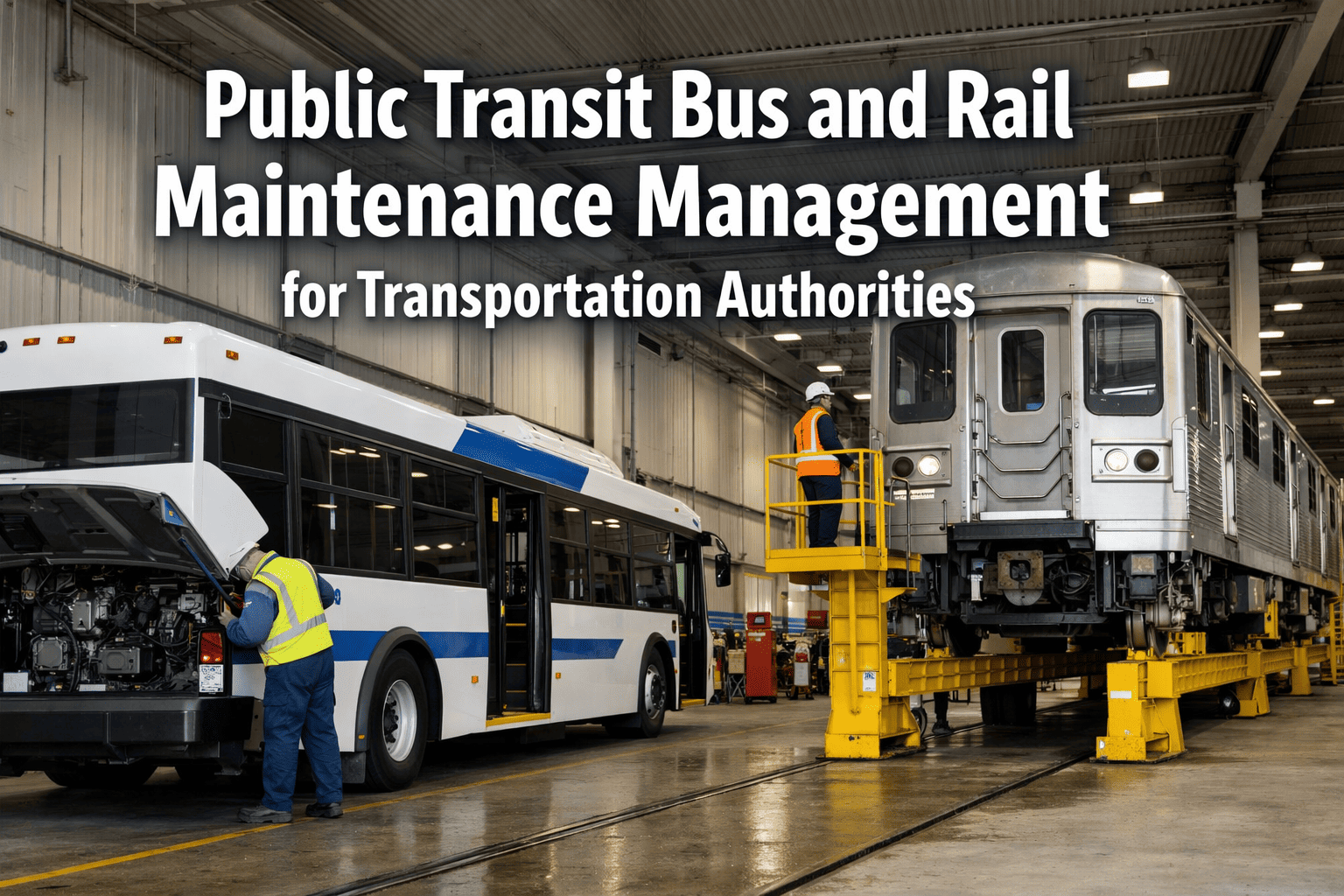
Transit agencies that miss FTA preventive maintenance compliance risk federal funding suspension — and every in-service vehicle failure costs $8,000–$45,000 in emergency response, passenger rebooking, and service disruption. Structured transit maintenance management cuts in-service failures by 40%, keeps FTA compliance documentation audit-ready continuously, and gives operations directors the real-time fleet health view that reactive programs never deliver. Schedule a demo to see Oxmaint's Transit Fleet Dashboard configured for your authority.
Transit maintenance software schedules PM by mileage and calendar per FTA requirements, tracks fleet health across bus and rail, generates pull-out readiness documentation, and uses predictive analytics to flag vehicles approaching in-service failure before they enter revenue service. Oxmaint's Transit Fleet Dashboard, FTA Compliance Tracking, and Predictive Maintenance Engine deliver this for authorities of all sizes.
Why Transit Maintenance Programs Fail Without a Structured Platform
Transit agencies operate under dual pressure — FTA compliance requirements on one side, service reliability expectations on the other. Spreadsheet-based programs fail both simultaneously. Book a demo to see how Oxmaint structures a transit fleet hierarchy for your authority.
34% of agencies face FTA findings annually — most from incomplete PM records, not actual maintenance failures. Paper logs cannot produce the continuous audit trail FTA Triennial Reviews require.
Without a real-time fleet dashboard, dispatchers release vehicles without knowing PM status — putting vehicles due for service into revenue service and accumulating undetected compliance deficiencies.
In-service failures are the most expensive transit maintenance event — $8K–$45K per incident. Agencies without predictive visibility cannot intervene before revenue service vehicles break down on route.
ADA lift records must be maintained per FTA requirements. Incomplete lift documentation is one of the most common FTA finding categories and carries significant federal funding exposure.
FTA-Compliant Transit Maintenance — Live in 3 Weeks
PM scheduling, pull-out readiness tracking, ADA compliance, and predictive failure alerts across your entire bus and rail fleet from one platform.
Transit Asset Categories and Maintenance Requirements
Bus and rail fleets each carry distinct PM intervals, component lifecycles, and FTA documentation requirements — all managed from Oxmaint's unified transit fleet registry.
Mileage-based PM — engine, transmission, brakes, and coolant at defined intervals. Pull-out readiness and ADA lift inspection documented per FTA requirements.
Higher per-mile utilization with smaller vehicle formats. Lift and ramp systems require more frequent inspection from intensive daily cycle counts.
Wheel profile, pantograph, door system PM, and overhaul cycles at 250K, 500K, and 1M mile intervals per FTA standards.
Propulsion diagnostics, braking inspections, and HVAC maintenance with 24/7 operational pressure. Planned maintenance windows are narrow — PM must be precise.
Bus washers, lifts, fueling systems, and shop equipment — PM schedules that directly impact fleet throughput. Facility equipment downtime delays vehicle PM and compounds availability problems.
Elevators, escalators, platform lighting, and HVAC — ADA-critical assets with FTA inspection requirements and direct ridership experience impact.
How Oxmaint Delivers Transit Maintenance Management
Every vehicle's PM status, mileage since last service, open defects, and pull-out readiness visible in real time to dispatchers and operations directors. Vehicles approaching PM due dates flagged 500 miles or 7 days in advance — enough lead time to plan without pulling vehicles unnecessarily. Book a demo to see the Transit Fleet Dashboard for your fleet size.
PM completion records, ADA lift logs, pull-out readiness reports, and emissions test documentation maintained continuously per vehicle. FTA Triennial Review packages exported in under 2 hours — not 3–6 weeks of manual compilation. State DOT audit responses generated from the same data without additional staff effort.
Fault code history, telematics data, and maintenance records analyzed per vehicle — failure probability scores identify propulsion, braking, and HVAC issues 14–45 days before in-service failure. High-probability vehicles flagged for priority shop scheduling before revenue service entry. Schedule a demo to see predictive scoring on your transit fleet.
Drivers complete structured digital DVIRs on mobile — defects photographed, categorized, and auto-routed as corrective work orders to the shop before the vehicle re-enters service. No paper DVIR, no phone call. DVIR completion reaches 97% within 60 days of deployment.
Bus overhaul milestones at 250K, 500K, and 1M miles trigger capital planning entries automatically. Fleet age distribution and cumulative maintenance cost feed 10-year fleet replacement schedules for grant applications and board submissions. Book a demo to see transit lifecycle planning for your authority.
FTA Compliance — What Oxmaint Documents
Every PM service logged with mileage, date, technician, and parts — timestamped and exportable per vehicle for FTA Triennial Review and state audits.
Lift inspection date, cycle count, defect findings, and repair records per vehicle — satisfying FTA ADA requirements and protecting against Title II findings.
Daily pull-out status per vehicle — PM compliance, open defects, and ADA lift status visible to dispatchers before any vehicle enters revenue service.
Photo-evidenced defects, driver signature, and corrective action documentation maintained per vehicle — exportable for DOT review without manual search.
Emissions test dates, results, and remediation records per vehicle — maintained with PM records for environmental compliance and FTA grant eligibility.
Fleet age, cumulative maintenance cost, and overhaul milestone status per vehicle — formatted for NTD reporting, grant applications, and board submissions.
Transit Performance — Before and After Oxmaint
Transit Fleet Benchmarks — Oxmaint-Deployed Authorities
Frequently Asked Questions
Continue Reading
FTA-Compliant Transit Maintenance Across Your Entire Fleet
PM scheduling, pull-out readiness, ADA compliance, and predictive failure prevention — live in 2–3 weeks, no IT project required.