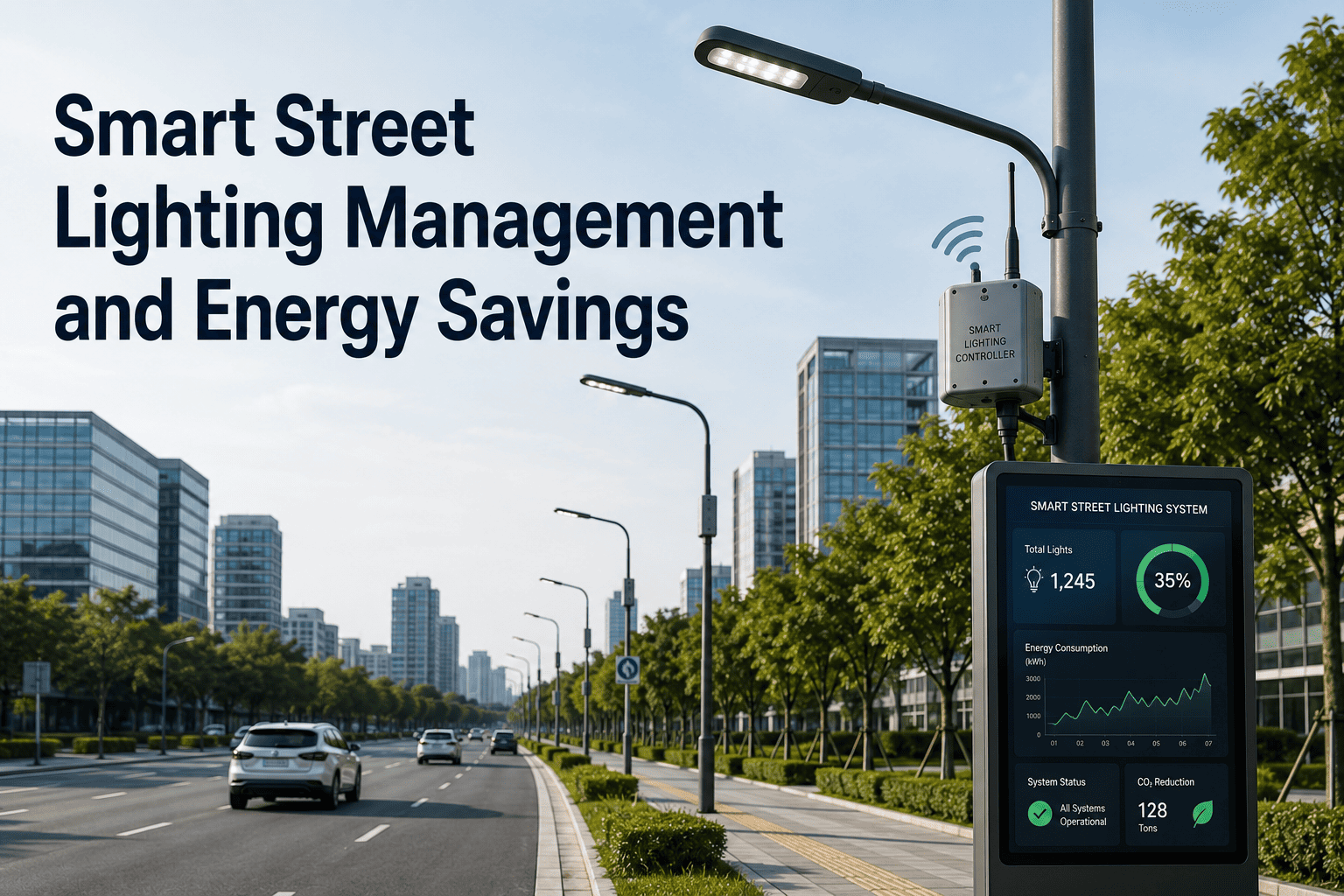
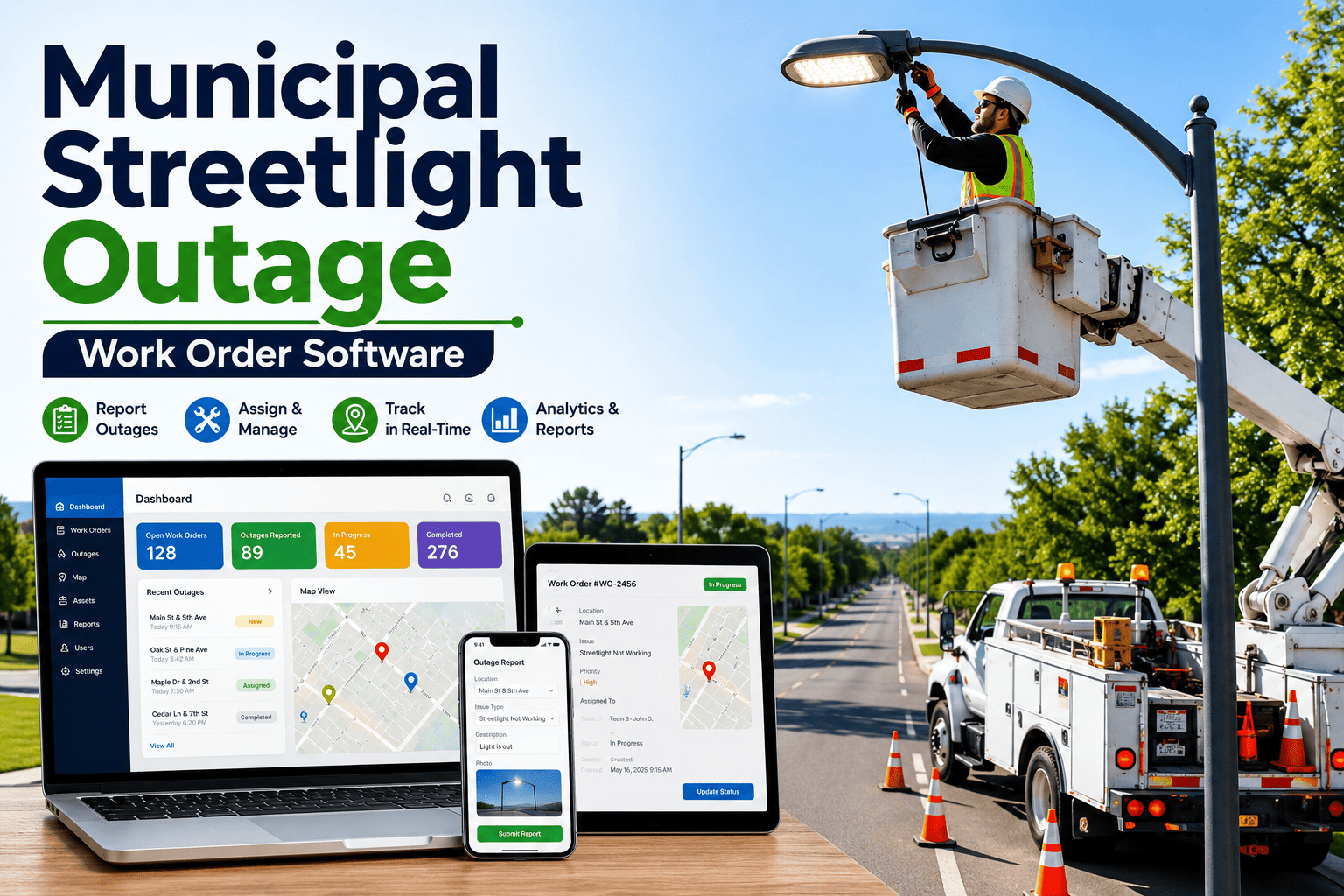
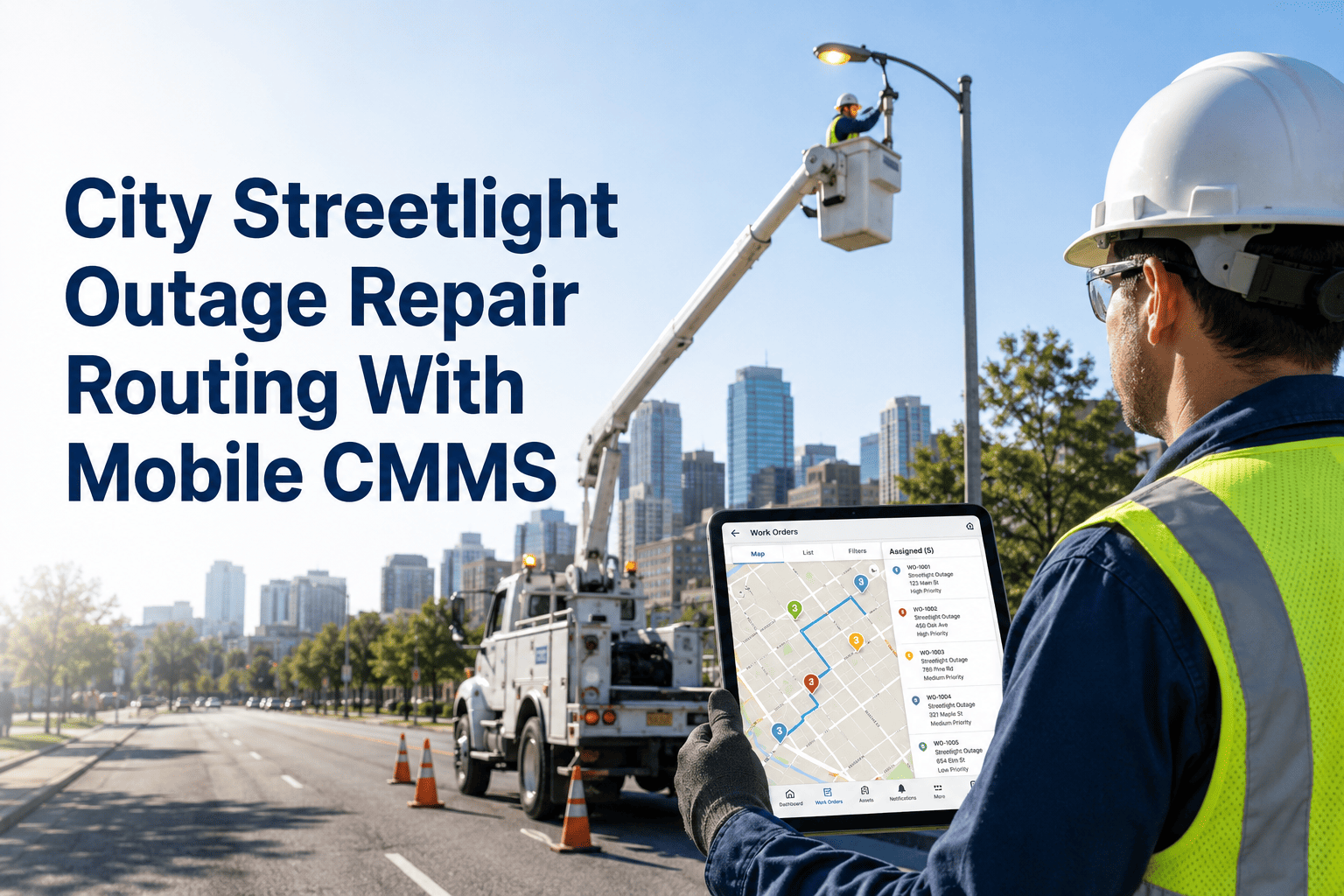
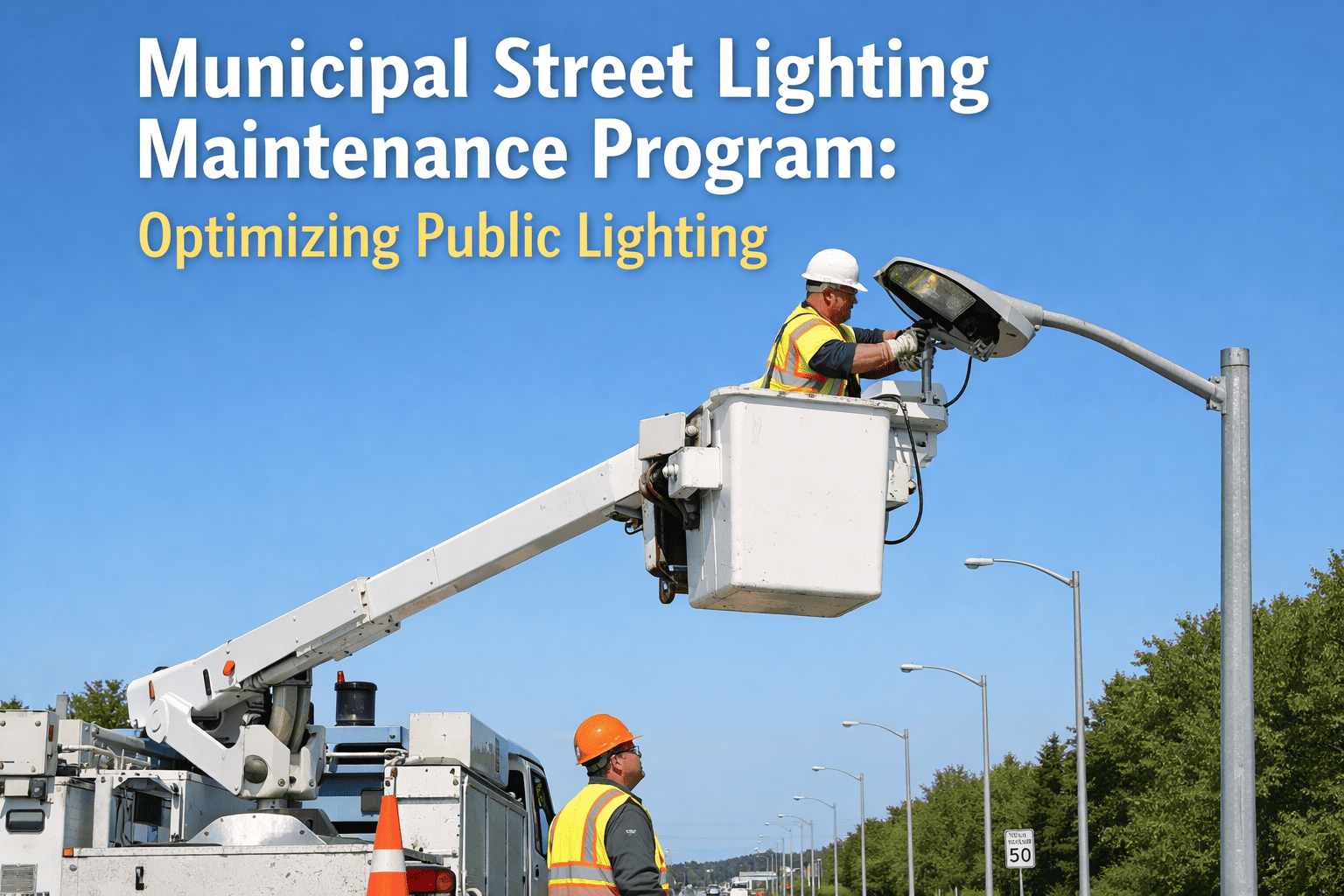
A Public Works department responsible for 12,000 streetlights faced a growing wave of citizen complaints: entire neighborhoods were dark for weeks, while day-burning lights wasted energy unnoticed. Manual inspections were slow and reactive. The tipping point came when a series of accidents at a major intersection were linked to prolonged lighting outages, despite three prior reports being "closed" without resolution due to data errors. An audit revealed that40% of their "lamp out" tickets were repeat failures caused by underlying ballast or wiring issues, not just burnt-out bulbs. By implementing a smart lighting management system integrated with their CMMS, the city reduced response times from 14 days to 48 hours, cut energy waste by 18%, and improved public safety scores. Street lighting isn't just infrastructure; it's a beacon of community safety and efficiency.
Street lighting failures are rarely as simple as a "burnt-out bulb." They are often symptoms of deeper electrical, environmental, or systemic issues. For municipal teams, the challenge is diagnosing these root causes efficiently across a vast, distributed network. Legacy methods—waiting for phone calls, then sending a bucket truck to "see what's wrong"—are costly and inefficient.
Modern lighting management moves beyond reactive bulb-swapping. It involves condition monitoring (detecting voltage irregularities), asset intelligence (tracking fixture age and failure history), and workflow automation (dispatching the right tech with the right parts). This guide breaks down common failure modes and how to fix them systematically.
Common Causes & Symptoms of Street Light Failures
Diagnosing a lamp out requires understanding the symptoms. Is it cycling on and off? Is it dim? Is the pole energized? Each symptom points to a specific failure mode.
Cause: End-of-life HPS/MH lamp (voltage rise) or overheating LED driver.
Fix: Replace lamp/driver. Check fixture heat dissipation.
Cause: Failed photocell (default ON mode) or shorted shorting cap.
Fix: Replace photocell. Verify NEMA socket orientation.
Cause: Blown fuse, severed underground wiring, failed ballast/driver, or knock-down.
Fix: Check fuse/breaker first, then test voltage at pole base and fixture head.
Cause: Voltage drop (wiring issues), failing capacitor, or incompatible LED dimmer.
Fix: Inspect connections for corrosion. Test circuit load.
Using a CMMS allows crews to log these symptoms via mobile app in the field, building a failure history that helps engineering teams identify systemic issues like "bad batches" of photocells or aging underground circuits.
Municipalities can access pre-built lighting inspection checklists to standardize diagnosis and repair workflows.
Diagnose, Repair, Repeat — a government & public works action plan with mobile apps
Empowering field crews with mobile technology transforms street lighting maintenance. Instead of scribbled notes and return trips for parts, technicians can close the loop in one visit.
Key mobile capabilities for lighting teams:
Asset History: Scan the pole tag to see: "This light was fixed 2 months ago." If it's failing again, don't just replace the bulb—investigate the wiring or ballast.
Inventory Draw: "Consumed: 1 LED Fixture, Type III Distribution." Automatically deducts from inventory and triggers reorder levels.
This data-driven approach shifts the focus from "fixing lights" to "maintaining a network." It enables proactive bulk replacements (group re-lamping) which is 40% cheaper than spot replacements.
Ready to modernize your lighting operations? Schedule a workflow review to see how mobile tools can streamline your specific city's needs.
The 90-Day Modernization Roadmap
Transitioning from reactive repairs to a smart, managed system doesn't happen overnight. Here is a proven 90-day plan for municipalities.
This roadmap moves a department from "chasing outages" to managing a reliable utility. Book a strategy session to adapt this timeline to your city's resources.
Before & After: Reactive vs. Managed Lighting
| Capability | Reactive (Legacy) | Managed (Modern CMMS) | Impact |
|---|---|---|---|
| Outage Reporting | Phone calls, angry emails | App, Web, & IoT Sensors | Real-time visibility |
| Dispatch | Paper stack, "drive and find" | GPS-routed digital WO | 30% fuel savings |
| Repair History | Lost in paper logs | Linked to specific pole ID | Identify lemon assets |
| Inventory | Truck stock guesswork | Live tracking & reordering | Eliminate return trips |
| Resolution Time | 10-14 Days | 24-48 Hours | Happy citizens |
| Cost Tracking | Aggregated monthly totals | Per-asset labor & parts | Accurate budgeting |
The shift to managed lighting operations delivers not just efficiency, but accountability. You can show city leadership exactly where budget dollars are going and verify that service level agreements (SLAs) are being met.
ROI Validation: Justifying the Investment
Modernizing street light maintenance pays for itself quickly. Here is the typical ROI profile for a municipality managing 10,000+ lights:
Material Savings: Warranty tracking ensures you don't pay for replacement drivers/fixtures that are still covered. Inventory control reduces shrinkage and obsolescence.
Energy Reduction: Fixing day-burners immediately (vs. weeks later) saves significant kWh. Smart controls can dim lights during low-traffic hours for further savings.
Liability Mitigation: Documented inspection and repair histories provide a defensible record in case of accidents or claims related to visibility.
Ready to calculate your specific savings potential? Schedule an ROI assessment tailored to your fixture count and labor rates.