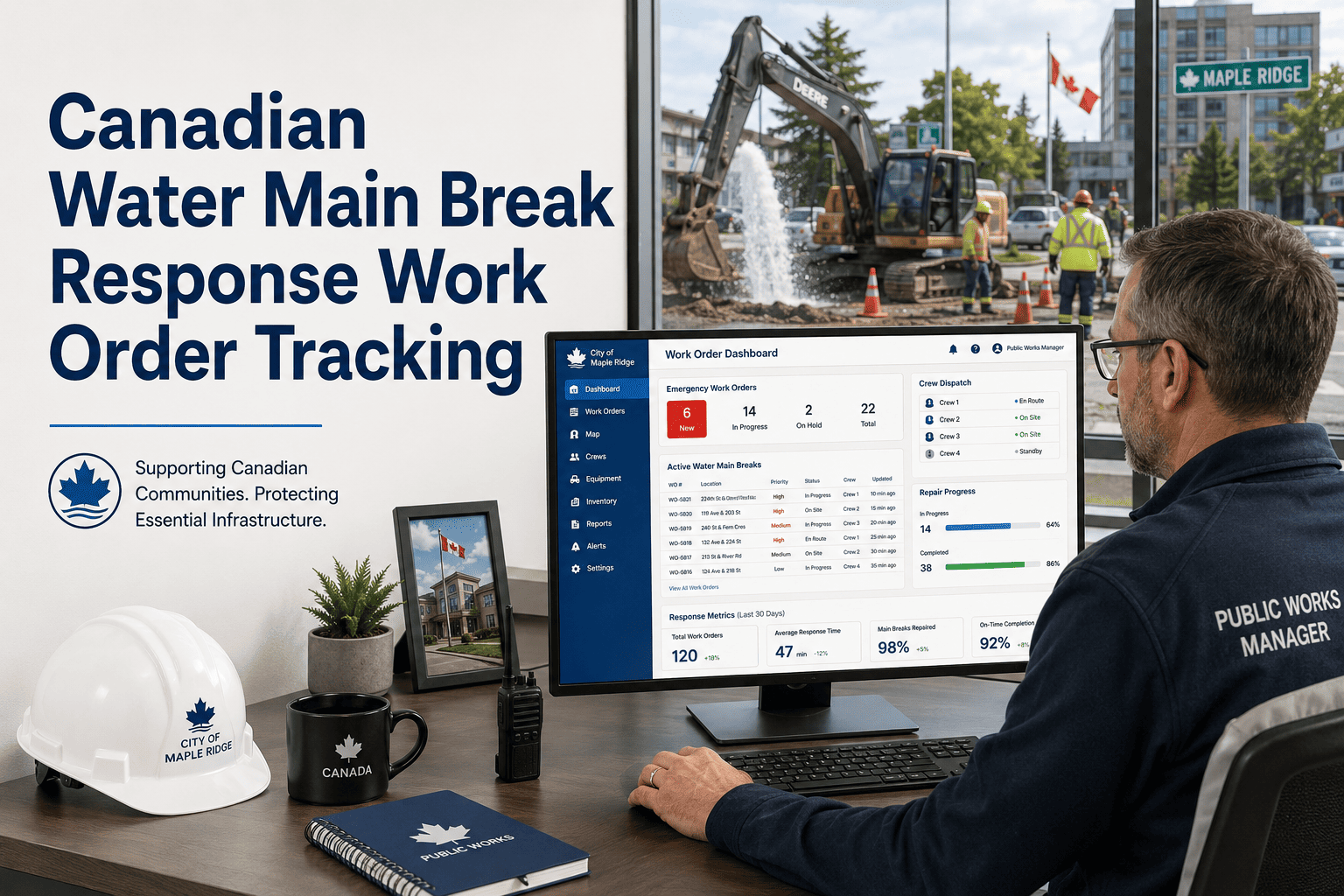
A water main break doesn't start with a rupture — it starts with a maintenance gap. The American Society of Civil Engineers estimates the U.S. loses 6 billion gallons of treated water daily through leaking and aging pipes, and the average municipal water system responds to a main break 4.2 hours after it's reported. For public works teams, every hour of delay compounds infrastructure damage, citizen impact, and regulatory exposure. OxMaint coordinates the entire break response workflow — from the first 311 ticket to the final site restoration record.
!
Water Main Break Response Time Benchmark: U.S. Average 4.2 Hours · Target with CMMS: Under 90 Minutes
Water Utilities · Emergency Response · Work Order Management
Water Main Break Response & Maintenance Coordination
How public works teams cut response times, protect service continuity, and build the documented repair histories that regulators, insurers, and councils expect.
Work Order Created
T+5 min
Valve Isolation Logged
T+35 min
Service Restored
T+82 min
OxMaint-coordinated response workflow
The Real Cost
What Every Uncoordinated Main Break Actually Costs
$8,000
Emergency repair cost for a 6-inch main break
vs $1,200 for proactive inspection-triggered repair
47%
Of pipe failures occur in mains with no recent inspection record
Source: AWWA State of the Water Industry
6B gal
Treated water lost daily across U.S. water systems
ASCE Infrastructure Report Card 2025
3.2x
Greater property damage when response exceeds 2 hours
Flood damage compounds exponentially with time
Response Workflow
The Coordinated Break Response Checklist
| Phase |
Action Required |
Who |
OxMaint Function |
| Immediate |
Log break report, create emergency work order |
Dispatcher |
Auto work order from 311 / mobile report |
| Immediate |
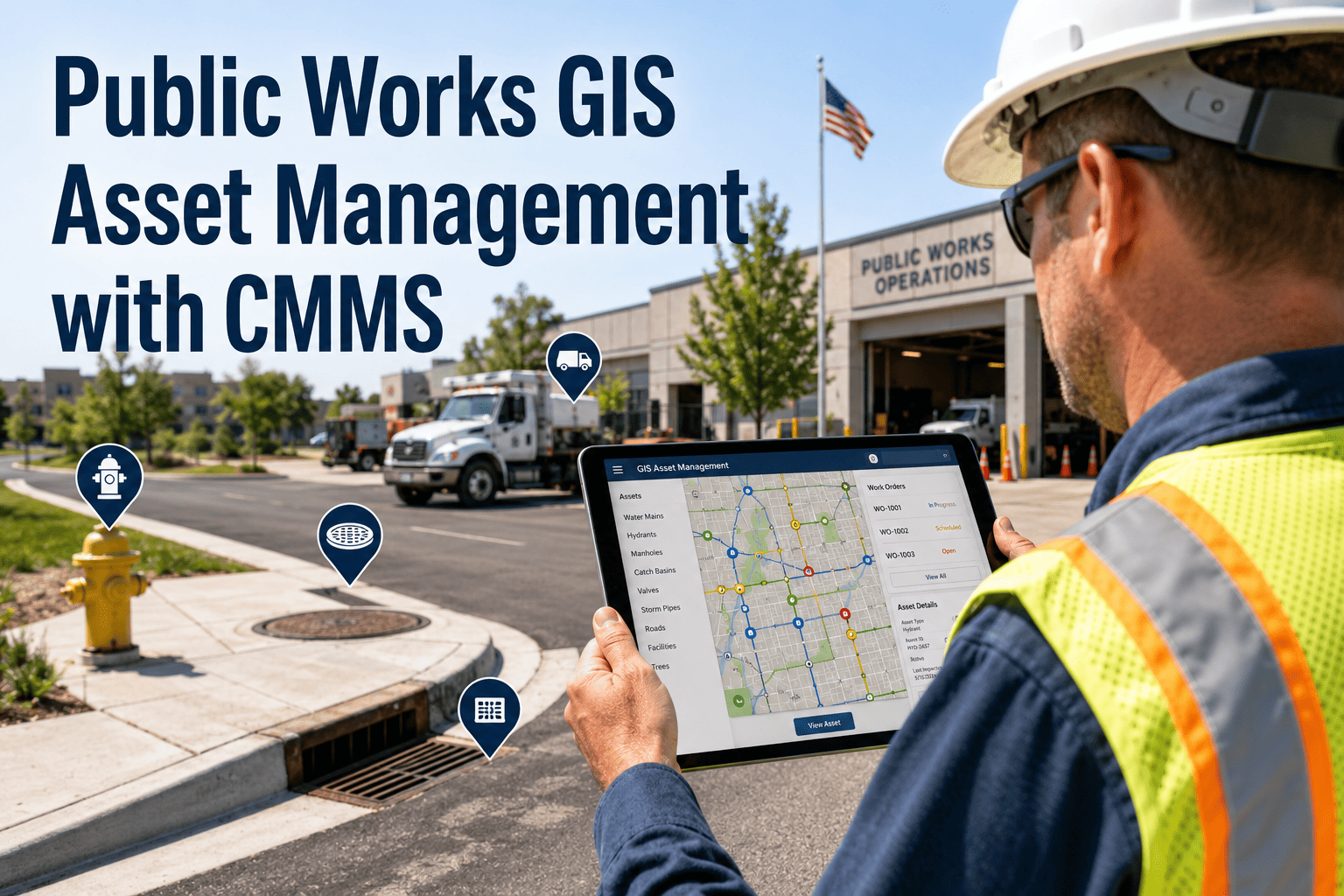
Identify nearest valve locations from asset map |
Dispatcher |
GIS-linked asset registry with valve inventory |
| 0–30 min |
Dispatch crew with pipe specs & repair history |
Field Supervisor |
Mobile work order with asset history pushed to crew |
| 0–30 min |
Isolate valve, document which zone is affected |
Field Crew |
Valve operation logged with timestamp & GPS |
| 30–90 min |
Excavation, repair materials staged from inventory |
Field Crew |
Parts consumed auto-deducted from parts inventory |
| 30–90 min |
Repair completed, pressure test passed |
Field Crew |
Work order closed with photo, test result, sign-off |
| Post-Repair |
Site restoration, regulatory notification filed |
Supervisor |
SLA clock logged, report auto-generated |
| Post-Repair |
Root cause logged, PM trigger reviewed |
Manager |
Failure analysis linked to asset history |
When a main breaks, every minute matters. Don't add coordination time to response time.
OxMaint gives your dispatch team, field crew, and supervisors one platform — so the right information reaches the right person the moment a break is reported.
Prevention Program
The Proactive Inspection Program That Prevents Most Breaks
01
Acoustic Leak Detection
Annual acoustic survey on mains over 15 years old. Vibration sensors detect pre-failure pipe stress weeks before rupture. Results trigger condition-based work orders, not calendar-based guesses.
02
Valve Exercise Program
Unexercised valves are the leading cause of delayed isolation during a break. AWWA recommends annual exercise on all distribution valves — every exercise logged in OxMaint with turn count and condition rating.
03
Hydrant Flush & Flow Test
Bi-annual hydrant flushing flushes sediment, confirms flow rates, and identifies pressure zone anomalies that indicate upstream pipe deterioration before it becomes an emergency callout.
04
Pipe Condition Assessment
Priority-based CCTV or sonar inspection on highest-risk mains — those with multiple prior breaks, age over 40 years, or in aggressive soil conditions. Inspection findings feed directly into capital replacement prioritization.
Expert Review
What Water Utility Leaders Say
“The cities that consistently achieve sub-90-minute main break response times share two characteristics: a real-time asset registry with valve and pipe data accessible in the field, and a dispatch protocol that creates the work order before the crew leaves the yard. Every minute of pre-dispatch coordination is a minute added to customer outage. Technology solves this — paper and phone calls don't.”
“Regulatory scrutiny on water loss and emergency response documentation has increased sharply. State primacy agencies are now requesting work order histories as part of system review. Utilities without a CMMS are spending weeks reconstructing what should be a 10-minute export.”
FAQ
Questions Water Utilities Ask About Break Response Management
How does OxMaint help reduce water main break response time?
OxMaint compresses the coordination gap between break report and crew arrival. When a break is reported — via 311 intake, SCADA alarm, or field observation — a work order is generated immediately with the affected asset pre-populated, the nearest valve locations pulled from the asset registry, and the repair history attached. The crew receives all of this on their mobile device before they leave the yard, eliminating the radio and call-back loops that typically add 30–60 minutes to response.
See the emergency response workflow in a live demo.
What documentation does OxMaint generate for regulatory reporting after a main break?
OxMaint automatically timestamps every step of the response workflow — break report, work order creation, crew dispatch, valve isolation, repair completion, and site restoration. This generates a complete event record with GPS coordinates, labor hours, parts used, pressure test results, and photographic evidence. For state regulatory submissions and EPA public notification requirements, this record can be exported in minutes rather than reconstructed from field notes over days.
Can OxMaint support a valve exercise program across a large distribution system?
Yes. OxMaint maintains a complete valve registry with exercise history, condition ratings, and next-due dates. Work orders for valve exercise campaigns are auto-generated by zone, crew territory, or valve age. Field crews record turn count, ease of operation, and any corrosion or seal issues on mobile — building the documented exercise history that AWWA and state regulators increasingly require.
Start tracking your valve program in OxMaint today.
How does OxMaint help prioritize which mains to inspect proactively?
OxMaint tracks break history, pipe age, material type, and repair frequency per main segment. The analytics dashboard surfaces mains with repeated failures, deferred inspections, or aging profiles that match your highest-risk failure patterns. This data feeds directly into capital replacement prioritization and helps public works managers justify inspection budget requests to council with defensible, asset-specific risk evidence rather than citywide averages.
Free Trial · No Credit Card · Emergency Workflows Ready Day One
The next main break is coming. Make sure your team is ready before it does.
Connect your asset registry, dispatch workflow, and regulatory documentation into one platform — and cut response time before the next call comes in.