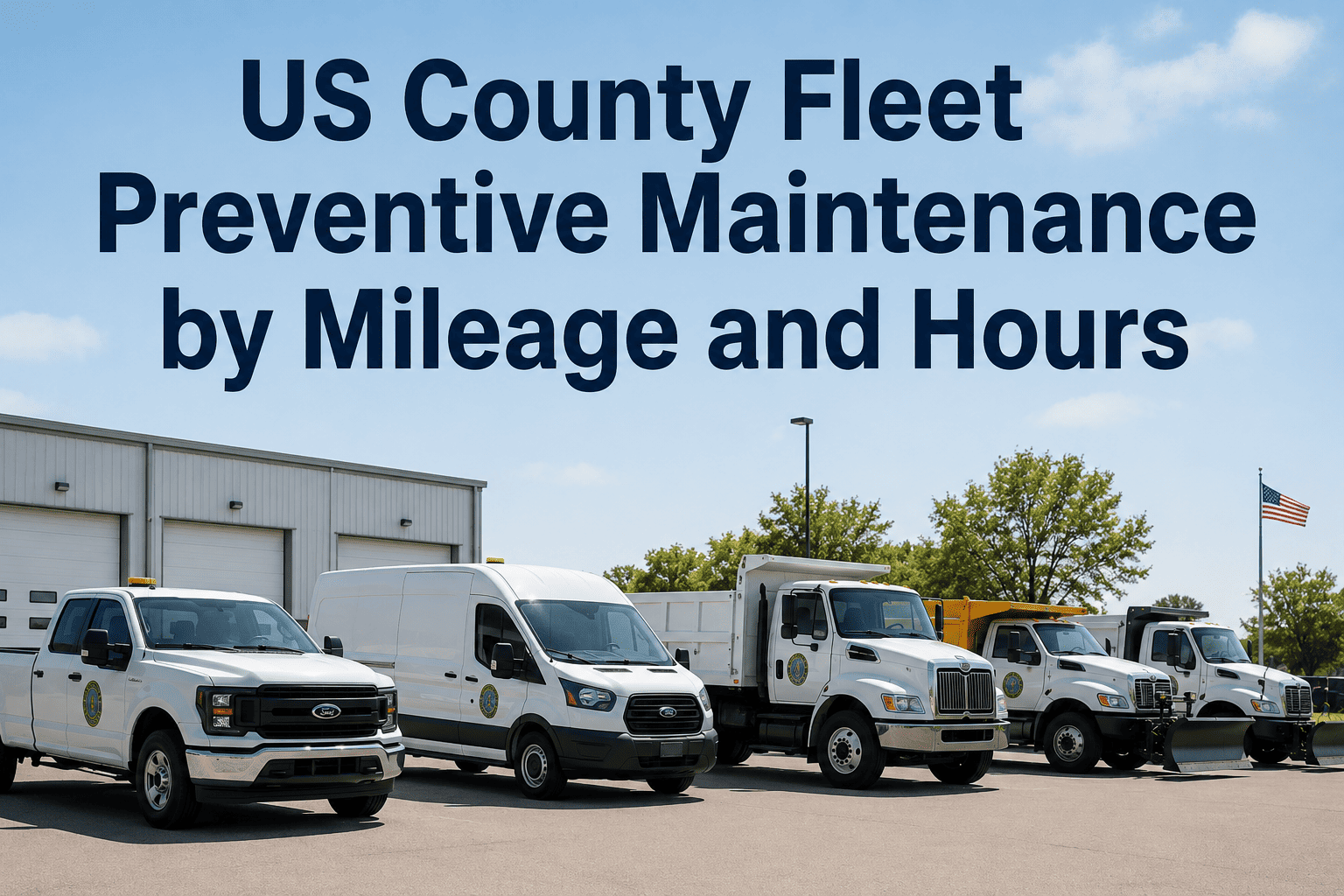
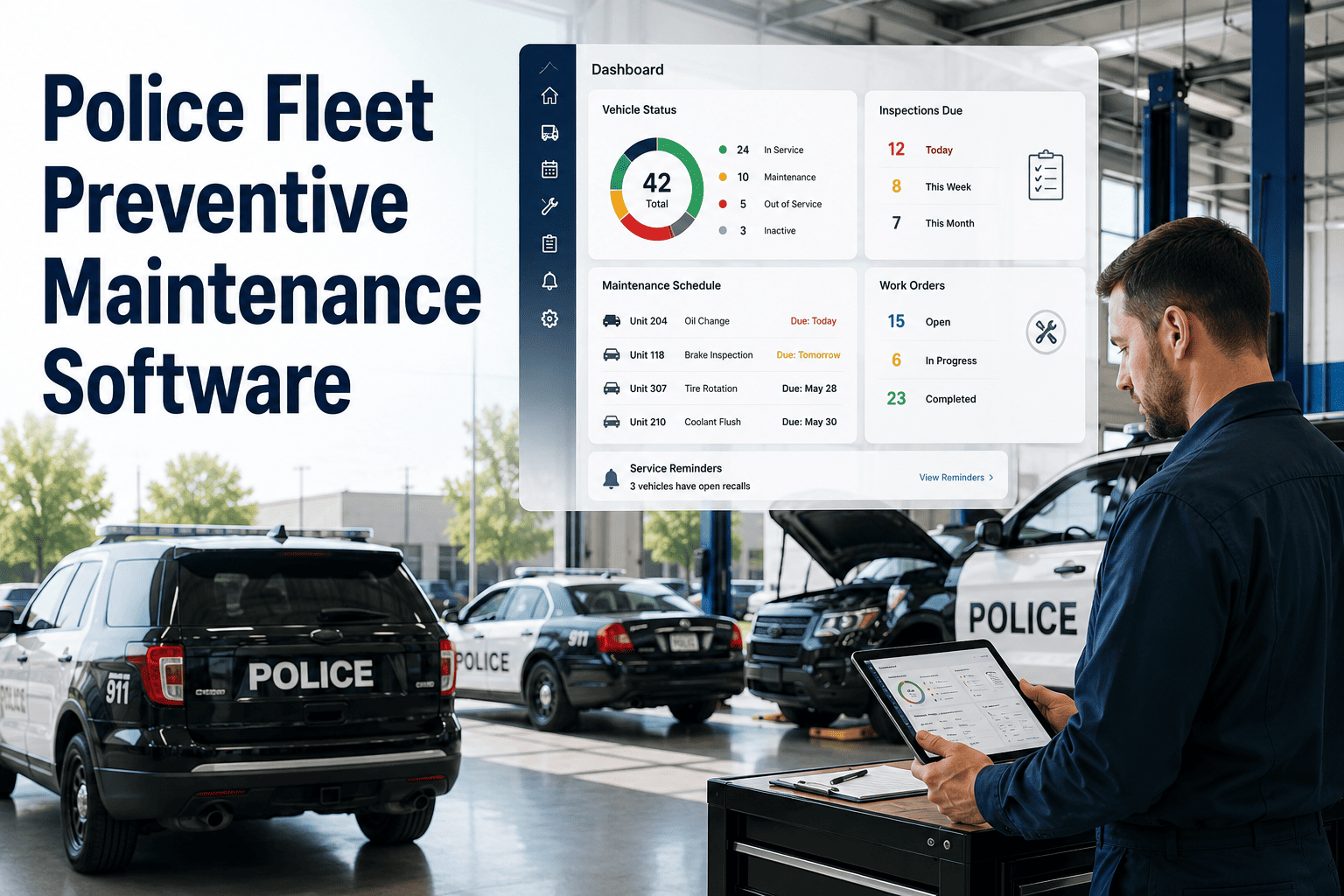
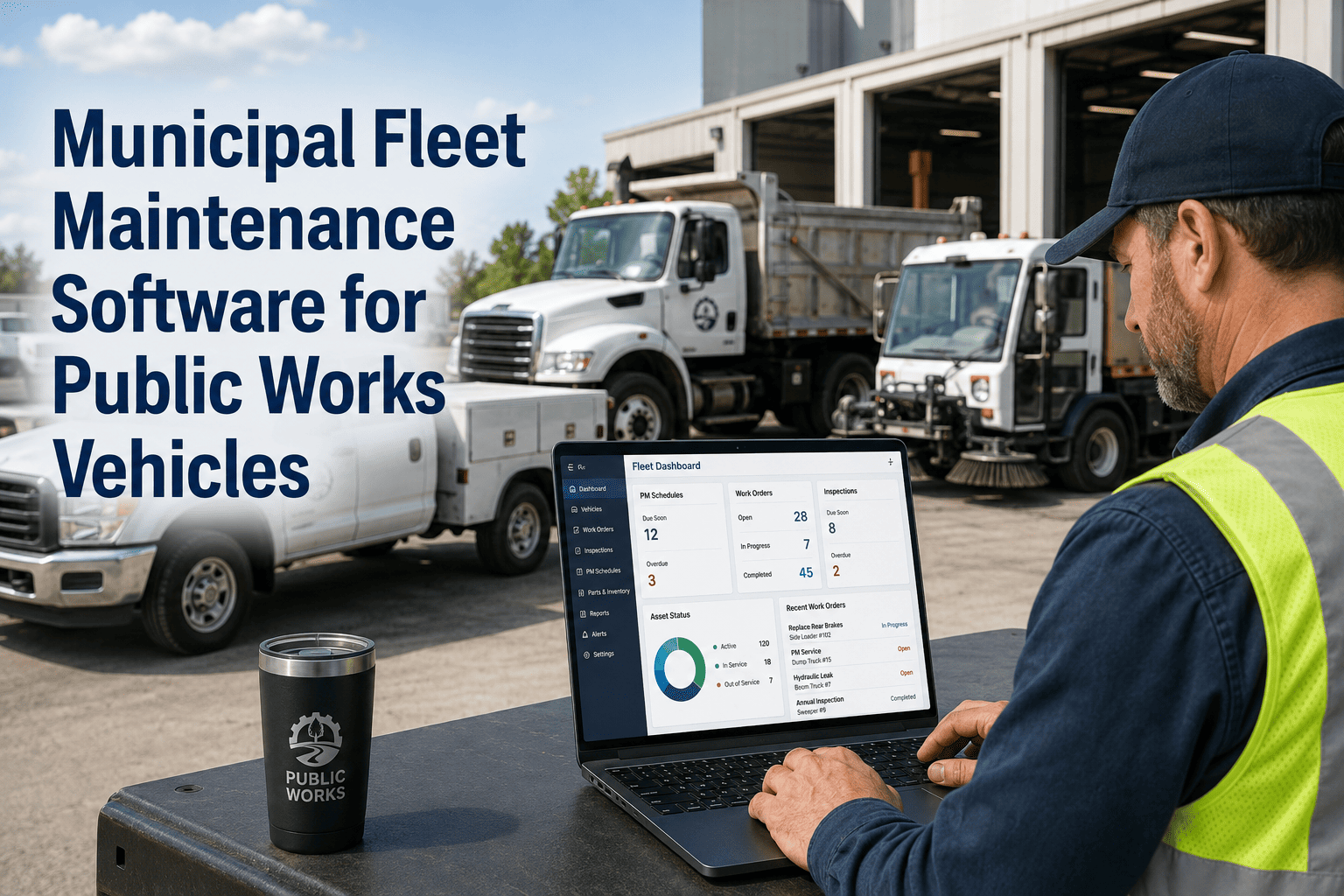
County fleets are among the most diverse and mission-critical vehicle assets in government — from sheriff patrol cars and school buses to road graders, utility trucks, and ambulances. When a snowplow fails during a storm or an emergency vehicle is out of service, it's not just a budget problem — it's a public safety failure. OxMaint automates preventive maintenance triggers based on actual mileage, engine hours, and inspection history so your county fleet runs reliably, compliantly, and cost-effectively year-round.
COUNTY FLEET MANAGEMENT
Mileage Hit. Hours Logged. Work Order Created — Automatically.
OxMaint monitors every vehicle in your county fleet and fires PM work orders the moment a service threshold is reached — before breakdowns, not after.
3x
Higher repair cost when PM is delayed past trigger threshold
$900B
Annual US state and local government fleet expenditure
68%
Of county fleet failures are preventable with timely PM
30%
Fuel efficiency loss in vehicles with overdue service
PM Trigger Types: How OxMaint Monitors Your Fleet
Unlike calendar-only scheduling, OxMaint uses multiple real-world triggers to generate PM work orders at the right time — not too early to waste resources, not too late to prevent failures.
01
Odometer Mileage
Oil changes, tire rotations, and brake inspections fire automatically at configured mileage intervals. Mileage is updated by drivers via mobile app at shift start or from integrated telematics.
02
Engine Hours
For road graders, generators, and heavy equipment where miles are irrelevant, OxMaint uses engine hours as the primary PM trigger — matching manufacturer service interval specifications.
03
Calendar Intervals
Annual inspections, registration renewals, and seasonal readiness checks trigger on date regardless of usage — ensuring compliance even for low-use reserve vehicles.
04
Driver Inspection Flags
Pre-trip inspection checklists completed by drivers create immediate work orders when defects are flagged — turning DVIR compliance into real-time maintenance alerts.
PM Schedule by County Fleet Vehicle Type
| Vehicle Type |
Primary PM Trigger |
Key Service Items |
Compliance Requirement |
| Sheriff / Patrol Cars |
Every 3,000 mi or 3 months |
Oil, tires, lights, emergency equipment |
State POST standards |
| Road Maintenance Trucks |
Every 5,000 mi or 250 engine hours |
Engine, hydraulics, plow systems |
FHWA equipment standards |
| Emergency / EMS Vehicles |
Every 2,500 mi or monthly |
Engine, brakes, medical equipment power |
NFPA 1912, state EMS regs |
| Utility / Water Trucks |
Every 5,000 mi or 300 hours |
Pump systems, tank integrity, engine |
DOT annual inspection |
| Heavy Equipment (Graders) |
Every 250 engine hours |
Hydraulics, undercarriage, blade |
Manufacturer service manual |
| Administrative Fleet |
Every 5,000 mi or 6 months |
Oil, tires, brakes |
Standard OEM intervals |
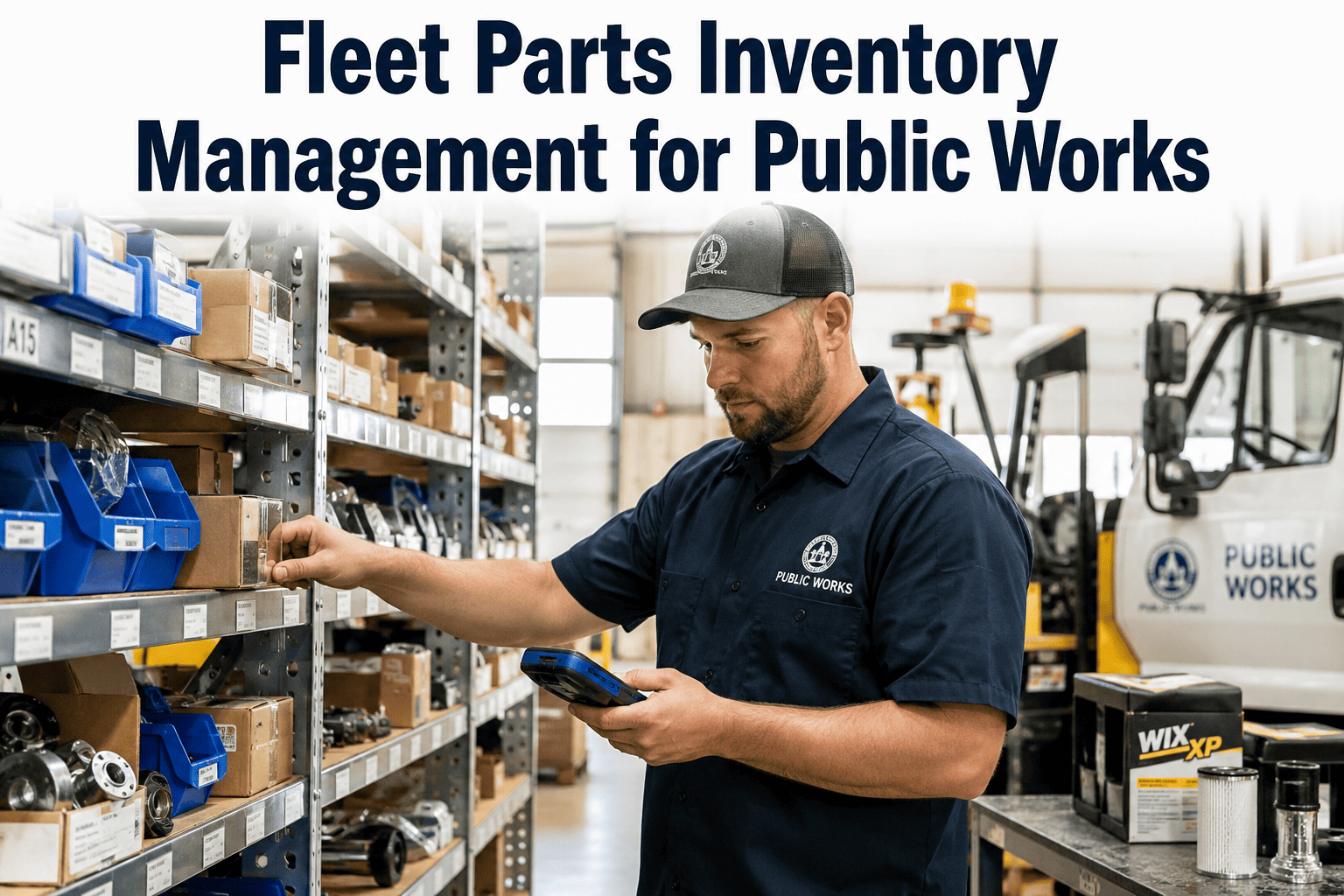
Parts Inventory — Stop Running Out Mid-Job
01
Auto Reorder Triggers
When oil filters, brake pads, or belts drop below minimum stock, OxMaint alerts the parts manager and can generate purchase requests automatically.
02
Parts Usage per Vehicle
Every part consumed is recorded against the vehicle work order — giving you true cost-per-vehicle data for fleet replacement planning and budget justification.
03
Vendor Tracking
Track parts sourced from state contracts, NASPO cooperative purchasing, or local vendors — with pricing history for each item to identify savings opportunities.
EXPERT REVIEW
Dale Hoffman, CAFM
County Fleet Manager — 20 Years Municipal Fleet Operations, former APWA Fleet Committee Chair
The biggest cost driver I see in county fleets isn't vehicle age — it's untracked mileage. When mechanics are manually checking odometers and updating spreadsheets, service intervals slip by 15 to 20 percent on average. A patrol car that should get serviced at 3,000 miles rolls through at 3,600 because nobody caught it. Over a 300-vehicle fleet, that's hundreds of engine failures and warranty voids per year. Automated PM triggers that fire the moment a threshold is hit — with a work order already waiting in the shop queue — change the entire economics of fleet maintenance. I've seen county fleets reduce unscheduled downtime by 40 percent within six months of switching to automated trigger-based PM systems.
Frequently Asked Questions
How does OxMaint receive mileage and engine hours data from county vehicles?
OxMaint supports three input methods: manual entry by drivers via the mobile app at the start and end of each shift, direct API integration with fleet telematics systems (Verizon Connect, Samsara, Geotab), and bulk upload from motor pool dispatch logs. The system uses whichever method is most practical for your fleet — even mixed methods across different vehicle categories.
Sign up free to configure your mileage input method.
Can OxMaint handle DOT annual inspection scheduling and compliance documentation?
Yes. DOT annual inspections, CVSA Level I–VI inspections, and state commercial vehicle inspection requirements are set up as compliance PM triggers in OxMaint. The system tracks inspection due dates, generates work orders 30 days in advance, stores inspection certificates, and alerts supervisors to vehicles approaching inspection expiry. Compliance records are retained for the full FMCSA-required audit period.
How does OxMaint help county fleets build the case for vehicle replacement?
OxMaint tracks total lifetime maintenance cost, repair frequency, and parts cost per vehicle — the data needed to calculate whether continued repair is more expensive than replacement. The fleet analytics dashboard shows cost-per-mile trends, downtime history, and age-versus-cost comparisons for every vehicle in your fleet. This output supports annual capital budget requests and meets the documented justification requirements for government vehicle replacement programs.
Book a demo to see a sample fleet cost analysis.
What if a driver completes a pre-trip inspection and finds a safety defect before a shift?
Any defect flagged during a driver's mobile pre-trip inspection in OxMaint immediately creates an urgent work order and removes the vehicle from available status on the dispatch board. The supervisor and shop manager receive instant alerts. The vehicle cannot be marked available again until the work order is closed and a qualified mechanic signs off the repair. This prevents safety-defective vehicles from being dispatched — a common liability exposure in county fleets without digital inspection systems.
AUTOMATE YOUR COUNTY FLEET PM
Every Vehicle. Every Threshold. Every Work Order — On Autopilot.
OxMaint tracks mileage, engine hours, and inspection intervals across your entire county fleet — and creates work orders automatically when service is due.