When government facilities and public works departments manage thousands of water meters, electrical substations, and critical infrastructure assets across sprawling service areas, the challenge isn't just maintaining equipment—it's predicting failures before they cascade into public emergencies while simultaneously satisfying auditors who demand perfect documentation of every wrench turn and sensor reading.
For municipal operations managers and public works directors navigating aging infrastructure and tightening budgets, utility metering combined with preventive maintenance represents a fundamental shift from reactive crisis management to predictive service delivery. Rather than responding to water main breaks at 2 AM or explaining pump station failures during budget hearings, forward-thinking municipalities are now deploying IoT sensors and automated preventive task systems that forecast infrastructure health with remarkable accuracy—transforming emergency management from firefighting to strategic planning.
This guide examines how government agencies can implement utility metering systems and design change management strategies that align preventive maintenance with emergency preparedness objectives, ultimately creating more resilient communities while ensuring audit-ready documentation. Agencies looking to modernize their asset management approach can start building their connected infrastructure monitoring system today.
Utility metering in government and public works extends far beyond simple consumption tracking. Modern metering systems integrate with CMMS platforms to provide real-time operational data that informs both preventive maintenance scheduling and emergency response protocols—creating a continuous feedback loop between asset performance and service delivery.
The Four Pillars of Integrated Utility Metering
01
Real-Time Monitoring
Connected sensors tracking flow rates, pressure levels, electrical loads, and temperature variations across distributed infrastructure networks
02
Automated Alerting
Threshold-based notifications triggering work orders when metrics exceed normal operating parameters, enabling proactive intervention
03
Historical Analytics
Trend analysis identifying seasonal patterns, degradation curves, and anomalous behavior that predict equipment failure before occurrence
04
Compliance Documentation
Automated logging of meter readings, calibration records, and maintenance actions creating audit-ready documentation for regulatory reviews
For municipal operations specifically, these metering capabilities address unique challenges: geographically dispersed assets requiring efficient route planning, aging infrastructure with unpredictable failure patterns, and public accountability demands for transparent resource management. Water distribution systems experiencing pressure fluctuations, electrical substations showing load imbalances, and wastewater treatment facilities with flow anomalies all generate metering data that directly informs preventive maintenance prioritization.
Infrastructure Risk Scoring Framework
1-3
Low Risk
Standard preventive maintenance, quarterly inspections
4-6
Moderate Risk
Enhanced monitoring, monthly meter reviews, PM optimization
7-8
High Risk
Weekly sensor checks, emergency response planning, replacement budgeting
9-10
Critical
Continuous monitoring, redundancy activation, immediate intervention protocols
Traditional preventive maintenance in government operations often follows manufacturer recommendations without consideration for actual operational stress or criticality to public services. This one-size-fits-all approach leads to either over-maintenance of low-risk assets or under-maintenance of critical infrastructure—neither outcome serves emergency preparedness objectives effectively.
Utility metering data enables condition-based preventive task scheduling that aligns maintenance intensity with actual asset health and public service impact, creating a more efficient and effective maintenance program.
Meter-Driven Preventive Maintenance Workflow
Step 1
Sensor Data Collection
IoT meters continuously transmit operational parameters—flow rates, pressures, temperatures, vibration levels—to centralized CMMS platform for analysis
Step 2
AI-Powered Analysis
Machine learning algorithms identify deviations from baseline performance, comparing current readings against historical patterns and manufacturer specifications
Step 3
Risk Score Calculation
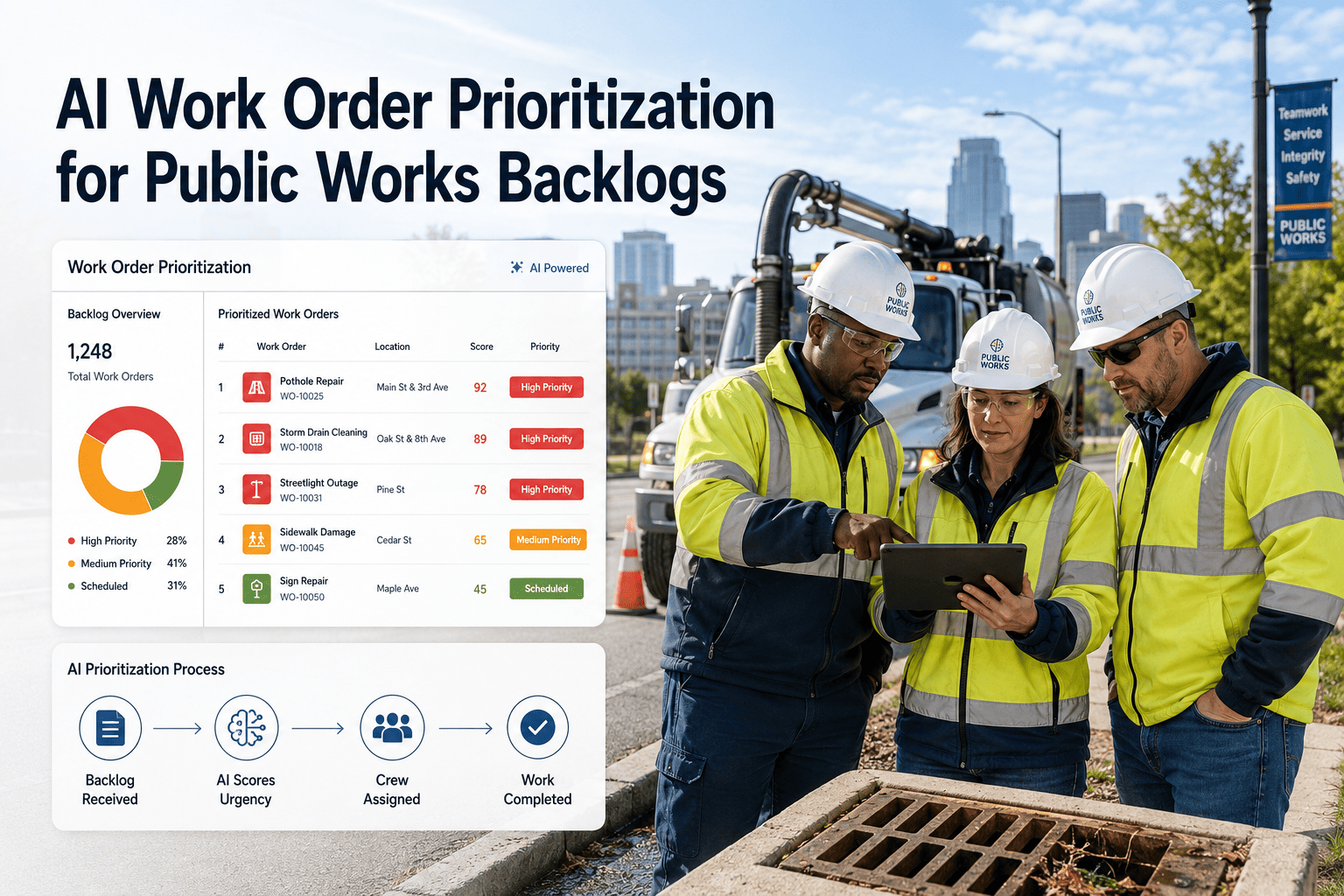
Automated risk scoring weights criticality to public services, failure probability, and consequence severity to prioritize intervention needs
Step 4
Automated Work Order Generation
System creates preventive maintenance tasks with appropriate urgency levels, technician assignments, and required parts based on OEM manual specifications
Step 5
Mobile Execution & Documentation
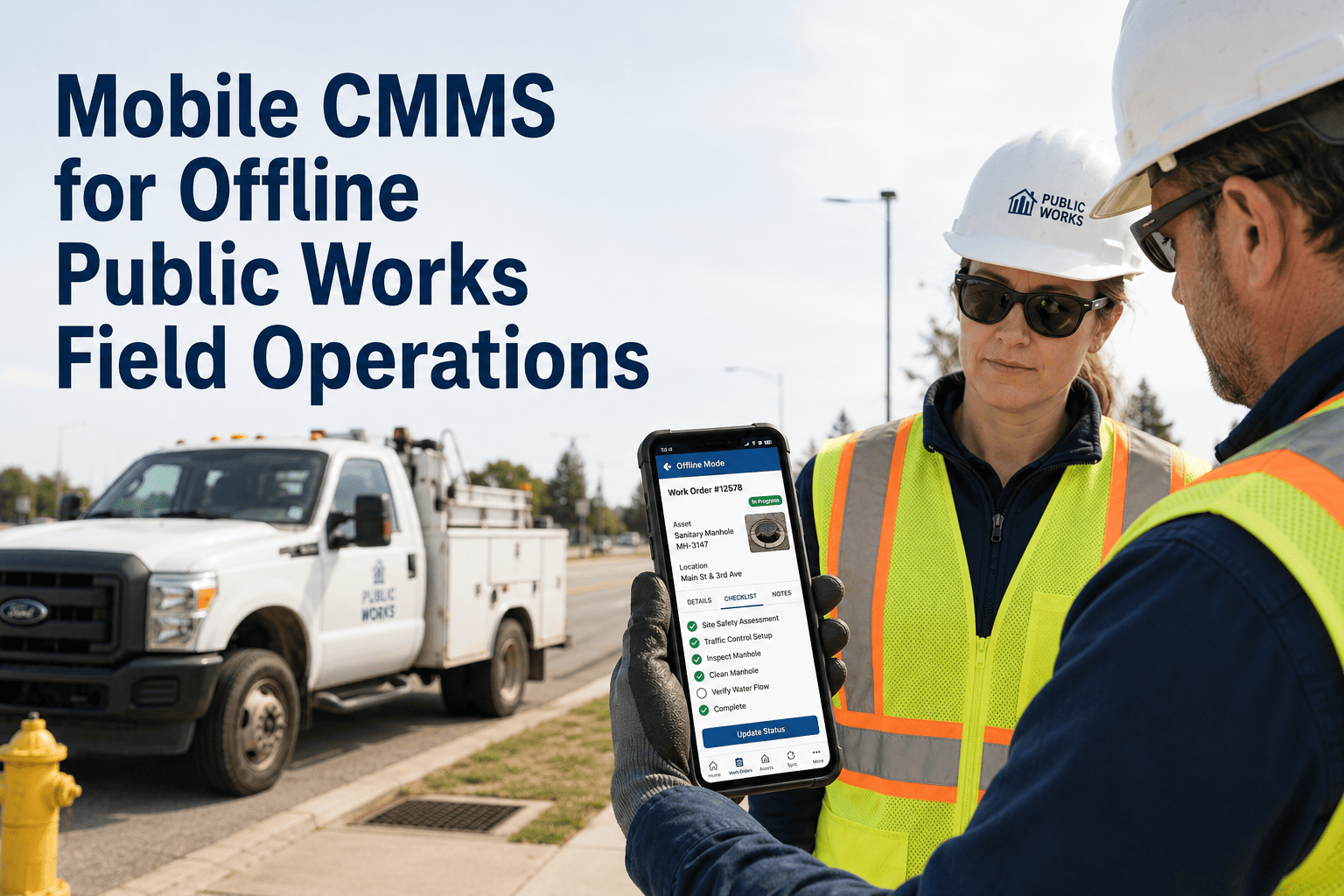
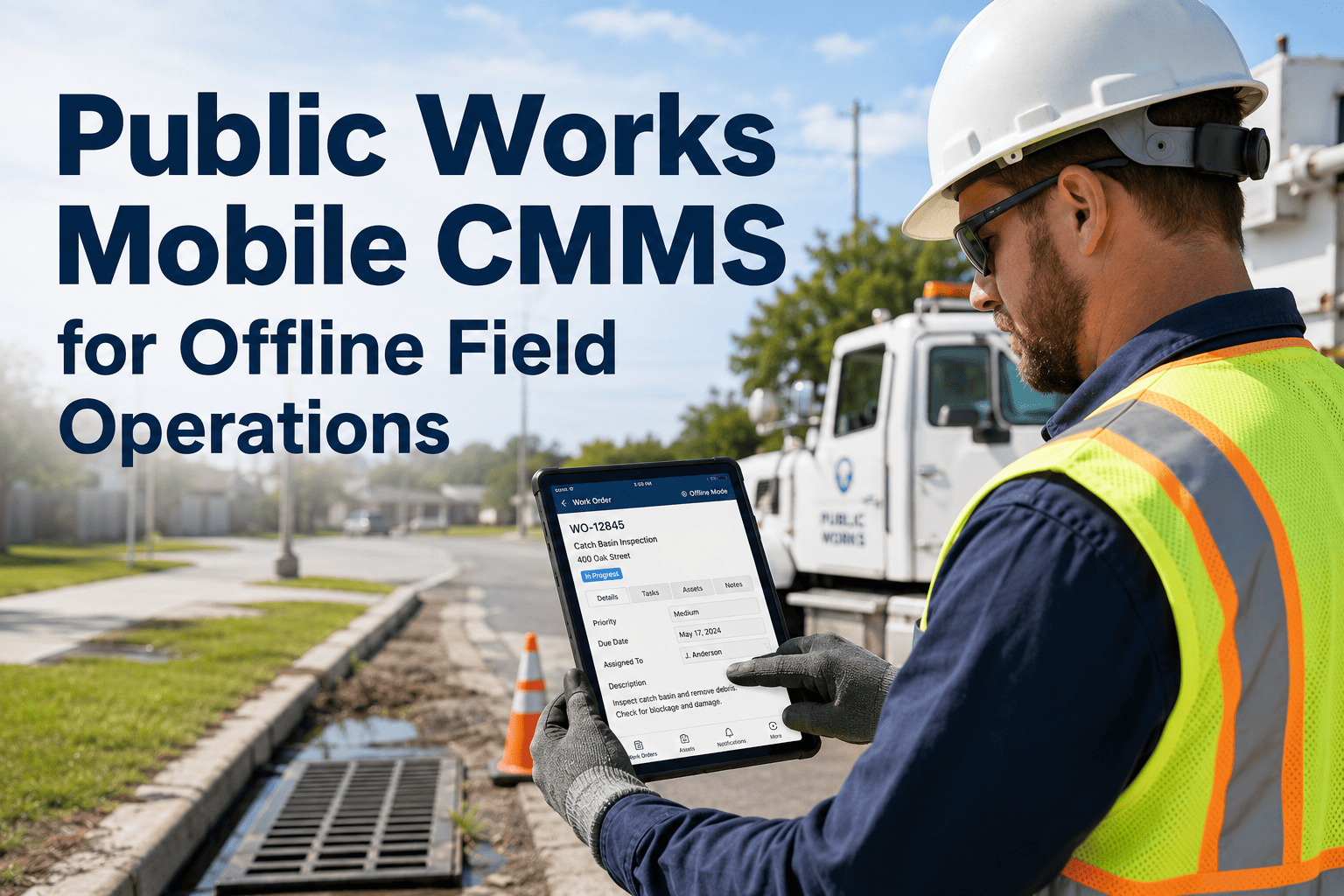
Field technicians complete tasks using mobile devices with barcode/QR scanning, capturing photos, timestamps, and compliance data for audit trails
This meter-driven approach ensures that preventive maintenance resources target assets most likely to fail during peak demand periods or emergency situations. Research consistently demonstrates that predictive strategies reduce unplanned downtime significantly while optimizing labor allocation. Government facilities ready to implement data-driven preventive maintenance can schedule a consultation with public sector CMMS specialists to design custom workflows.
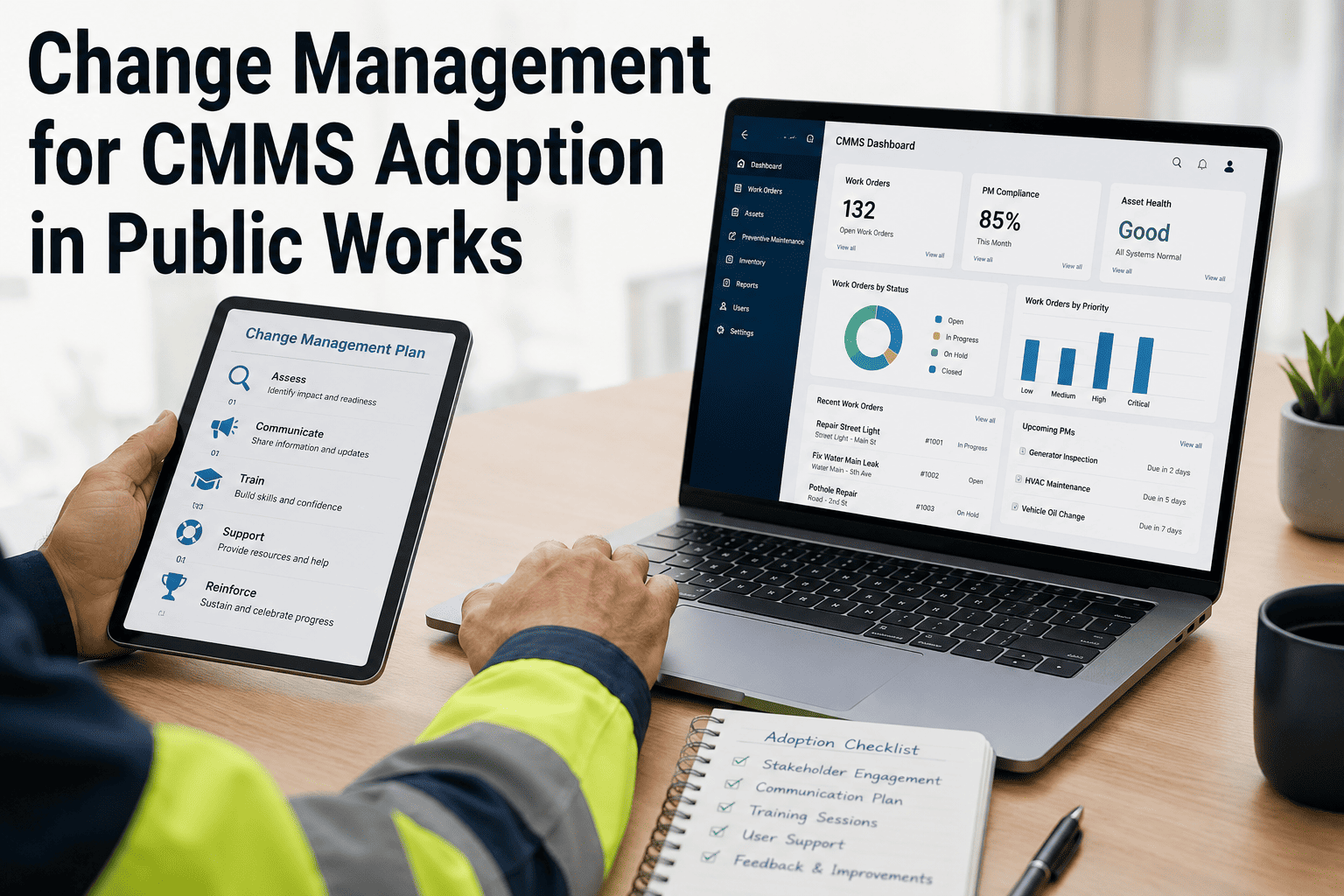
Implementing utility metering and automated preventive tasks represents substantial operational change for government agencies accustomed to paper-based systems and reactive maintenance cultures. Successful technology adoption requires structured change management addressing both technical and human factors.
Change Management Maturity Levels
| Capability Area |
Level 1: Reactive |
Level 2: Systematic |
Level 3: Predictive |
| Work Order Management |
Paper-based, manual dispatch |
Digital CMMS, mobile access |
AI-generated, sensor-triggered |
| Asset Monitoring |
Visual inspections only |
Scheduled meter readings |
Real-time IoT sensors |
| Preventive Maintenance |
Time-based if at all |
Manufacturer schedules |
Condition-based optimization |
| Documentation |
Incomplete paper logs |
Digital records, basic compliance |
Automated audit trails, full traceability |
| Emergency Response |
Reactive crisis management |
Basic emergency protocols |
Predictive intervention, redundancy planning |
| Analytics & Reporting |
Manual spreadsheets |
Standard CMMS reports |
AI-powered forecasting, KPI dashboards |
The transition from Level 1 to Level 3 capabilities typically occurs over 12-18 months, requiring phased implementation that builds organizational competency while delivering early wins to sustain momentum and stakeholder support.
Essential KPIs for Government Asset Management Success
Preventive Maintenance Compliance
Target: 90% or higher
Measures adherence to scheduled tasks, directly correlating with reduced emergency repairs
Mean Time to Repair (MTTR)
Target: Under 4 hours
Faster repairs minimize public service disruptions and demonstrate operational efficiency
Asset Downtime Percentage
Target: Under 3%
Critical for emergency preparedness, ensuring infrastructure availability during crisis events
Work Order Automation Rate
Target: 60% or higher
Higher automation reduces administrative burden and accelerates response times
Ready to Modernize Your Public Works Operations?
Oxmaint CMMS delivers integrated utility metering, automated preventive tasks, and mobile inspections designed specifically for government agencies managing critical infrastructure.
Trusted by municipalities managing thousands of critical infrastructure assets
Government agencies transitioning from paper-based or legacy digital systems to modern CMMS platforms with integrated utility metering require structured implementation approaches that minimize operational disruption while building organizational capability.
Conduct comprehensive asset inventory with barcode/QR tagging for all critical infrastructure
Digitize OEM manuals and historical maintenance records into centralized knowledge base
Map existing utility metering infrastructure and identify sensor expansion opportunities
Define risk scoring criteria based on public service impact and failure consequences
Establish baseline KPIs for current maintenance performance and downtime metrics
Deploy Oxmaint CMMS platform with customized workflows for government compliance requirements
Configure mobile inspection applications with offline capabilities for field technicians
Implement barcode/QR scanning protocols for asset identification and work order tracking
Train maintenance teams on mobile work order execution and digital documentation standards
Begin migrating preventive maintenance schedules from time-based to condition-based triggers
Deploy IoT sensors on critical infrastructure assets with automated CMMS integration
Configure AI-powered analytics for predictive maintenance recommendations
Establish automated work order generation based on sensor threshold violations
Develop executive dashboards linking operational metrics to emergency preparedness goals
Create audit-ready compliance logs meeting state and federal regulatory requirements
The true value of integrated utility metering emerges when sensor data flows seamlessly into AI-powered analytics that generate actionable maintenance recommendations. Government agencies implementing this complete ecosystem report substantial improvements in both operational efficiency and emergency readiness.
AI-Powered Maintenance Lifecycle
Data Aggregation
Sensors continuously feed operational data into centralized analytics platform, creating comprehensive performance baselines
AI Pattern Recognition
Machine learning algorithms identify anomalies, degradation trends, and failure precursors invisible to human observation
Predictive Alerting
System generates prioritized notifications recommending specific interventions before equipment failures occur
Automated Task Generation
CMMS creates work orders with detailed procedures from OEM manuals, required parts, and estimated durations
Mobile Execution
Technicians complete tasks using mobile devices, capturing compliance data, photos, and completion timestamps
Continuous Improvement
Analytics incorporate work order outcomes to refine predictive models, improving forecast accuracy over time
Documented Benefits of Predictive Maintenance in Public Sector
40%
Reduction in unplanned equipment downtime through AI-driven monitoring
30%
Decrease in emergency maintenance costs with predictive intervention
25%
Improvement in asset lifecycle extension through optimized preventive care
50%
Faster regulatory audit preparation with automated compliance documentation
For municipal operations managing extensive infrastructure networks, these improvements translate directly to enhanced public services and reduced taxpayer burden. Water utilities avoiding main breaks, electrical departments preventing substation failures, and wastewater facilities maintaining continuous operation all contribute to community resilience during both routine operations and emergency situations. Government agencies can explore AI-powered analytics dashboards designed specifically for public sector applications.
Government agencies face rigorous documentation requirements from multiple oversight bodies—state regulators, federal agencies, internal auditors, and public transparency laws all demand comprehensive records of maintenance activities, asset conditions, and expenditure justifications.
Automated Compliance Documentation Capabilities
Automated logging of water quality meters, wastewater treatment parameters, and environmental monitoring creating audit-ready records for regulatory inspections and discharge permits.
Digital inspection checklists, safety equipment maintenance logs, and hazard documentation satisfying workplace safety compliance for government facilities and field operations.
Comprehensive asset condition reports, maintenance expenditure tracking, and capital planning documentation meeting state-specific infrastructure assessment requirements.
Searchable digital archives of work orders, vendor invoices, and maintenance activities enabling rapid response to public information requests and transparency mandates.
Transform Your Agency's Emergency Preparedness
Oxmaint delivers comprehensive utility metering integration, AI-powered predictive maintenance, and mobile-first workflows designed specifically for government and public works operations.
Join government agencies nationwide modernizing critical infrastructure management
Successful CMMS adoption in government environments requires attention to unique operational constraints—procurement processes, union agreements, budget cycles, and political oversight all influence implementation approaches. Agencies achieving successful deployments consistently follow these best practices:
1
Start with High-Impact Assets
Identify 20-30 critical infrastructure assets where utility metering and predictive maintenance deliver immediate visibility into public service risks. Early wins build stakeholder support for broader deployment.
2
Involve Technicians Early
Field personnel who execute maintenance work must participate in workflow design and mobile interface configuration. Their operational knowledge ensures system usability and adoption.
3
Establish Clear KPI Baselines
Document current performance on downtime, emergency repairs, and compliance metrics before implementation. Quantifiable improvements justify continued investment and expansion.
4
Integrate with Existing Systems
Connect CMMS platforms to financial systems, GIS mapping, and asset management databases. Seamless data flow eliminates duplicate entry and improves accuracy.
5
Plan for Long-Term Sustainability
Budget for ongoing training, sensor replacements, and system updates. Successful implementations view CMMS as operational infrastructure requiring continuous investment.
Utility metering integrated with preventive maintenance represents more than operational improvement—it constitutes a fundamental responsibility of modern government to manage public infrastructure with the same data-driven sophistication that private sector entities apply to commercial assets. Taxpayers expect reliable services. Regulators demand documented compliance. Emergency managers require operational resilience. All three objectives align when municipalities deploy connected sensors, automated preventive tasks, and predictive analytics.
The agencies that implement these capabilities first will benefit from extended infrastructure lifecycles, reduced emergency expenditures, and the public trust that comes from transparent, proactive asset management. Those that delay face increasing risk of catastrophic failures, ballooning maintenance costs, and the reputational damage that accompanies public service disruptions.
The technology exists. The ROI is documented. The implementation roadmap is clear. What remains is the organizational commitment to transform legacy maintenance operations into predictive, data-driven programs worthy of 21st-century public service expectations. For a personalized assessment of your agency's modernization readiness, request a tailored implementation strategy from government CMMS specialists.
What types of utility meters integrate with government CMMS platforms?
Modern CMMS platforms support integration with water flow meters, electrical load monitors, pressure sensors, temperature gauges, vibration analyzers, and chemical level indicators. Oxmaint specifically provides API connectivity with common IoT sensor manufacturers used in municipal applications, enabling real-time data transmission from distributed infrastructure. Integration occurs through standard communication protocols including Modbus, BACnet, and cellular IoT connections, allowing agencies to leverage existing sensor investments while expanding monitoring capabilities as budgets allow.
How do barcode/QR systems improve maintenance documentation for government audits?
Barcode and QR scanning eliminates manual asset identification errors while creating precise audit trails linking work orders to specific equipment. Field technicians scan asset tags when beginning maintenance tasks, automatically associating labor hours, parts usage, and completion data with correct assets. This automated documentation satisfies regulatory requirements for maintenance record accuracy while reducing administrative burden. Auditors can instantly retrieve complete maintenance histories for any asset, with timestamps, technician credentials, and photographic evidence creating defensible compliance records that withstand regulatory scrutiny.
What mobile inspection capabilities are essential for government field operations?
Government technicians require mobile applications with offline functionality for remote locations without reliable connectivity. Essential capabilities include digital inspection checklists based on OEM manual specifications, photo capture with automatic GPS tagging, barcode/QR scanning for asset identification, electronic signature collection for compliance documentation, and automated upload when connectivity restores. Oxmaint's mobile platform specifically addresses these government requirements with ruggedized interfaces designed for field conditions and security protocols meeting public sector data protection standards.
Explore mobile inspection workflows designed for government operations.
How quickly can government agencies implement predictive maintenance programs?
Initial implementation focusing on 20-30 critical assets typically requires 3-4 months from contract execution to operational deployment. This timeline includes asset inventory, CMMS configuration, sensor installation, technician training, and initial baseline data collection. Full predictive analytics capabilities incorporating AI-powered recommendations generally mature over 6-12 months as historical performance data accumulates. Agencies can accelerate timelines by prioritizing high-impact infrastructure and implementing phased rollouts rather than attempting simultaneous deployment across all asset categories.
What OEM manual integration capabilities support government maintenance standardization?
Modern CMMS platforms digitize manufacturer maintenance procedures, creating standardized work order templates that ensure technicians follow OEM specifications regardless of equipment familiarity. Oxmaint specifically provides digital libraries where agencies upload PDF manuals, link procedures to specific assets, and incorporate manufacturer-recommended task frequencies into automated preventive maintenance schedules. This integration reduces training requirements for new equipment while ensuring warranty compliance and optimal maintenance practices. Technicians access relevant manual sections directly within mobile work orders, eliminating the need to locate paper documentation in field environments.