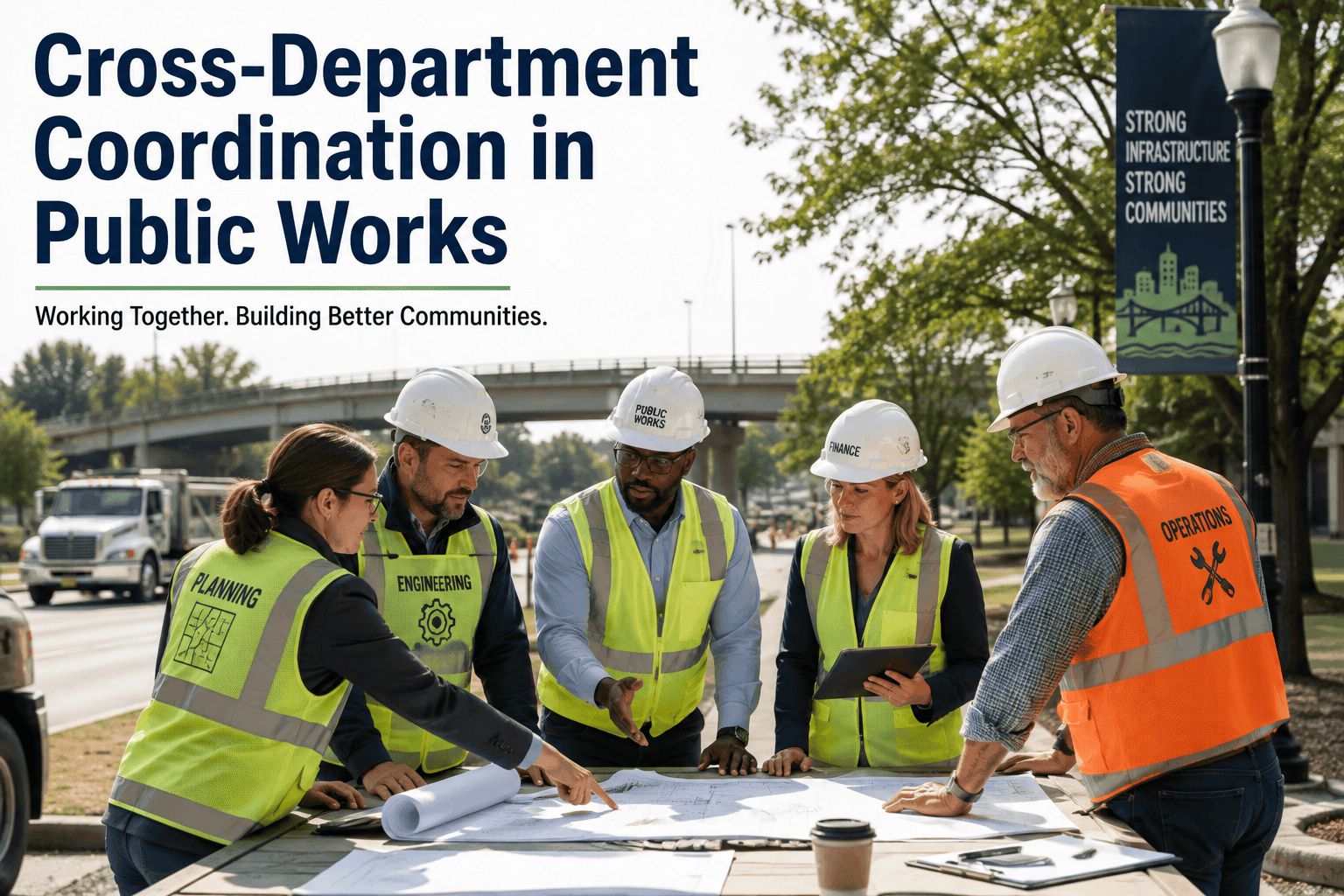
Effective vendor coordination on public works projects means synchronizing multiple trades — paving, striping, signage, utilities — so that no crew blocks another and no milestone slips. When multi-trade coordination on government projects breaks down, agencies absorb average cost overruns of 15–25% and schedule delays that erode public trust. Municipal maintenance and reliability teams are increasingly turning to centralized, CMMS-driven workflows to replace fragmented spreadsheets and email threads. By mapping every trade to a shared timeline, access plan, and communication protocol, you can keep public works vendor coordination tight, auditable, and on budget. Explore how a modern platform like OxMaint streamlines this process, then Start Free Trial to see it in action on your assets.
Are Vendor Scheduling Conflicts Stalling Your Multi-Trade Public Works Project?
When paving, striping, signage, and utility crews fall out of sync, schedule overruns and budget blowouts follow. Centralized, CMMS-driven coordination keeps every trade aligned, accountable, and moving forward on government infrastructure projects.
Why Multi-Trade Public Works Projects Fall Apart Without Coordination
A single public works project can involve 5–15 separate vendors working in tight proximity. When coordination is left to email chains and paper schedules, the cost of misalignment adds up fast.
A Midwest municipality's $1.2M road resurfacing project required coordination between an asphalt crew, a striping contractor, a signage installer, and the local water utility. Without a shared scheduling system, the striping contractor arrived before the asphalt cured, the signage team was blocked by active utility trenching, and the project finished 6 weeks late — costing the agency $180K in extended traffic control and penalty clauses. A centralized vendor coordination platform would have mapped dependencies and prevented every conflict.
How to Coordinate Vendors Across Trades on Government Projects
Successful multi-trade project coordination follows a disciplined sequence — from pre-mobilization planning through daily access management. Here is the framework used by high-performing public works agencies.
Vendor Registration & Compliance Verification
Before any crew sets foot on-site, verify licenses, insurance, bonding, and OSHA safety certifications. Centralize documentation so audits take minutes, not days. Digitize W-9s, MWBE certifications, and prevailing wage records in one system.
Dependency Mapping & Trade Sequencing
Map logical dependencies: paving must precede striping; utility trenching must close before final grading. Assign each vendor a mobilization window with buffer time built in. Use a shared Gantt-style or calendar view so every contractor sees exactly when their window opens.
Access Management & Site Control
Control lane closures, detour routes, and work zones so no two trades conflict spatially. Issue digital permits and access passes. Track which vendor is on-site, in which zone, at what time — creating an automatic audit trail for the agency and FHWA.
Real-Time Communication Protocols
Replace email threads with a centralized communication hub tied to each work order. Every change, delay notification, or safety alert reaches the relevant vendor instantly. Require digital acknowledgments for critical updates to close the accountability loop.
Performance Review & Documentation Closeout
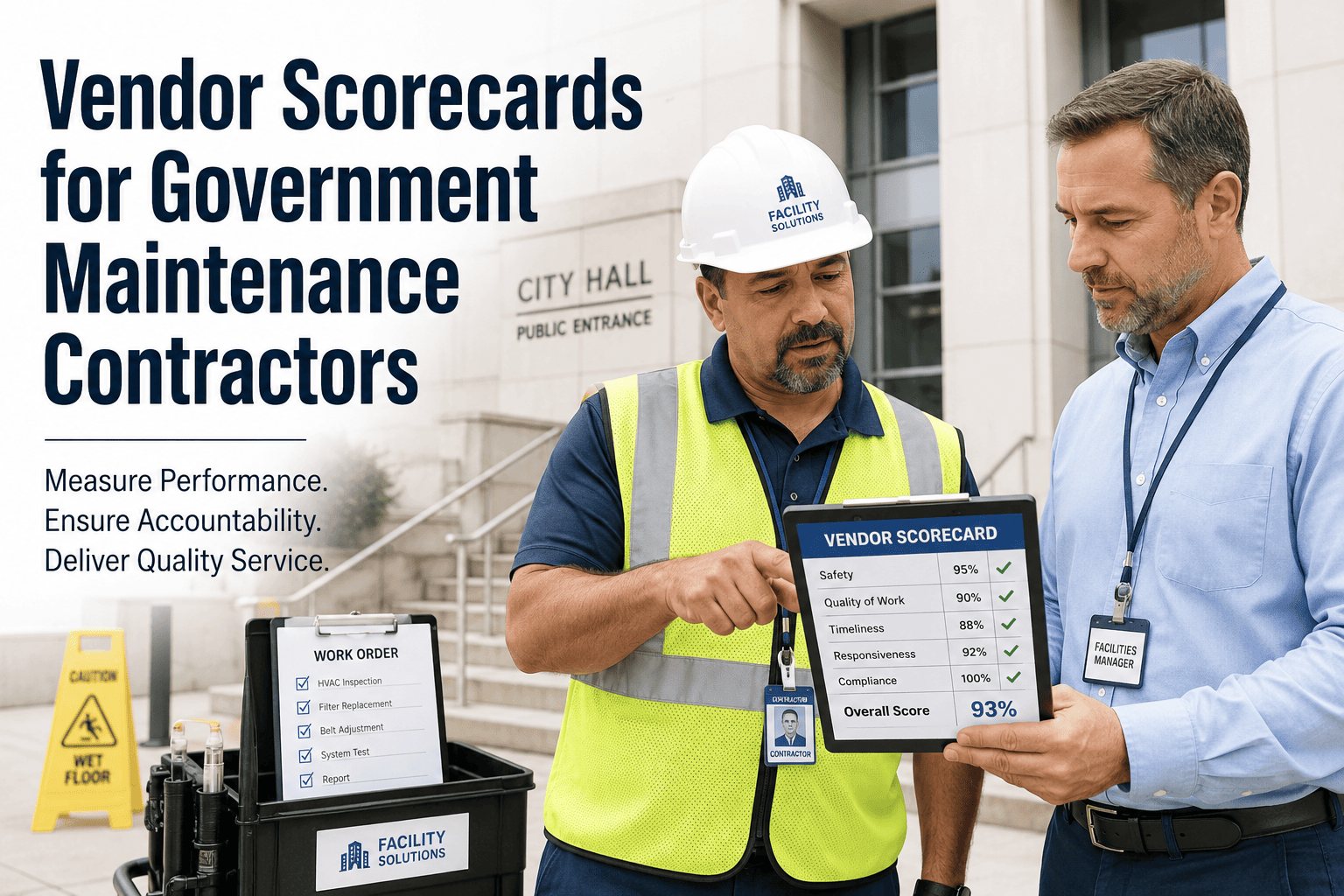
Log actual vs. scheduled completion times, quality defects, and change orders. Rate vendor performance to inform future procurement decisions. Archive all records for FOIA compliance and federal reporting requirements.
Contractor Coordination Checklist for Public Works Teams
Use this checklist to verify that every trade is coordinated before mobilization and throughout execution. Each item maps directly to a control that prevents the most common causes of multi-trade delays.
Scheduling Coordination
- Shared project calendar accessible to all vendors
- Trade dependencies mapped with 24–48 hr buffers
- Mobilization windows issued per contractor
- Weather contingency dates pre-scheduled
Access Management
- Work zones assigned and mapped digitally
- Lane closure permits linked to vendor schedule
- No overlapping trades in the same zone
- Traffic control plan approved and distributed
Communication Protocols
- Single source of truth for all project updates
- Delay notifications pushed in real time
- Digital acknowledgment required for changes
- Daily progress logs submitted by each vendor
Compliance & Documentation
- Insurance and bonding verified and current
- Prevailing wage records submitted weekly
- Safety certifications on file for every crew
- Change orders logged and approved digitally
What Poor Vendor Coordination Costs Municipal Projects
When vendor coordination on municipal projects relies on manual tracking, the financial impact compounds across every trade. Here is a typical cost breakdown for a $1M multi-trade public works project running just 4 weeks over schedule.
| Cost Category | Manual / Spreadsheet Coordination | CMMS-Driven Coordination | Savings |
|---|---|---|---|
| Extended traffic control & detours | $48,000 | $12,000 | $36,000 |
| Idle crew time (vendor standby) | $32,000 | $6,500 | $25,500 |
| Change orders from scheduling conflicts | $22,000 | $4,000 | $18,000 |
| Re-work (damaged work by out-of-sequence trades) | $18,500 | $2,500 | $16,000 |
| Admin overhead (reporting, audit prep) | $14,000 | $3,500 | $10,500 |
| Total Project Impact | $134,500 | $28,500 | $106,000 |
A CMMS-driven approach to public works project coordination can recover over $100K per $1M project — a payback period measured in weeks, not years.
How OxMaint Streamlines Vendor Coordination for Public Works
OxMaint replaces fragmented spreadsheets and email chains with a centralized AI-powered CMMS built for multi-trade complexity. Here is how specific capabilities map directly to the coordination challenges public works teams face.
Shared Work Order Calendar
Assign every vendor a visible mobilization window on a shared calendar. Trades see dependencies in real time, eliminating the scheduling conflicts that cause 40% of project delays.
Outcome: Cut scheduling conflicts by up to 70%Real-Time Vendor Communication
Push delay notifications, safety alerts, and change orders directly to vendors through the platform. Require digital acknowledgment so every contractor is accountable for receiving critical updates.
Outcome: Eliminate miscommunication-driven delaysAsset & Zone Tracking
Track which vendor is working in which zone, on which asset, at what time. Link work zones to lane closure permits and ensure no two trades operate in the same physical space simultaneously.
Outcome: Zero spatial conflicts between tradesAutomated Compliance & Audit Trails
Store insurance, bonding, prevailing wage records, and safety certifications in one system. Generate audit-ready reports for FOIA requests and federal reporting in minutes, not days.
Outcome: Cut audit prep time by 80%See OxMaint Coordinate Your Multi-Trade Vendors
Book a 30-minute demo and watch how OxMaint maps trade dependencies, tracks vendor access, and eliminates the scheduling conflicts that stall public works projects.
Public Works Vendor Coordination: Your Questions Answered
What is vendor coordination in public works projects?
Vendor coordination in public works is the process of synchronizing multiple contractors — paving, striping, signage, utilities — so that no trade blocks another. It involves scheduling, access management, communication protocols, and compliance tracking, all tied to a shared project timeline that keeps multi-trade work on schedule and budget.
How does a CMMS improve multi-trade coordination on government projects?
A CMMS like OxMaint centralizes work orders, vendor schedules, asset tracking, and communication in one platform. Every trade sees the same calendar, receives real-time updates, and submits compliance documentation digitally. This eliminates the email-chain chaos that causes up to 40% of trade-scheduling delays. You can Book a Demo to see the coordination dashboard in action.
How do you manage access control when multiple trades are on-site?
Assign each vendor a specific work zone and mobilization window within your CMMS. Link zones to lane closure permits and require digital check-in before a crew enters the site. This ensures no two trades operate in the same physical space and creates a real-time audit trail of who was where, and when.
What are the most common causes of delays in multi-trade public works projects?
The top causes are trade sequencing conflicts (one crew arriving before another's work is complete), poor communication of schedule changes, missing compliance documentation that halts mobilization, and spatial conflicts where two vendors need the same work zone. A centralized coordination system addresses all four.
How much can a municipality save by improving vendor coordination?
A well-coordinated $1M multi-trade project can recover $80,000–$120,000 in avoided traffic control costs, idle crew time, change orders, and re-work. The payback period for implementing a CMMS for vendor coordination is typically measured in weeks, especially when the platform also streamlines preventive maintenance and asset tracking. Start with a Start Free Trial to benchmark your current gaps.
Stop Losing Time to Vendor Scheduling Conflicts
OxMaint brings every trade, work order, and compliance document into one AI-powered platform — so your public works projects finish on schedule and under budget.
Free 14-day trial · No credit card