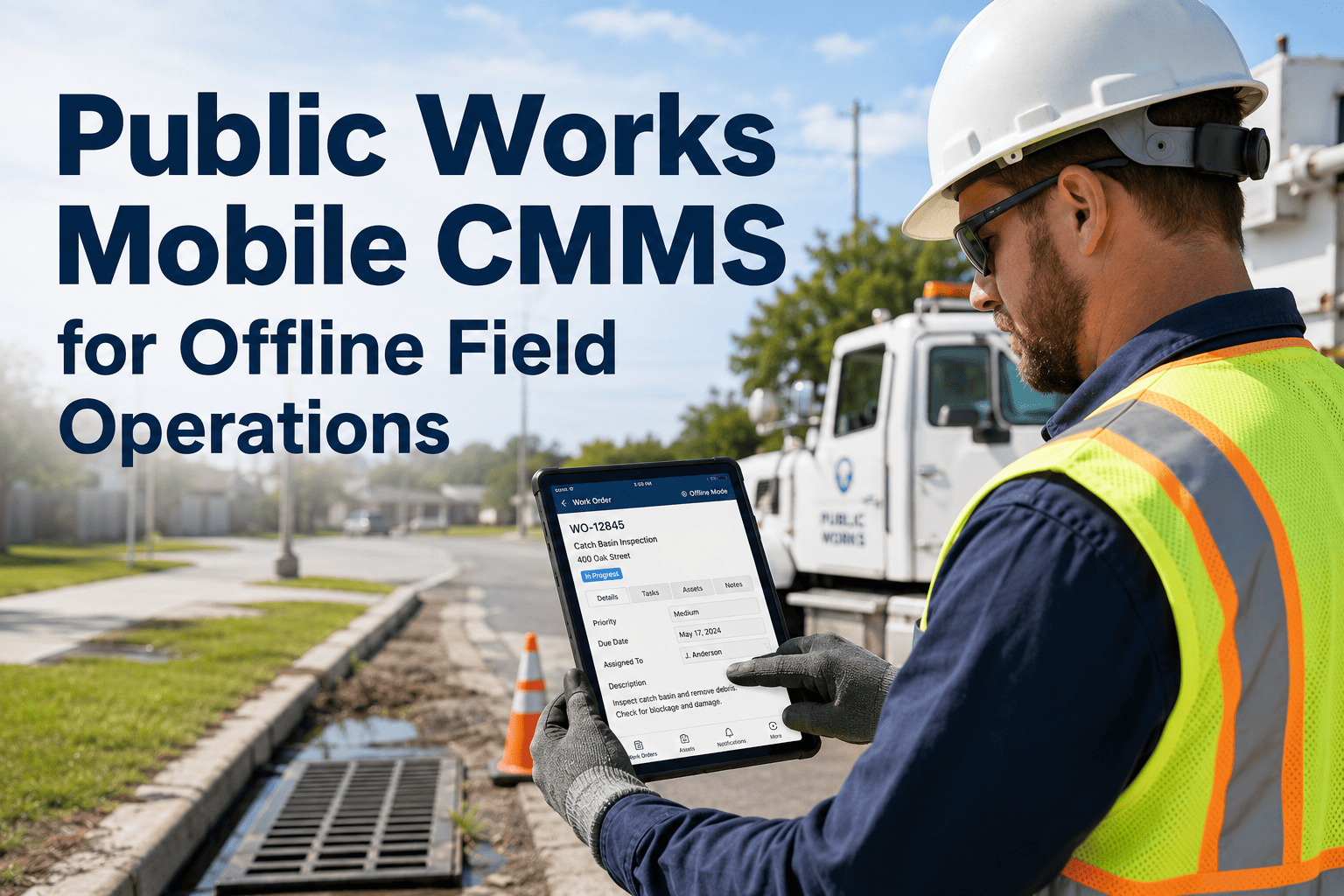
Cross-department coordination in public works is the operational backbone that determines whether roads, water, fleet, parks, and facilities function as a unified organization or collapse into competing silos. When municipal departments share a single CMMS architecture, coordination protocols, and joint planning schedules, they typically reduce redundant maintenance labor by 20–30% and extend critical asset life by years. Interdepartmental coordination in government eliminates the costly blind spots that occur when a streets team tears up a freshly paved road because the water utility failed to schedule a pipe replacement. By replacing fragmented spreadsheets and disconnected work order systems with a centralized public works collaboration platform like OxMaint, municipalities can align maintenance schedules, share spare-parts inventory, and track cross-departmental assets in real time. Start your Start Free Trial today to see how a unified system transforms public sector coordination.
Are your public works departments operating as one organization — or five disconnected silos?
Streets, water, fleet, parks, and facilities rarely share maintenance plans, asset data, or work order systems. The result is duplicated effort, clashing schedules, and costly reactive emergencies. A shared CMMS architecture aligns every department under one operating model — cutting redundant labor by up to 30% and eliminating cross-departmental scheduling conflicts.
How cross-departmental public works alignment changes daily operations
Municipal department coordination fails most often at the handoff — when an asset, a repair, or a scheduled outage moves from one team's jurisdiction to another's. The contrast between fragmented operations and a coordinated model is measurable.
| Operational Dimension | Siloed Departments (Status Quo) | Coordinated Public Works (OxMaint) |
|---|---|---|
| Asset visibility | Each division tracks assets in isolated spreadsheets or legacy databases; no one sees the full picture. | A unified EAM registry shows every asset, its condition, and its maintenance history across all departments. |
| Scheduling conflicts | Streets pave over newly installed water lines; fleet vehicles sit idle waiting for facility bay repairs. | Joint preventive maintenance calendars prevent overlapping shutdowns and utility cut-offs. |
| Spare parts inventory | Water and fleet divisions stock identical filters and belts separately, tying up budget in duplicate stock. | Shared inventory pool reduces carrying costs by 15–25% and eliminates emergency parts runs. |
| Emergency response | Confused radio traffic and paper work orders delay interagency coordination during storm response. | Mobile work orders route instantly to the closest qualified crew regardless of home division. |
| Compliance reporting | Audits take weeks as each department scrambles to assemble paper records from separate systems. | One-click dashboards export FMCSA, GPA, and ISO 55000 compliance data across all divisions. |
A 4-phase timeline for government interdepartmental coordination
Moving from isolated municipal divisions to a unified public works collaboration model does not happen overnight. This proven 4-month deployment sequence establishes shared protocols without disrupting active operations.
Asset Registry Unification
Consolidate asset data from streets, water, fleet, parks, and facilities into a single OxMaint EAM database. Classify hierarchy by department, location, and criticality. Most municipalities consolidate 3,000–8,000 assets in under 30 days using automated import tools.
Coordination Protocol Design
Define interdepartmental work order workflows. Establish rules for joint scheduling — for example, requiring water line shut-offs to trigger automatic notifications to the streets division 48 hours before paving begins. Map approval chains for shared resources.
Joint PM Calendar Launch
Roll out a shared preventive maintenance calendar that spans all divisions. Fleet oil changes, water hydrant inspections, park playground audits, and street sweeper servicing appear on one timeline. Conflict-detection flags overlapping resource demands automatically.
Analytics and Continuous Improvement
Activate cross-departmental dashboards. Measure OEE by division, track shared inventory turnover, and identify chronic failure patterns across asset classes. Use predictive maintenance alerts to shift from reactive breakdowns to planned interventions.
The cost of siloed municipal coordination: a real-world scenario
Consider a mid-sized municipality with 12,000 residents managing 180 public works assets across three divisions. Because fleet, streets, and facilities operate on separate paper logs, no one realized the fleet maintenance bay's hydraulic lift was due for its annual recertification — until it failed during a snowplow blade change in January.
- Hydraulic lift failure during peak winter storm preparation
- 3 snowplow trucks delayed for 4 days waiting for alternative bay access
- $8,400 in emergency repair premiums and overtime labor
- Facilities team unaware fleet needed the lift — no shared PM calendar existed
- Paper trail took 6 days to reconstruct for compliance reporting
- Predictive alert flagged lift wear pattern 21 days before failure
- Automated work order routed to facilities crew during scheduled lull
- Fleet notified via shared calendar — trucks redirected to secondary bay
- Repair completed for $1,850 during normal business hours
- Compliance records auto-generated and audit-ready instantly
How OxMaint drives municipal department coordination
OxMaint is built for the realities of public sector coordination. Its AI-powered CMMS and EAM platform unifies work orders, preventive maintenance, asset tracking, and inventory across every division — giving maintenance and reliability teams a single source of truth.
Unified Asset Registry
A single EAM database tracks every asset — from water pumps to street sweepers to park irrigation systems — with department tags, location hierarchy, and full maintenance history visible to all authorized teams.
Cross-Departmental PM Calendar
Schedule preventive maintenance across streets, water, fleet, parks, and facilities on one shared calendar. Automatic conflict detection flags overlapping resource demands and joint scheduling needs before they become problems.
Shared Spare-Parts Inventory
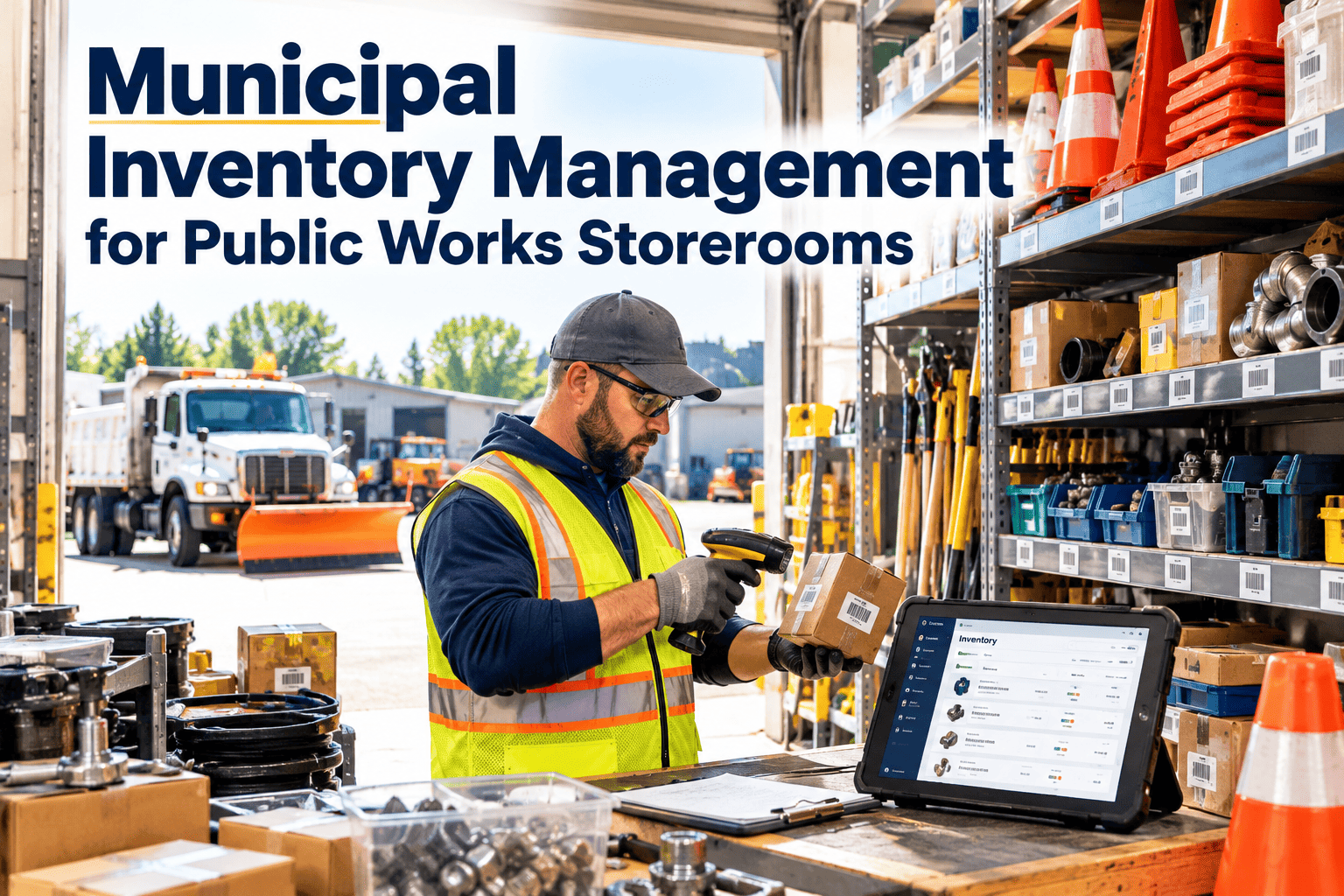
Pool inventory across departments so fleet mechanics and water utility technicians draw from the same stock. Automated reorder points and predictive demand forecasting prevent stockouts and eliminate redundant purchasing.
Mobile Work Orders and Analytics
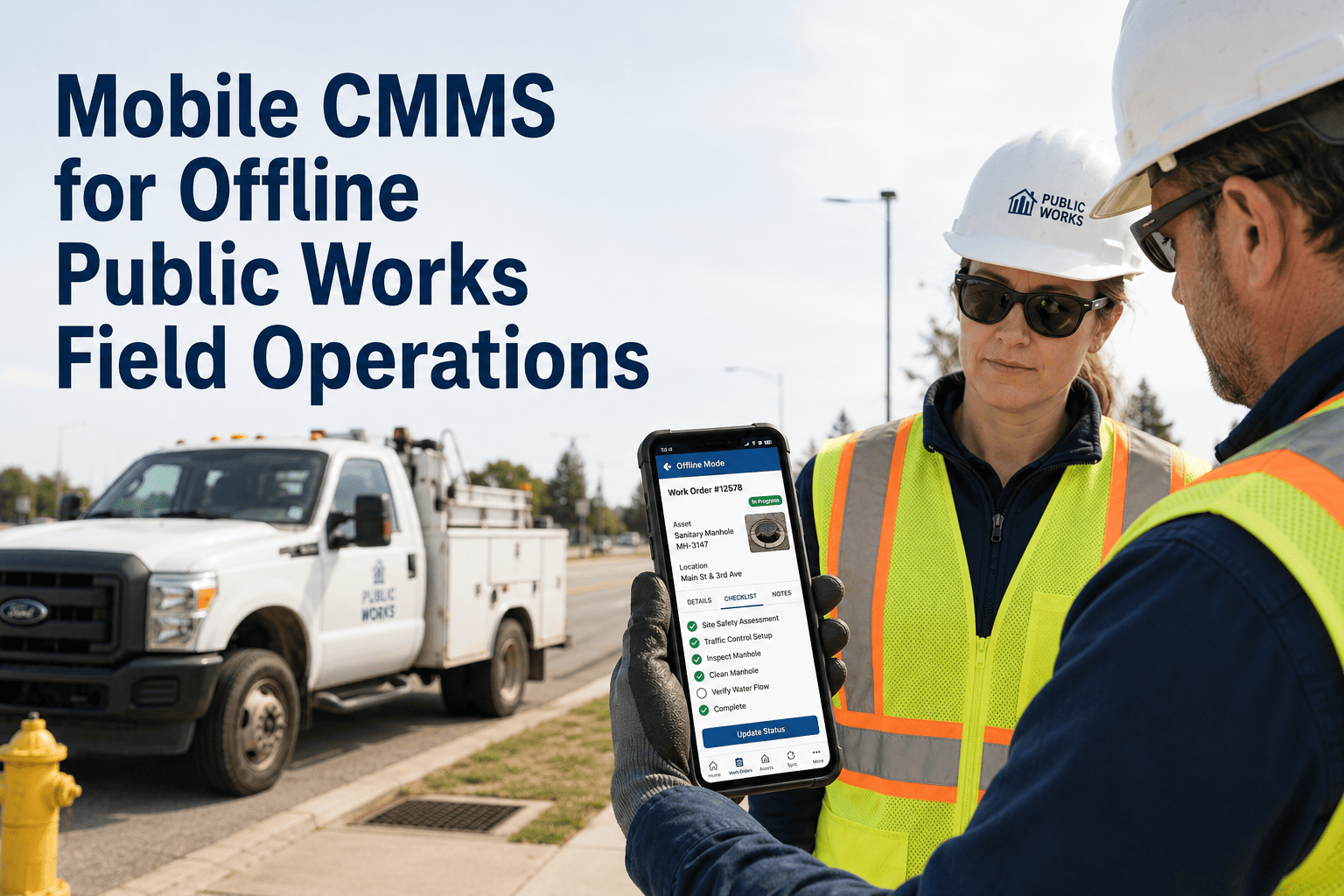
Field crews receive and close work orders on mobile devices regardless of home division. AI-driven analytics surface failure patterns, track OEE by department, and generate compliance reports for FMCSA, GPA, and ISO 55000 audits in one click.
KPIs that prove public sector coordination is working
Interagency coordination in public works is only credible when it shows up in the numbers. Track these six KPIs within the first 90 days of deploying OxMaint to quantify the shift from siloed to unified operations.
See OxMaint unify your public works departments
Book a 30-minute demo and watch how cross-department coordination eliminates scheduling conflicts, cuts duplicate labor, and gives every division one source of truth.
Public works interdepartmental coordination: what teams ask most
What is cross-department coordination in public works?
Cross-department coordination in public works is the practice of aligning maintenance schedules, asset data, work orders, and spare-parts inventory across municipal divisions such as streets, water, fleet, parks, and facilities. It replaces isolated spreadsheets and paper logs with a shared CMMS platform so every department operates from a single source of truth, reducing duplicate labor and scheduling conflicts. You can explore how OxMaint enables this by visiting app.oxmaint.ai to start a free trial.
How does a shared CMMS improve municipal department coordination?
A shared CMMS gives all public works divisions access to the same asset registry, preventive maintenance calendar, and work order system. This eliminates the blind spots that cause problems like streets paving over active water lines, reduces duplicate parts purchasing by 15–25%, and enables instant mobile work order routing during emergencies regardless of which division a crew belongs to.
How long does it take to implement cross-departmental CMMS coordination?
Most mid-sized municipalities complete a full cross-department CMMS rollout in 3–4 months. The first month unifies the asset registry, the second designs coordination protocols, the third launches the joint preventive maintenance calendar, and the fourth activates analytics dashboards. A 180-asset municipality can consolidate its entire inventory in under 30 days using OxMaint's automated import tools — book a demo at calendly.com/oxmaintapp/30min to see the timeline for your operation.
What are the biggest risks of not coordinating public works departments?
Without interdepartmental coordination, municipalities face duplicated maintenance labor costing 20–30% of total maintenance spend, emergency repair premiums from preventable asset failures, compliance audit delays lasting weeks, and scheduling conflicts that delay critical services. The status quo of paper logs and isolated spreadsheets makes these costs invisible until a failure forces an expensive reactive response.
Can OxMaint handle compliance reporting across multiple government departments?
Yes. OxMaint auto-generates compliance reports for FMCSA, GPA, ISO 55000, and local municipal audit standards across all divisions in a single click. Because every work order, asset history record, and preventive maintenance task lives in one database, audit preparation that previously took 2–3 weeks of manual compilation across departments becomes an instant export.
Stop operating in silos. Start coordinating as one public works organization.
Join the municipalities using OxMaint to unify streets, water, fleet, parks, and facilities on one AI-powered CMMS — cutting downtime, eliminating duplicate labor, and delivering audit-ready compliance.
Free 14-day trial · No credit card